

Tested Applications
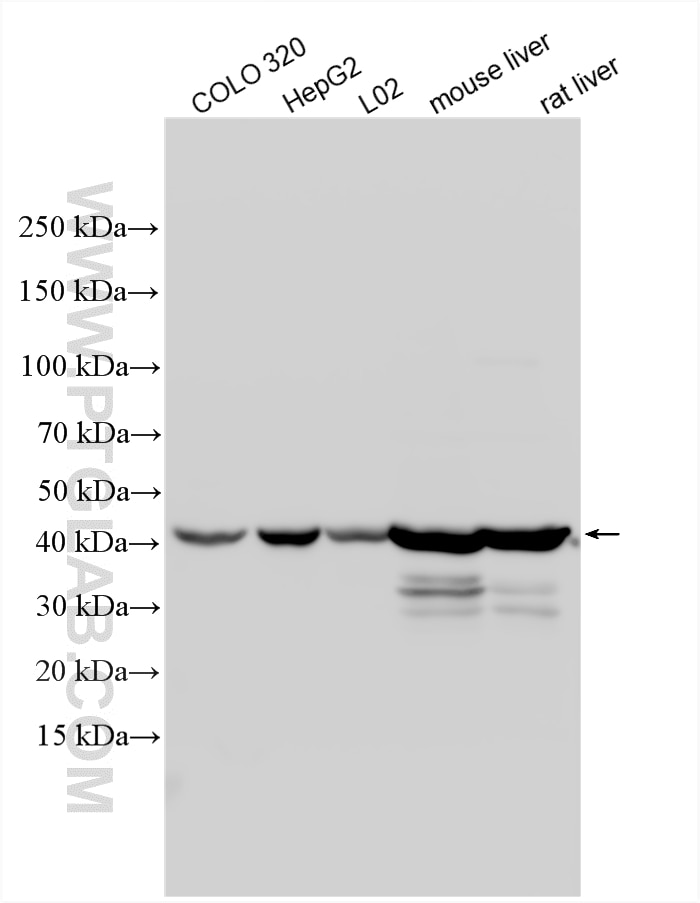
| Positive WB detected in | COLO 320 cells, HepG2 cells, L02 cells, mouse liver tissue, rat liver tissue |
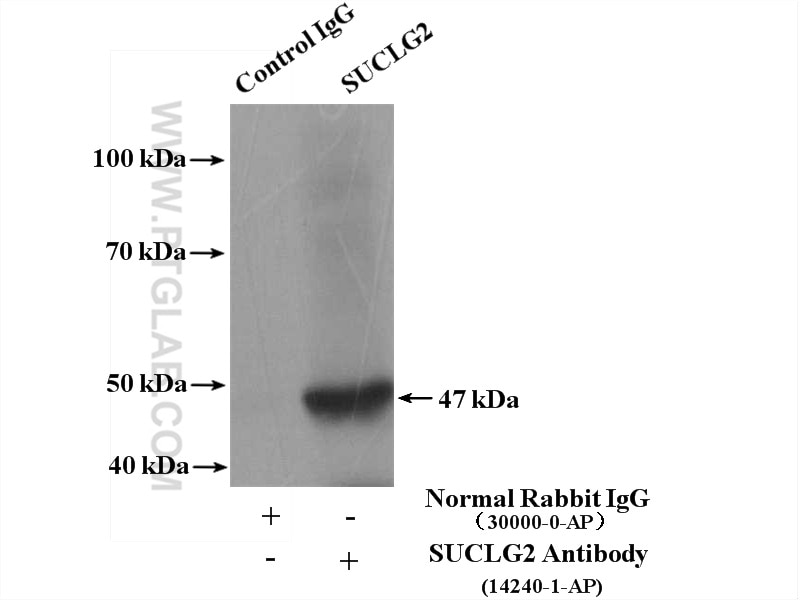
| Positive IP detected in | mouse kidney tissue |
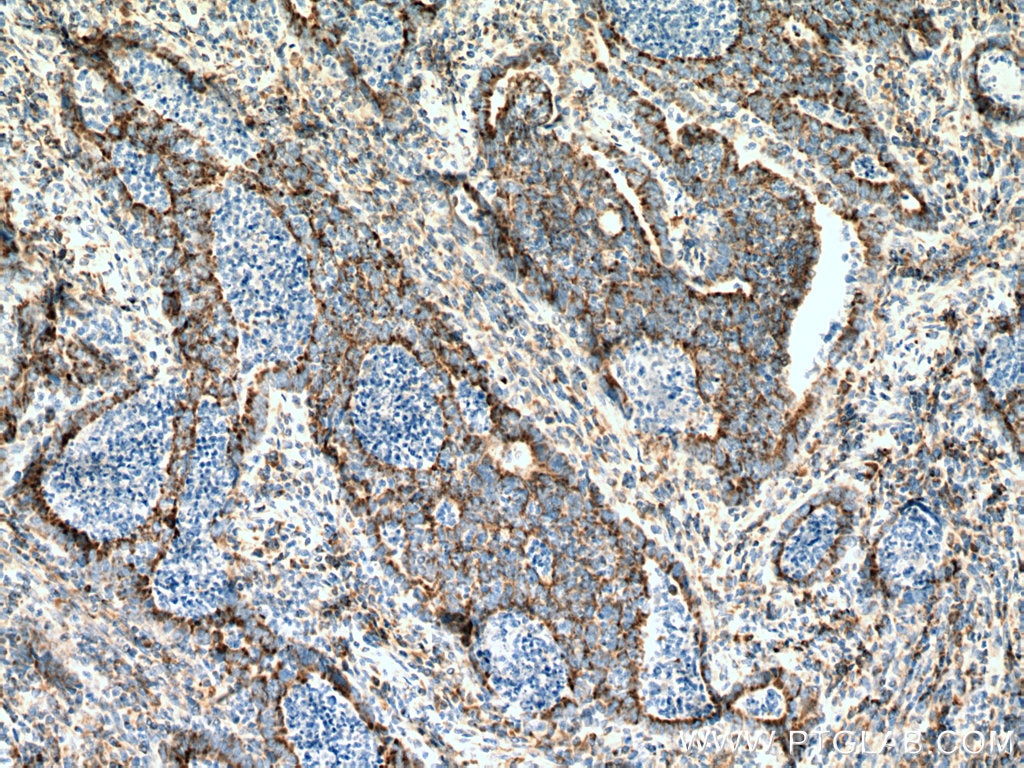
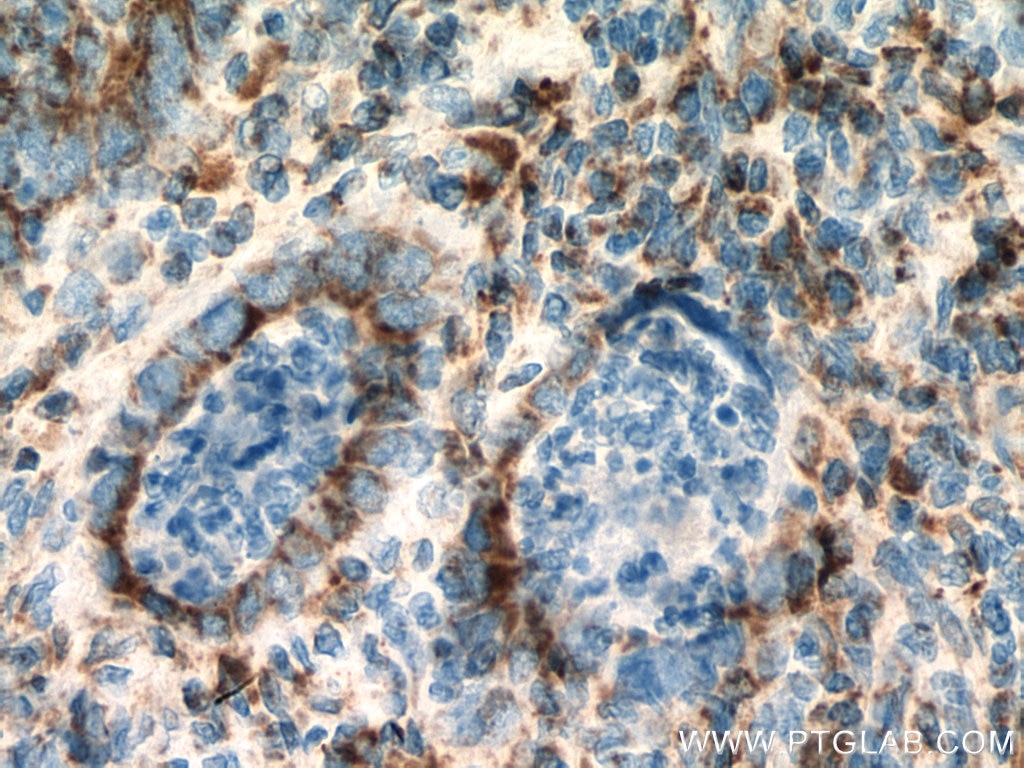
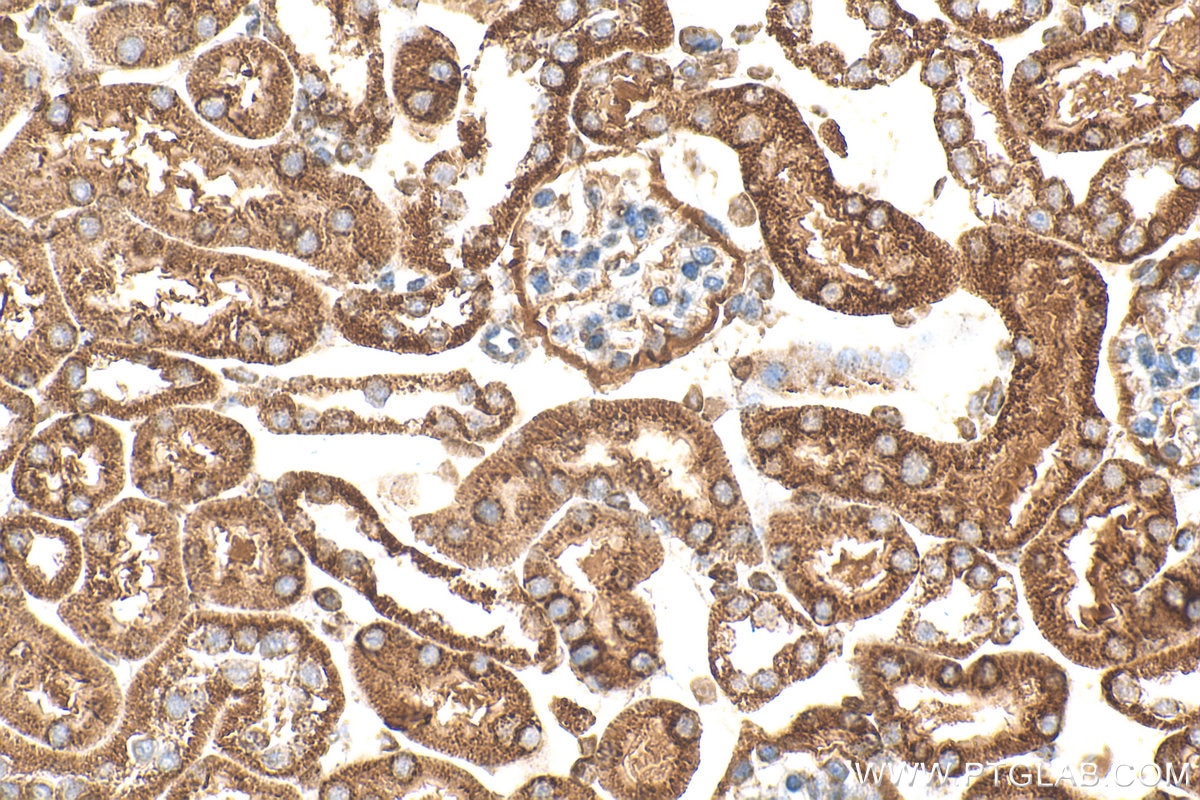
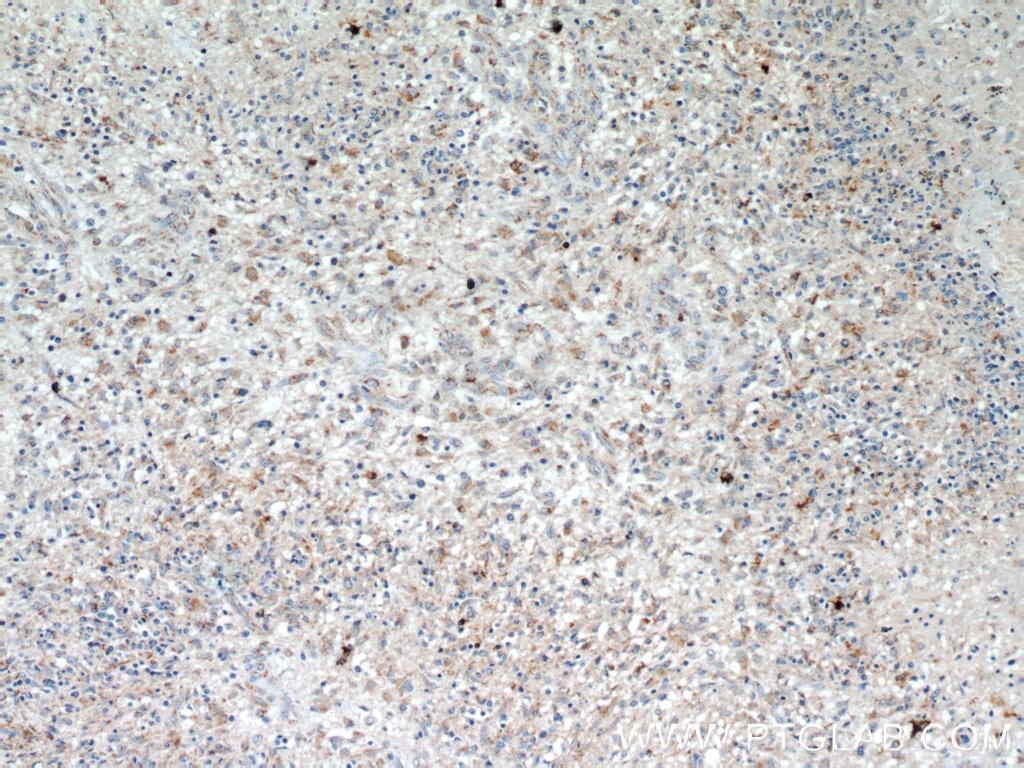
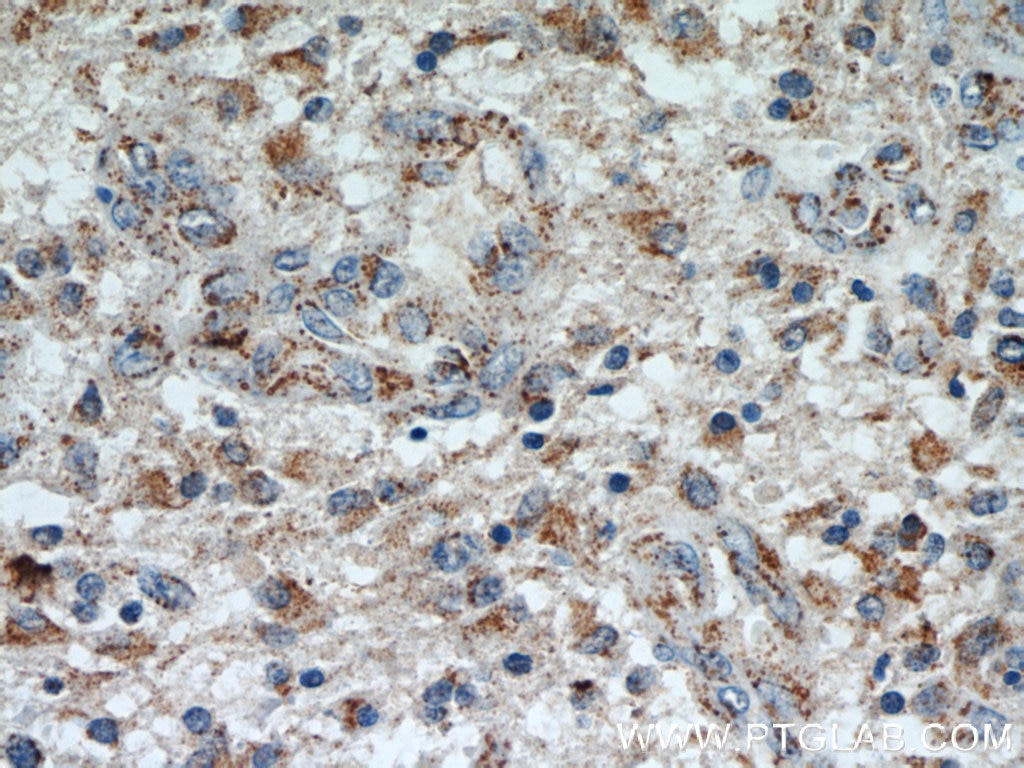
| Positive IHC detected in | human colon cancer tissue, human gliomas tissue, mouse kidney tissue Note: suggested antigen retrieval with TE buffer pH 9.0; (*) Alternatively, antigen retrieval may be performed with citrate buffer pH 6.0 |
Recommended dilution
| Application | Dilution |
|---|---|
| Western Blot (WB) | WB : 1:5000-1:50000 |
| Immunoprecipitation (IP) | IP : 0.5-4.0 ug for 1.0-3.0 mg of total protein lysate |
| Immunohistochemistry (IHC) | IHC : 1:250-1:1000 |
| It is recommended that this reagent should be titrated in each testing system to obtain optimal results. | |
| Sample-dependent, Check data in validation data gallery. | |
Product Information
14240-1-AP targets SUCLG2 in WB, IHC, IF, IP, CoIP, ELISA applications and shows reactivity with human, mouse, rat samples.
| Tested Reactivity | human, mouse, rat |
| Cited Reactivity | human, mouse, rat |
| Host / Isotype | Rabbit / IgG |
| Class | Polyclonal |
| Type | Antibody |
| Immunogen |
CatNo: Ag5495 Product name: Recombinant human SUCLG2 protein Source: e coli.-derived, PET28a Tag: 6*His Domain: 1-385 aa of BC047024 Sequence: MSDNGVRVQRFFVADTANEALEAAKRLNAKEIVLKAQILAGGRGKGVFNSGLKGGVHLTKDPNVVGQLAKQMIGYNLATKQTPKEGVKVNKVMVAEALDISRETYLAILMDRSCNGPVLVGSPQGGVDIEEVAASNPELIFKEQIDIFEGIKDSQAQRMAENLGFVGPLKSQAADQITKLYNLFLKIDATQVEVNPFGETPEGQVVCFDAKINFDDNAEFRQKDIFAMDDKSENEPIENEAAKYDLKYIGLDGNIACFVNGAGLAMATCDIIFLNGGKPANFLDLGGGVKEAQVYQAFKLLTADPKVEAILVNIFGGIVNCAIIANGITKACRELELKVPLVVRLEGTNVQEAQKILNNSGLPITSAIDLEDAAKKAVASVAKK Predict reactive species |
| Full Name | succinate-CoA ligase, GDP-forming, beta subunit |
| Calculated Molecular Weight | 47 kDa |
| Observed Molecular Weight | 47 kDa |
| GenBank Accession Number | BC047024 |
| Gene Symbol | SUCLG2 |
| Gene ID (NCBI) | 8801 |
| RRID | AB_2197187 |
| Conjugate | Unconjugated |
| Form | Liquid |
| Purification Method | Antigen affinity purification |
| UNIPROT ID | Q96I99 |
| Storage Buffer | PBS with 0.02% sodium azide and 50% glycerol, pH 7.3. |
| Storage Conditions | Store at -20°C. Stable for one year after shipment. Aliquoting is unnecessary for -20oC storage. 20ul sizes contain 0.1% BSA. |
Background Information
SUCLG2, encodes a GTP-specific beta subunit of succinyl-CoA synthetase. Succinyl-CoA synthetase catalyzes the reversible reaction involving the formation of succinyl-CoA and succinate. The deficiency of SUCLG2 represents an encephalomyopathic form of mtDNA depletion syndromes (PMID:30470562). Mutated SUCLG1 causes mislocalization of SUCLG2 protein, morphological alterations of mitochondria and an early-onset severe neurometabolic disorder. SUCLG2 is mainly expressed in liver, kidney, heart (PMID: 9765291).
Protocols
| Product Specific Protocols | |
|---|---|
| IHC protocol for SUCLG2 antibody 14240-1-AP | Download protocol |
| IP protocol for SUCLG2 antibody 14240-1-AP | Download protocol |
| WB protocol for SUCLG2 antibody 14240-1-AP | Download protocol |
| Standard Protocols | |
|---|---|
| Click here to view our Standard Protocols |
Publications
What published studies show
Able is busy answering your previous question. Please try again later.
| Species | Application | Title |
|---|---|---|
Metabolism Glutamine synthetase deficiency triggers mitochondrial oxidative stress and a ribotoxic stress response during acute hepatic metabolic crisis. | ||
Mol Cell RAD51 succinylation regulates homologous recombination and contributes to the chemosensitivity in cancer.
| ||
Gut Microbes CD44 is a macrophage receptor for TcdB from Clostridioides difficile that via its lysine-158 succinylation contributes to inflammation | ||
Adv Sci (Weinh) SUCLG2 Regulates Mitochondrial Dysfunction through Succinylation in Lung Adenocarcinoma | ||
Cell Death Dis CircPSD3 aggravates tumor progression by maintaining TCA cycle and mitochondrial function via regulating SUCLG2 in thyroid carcinoma | ||
Clin Cancer Res Biomarker identification and risk prediction model development for differentiated thyroid carcinoma lung metastasis based on primary lesion proteomics |
Reviews
What customers say
The single review for this product is highly positive, with a 5-star rating. The reviewer used it on C2C12 cells for Western Blot, Immunoprecipitation, and Immunofluorescence, reporting that it works well across all three applications. The dilutions used were 1:1000 for WB and 1 µg for IP. Overall, the feedback indicates strong performance and reliability for multiple applications.
The reviews below have been submitted by verified Proteintech customers who received an incentive for providing their feedback.
Jun (Verified Customer) (05-08-2025) | Works well for WB, IP and IF
|

