

Tested Applications
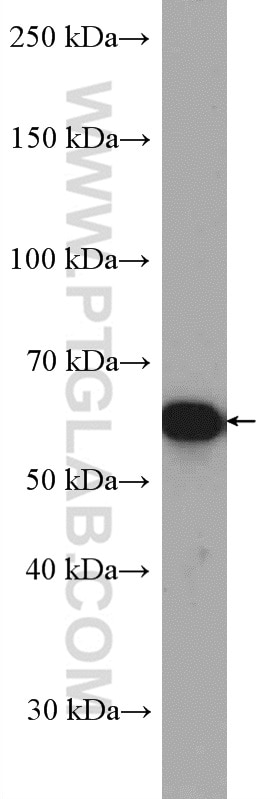
| Positive WB detected in | mouse heart tissue |
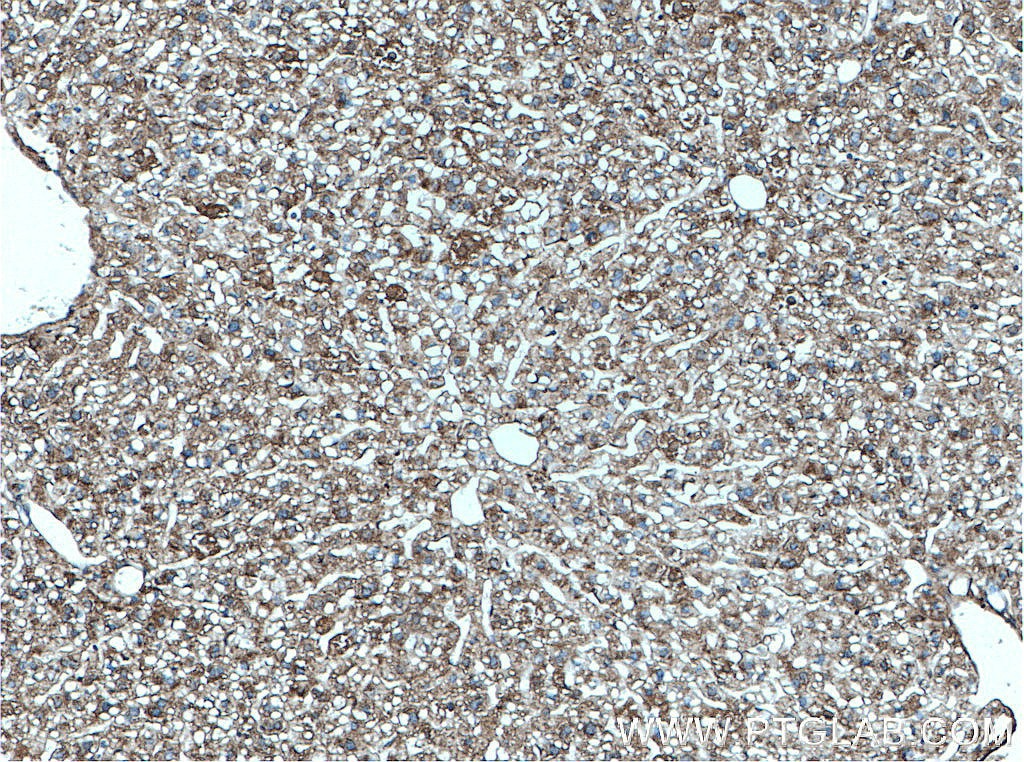
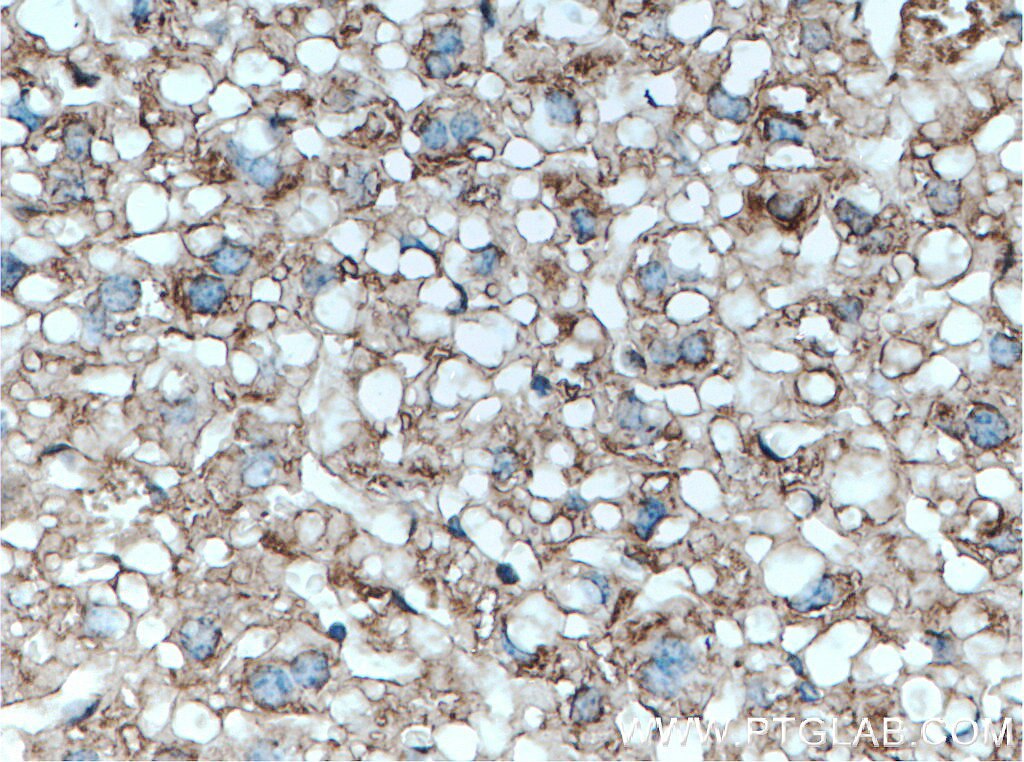
| Positive IHC detected in | mouse liver tissue Note: suggested antigen retrieval with TE buffer pH 9.0; (*) Alternatively, antigen retrieval may be performed with citrate buffer pH 6.0 |
Recommended dilution
| Application | Dilution |
|---|---|
| Western Blot (WB) | WB : 1:500-1:2000 |
| Immunohistochemistry (IHC) | IHC : 1:50-1:500 |
| It is recommended that this reagent should be titrated in each testing system to obtain optimal results. | |
| Sample-dependent, Check data in validation data gallery. | |
Product Information
55480-1-AP targets Serpina3k in WB, IHC, IF, ELISA applications and shows reactivity with mouse samples.
| Tested Reactivity | mouse |
| Cited Reactivity | human, mouse, rat |
| Host / Isotype | Rabbit / IgG |
| Class | Polyclonal |
| Type | Antibody |
| Immunogen |
Peptide Predict reactive species |
| Full Name | serine (or cysteine) peptidase inhibitor, clade A, member 3K |
| Calculated Molecular Weight | 47 kDa |
| Observed Molecular Weight | 50-60 kDa |
| GenBank Accession Number | NM_011458 |
| Gene Symbol | Serpina3k |
| Gene ID (NCBI) | 20714 |
| RRID | AB_2881346 |
| Conjugate | Unconjugated |
| Form | Liquid |
| Purification Method | Antigen affinity purification |
| UNIPROT ID | P07759 |
| Storage Buffer | PBS with 0.02% sodium azide and 50% glycerol, pH 7.3. |
| Storage Conditions | Store at -20°C. Aliquoting is unnecessary for -20oC storage. 20ul sizes contain 0.1% BSA. |
Protocols
| Product Specific Protocols | |
|---|---|
| IHC protocol for Serpina3k antibody 55480-1-AP | Download protocol |
| WB protocol for Serpina3k antibody 55480-1-AP | Download protocol |
| Standard Protocols | |
|---|---|
| Click here to view our Standard Protocols |
Publications
What published studies show
Serpina3k Polyclonal Antibody (55480-1-AP) has 14 total citations. Research fields include cardiology (Nature Communications, Advanced Science), hepatology/liver fibrosis (Experimental & Molecular Medicine), diabetes/metabolism (Cellular and Molecular Life Sciences), and nephrology/kidney injury (Scientific Reports, American Journal of Physiology-Renal Physiology, International Journal of Molecular Sciences, Physiological Reports). Additional work spans neuroscience/traumatic brain injury (Frontiers in Neurology, Cell Biology & Toxicology), immunology (Nature Immunology), and neurophysiology (FASEB Journal, Biomolecules). Applications cited include WB, IHC, and IF across human, mouse, and rat models.
| Species | Application | Title |
|---|---|---|
Exp Mol Med Hepatocyte KCTD17-mediated SERPINA3 inhibition determines liver fibrosis in metabolic dysfunction-associated steatohepatitis. | ||
Cell Mol Life Sci SerpinA3k Deficiency Ameliorates Experimental type 2 Diabetes.
| ||
Cell Biol Toxicol Neurorescuing effect of Cinacalcet against hypercalcemia-induced nerve injury in chronic kidney disease via TRAF2/cIAP1/KLF2/SERPINA3 signal axis. | ||
Biomolecules Molecular Profiling of Mouse Models of Loss or Gain of Function of the KCNT1 (Slack) Potassium Channel and Antisense Oligonucleotide Treatment | ||

