

Tested Applications
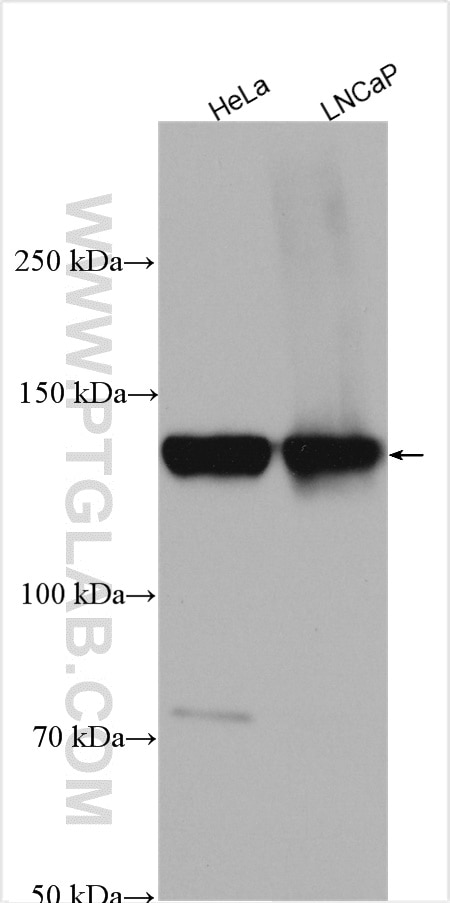
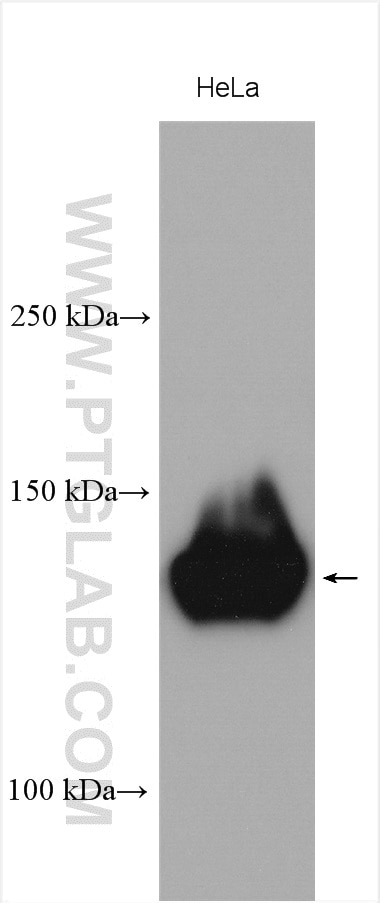
| Positive WB detected in | HeLa cells, LNCaP cells |
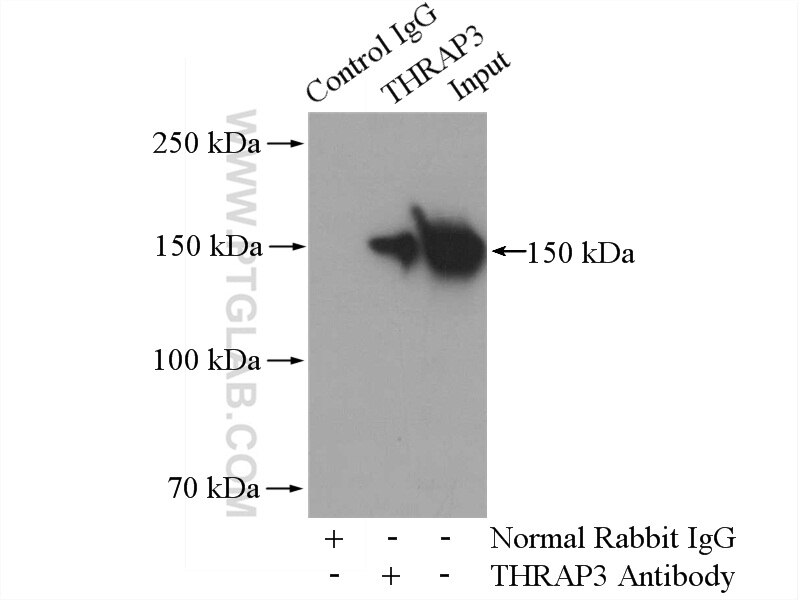
| Positive IP detected in | HeLa cells |
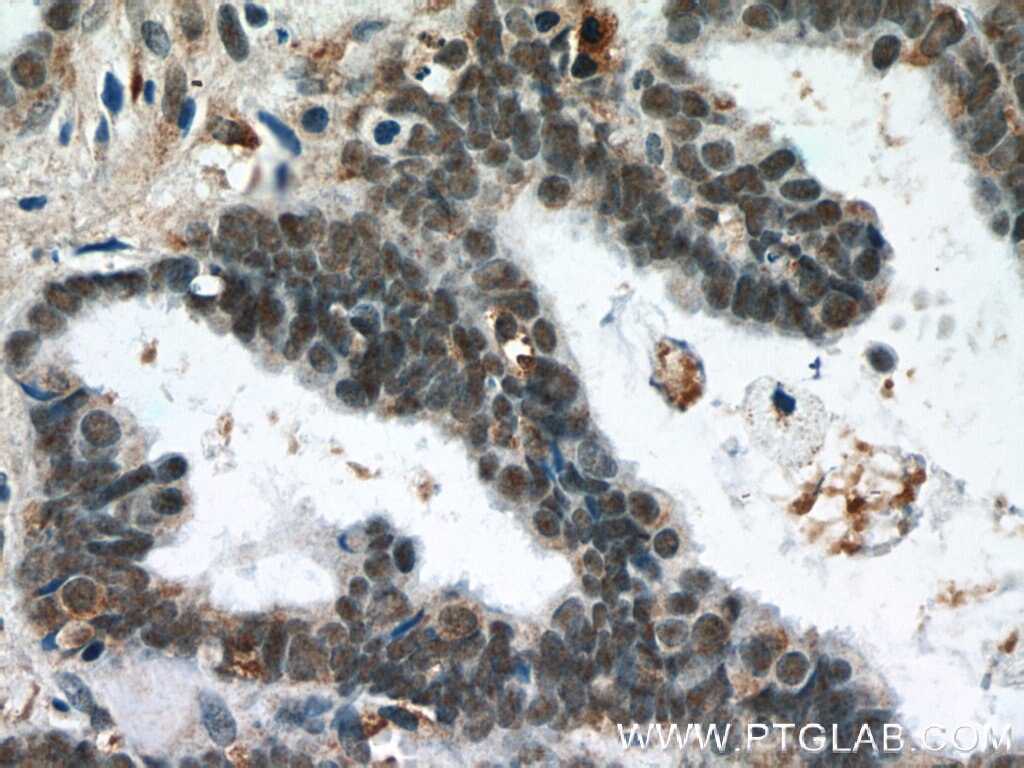
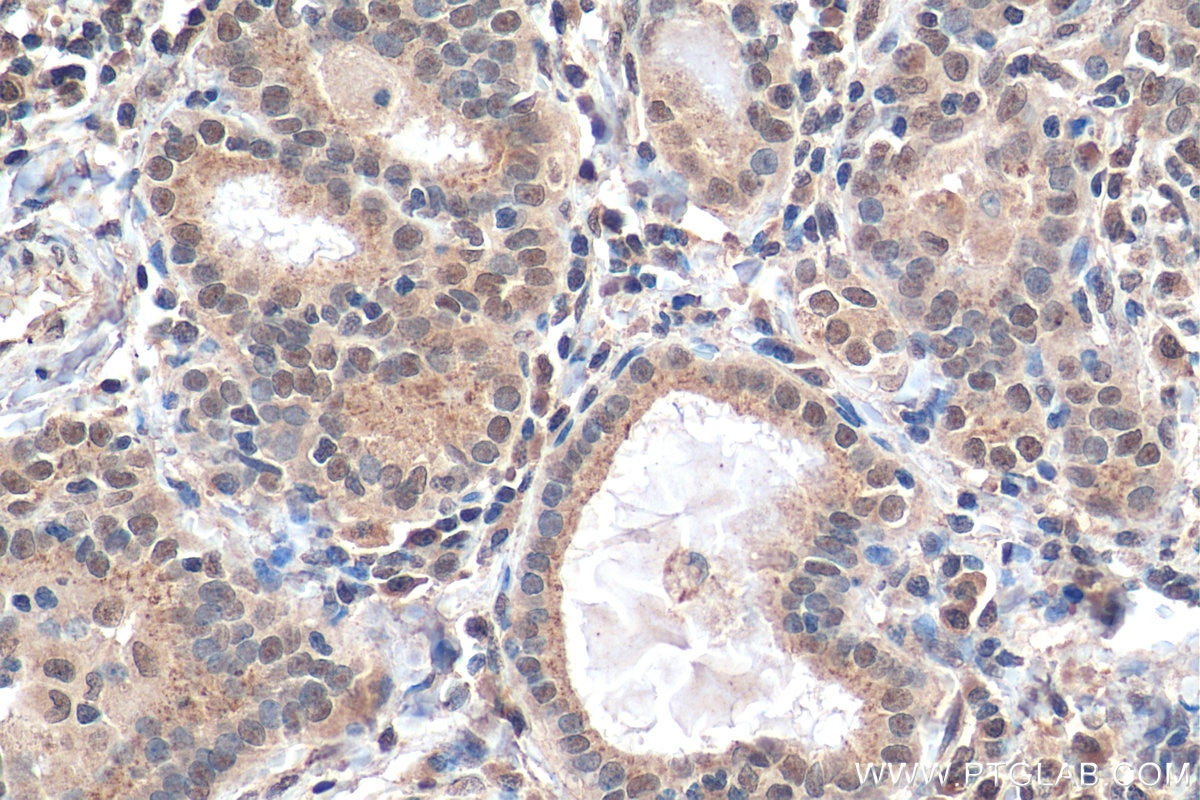
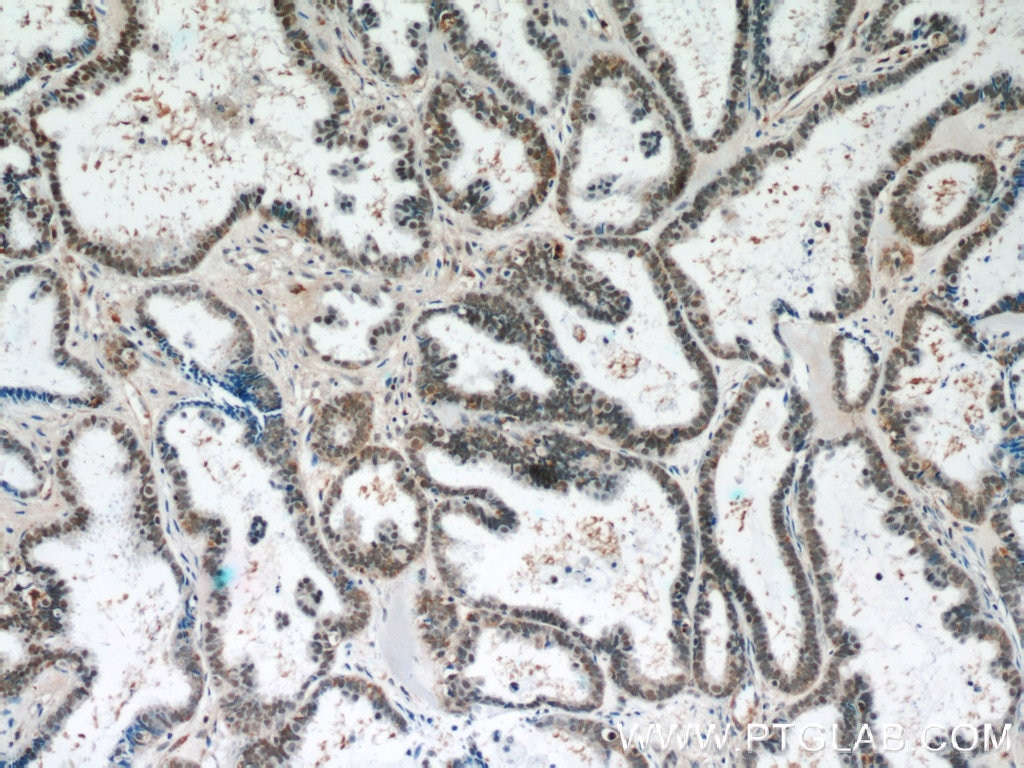
| Positive IHC detected in | human ovary tumor tissue, human thyroid cancer tissue Note: suggested antigen retrieval with TE buffer pH 9.0; (*) Alternatively, antigen retrieval may be performed with citrate buffer pH 6.0 |
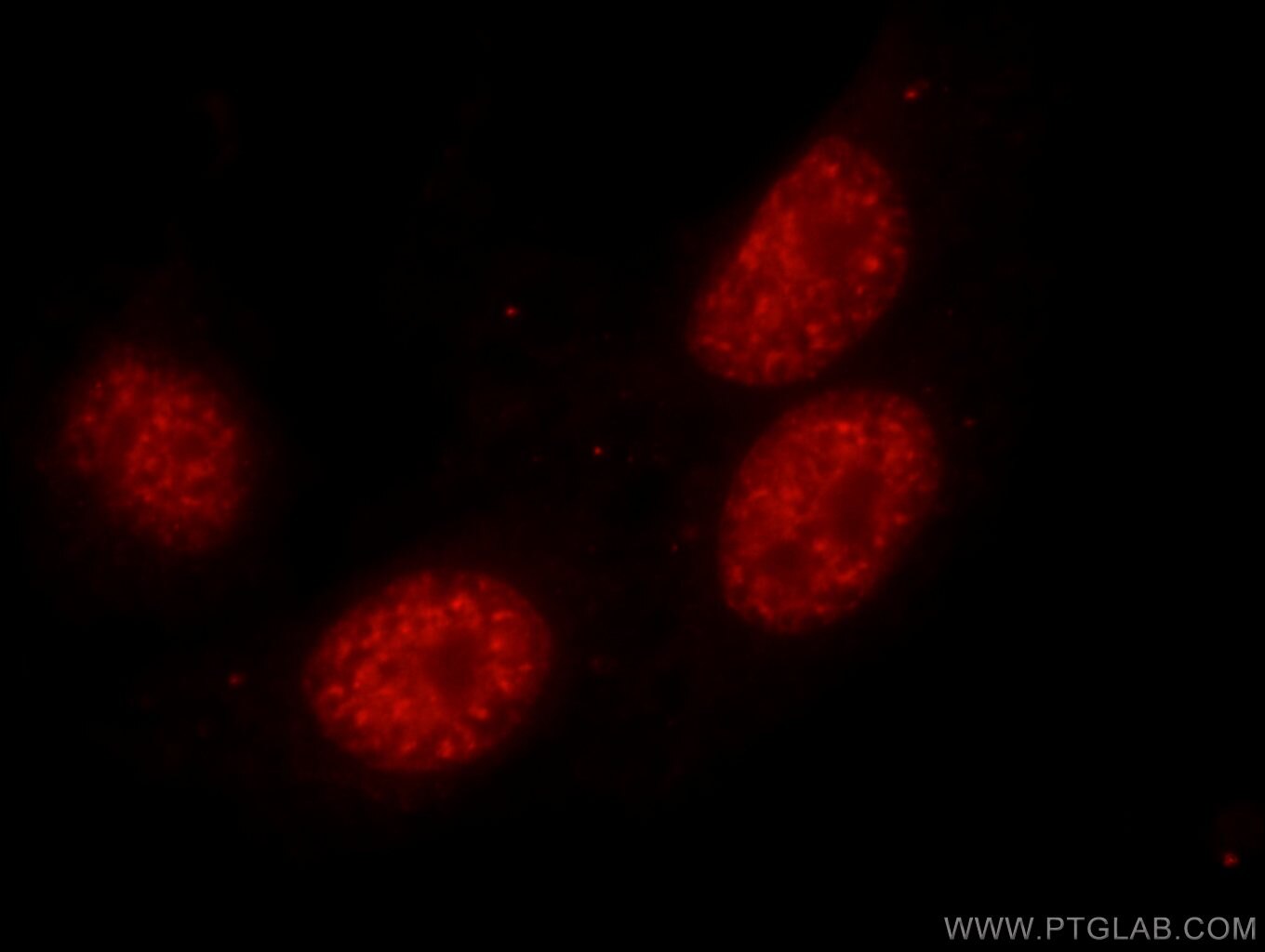
| Positive IF/ICC detected in | HepG2 cells |
Recommended dilution
| Application | Dilution |
|---|---|
| Western Blot (WB) | WB : 1:500-1:2000 |
| Immunoprecipitation (IP) | IP : 0.5-4.0 ug for 1.0-3.0 mg of total protein lysate |
| Immunohistochemistry (IHC) | IHC : 1:20-1:200 |
| Immunofluorescence (IF)/ICC | IF/ICC : 1:10-1:100 |
| It is recommended that this reagent should be titrated in each testing system to obtain optimal results. | |
| Sample-dependent, Check data in validation data gallery. | |
Product Information
19744-1-AP targets THRAP3 in WB, IHC, IF/ICC, IP, CoIP, ELISA applications and shows reactivity with human samples.
| Tested Reactivity | human |
| Cited Reactivity | human, pig |
| Host / Isotype | Rabbit / IgG |
| Class | Polyclonal |
| Type | Antibody |
| Immunogen |
Peptide Predict reactive species |
| Full Name | thyroid hormone receptor associated protein 3 |
| Calculated Molecular Weight | 109 kDa |
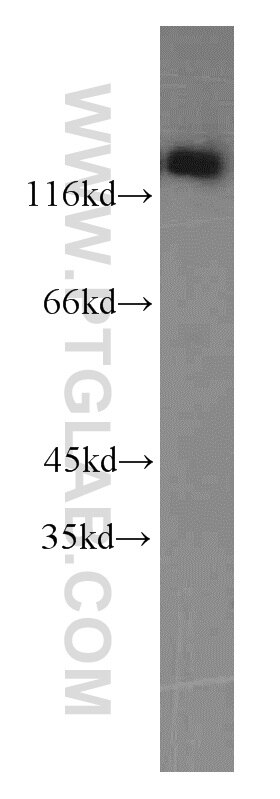
| Observed Molecular Weight | 109-130 kDa |
| GenBank Accession Number | NM_005119 |
| Gene Symbol | THRAP3 |
| Gene ID (NCBI) | 9967 |
| RRID | AB_11232035 |
| Conjugate | Unconjugated |
| Form | Liquid |
| Purification Method | Antigen affinity purification |
| UNIPROT ID | Q9Y2W1 |
| Storage Buffer | PBS with 0.02% sodium azide and 50% glycerol, pH 7.3. |
| Storage Conditions | Store at -20°C. Stable for one year after shipment. Aliquoting is unnecessary for -20oC storage. 20ul sizes contain 0.1% BSA. |
Background Information
THRAP3, also named as TRAP150, plays a role in transcriptional coactivation. The antibody recognizes the C-term of THRAP3.
Protocols
| Product Specific Protocols | |
|---|---|
| IF protocol for THRAP3 antibody 19744-1-AP | Download protocol |
| IHC protocol for THRAP3 antibody 19744-1-AP | Download protocol |
| IP protocol for THRAP3 antibody 19744-1-AP | Download protocol |
| WB protocol for THRAP3 antibody 19744-1-AP | Download protocol |
| Standard Protocols | |
|---|---|
| Click here to view our Standard Protocols |
Publications
What published studies show
The THRAP3 Polyclonal antibody (Cat# 19744-1-AP) has 6 citations published in Cancer Research, Nucleic Acids Research, PLoS Biology, Molecular & Cellular Proteomics, Communications Biology, and Journal of Cell Science. Research fields span bladder and colon cancer, RNA modification, intestinal immune response, autophagy regulation, early embryogenesis, and viral infection–induced stress granules. Applications include WB, CoIP, and IF in human, pig, and unspecified species.
| Species | Application | Title |
|---|---|---|
Cancer Res NAT10 drives cisplatin chemoresistance by enhancing ac4C-associated DNA repair in bladder cancer | ||
Nucleic Acids Res The N6-methyladenosine RNA-binding protein YTHDF1 modulates the translation of TRAF6 to mediate the intestinal immune response. | ||
PLoS Biol CUL5 E3 ubiquitin ligase regulates the evasion of bladder cancer cells to CD8+ T cell-mediated killing by inhibiting autophagy. | ||
Mol Cell Proteomics Deciphering the clinical significance and kinase functions of GSK3α in colon cancer by proteomics and phosphoproteomics | ||
Commun Biol NLRP7 maintains the genomic stability during early human embryogenesis via mediating alternative splicing | ||
J Cell Sci Novel stress granules-like structures are induced via a paracrine mechanism during viral infection. |

