


Tested Applications
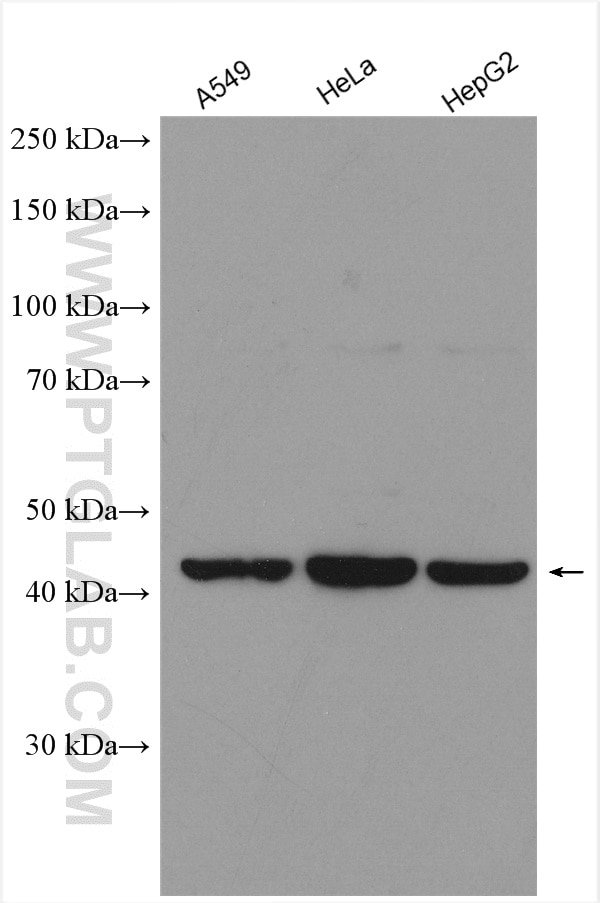
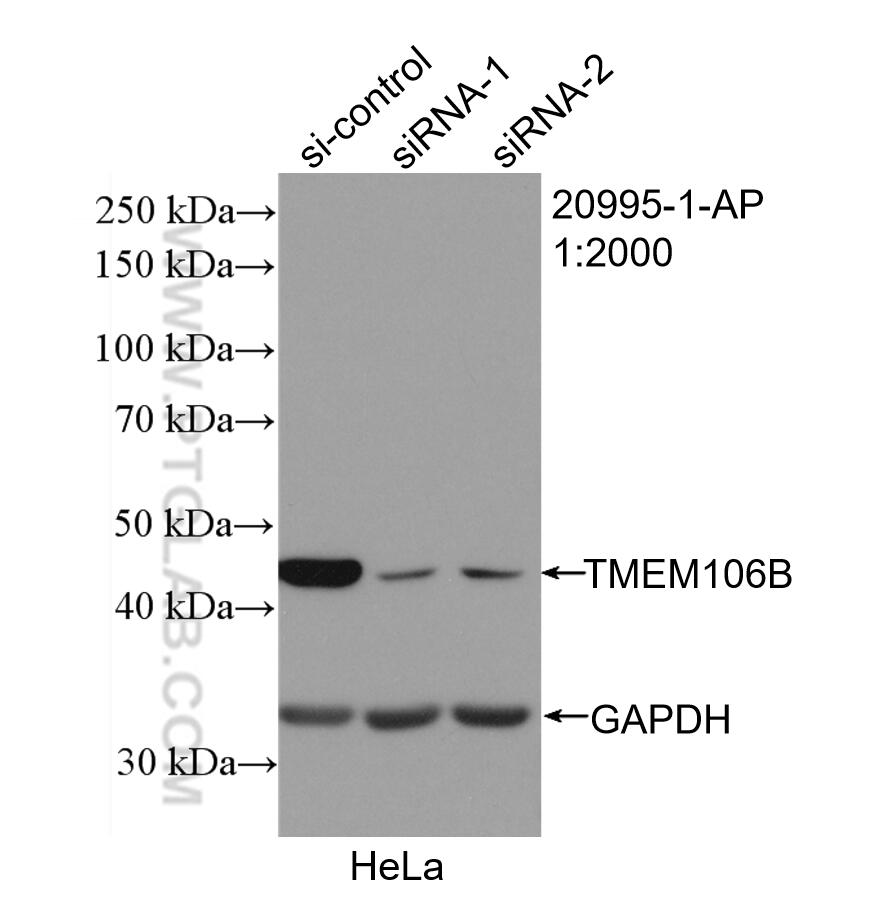
| Positive WB detected in | A549 cells, HeLa cells, HepG2 cells |
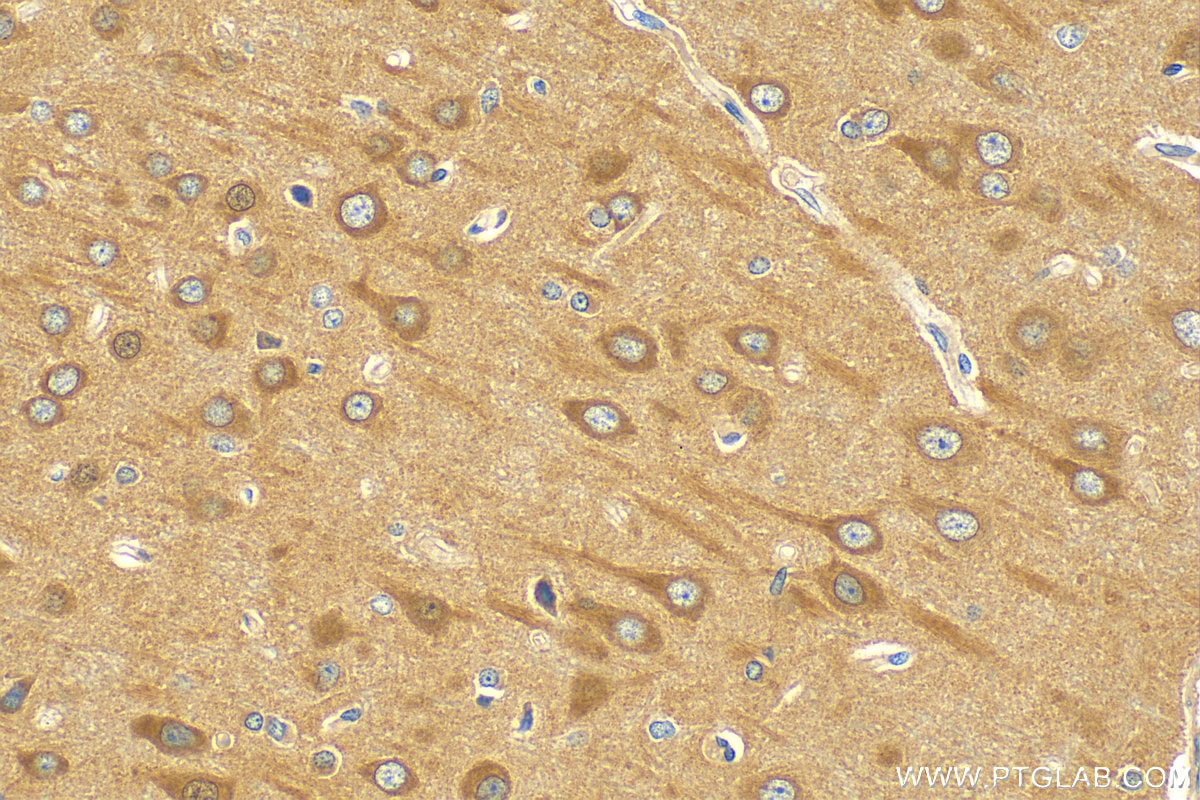
| Positive IHC detected in | rat brain tissue Note: suggested antigen retrieval with TE buffer pH 9.0; (*) Alternatively, antigen retrieval may be performed with citrate buffer pH 6.0 |
Recommended dilution
| Application | Dilution |
|---|---|
| Western Blot (WB) | WB : 1:500-1:2000 |
| Immunohistochemistry (IHC) | IHC : 1:50-1:500 |
| It is recommended that this reagent should be titrated in each testing system to obtain optimal results. | |
| Sample-dependent, Check data in validation data gallery. | |
Product Information
20995-1-AP targets TMEM106B (150-274aa) in WB, IHC, IF, ELISA applications and shows reactivity with human, mouse samples.
| Tested Reactivity | human, mouse |
| Cited Reactivity | human, mouse |
| Host / Isotype | Rabbit / IgG |
| Class | Polyclonal |
| Type | Antibody |
| Immunogen |
CatNo: Ag14264 Product name: Recombinant human TMEM106B protein Source: e coli.-derived, PGEX-4T Tag: GST Domain: 150-274 aa of BC033901 Sequence: LNITNNNYYSVEVENITAQVQFSKTVIGKARLNNITIIGPLDMKQIDYTVPTVIAEEMSYMYDFCTLISIKVHNIVLMMQVTVTTTYFGHSEQISQERYQYVDCGRNTTYQLGQSEYLNVLQPQQ Predict reactive species |
| Full Name | transmembrane protein 106B |
| Calculated Molecular Weight | 31 kDa |
| Observed Molecular Weight | 31-35 kDa, 40-55 kDa |
| GenBank Accession Number | BC033901 |
| Gene Symbol | TMEM106B |
| Gene ID (NCBI) | 54664 |
| RRID | AB_10694293 |
| Conjugate | Unconjugated |
| Form | Liquid |
| Purification Method | Antigen affinity purification |
| UNIPROT ID | Q9NUM4 |
| Storage Buffer | PBS with 0.02% sodium azide and 50% glycerol, pH 7.3. |
| Storage Conditions | Store at -20°C. Stable for one year after shipment. Aliquoting is unnecessary for -20oC storage. 20ul sizes contain 0.1% BSA. |
Background Information
TMEM106B is a genetic risk factor for frontotemporal lobar degeneration with TDP-43 inclusions (FTLD-TDP). Amyotrophic lateral sclerosis (ALS), like FTLD-TDP, is characterized by pathological TDP-43 inclusions. TMEM106B expression in the brain may be linked to mechanisms of disease in FTLD-TDP and risk alleles confer genetic susceptibility by increasing gene expression. TMEM106B can be showed as 31-55 kDa and 70-90 kDa (Glycosylated or Dimer) form in western blot test. (PMID: 27543298, 22895706, PMID: 23136129).
Protocols
| Product Specific Protocols | |
|---|---|
| IHC protocol for TMEM106B (150-274aa) antibody 20995-1-AP | Download protocol |
| WB protocol for TMEM106B (150-274aa) antibody 20995-1-AP | Download protocol |
| Standard Protocols | |
|---|---|
| Click here to view our Standard Protocols |
Publications
What published studies show
Able is busy answering your previous question. Please try again later.
| Species | Application | Title |
|---|---|---|
J Neuroinflammation Progranulin haploinsufficiency mediates cytoplasmic TDP-43 aggregation with lysosomal abnormalities in human microglia | ||
Sci China Life Sci Superresolution live-cell imaging reveals that the localization of TMEM106B to filopodia in oligodendrocytes is compromised by the hypomyelination-related D252N mutation | ||
Life Med Tracing TMEM106B fibril deposition in aging and Parkinson's disease with dementia brains | ||
Cell Mol Life Sci Proteostasis network response to environmental chronic stress: linking survival to protein aggregation in a human neuroblastoma cellular model. |
Reviews
What customers say
Both reviewers rated the product 4 out of 5 stars for Western Blot at a 1:1000 dilution. One user noted that the antibody performs better with human samples than with mouse samples when tested on brain lysates. The other user reported good signal with low background using human brain tissue extract. Overall, the reviews suggest reliable performance in WB, particularly for human samples, with a slight limitation in cross-reactivity with mouse tissue.
The reviews below have been submitted by verified Proteintech customers who received an incentive for providing their feedback.
Q (Verified Customer) (05-08-2025) | It seems in WB, it works better with human sample than with mouse sample.
|
Carolyn (Verified Customer) (02-18-2022) | good signal, low background
|


