

Tested Applications
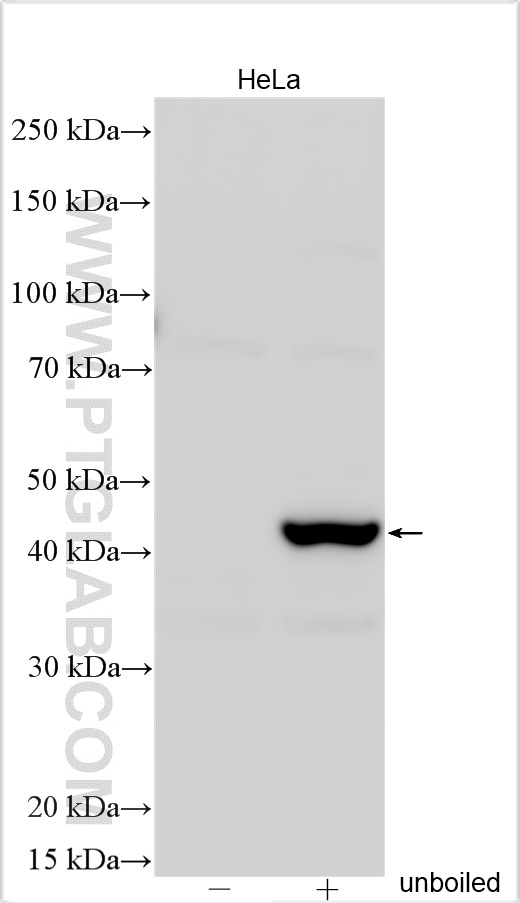
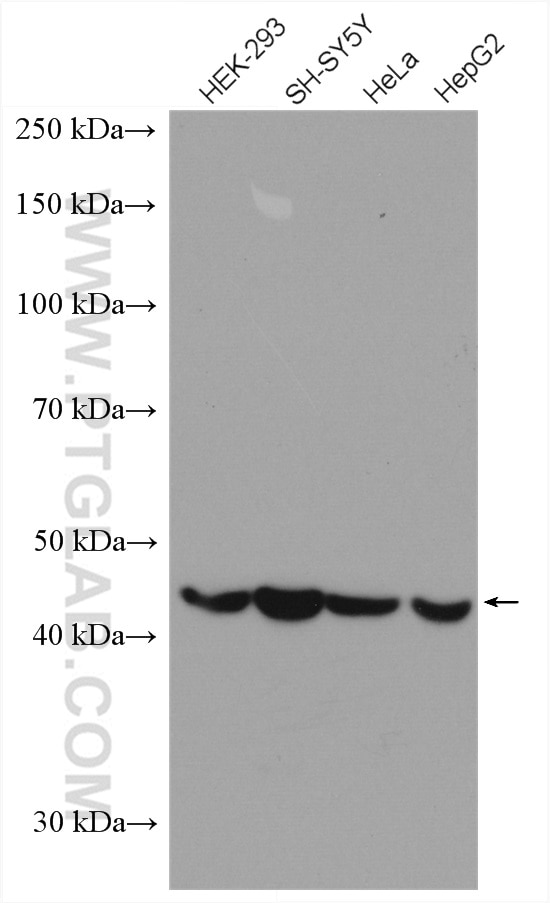
| Positive WB detected in | HeLa cells, HEK-293 cells, SH-SY5Y cells, HepG2 cells |
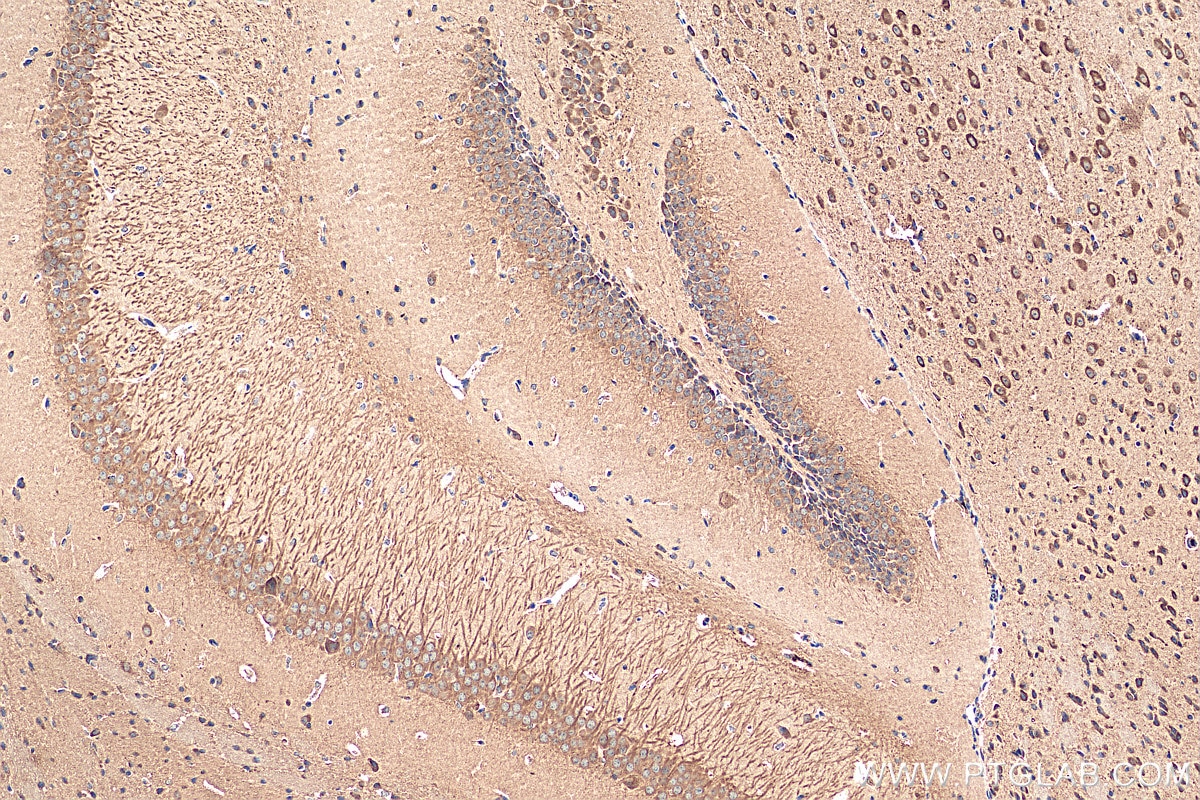
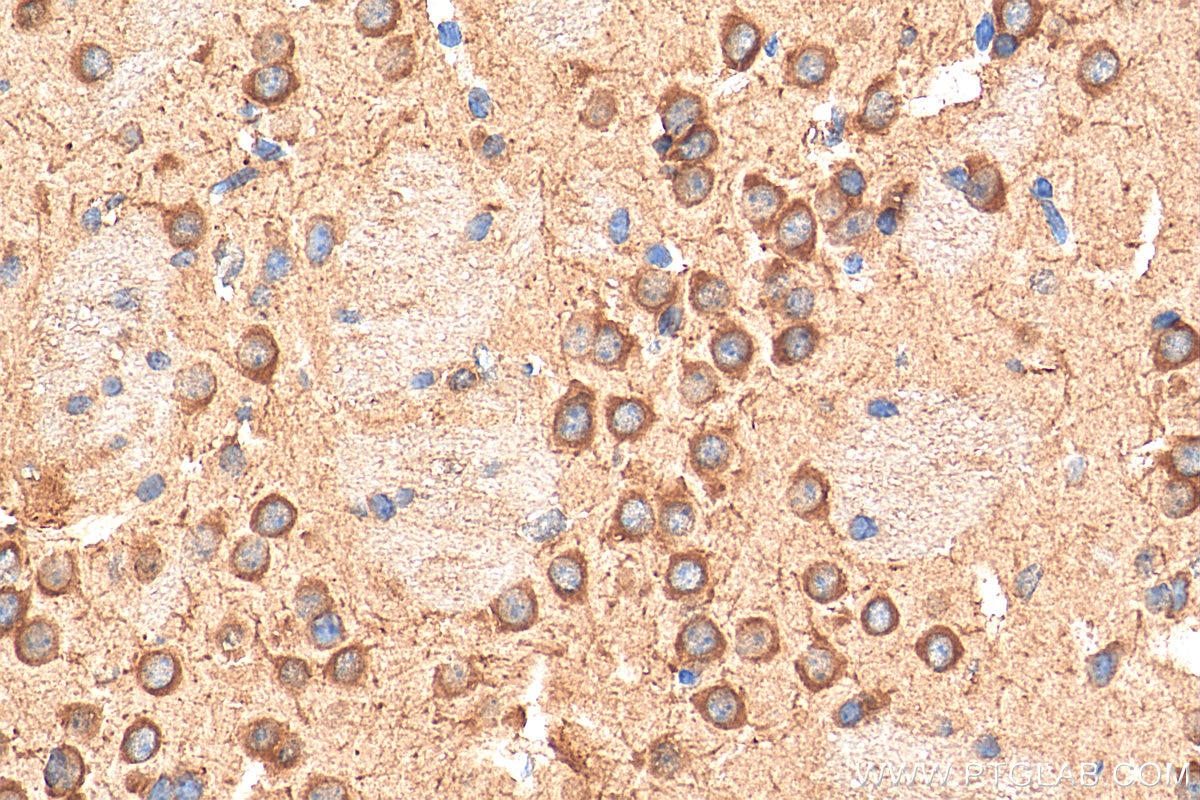
| Positive IHC detected in | mouse brain tissue Note: suggested antigen retrieval with TE buffer pH 9.0; (*) Alternatively, antigen retrieval may be performed with citrate buffer pH 6.0 |
Recommended dilution
| Application | Dilution |
|---|---|
| Western Blot (WB) | WB : 1:500-1:3000 |
| Immunohistochemistry (IHC) | IHC : 1:50-1:500 |
| It is recommended that this reagent should be titrated in each testing system to obtain optimal results. | |
| Sample-dependent, Check data in validation data gallery. | |
Product Information
19925-1-AP targets TMEM175 in WB, IHC, IF, IP, CoIP, ELISA applications and shows reactivity with human, mouse, rat samples.
| Tested Reactivity | human, mouse, rat |
| Cited Reactivity | human, mouse, rat, monkey |
| Host / Isotype | Rabbit / IgG |
| Class | Polyclonal |
| Type | Antibody |
| Immunogen |
CatNo: Ag13890 Product name: Recombinant human TMEM175 protein Source: e coli.-derived, PGEX-4T Tag: GST Domain: 222-313 aa of BC005158 Sequence: YVSKVTGWCRDRLLGHREPSAHPVEVFSFDLHEPLSKERVEAFSDGVYAIVATLLILDICEDNVPDPKDVKERFSGSLVAALSATGPRFLAY Predict reactive species |
| Full Name | transmembrane protein 175 |
| Calculated Molecular Weight | 504 aa, 56 kDa |
| Observed Molecular Weight | 41-45 kDa, 54-60 kDa |
| GenBank Accession Number | BC005158 |
| Gene Symbol | TMEM175 |
| Gene ID (NCBI) | 84286 |
| RRID | AB_10666166 |
| Conjugate | Unconjugated |
| Form | Liquid |
| Purification Method | Antigen affinity purification |
| UNIPROT ID | Q9BSA9 |
| Storage Buffer | PBS with 0.02% sodium azide and 50% glycerol, pH 7.3. |
| Storage Conditions | Store at -20°C. Stable for one year after shipment. Aliquoting is unnecessary for -20oC storage. 20ul sizes contain 0.1% BSA. |
Background Information
TMEM175 has two repeats of 6-transmembrane-spanning segments and has no GYG K+ channel sequence signature-containing, pore-forming P loop. Lysosomes lacking TMEM175 exhibit no K+conductance, have a markedly depolarized ΔΨ and little sensitivity to changes in [K+], and have compromised luminal pH stability and abnormal fusion with autophagosomes during autophagy. TMEM175 comprises a K+ channel that underlies the molecular mechanism of lysosomal K+ permeability. It has two isoforms with MW 41-45 kDa and 54-60 kDa. For optimal WB detection with this antibody, we recommend avoiding boiling the sample after lysis.
Protocols
| Product Specific Protocols | |
|---|---|
| IHC protocol for TMEM175 antibody 19925-1-AP | Download protocol |
| WB protocol for TMEM175 antibody 19925-1-AP | Download protocol |
| Standard Protocols | |
|---|---|
| Click here to view our Standard Protocols |
Publications
What published studies show
The TMEM175 Polyclonal antibody (Cat# 19925-1-AP) has 27 citations. These appear in high-impact journals including Nature, Cell, Nature Communications, Neuron, Molecular Cell, PNAS, EMBO Reports, Annals of Neurology, Human Molecular Genetics, Molecular Brain, Molecular Biology of the Cell, and Advanced Science. Research fields span Parkinson's disease and neurodegeneration, lysosomal function, autophagy, mitochondrial dynamics, cardiac dysfunction, and immune regulation, with applications mainly in Western blot, immunofluorescence, and immunoprecipitation.
| Species | Application | Title |
|---|---|---|
Nature A growth-factor-activated lysosomal K+ channel regulates Parkinson's pathology.
| ||
Nat Commun Deficiency of lysosomal TMEM175 in myeloid macrophages exerts anti-tumor immunity via inflammasome and cross-presentation pathway.
| ||
Mol Cell Lysosomal LAMP proteins regulate lysosomal pH by direct inhibition of the TMEM175 channel | ||
Adv Sci (Weinh) Trafficking Deficiency of TMEM175 Variants in Parkinson's Disease Pathogenesis and the Prospects of Precision Medicine. |

