

Tested Applications
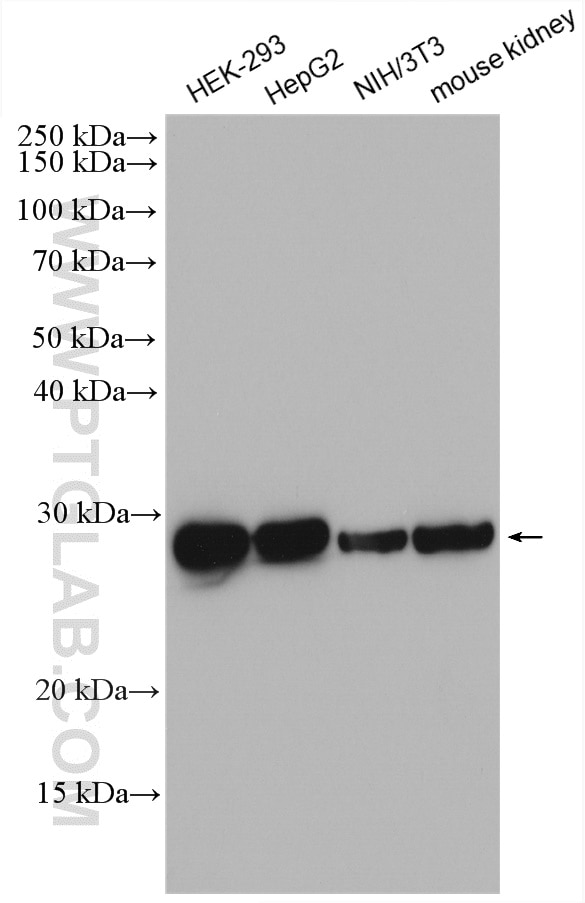
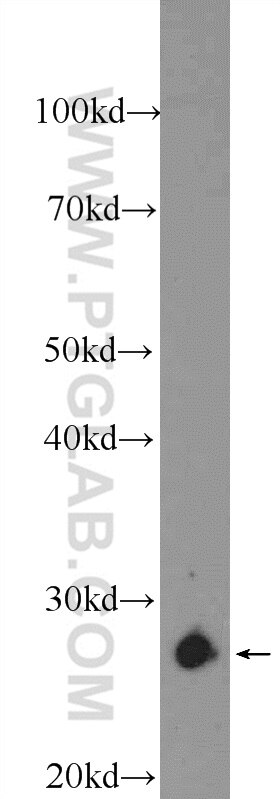
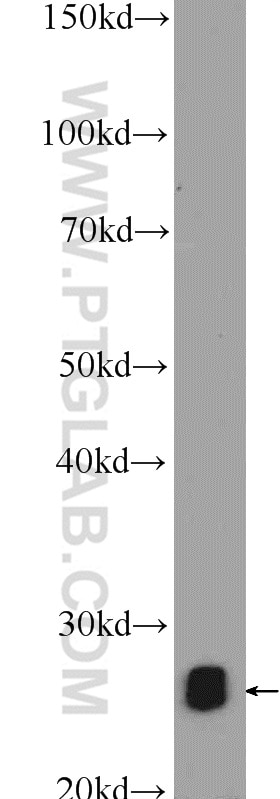
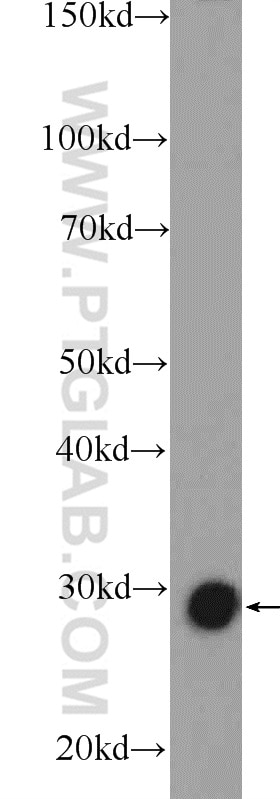
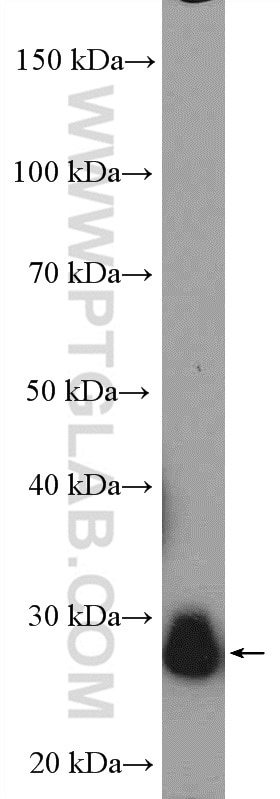
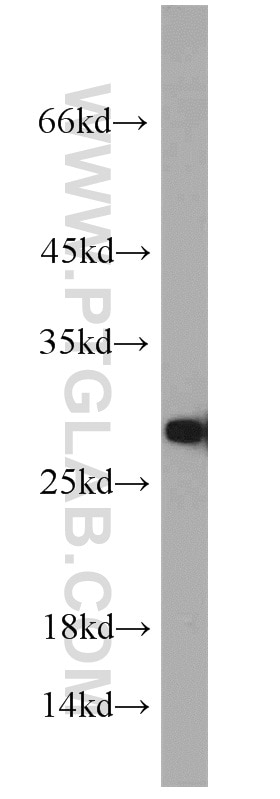
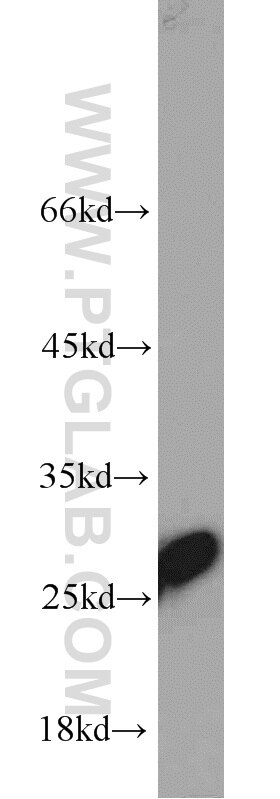
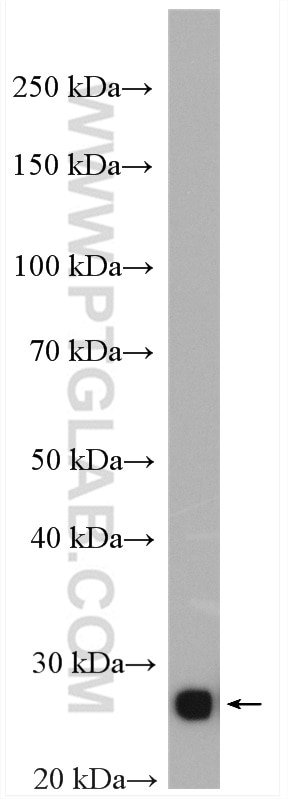
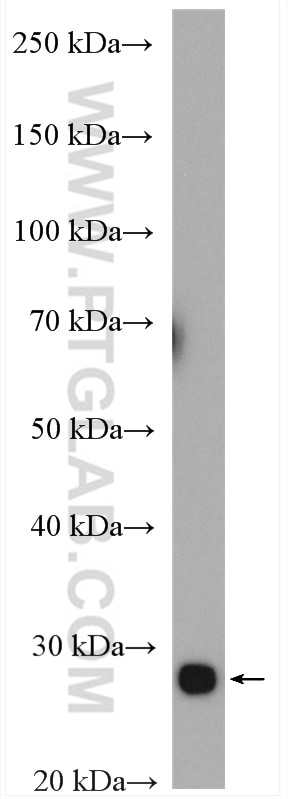
| Positive WB detected in | HEK-293 cells, A431 cells, HepG2 cells, rat liver tissue, rat kidney tissue, RAW 264.7 cells, mouse liver tissue, mouse kidney tissue, NIH/3T3 cells |
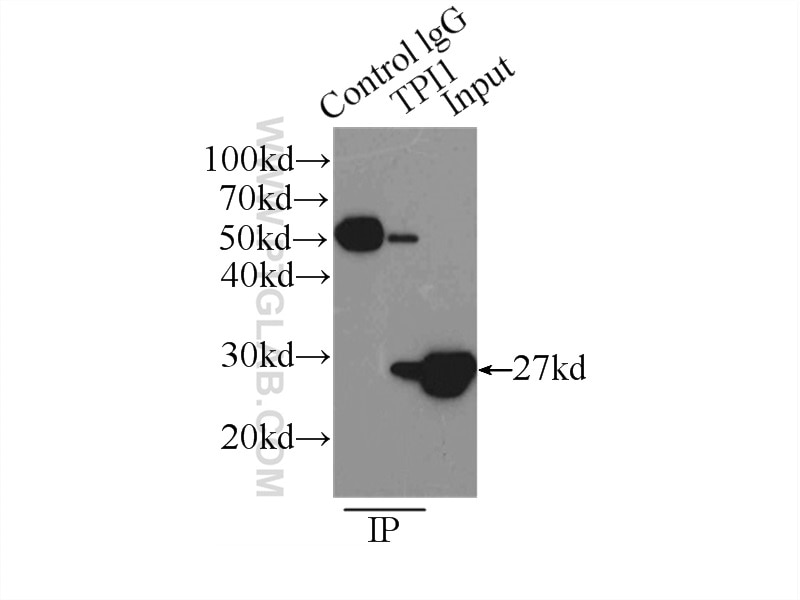
| Positive IP detected in | HEK-293 cells |
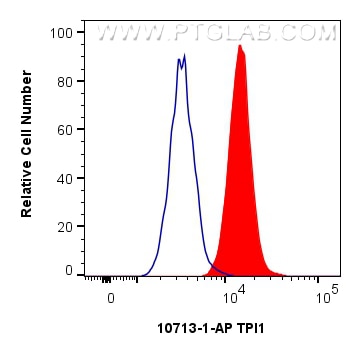
| Positive FC (Intra) detected in | HeLa cells |
Recommended dilution
| Application | Dilution |
|---|---|
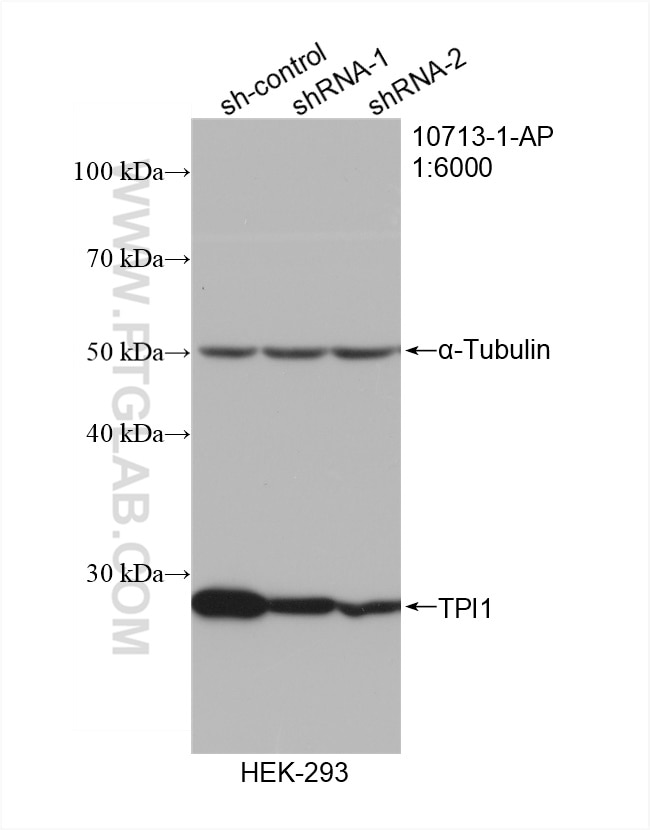
| Western Blot (WB) | WB : 1:2000-1:12000 |
| Immunoprecipitation (IP) | IP : 0.5-4.0 ug for 1.0-3.0 mg of total protein lysate |
| Flow Cytometry (FC) (INTRA) | FC (INTRA) : 0.25 ug per 10^6 cells in a 100 ul suspension |
| It is recommended that this reagent should be titrated in each testing system to obtain optimal results. | |
| Sample-dependent, Check data in validation data gallery. | |
Product Information
10713-1-AP targets TPI1 in WB, IHC, IF, FC (Intra), IP, CoIP, ELISA applications and shows reactivity with human, mouse, rat samples.
| Tested Reactivity | human, mouse, rat |
| Cited Reactivity | human, mouse, rat, pig, chicken, yeast, drosophila |
| Host / Isotype | Rabbit / IgG |
| Class | Polyclonal |
| Type | Antibody |
| Immunogen |
CatNo: Ag1175 Product name: Recombinant human TPI1 protein Source: e coli.-derived, PGEX-4T Tag: GST Domain: 1-249 aa of BC007086 Sequence: MAPSRKFFVGGNWKMNGRKQSLGELIGTLNAAKVPADTEVVCAPPTAYIDFARQKLDPKIAVAAQNCYKVTNGAFTGEISPGMIKDCGATWVVLGHSERRHVFGESDELIGQKVAHALAEGLGVIACIGEKLDEREAGITEKVVFEQTKVIADNVKDWSKVVLAYEPVWAIGTGKTATPQQAQEVHEKLRGWLKSNVSDAVAQSTRIIYGGSVTGATCKELASQPDVDGFLVGGASLKPEFVDIINAKQ Predict reactive species |
| Full Name | triosephosphate isomerase 1 |
| Calculated Molecular Weight | 27 kDa |
| Observed Molecular Weight | 27 kDa |
| GenBank Accession Number | BC007086 |
| Gene Symbol | TPI1 |
| Gene ID (NCBI) | 7167 |
| RRID | AB_2207716 |
| Conjugate | Unconjugated |
| Form | Liquid |
| Purification Method | Antigen affinity purification |
| UNIPROT ID | P60174 |
| Storage Buffer | PBS with 0.02% sodium azide and 50% glycerol, pH 7.3. |
| Storage Conditions | Store at -20°C. Stable for one year after shipment. Aliquoting is unnecessary for -20oC storage. 20ul sizes contain 0.1% BSA. |
Background Information
TPI1(Triosephosphate isomerase) is also named as TIM, TPI and belongs to the triosephosphate isomerase family. It is a key enzyme in cell metabolism that controls the glycolytic flow and energy production through the interconversion of dihydroxyacetone phosphate (DHAP) and D-glyceraldehyde 3-phosphate (G3P)(PMID:19251756). Defects in TPI1 are the cause of triosephosphate isomerase deficiency (TPI deficiency). It can exsit as a homodimer(PMID:18562316).
Protocols
| Product Specific Protocols | |
|---|---|
| FC protocol for TPI1 antibody 10713-1-AP | Download protocol |
| IP protocol for TPI1 antibody 10713-1-AP | Download protocol |
| WB protocol for TPI1 antibody 10713-1-AP | Download protocol |
| Standard Protocols | |
|---|---|
| Click here to view our Standard Protocols |
Publications
What published studies show
The TPI1 Polyclonal antibody (10713-1-AP) has 63 total citations. It appears in prominent journals including Cell, Cell Research, Cancer Discovery, Nature Metabolism, Nature Cell Biology, Nature Communications, Cancer Research, Science Immunology, Brain, EMBO Journal, EMBO Reports, Journal of Translational Medicine, and many others. The citations span research fields of tumor metabolism and glycolysis (cancer progression in colorectal, breast, lung, ovarian, hepatocellular, pancreatic, gastric cancers), metabolic rewiring, ferroptosis, pulmonary fibrosis, mitochondrial redox biology, and glycolytic enzyme regulation across species including human, mouse, rat, pig, chicken, Drosophila, yeast, and fish. This antibody is widely used in cancer metabolism and metabolic disease research.
| Species | Application | Title |
|---|---|---|
Cell Res cMyc-mediated activation of serine biosynthesis pathway is critical for cancer progression under nutrient deprivation conditions. | ||
Cancer Discov LKB1-Dependent Regulation of TPI1 Creates a Divergent Metabolic Liability between Human and Mouse Lung Adenocarcinoma | ||
Nat Cell Biol AMPK-regulated glycerol excretion maintains metabolic crosstalk between reductive and energetic stress | ||
Cancer Res Exon Skipping of Ste20-Like Kinase Enhances Glycolysis and Tumor Progression by Activating Enolase 1-Mediated Phosphoenolpyruvate Production |

