

Tested Applications
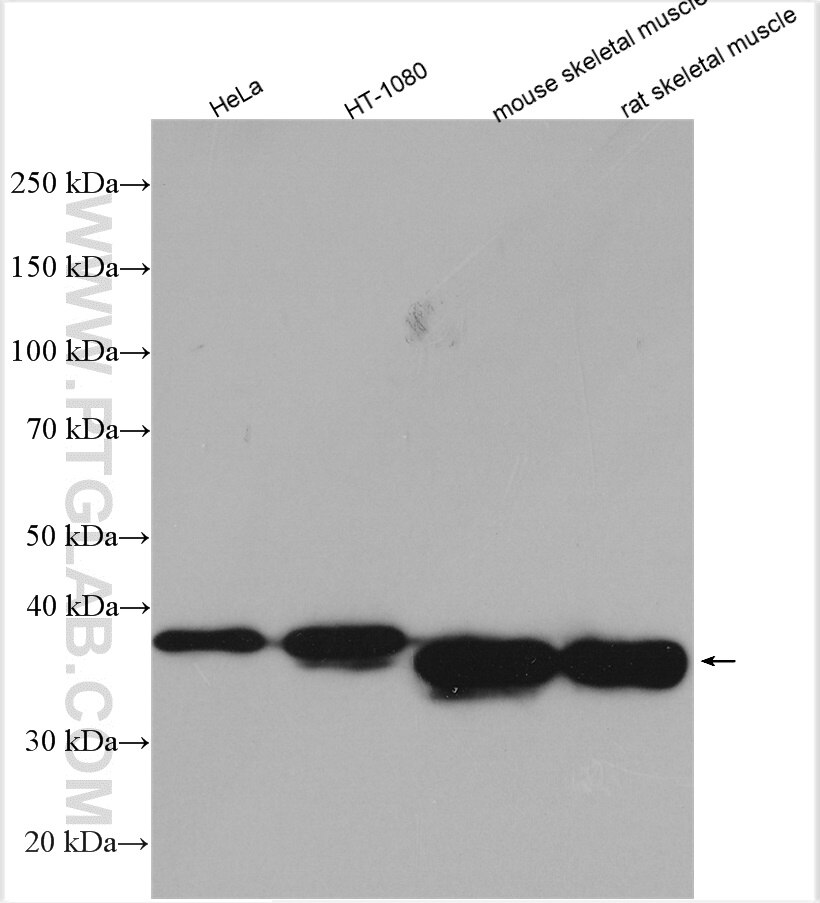
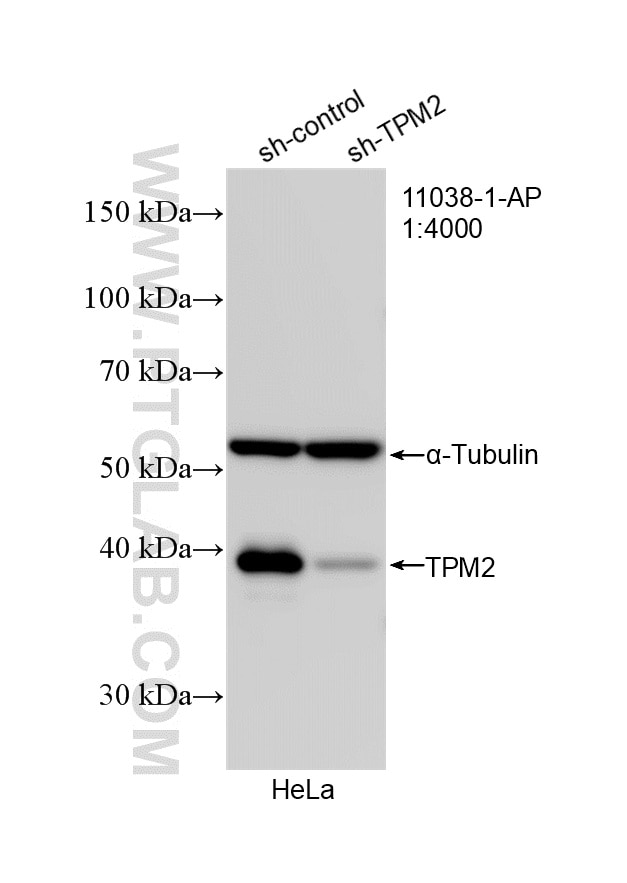
| Positive WB detected in | HT-1080 cells, HeLa cells, mouse skeletal muscle, rat skeletal muscle |
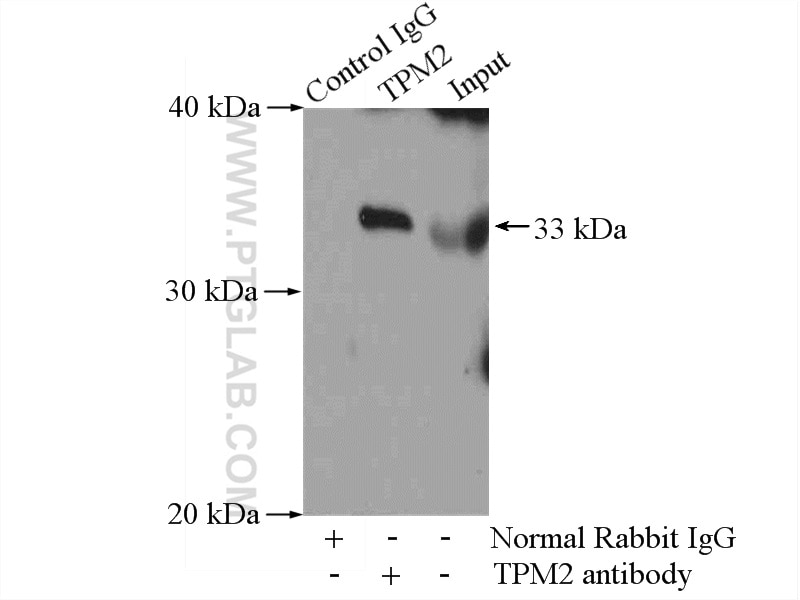
| Positive IP detected in | mouse skeletal muscle tissue |
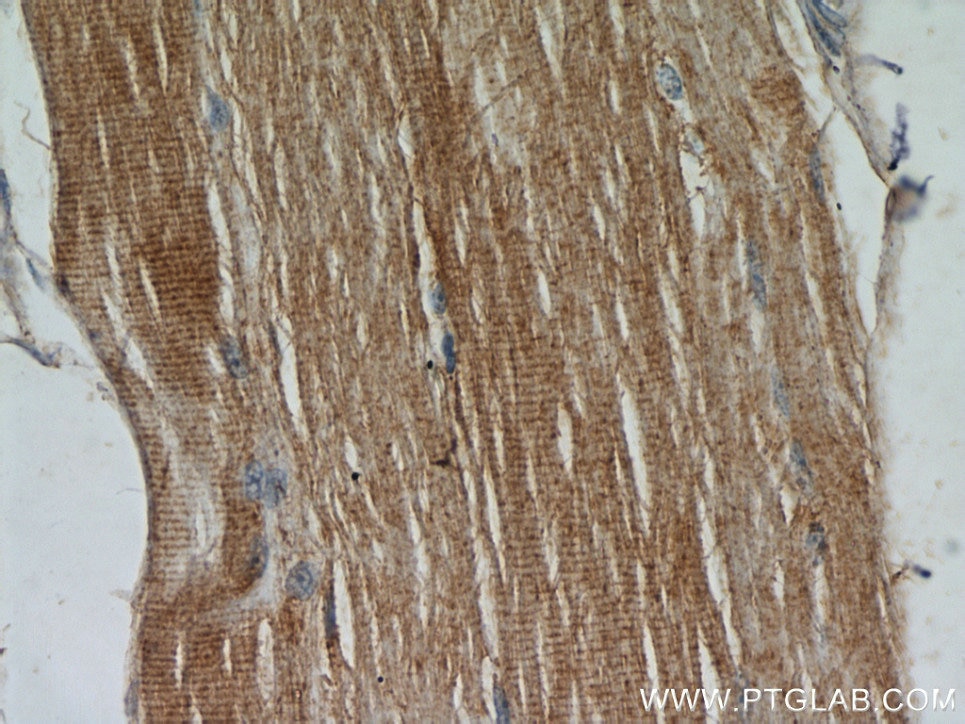
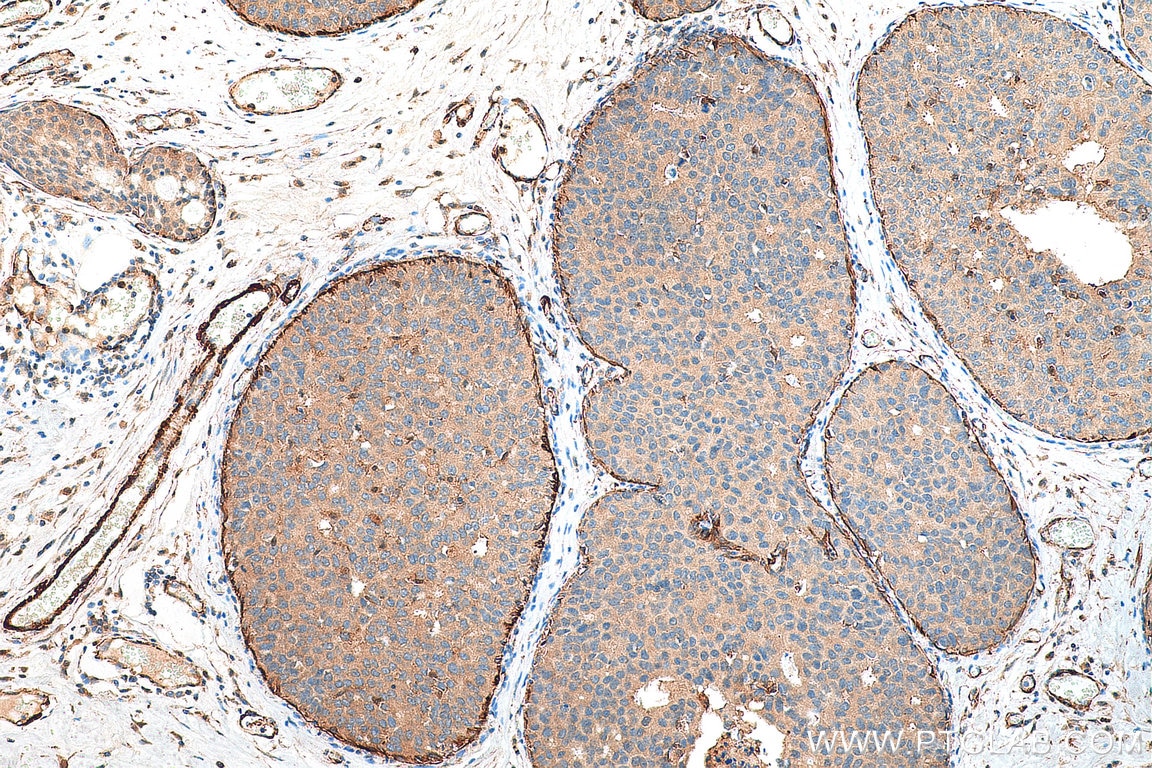
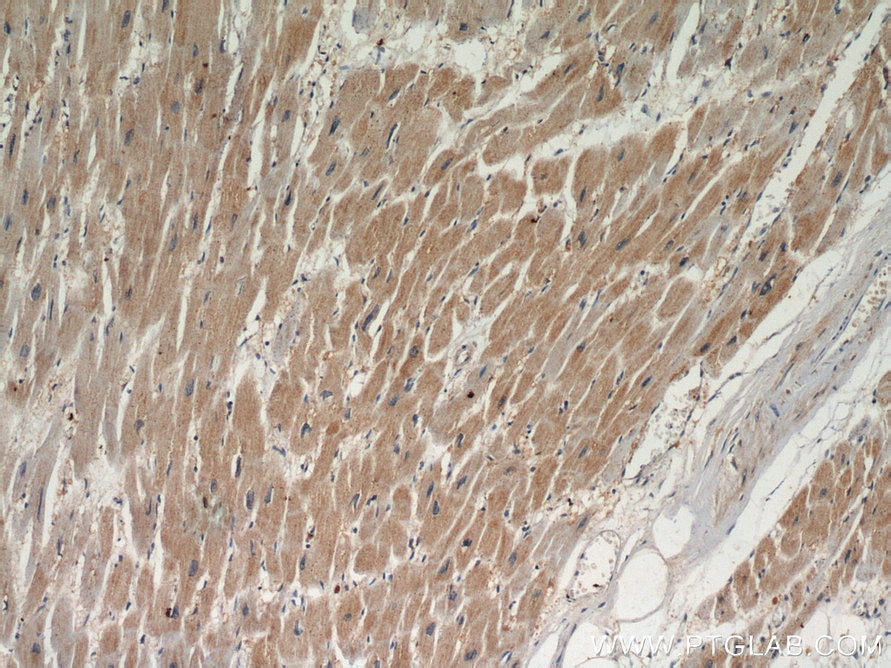
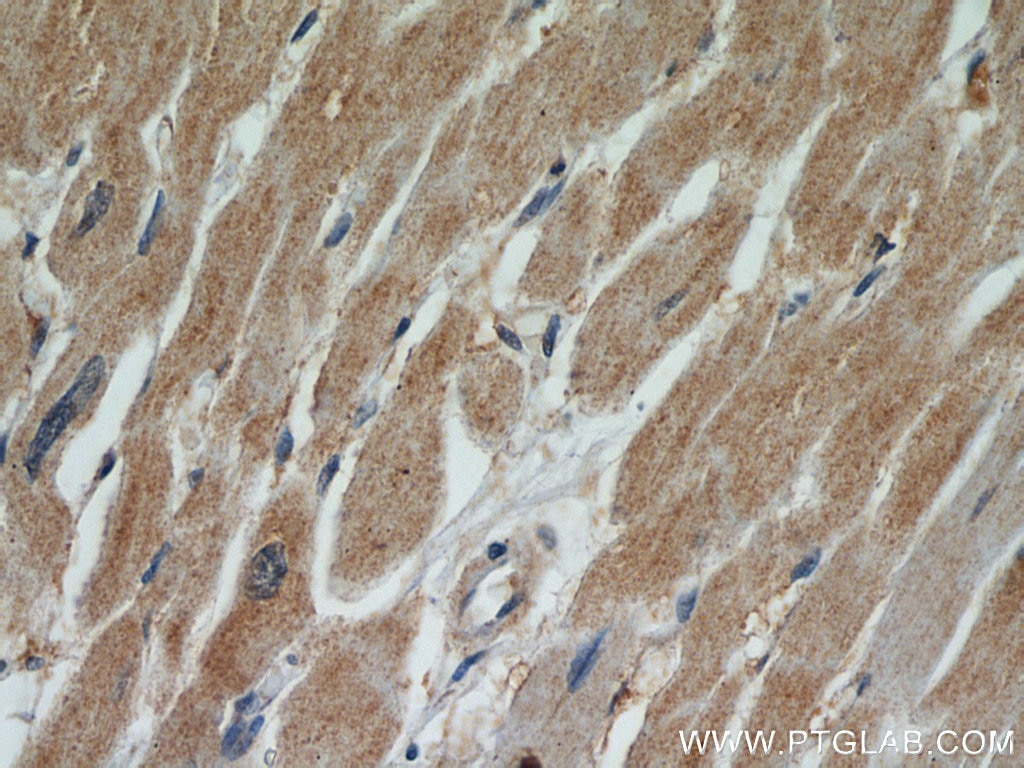
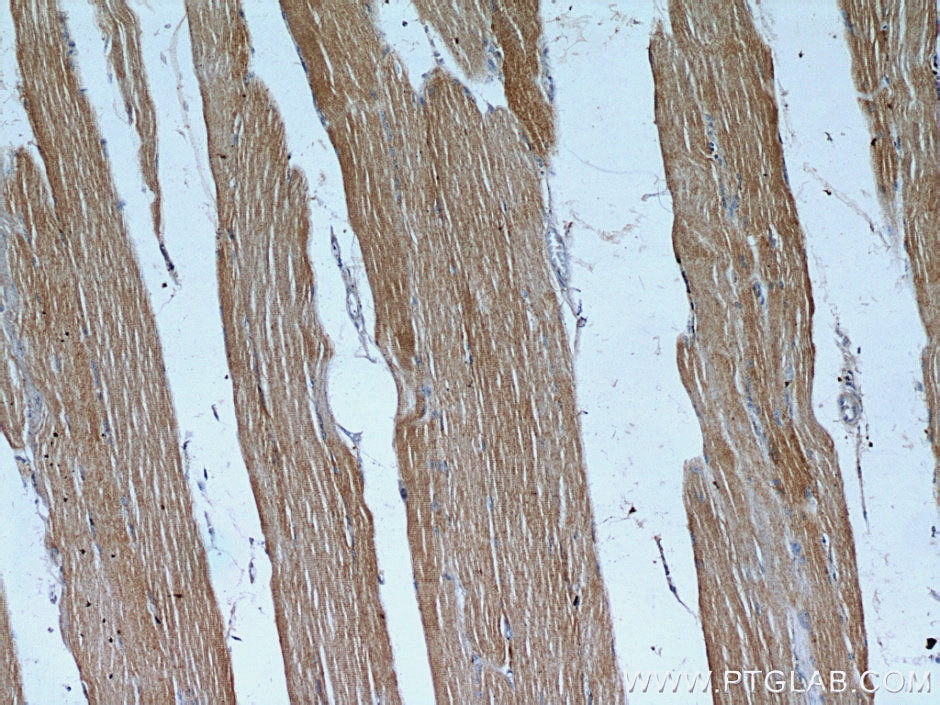
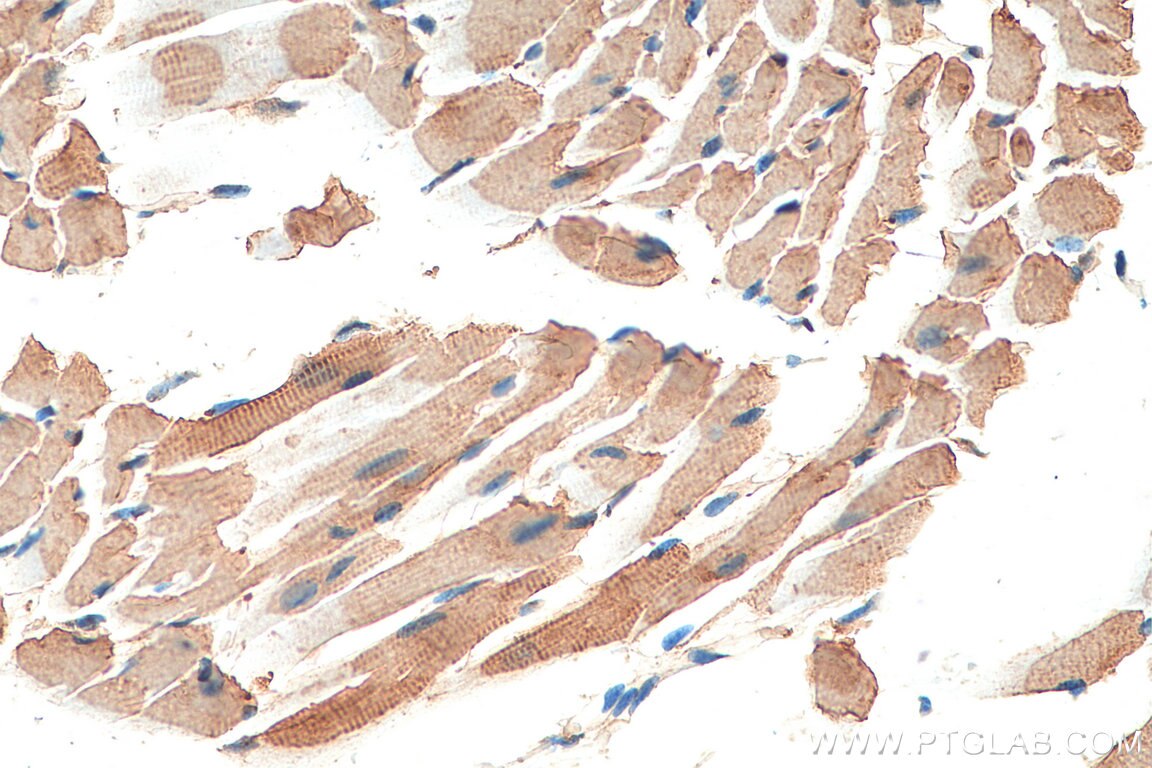
| Positive IHC detected in | human breast cancer tissue, human heart tissue, human skeletal muscle tissue, mouse heart tissue Note: suggested antigen retrieval with TE buffer pH 9.0; (*) Alternatively, antigen retrieval may be performed with citrate buffer pH 6.0 |
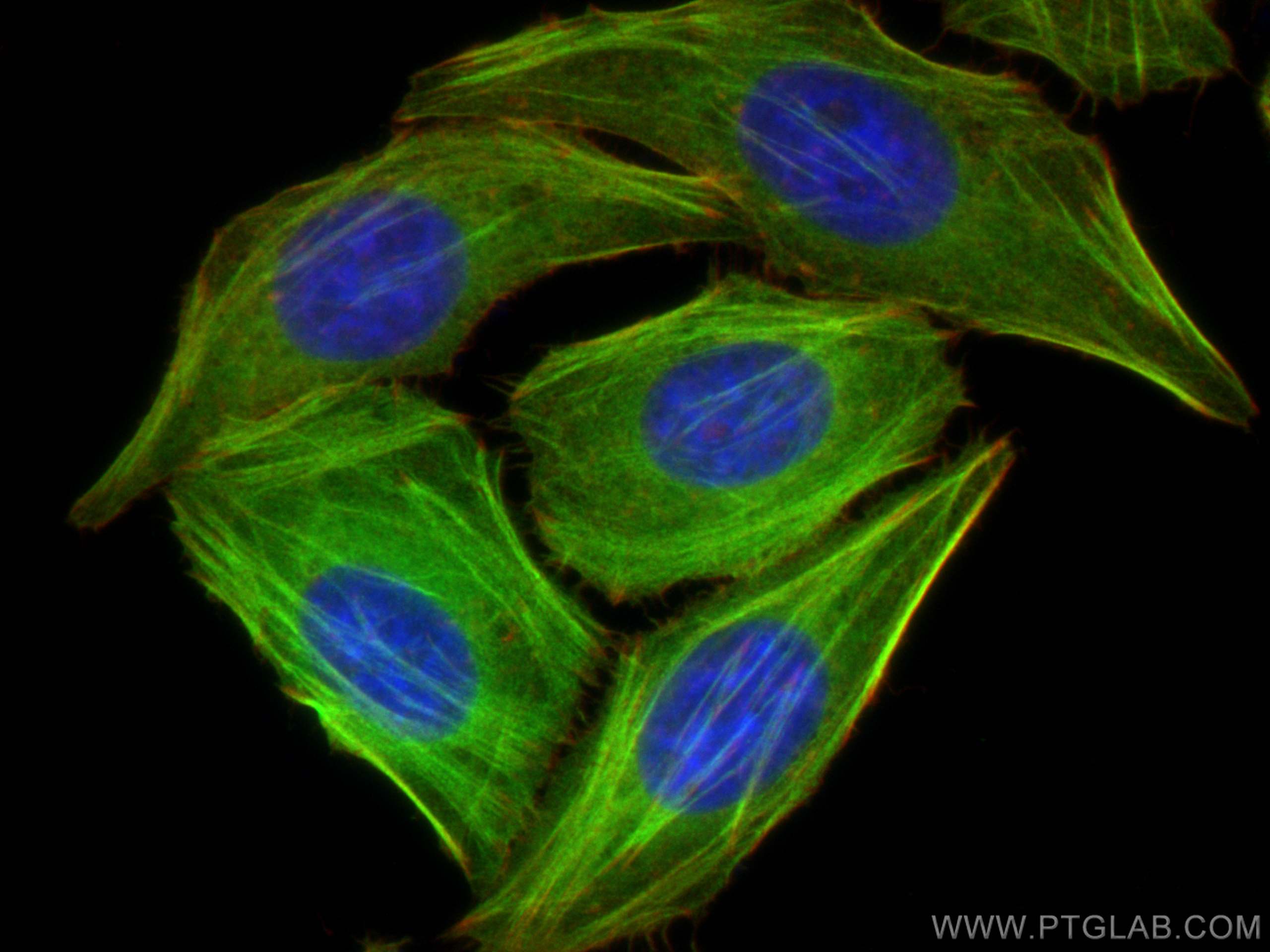
| Positive IF/ICC detected in | HepG2 cells |
Recommended dilution
| Application | Dilution |
|---|---|
| Western Blot (WB) | WB : 1:1000-1:4000 |
| Immunoprecipitation (IP) | IP : 0.5-4.0 ug for 1.0-3.0 mg of total protein lysate |
| Immunohistochemistry (IHC) | IHC : 1:50-1:500 |
| Immunofluorescence (IF)/ICC | IF/ICC : 1:50-1:500 |
| It is recommended that this reagent should be titrated in each testing system to obtain optimal results. | |
| Sample-dependent, Check data in validation data gallery. | |
Product Information
11038-1-AP targets TPM2 in WB, IHC, IF/ICC, IP, CoIP, ELISA applications and shows reactivity with human, mouse, rat samples.
| Tested Reactivity | human, mouse, rat |
| Cited Reactivity | human, mouse, rat, rabbit |
| Host / Isotype | Rabbit / IgG |
| Class | Polyclonal |
| Type | Antibody |
| Immunogen |
CatNo: Ag1508 Product name: Recombinant human TPM2 protein Source: e coli.-derived, PGEX-4T Tag: GST Domain: 1-284 aa of BC011776 Sequence: MDAIKKKMQMLKLDKENAIDRAEQAEADKKQAEDRCKQLEEEQQALQKKLKGTEDEVEKYSESVKEAQEKLEQAEKKATDAEADVASLNRRIQLVEEELDRAQERLATALQKLEEAEKAADESERGMKVIENRAMKDEEKMELQEMQLKEAKHIAEDSDRKYEEVARKLVILEGELERSEERAEVAESRARQLEEELRTMDQALKSLMASEEEYSTKEDKYEEEIKLLEEKLKEAETRAEFAERSVAKLEKTIDDLEETLASAKEENVEIHQTLDQTLLELNNL Predict reactive species |
| Full Name | tropomyosin 2 (beta) |
| Calculated Molecular Weight | 33 kDa |
| Observed Molecular Weight | 29-33 kDa |
| GenBank Accession Number | BC011776 |
| Gene Symbol | TPM2 |
| Gene ID (NCBI) | 7169 |
| RRID | AB_2205660 |
| Conjugate | Unconjugated |
| Form | Liquid |
| Purification Method | Antigen affinity purification |
| UNIPROT ID | P07951 |
| Storage Buffer | PBS with 0.02% sodium azide and 50% glycerol, pH 7.3. |
| Storage Conditions | Store at -20°C. Stable for one year after shipment. Aliquoting is unnecessary for -20oC storage. 20ul sizes contain 0.1% BSA. |
Background Information
TPM2, also named as TMSB, belongs to the tropomyosin family. It binds to actin filaments in muscle and non-muscle cells. TPM2 plays a central role, in association with the troponin complex, in the calcium dependent regulation of vertebrate striated muscle contraction. In non-piamuscle cells, TPM2 is implicated in stabilizing cytoskeleton actin filaments. Defects in TPM2 are the cause of nemaline myopathy type 4 (NEM4) and distal arthrogryposis type 1 (DA1).
Protocols
| Product Specific Protocols | |
|---|---|
| IF protocol for TPM2 antibody 11038-1-AP | Download protocol |
| IHC protocol for TPM2 antibody 11038-1-AP | Download protocol |
| IP protocol for TPM2 antibody 11038-1-AP | Download protocol |
| WB protocol for TPM2 antibody 11038-1-AP | Download protocol |
| Standard Protocols | |
|---|---|
| Click here to view our Standard Protocols |
Publications
What published studies show
The TPM2 Polyclonal antibody (11038-1-AP) has 17 total citations. Its applications include WB, IHC, IP, CoIP, IF, and ELISA across human, mouse, rat, and rabbit samples. Citations appear in journals including Bone Research, Redox Biology, Leukemia, JCI Insight, Cell & Bioscience, Journal of Cachexia, Sarcopenia and Muscle, International Journal of Molecular Sciences, FEBS Journal, Pediatric Research, and PLoS One. Research fields span cancer biology (osteosarcoma, prostate, gastric, lymphoma, Kaposi's sarcoma), cardiovascular disease/heart failure, myopathy and skeletal muscle contraction, radiation effects, and corneal myopia studies.
| Species | Application | Title |
|---|---|---|
Bone Res Impairment of rigidity sensing caused by mutant TP53 gain of function in osteosarcoma | ||
Redox Biol USP13 ameliorates myocardial infarction injury by inhibiting ferroptosis via stabilizing ALDOA. | ||
J Cachexia Sarcopenia Muscle MyoMed205 Counteracts Titin Hyperphosphorylation and the Expression of Contraction-Regulating Proteins in a Rat Model of HFpEF | ||
Leukemia Single-cell transcriptomics of pediatric Burkitt lymphoma reveals intra-tumor heterogeneity and markers of therapy resistance | ||
JCI Insight Vascular smooth muscle RbFox2 regulates the cytoskeleton and arterial stiffness by a RhoBTB1-Cullin-3 mechanism. | ||
Cell Biosci TPM2 attenuates progression of prostate cancer by blocking PDLIM7-mediated nuclear translocation of YAP1 |
Reviews
What customers say
Able is busy answering your previous question. Please try again later.
The reviews below have been submitted by verified Proteintech customers who received an incentive for providing their feedback.
MALLIKARJUNA (Verified Customer) (10-24-2025) | best for WB
|
Marco (Verified Customer) (07-03-2024) | A view unspecific bands near the region of the protein, but enough blocking (o.N.) got rid of the problem. A well visible band.
|

