
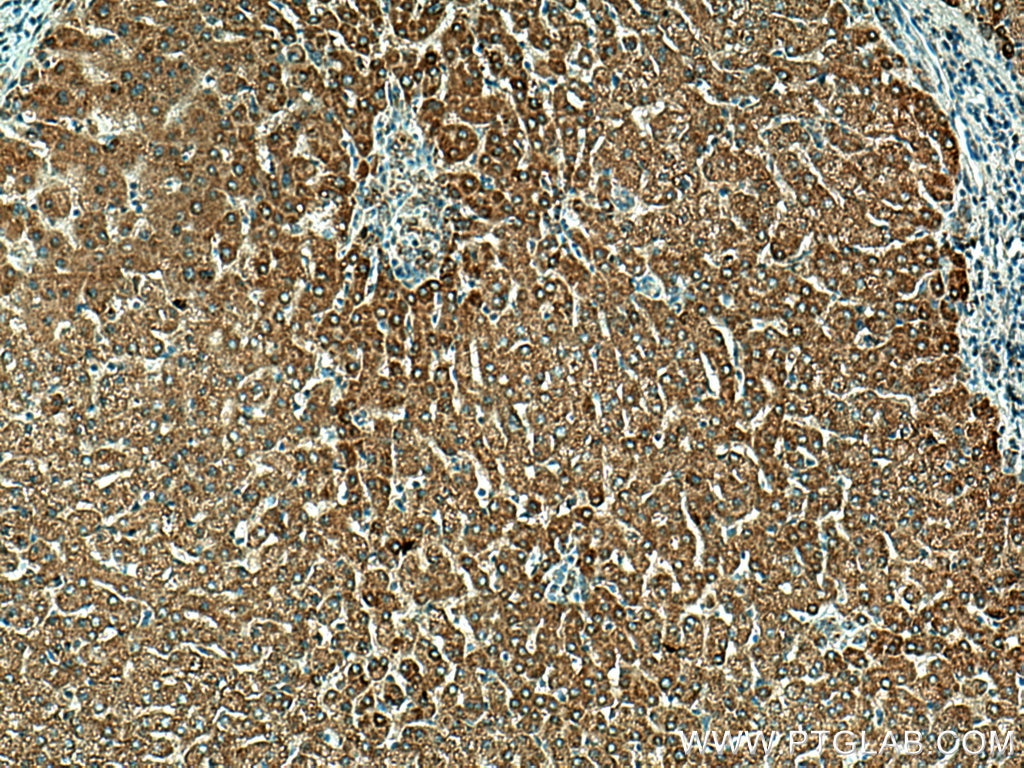

Tested Applications
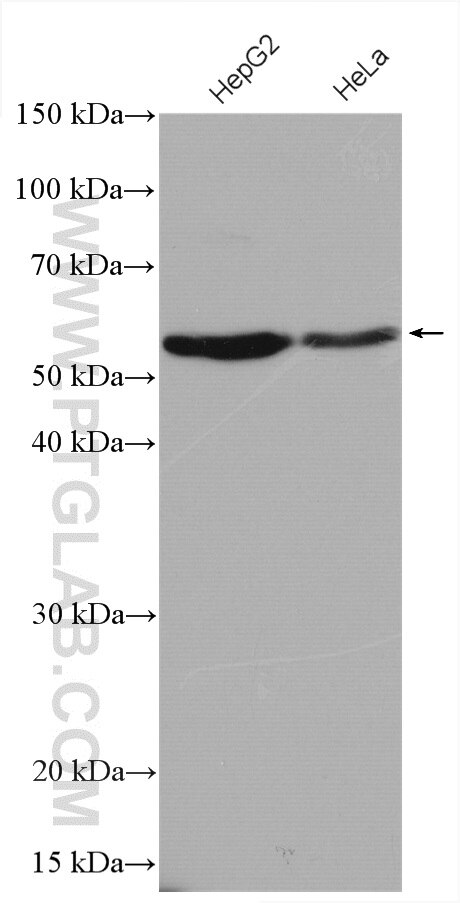
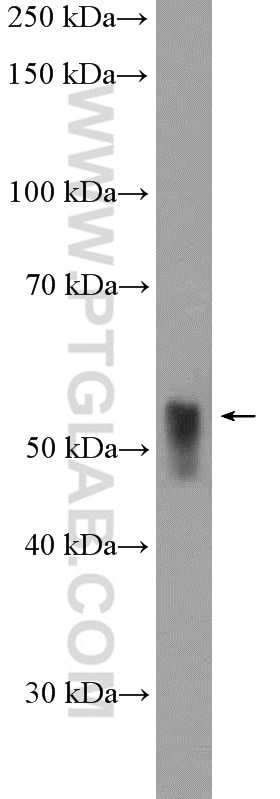
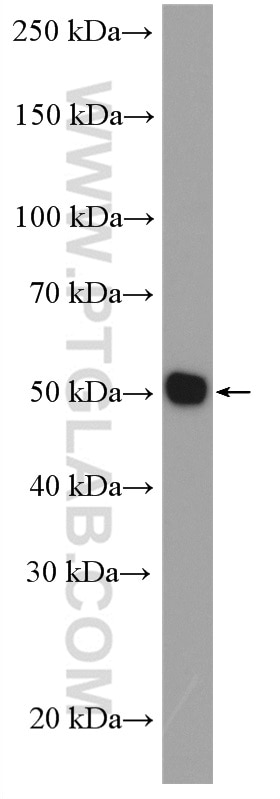
| Positive WB detected in | HepG2 cells, rat liver tissue, MCF-7 cells, HeLa cells |
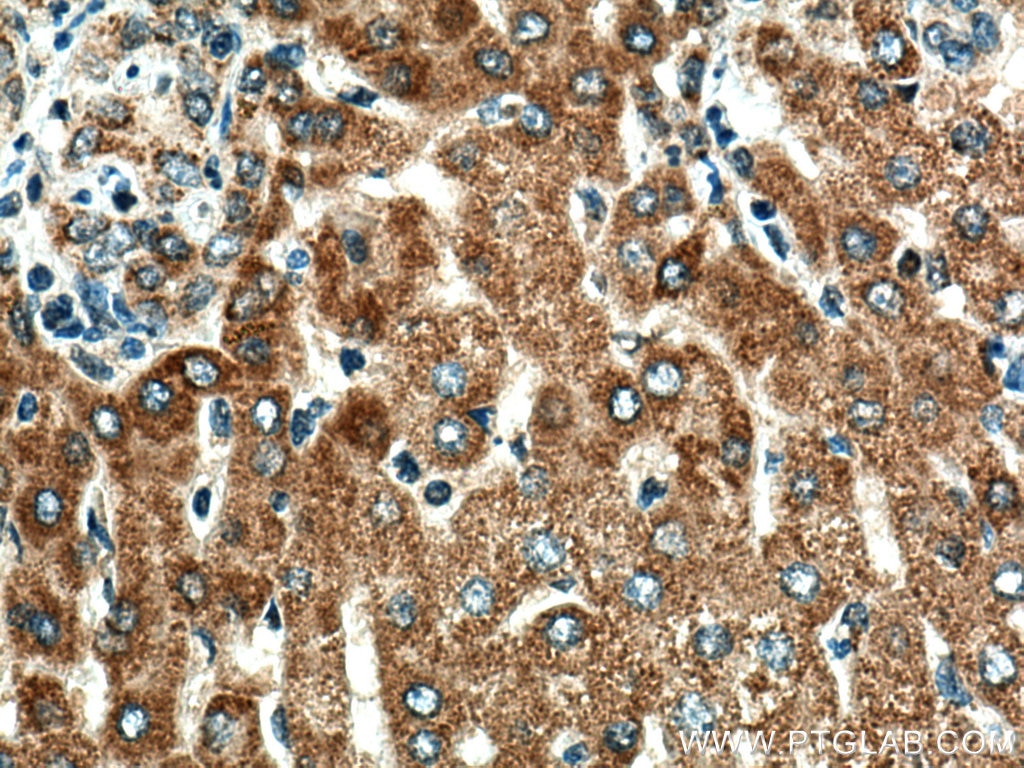
| Positive IHC detected in | human liver tissue Note: suggested antigen retrieval with TE buffer pH 9.0; (*) Alternatively, antigen retrieval may be performed with citrate buffer pH 6.0 |
Recommended dilution
| Application | Dilution |
|---|---|
| Western Blot (WB) | WB : 1:1000-1:6000 |
| Immunohistochemistry (IHC) | IHC : 1:50-1:500 |
| It is recommended that this reagent should be titrated in each testing system to obtain optimal results. | |
| Sample-dependent, Check data in validation data gallery. | |
Product Information
16360-1-AP targets TXNRD2 in WB, IHC, IF, ELISA applications and shows reactivity with human, mouse, rat samples.
| Tested Reactivity | human, mouse, rat |
| Cited Reactivity | human, mouse, rat, pig |
| Host / Isotype | Rabbit / IgG |
| Class | Polyclonal |
| Type | Antibody |
| Immunogen |
CatNo: Ag8367 Product name: Recombinant human TXNRD2 protein Source: e coli.-derived, PET28a Tag: 6*His Domain: 137-485 aa of BC007489 Sequence: EILLSADHIIIATGGRPRYPTHIEGALEYGITSDDIFWLKESPGKTLVVGASYVALECAGFLTGIGLDTTIMMRSIPLRGFDQQMSSMVIEHMASHGTRFLRGCAPSRVRRLPDGQLQVTWEDSTTGKEDTGTFDTVLWAIGRVPDTRSLNLEKAGVDTSPDTQKILVDSREATSVPHIYAIGDVVEGRPELTPIAIMAGRLLVQRLFGGSSDLMDYDNVPTTVFTPLEYGCVGLSEEEAVARHGQEHVEVYHAHYKPLEFTVAGRDASQCYVKMVCLREPPQLVLGLHFLGPNAGEVTQGFALGIKCGASYAQVMRTVGIHPTCSEEVVKLRISKRSGLDPTVTGCUG Predict reactive species |
| Full Name | thioredoxin reductase 2 |
| Calculated Molecular Weight | 524 aa, 56 kDa |
| Observed Molecular Weight | 54 kDa |
| GenBank Accession Number | BC007489 |
| Gene Symbol | TXNRD2 |
| Gene ID (NCBI) | 10587 |
| RRID | AB_2210258 |
| Conjugate | Unconjugated |
| Form | Liquid |
| Purification Method | Antigen affinity purification |
| UNIPROT ID | Q9NNW7 |
| Storage Buffer | PBS with 0.02% sodium azide and 50% glycerol, pH 7.3. |
| Storage Conditions | Store at -20°C. Stable for one year after shipment. Aliquoting is unnecessary for -20oC storage. 20ul sizes contain 0.1% BSA. |
Background Information
Human mitochondrial thioredoxin reductase (TXNRD2) is a selenocysteine-containing enzyme essential for mitochondrial oxygen radical scavenging. Three mammalian thioredoxin reductases exist; a cytosolic (TXNRD1), a mitochondrial (TXNRD2), and a testis-specific thioredoxin reductase (TXNRD3). (PMID: 21247928, PMID: 26199228)
Protocols
| Product Specific Protocols | |
|---|---|
| IHC protocol for TXNRD2 antibody 16360-1-AP | Download protocol |
| WB protocol for TXNRD2 antibody 16360-1-AP | Download protocol |
| Standard Protocols | |
|---|---|
| Click here to view our Standard Protocols |
Publications
What published studies show
The TXNRD2 Polyclonal antibody (catalog no. 16360-1-AP) has 18 citations. They appear in journals including Molecular Cell, Nature Chemical Biology, Advanced Science, Antioxidants, Journal of Animal Science and Biotechnology, British Journal of Cancer, Oxidative Medicine and Cellular Longevity, Experimental Gerontology, Scientific Reports, Journal of Biological Chemistry, Archives of Biochemistry and Biophysics, Photochemical & Photobiological Sciences, Frontiers in Pediatrics, and Journal of Biochemical & Molecular Toxicology. Research fields span ferroptosis, redox homeostasis, selenoproteins, oxidative stress, mitochondrial biology, prostate cancer, and metabolic regulation.
| Species | Application | Title |
|---|---|---|
Mol Cell Hypoxia-driven lncRNA SHIELD promotes GPX4 translation and protects against ferroptosis in hepatocellular carcinoma. | ||
Nat Chem Biol Ribosome stalling during selenoprotein translation exposes a ferroptosis vulnerability. | ||
Adv Sci (Weinh) Identification of PRDX5 as A Target for The Treatment of Castration-Resistant Prostate Cancer | ||
Antioxidants (Basel) GCN5L1-Mediated Lysine Acetylation Regulates Mitochondrial Bioenergetics and Redox Homeostasis in the Aged Heart.
| ||
Antioxidants (Basel) Hydrogen Peroxide Promotes the Production of Radiation-Derived EVs Containing Mitochondrial Proteins | ||
Antioxidants (Basel) Selenium Status in Diet Affects Nephrotoxicity Induced by Cisplatin in Mice. |

