
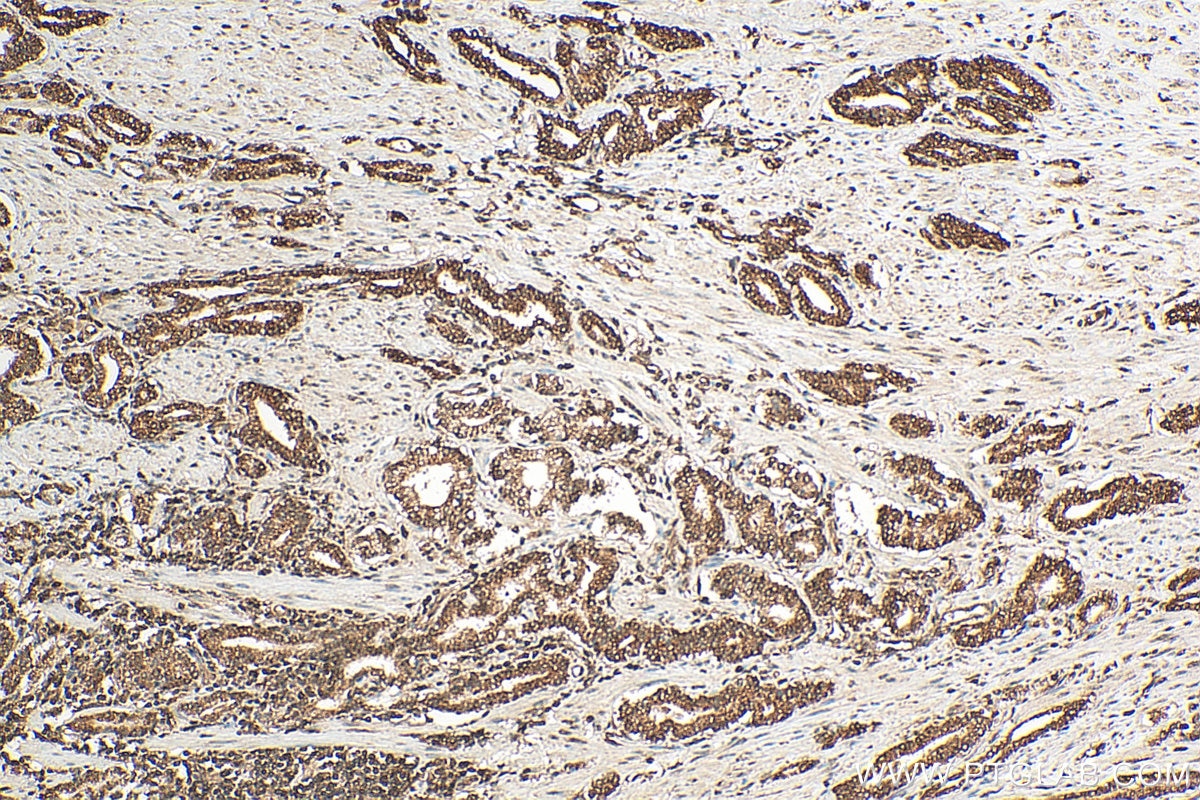

Tested Applications
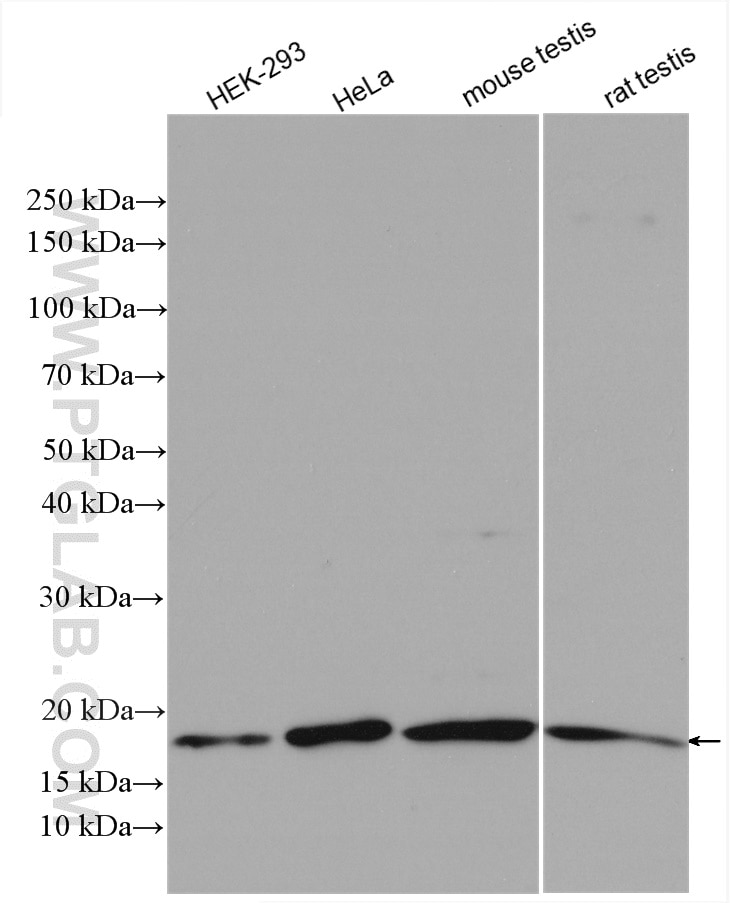
| Positive WB detected in | HEK-293 cells, HeLa cells, mouse testis tissue, rat testis tissue |
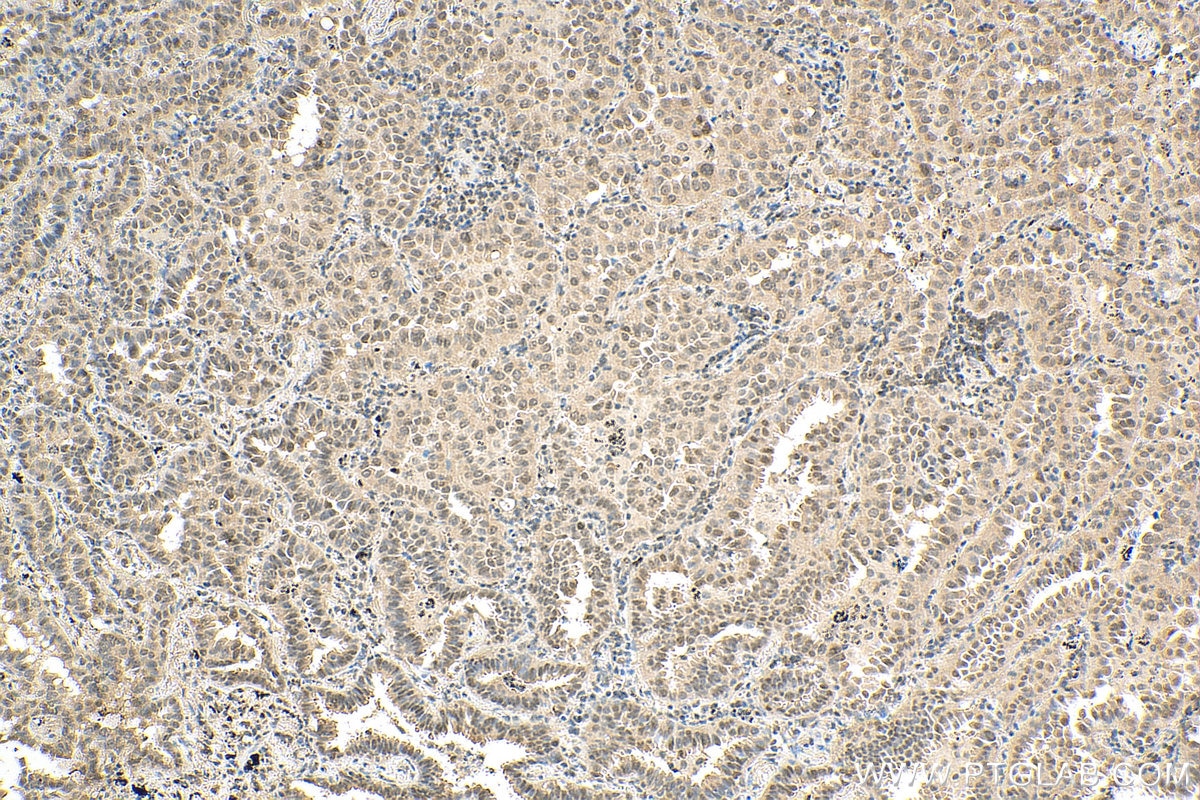
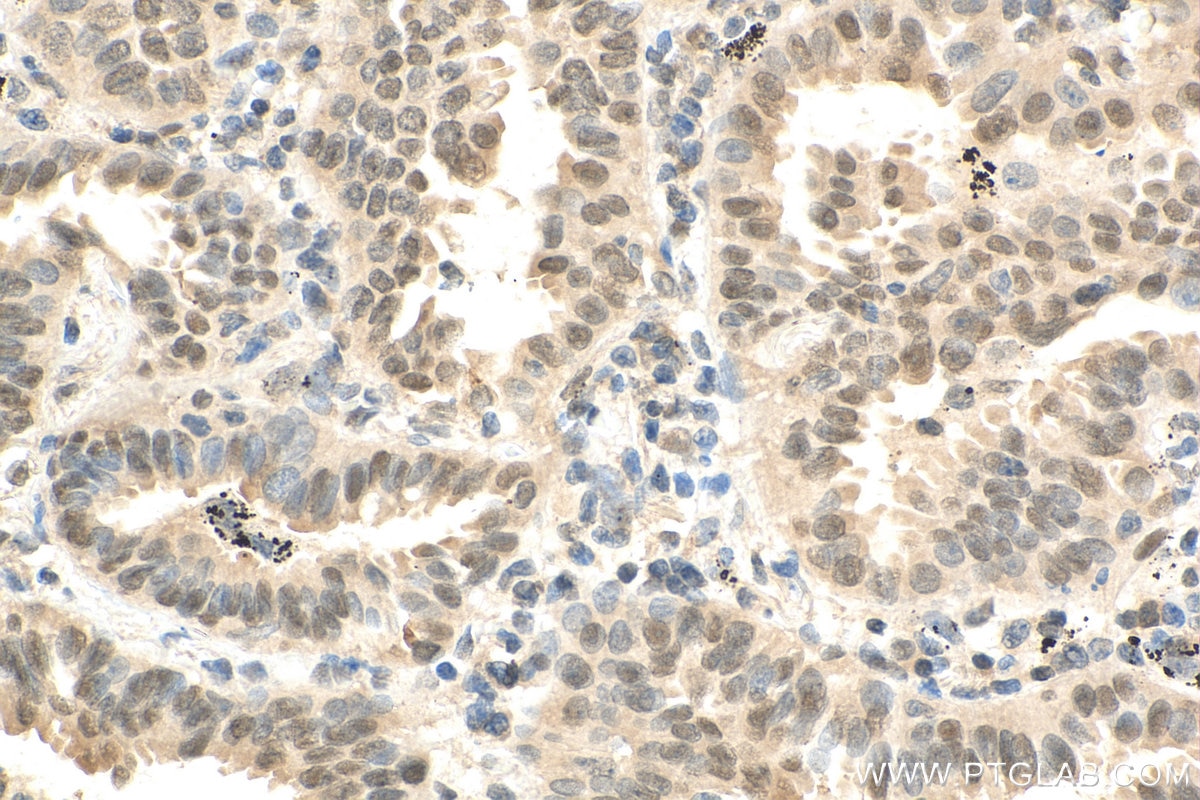
| Positive IHC detected in | human lung cancer tissue, human prostate cancer tissue Note: suggested antigen retrieval with TE buffer pH 9.0; (*) Alternatively, antigen retrieval may be performed with citrate buffer pH 6.0 |
Recommended dilution
| Application | Dilution |
|---|---|
| Western Blot (WB) | WB : 1:1000-1:4000 |
| Immunohistochemistry (IHC) | IHC : 1:50-1:500 |
| It is recommended that this reagent should be titrated in each testing system to obtain optimal results. | |
| Sample-dependent, Check data in validation data gallery. | |
Product Information
10070-1-AP targets UBC9 in WB, IHC, IF, IP, ELISA applications and shows reactivity with human, mouse, rat samples.
| Tested Reactivity | human, mouse, rat |
| Cited Reactivity | human, mouse, rat, zebrafish |
| Host / Isotype | Rabbit / IgG |
| Class | Polyclonal |
| Type | Antibody |
| Immunogen |
CatNo: Ag0111 Product name: Recombinant human UBC9 protein Source: e coli.-derived, PGEX-4T Tag: GST Domain: 1-184 aa of BC004437 Sequence: VPGTLNMSGIALSRLAQERKAWRKDHPFGFVAVPTKNPDGTMNLMNWECAIPGKKGTPWEGGLFKLRMLFKDDYPSSPPKCKFEPPLFHPNVYPSGTVCLSILEEDKDWRPAITIKQILLGIQELLNEPNIQDPAQAEAYTIYWLVAALAPLVAAPPRPSQGRLAGREWSTQAHPRDSQGPRLC Predict reactive species |
| Full Name | ubiquitin-conjugating enzyme E2I (UBC9 homolog, yeast) |
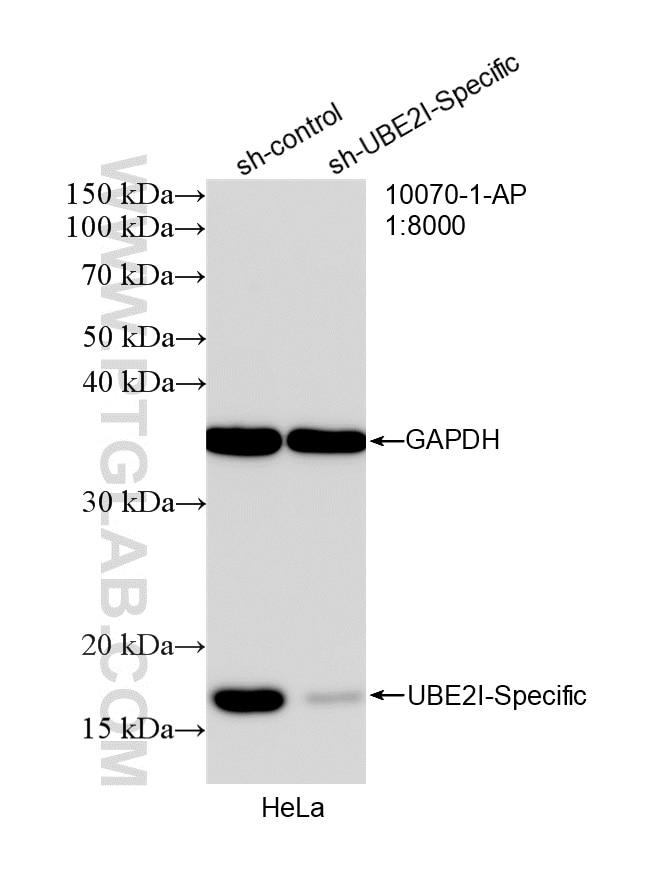
| Calculated Molecular Weight | 18 kDa |
| Observed Molecular Weight | 18 kDa |
| GenBank Accession Number | BC051289 |
| Gene Symbol | UBC9 |
| Gene ID (NCBI) | 7329 |
| RRID | AB_513699 |
| Conjugate | Unconjugated |
| Form | Liquid |
| Purification Method | Antigen affinity purification |
| UNIPROT ID | P63279 |
| Storage Buffer | PBS with 0.02% sodium azide and 50% glycerol, pH 7.3. |
| Storage Conditions | Store at -20°C. Stable for one year after shipment. Aliquoting is unnecessary for -20oC storage. 20ul sizes contain 0.1% BSA. |
Background Information
UBC9 is also named as UBE2I, UBCE9 and belongs to the ubiquitin-conjugating enzyme family. It is a homologue of the E2 ubiquitin conjugating enzyme and participates in the covalent linking of SUMO-1 molecule to the target protein. This protein is present at a high level in spleen and lung. Moderate level of UBC9 is detected in kidney and liver. Low amount of UBC9 is observed in brain, whereas the 18 kDa band of UBC9 is barely visible or absent in heart and skeletal muscle. In heart and muscle extracts the UBC9 antibodies recognizes a 38 kDa protein band,but this band is not visible in extracts of other rat tissues(PMID:14739995).
Protocols
| Product Specific Protocols | |
|---|---|
| IHC protocol for UBC9 antibody 10070-1-AP | Download protocol |
| WB protocol for UBC9 antibody 10070-1-AP | Download protocol |
| Standard Protocols | |
|---|---|
| Click here to view our Standard Protocols |
Publications
What published studies show
The anti-SUMO antibody (Cat# 10070-1-AP) has 16 citations spanning journals including Cell Reports, FASEB Journal, Journal of Virology, ACS Chemical Biology, International Journal of Biological Sciences, Chemical Research in Toxicology, and Biochemical and Biophysical Research Communications. Research fields cover SUMOylation regulation in cancers (bladder, hepatocellular, ovarian, colorectal, gastric), viral replication, neuroinflammation, metal ion homeostasis, and innate immune responses across human, mouse, rat, and zebrafish models.
| Species | Application | Title |
|---|---|---|
Int J Biol Sci SUMO E3 ligase MUL1 inhibits lymph node metastasis of bladder cancer by mediating mitochondrial HSPA9 translocation | ||
J Transl Med UBC9-mediated regulation of K144 ubiquitination of Lamin A and its implications for hepatocellular carcinoma.
| ||
Environ Res Antimony Exposure Induces Bladder Cancer Metastasis Via Activation of the SUMOylation-Dependent TGF-β/Smad2/3 Axis | ||
Cell Rep ESM1 SUMOylation mediates bevacizumab resistance in ovarian cancer through ITGB1-FAK-driven angiogenesis. | ||
J Ethnopharmacol Honghua Xiaoyao tablets ameliorate premenstrual syndrome by modulating HPA axis and restoring ovarian estrogen synthesis to attenuate hippocampal neuroinflammation. | ||
Cancer Gene Ther METTL3-mediated RanGAP1 promotes colorectal cancer progression through the MAPK pathway by recruiting YTHDF1 |

