



Tested Applications
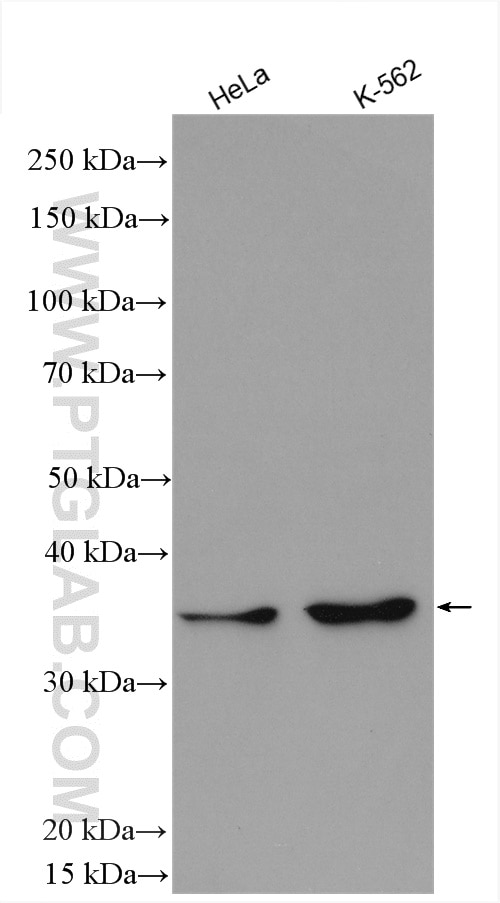
| Positive WB detected in | HeLa cells, K-562 cells |
| Positive IP detected in | HeLa cells |
| Positive IHC detected in | human tonsillitis tissue, human lung cancer tissue Note: suggested antigen retrieval with TE buffer pH 9.0; (*) Alternatively, antigen retrieval may be performed with citrate buffer pH 6.0 |
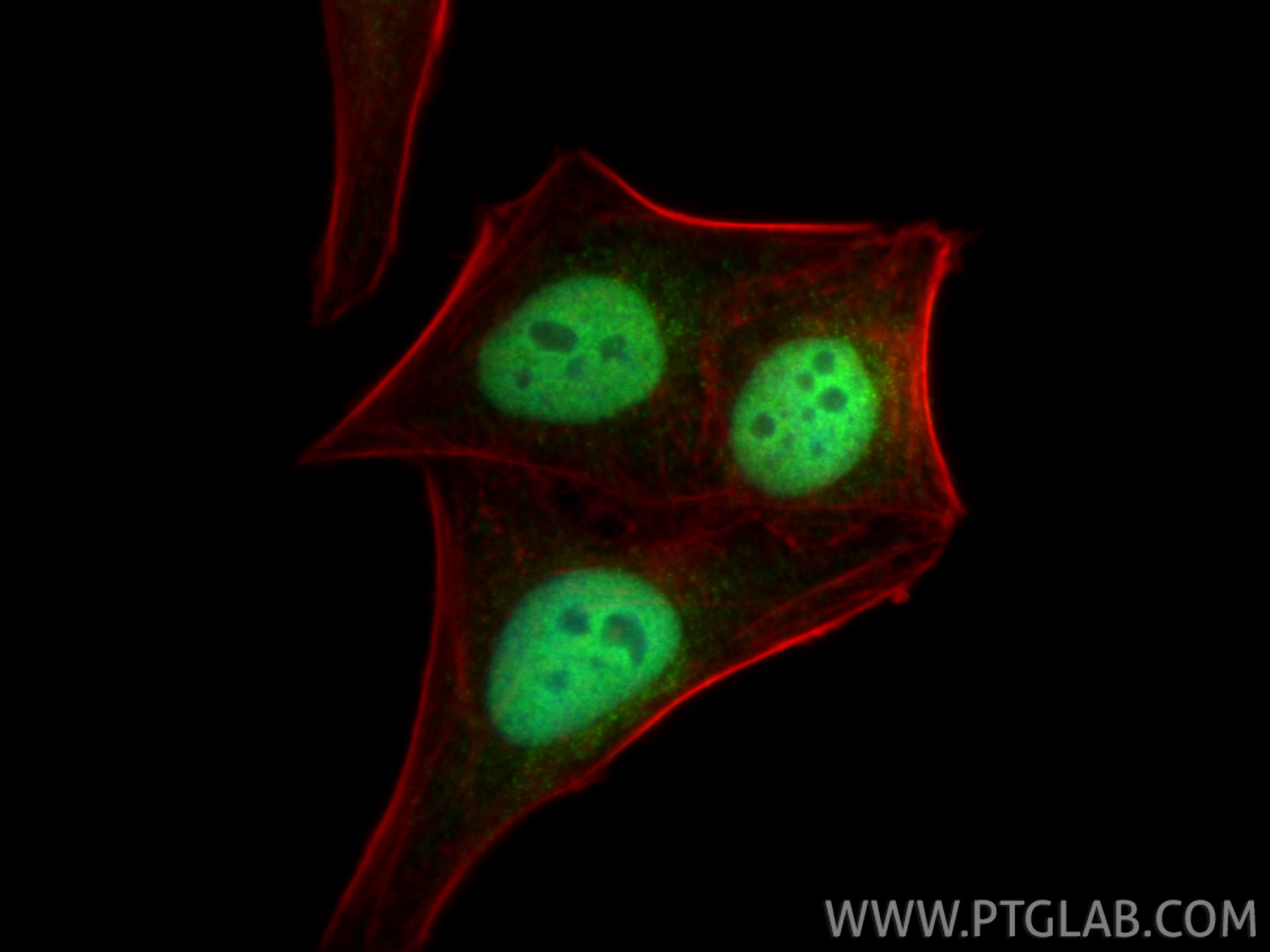
| Positive IF/ICC detected in | A549 cells, HepG2 cells |
Recommended dilution
| Application | Dilution |
|---|---|
| Western Blot (WB) | WB : 1:1000-1:4000 |
| Immunoprecipitation (IP) | IP : 0.5-4.0 ug for 1.0-3.0 mg of total protein lysate |
| Immunohistochemistry (IHC) | IHC : 1:500-1:2000 |
| Immunofluorescence (IF)/ICC | IF/ICC : 1:200-1:800 |
| It is recommended that this reagent should be titrated in each testing system to obtain optimal results. | |
| Sample-dependent, Check data in validation data gallery. | |
Product Information
15544-1-AP targets WDR5 in WB, IHC, IF/ICC, IP, CoIP, ChIP, ELISA applications and shows reactivity with human, mouse, rat samples.
| Tested Reactivity | human, mouse, rat |
| Cited Reactivity | human, mouse |
| Host / Isotype | Rabbit / IgG |
| Class | Polyclonal |
| Type | Antibody |
| Immunogen |
CatNo: Ag7900 Product name: Recombinant human WDR5 protein Source: e coli.-derived, PGEX-4T Tag: GST Domain: 1-334 aa of BC001635 Sequence: MATEEKKPETEAARAQPTPSSSATQSKPTPVKPNYALKFTLAGHTKAVSSVKFSPNGEWLASSSADKLIKIWGAYDGKFEKTISGHKLGISDVAWSSDSNLLVSASDDKTLKIWDVSSGKCLKTLKGHSNYVFCCNFNPQSNLIVSGSFDESVRIWDVKTGKCLKTLPAHSDPVSAVHFNRDGSLIVSSSYDGLCRIWDTASGQCLKTLIDDDNPPVSFVKFSPNGKYILAATLDNTLKLWDYSKGKCLKTYTGHKNEKYCIFANFSVTGGKWIVSGSEDNLVYIWNLQTKEIVQKLQGHTDVVISTACHPTENIIASAALENDKTIKLWKSDC Predict reactive species |
| Full Name | WD repeat domain 5 |
| Calculated Molecular Weight | 37 kDa |
| Observed Molecular Weight | 36 kDa |
| GenBank Accession Number | BC001635 |
| Gene Symbol | WDR5 |
| Gene ID (NCBI) | 11091 |
| RRID | AB_2257220 |
| Conjugate | Unconjugated |
| Form | Liquid |
| Purification Method | Antigen affinity purification |
| UNIPROT ID | P61964 |
| Storage Buffer | PBS with 0.02% sodium azide and 50% glycerol, pH 7.3. |
| Storage Conditions | Store at -20°C. Stable for one year after shipment. Aliquoting is unnecessary for -20oC storage. 20ul sizes contain 0.1% BSA. |
Background Information
The WDR5 antibody targets the WD repeat protein domain 5 (WDR5), a member of the WD40 repeat protein family in humans. The WDR5 protein is a core member of the mammalian trithorax complex and, like the rest of the WD40 repeat protein family, is primarily involved in diverse cellular processes. WDR5 is identified as a methyl Lys-4 H3-specific-binding protein, however it is known to interact with the Mixed Lineage Leukemia (MLL) protein at the same site for histone H3 tri-methylation(PMID:18840606). Recently, the WDR5 protein has been shown to regulate embryonic stem cell self-renewal, and an increased expression of WDR5 has been found to efficiently induce the formation of pluripotent stem cells (PMID:21477851). WDR5 is also shown to accelerate osteoblast and chondrocyte differentiation(PMID:16730692 ).
Protocols
| Product Specific Protocols | |
|---|---|
| IF protocol for WDR5 antibody 15544-1-AP | Download protocol |
| IHC protocol for WDR5 antibody 15544-1-AP | Download protocol |
| IP protocol for WDR5 antibody 15544-1-AP | Download protocol |
| WB protocol for WDR5 antibody 15544-1-AP | Download protocol |
| Standard Protocols | |
|---|---|
| Click here to view our Standard Protocols |
Publications
What published studies show
The WDR5 Polyclonal antibody (Cat# 15544-1-AP) has 17 citations. These appear in journals including Nature Aging, Nature Communications, Advanced Science, Cell Reports Medicine, Science Advances, Cardiovascular Research, Pharmacological Research, Cancer Letters, PNAS, Molecular Medicine, Free Radical Biology and Medicine, International Immunopharmacology, Brain Research Bulletin, Journal of Orthopaedic Surgery and Research, and American Journal of Cancer Research. Research fields span epigenetics (H3K4me3), cancer, neurology, stem cells, and metabolism.
| Species | Application | Title |
|---|---|---|
Nat Aging Transcriptional and epigenetic dysregulation impairs generation of proliferative neural stem and progenitor cells during brain aging | ||
Nat Commun KMT2A associates with PHF5A-PHF14-HMG20A-RAI1 subcomplex in pancreatic cancer stem cells and epigenetically regulates their characteristics | ||
Adv Sci (Weinh) Heat Stress Modulates WDR5-Mediated H3K4me3 Modification to Induce Melanogenesis via Activating CX3CL1/CX3CR1 Axis.
| ||
Cell Rep Med Targeting pancreatic cancer glutamine dependency confers vulnerability to GPX4-dependent ferroptosis | ||
Sci Adv A MYC inhibitor selectively alters the MYC and MAX cistromes and modulates the epigenomic landscape to regulate target gene expression. | ||
Sci Adv EIF3D safeguards the homeostasis of key signaling pathways in human primed pluripotency |


