
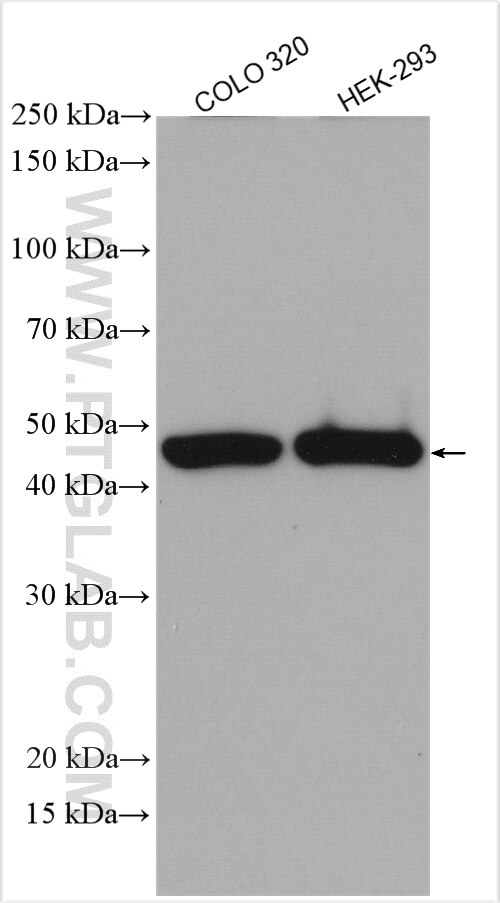
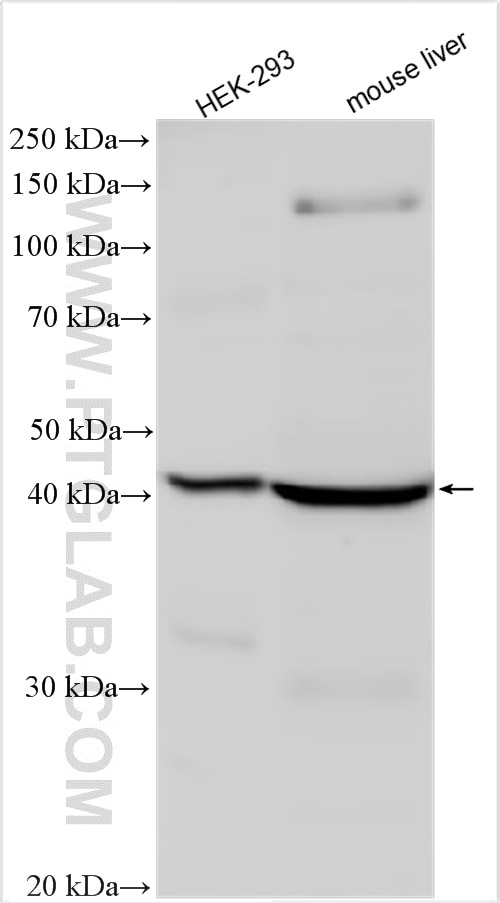
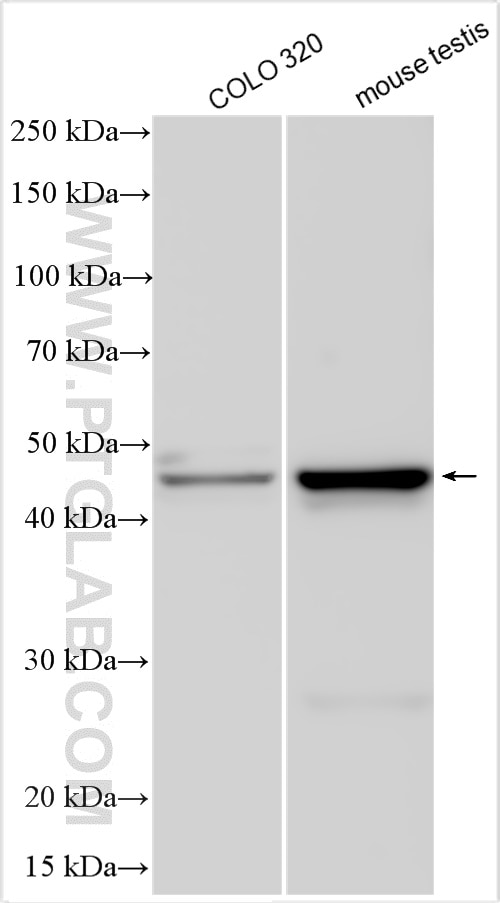
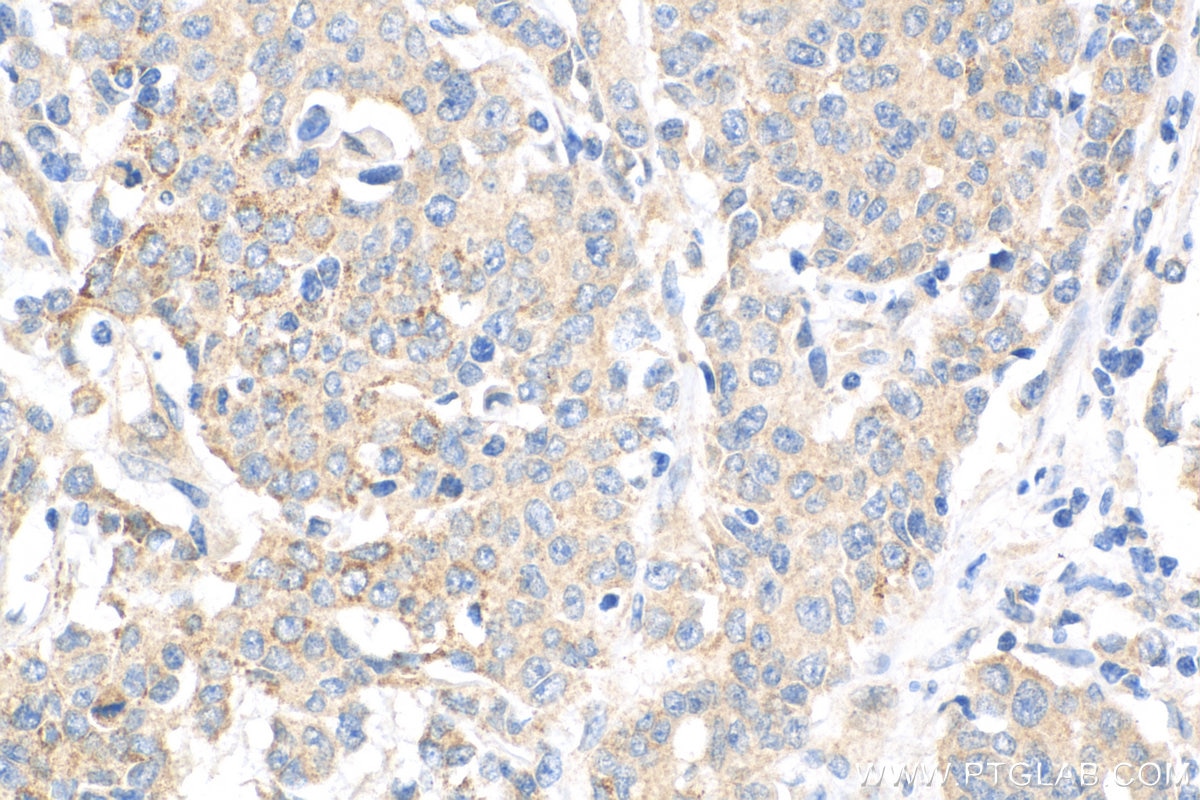

Tested Applications
| Positive WB detected in | COLO 320 cells, HEK-293 cells, mouse testis tissue, mouse liver tissue |
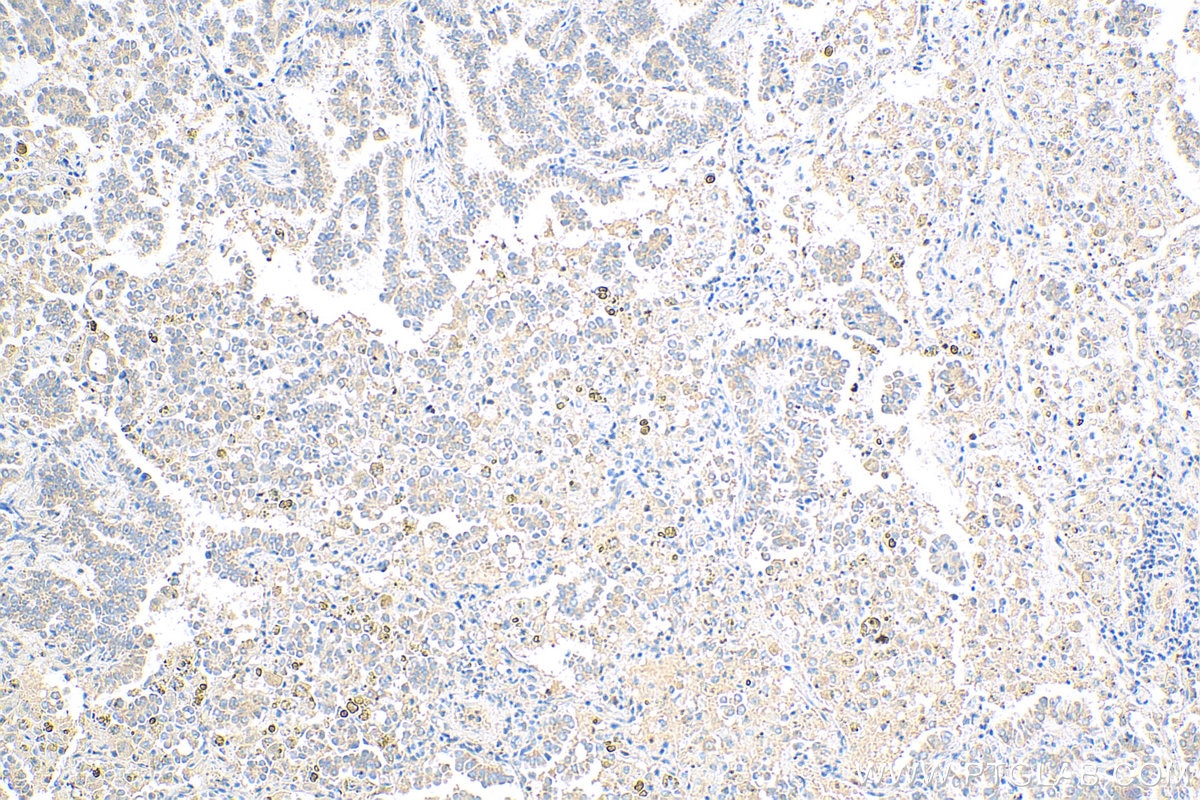
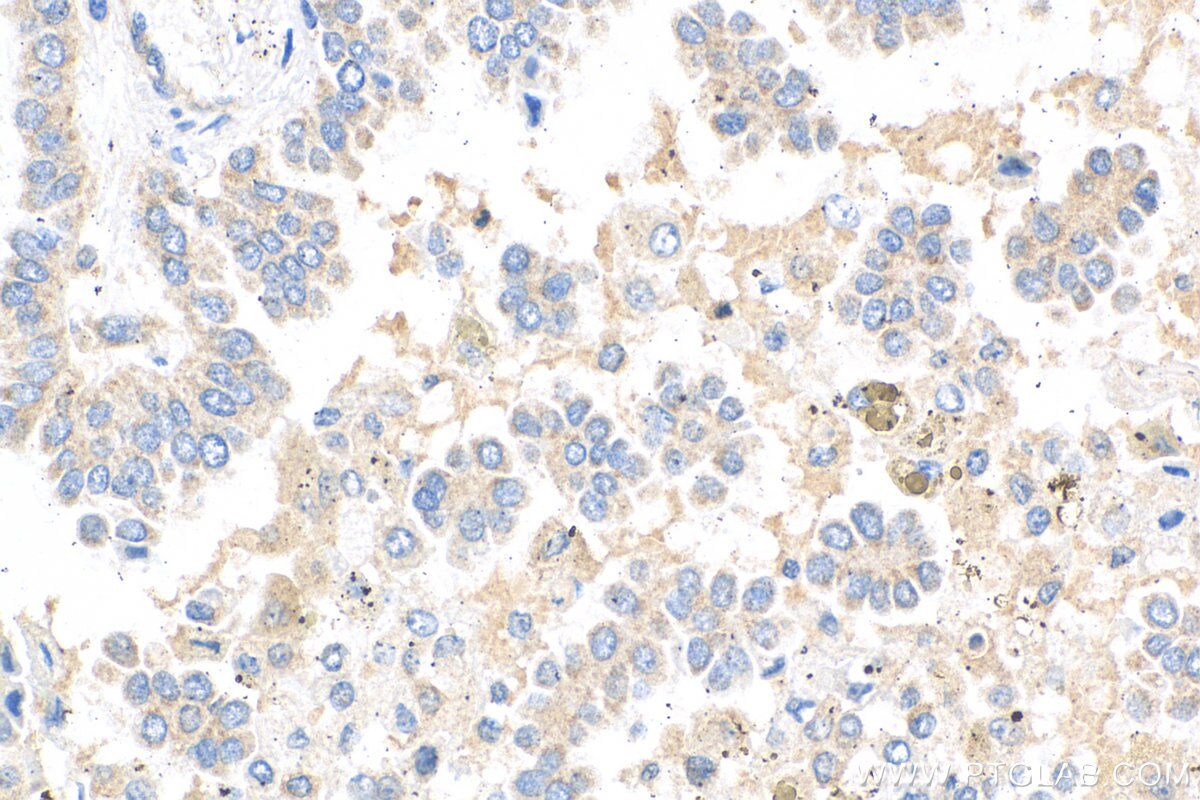
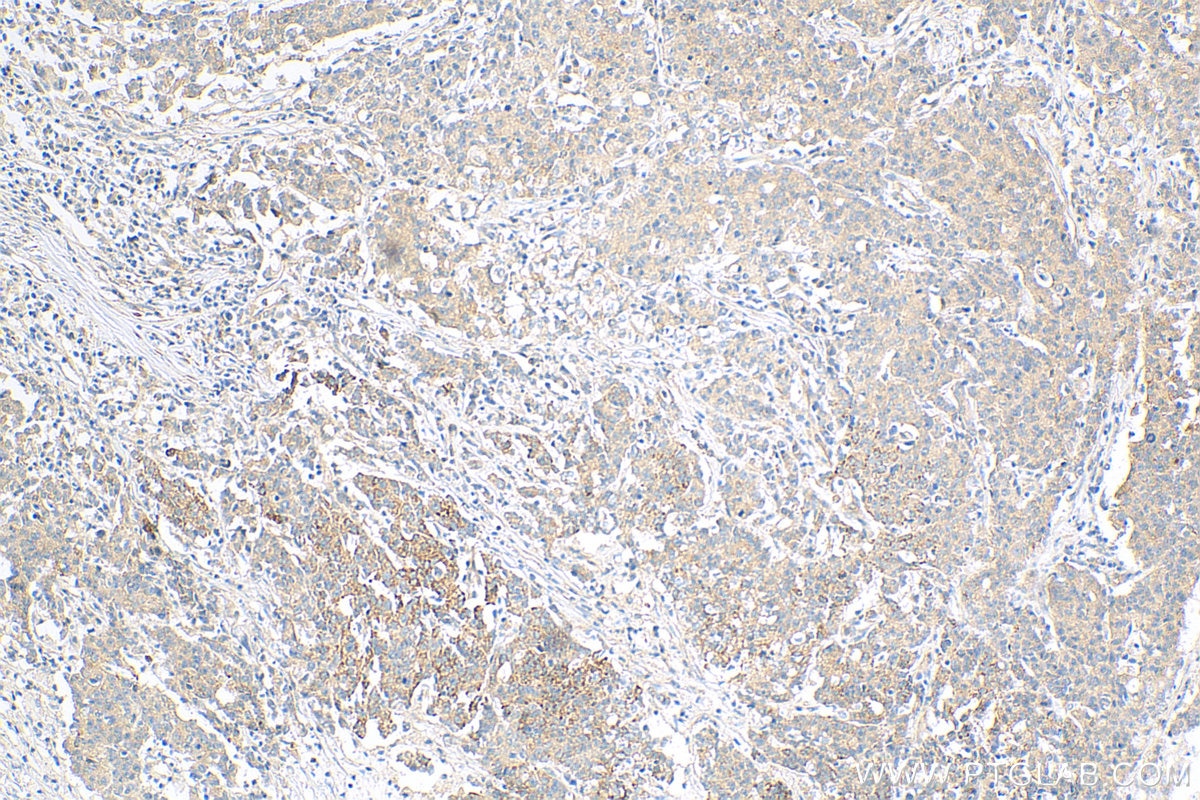
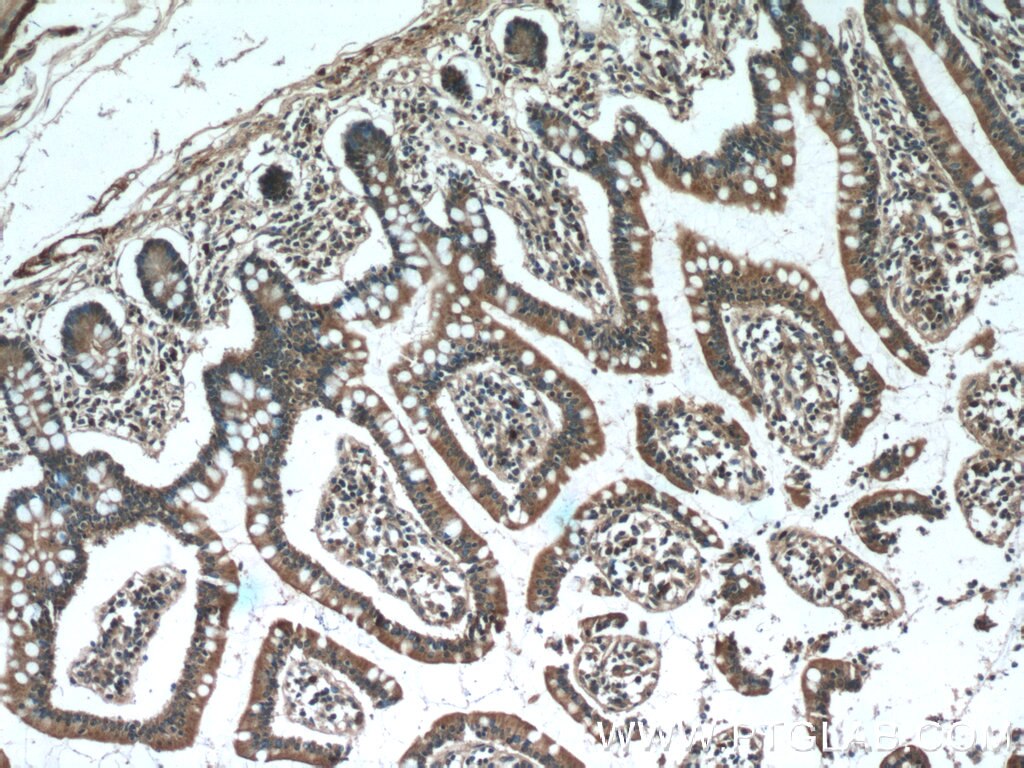
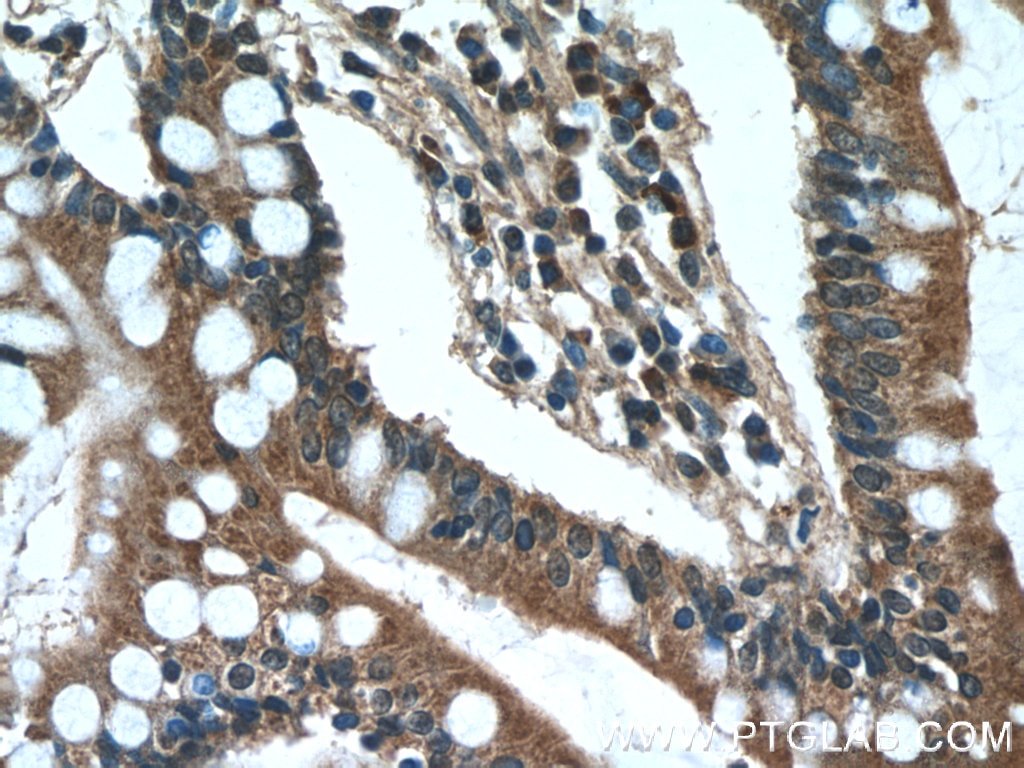
| Positive IHC detected in | human stomach cancer tissue, human small intestine tissue, human lung cancer tissue Note: suggested antigen retrieval with TE buffer pH 9.0; (*) Alternatively, antigen retrieval may be performed with citrate buffer pH 6.0 |
Recommended dilution
| Application | Dilution |
|---|---|
| Western Blot (WB) | WB : 1:1000-1:4000 |
| Immunohistochemistry (IHC) | IHC : 1:50-1:500 |
| It is recommended that this reagent should be titrated in each testing system to obtain optimal results. | |
| Sample-dependent, Check data in validation data gallery. | |
Product Information
18166-1-AP targets WISP-1/CCN4 in WB, IHC, IF, ELISA applications and shows reactivity with human, mouse samples.
| Tested Reactivity | human, mouse |
| Cited Reactivity | human |
| Host / Isotype | Rabbit / IgG |
| Class | Polyclonal |
| Type | Antibody |
| Immunogen |
CatNo: Ag12657 Product name: Recombinant human WISP1 protein Source: e coli.-derived, PGEX-4T Tag: GST Domain: 132-367 aa of BC074841 Sequence: NGQSFQPNCKYNCTCIDGAVGCTPLCLRVRPPRLWCPHPRRVSIPGHCCEQWVCEDDAKRPRKTAPRDTGAFDAVGEVEAWHRNCIAYTSPWSPCSTSCGLGVSTRISNVNAQCWPEQESRLCNLRPCDVDIHTLIKAGKKCLAVYQPEASMNFTLAGCISTRSYQPKYCGVCMDNRCCIPYKSKTIDVSFQCPDGLGFSRQVLWINACFCNLSCRNPNDIFADLESYPDFSEIAN Predict reactive species |
| Full Name | WNT1 inducible signaling pathway protein 1 |
| Calculated Molecular Weight | 367 aa, 40 kDa |
| Observed Molecular Weight | 40-45 kDa |
| GenBank Accession Number | BC074841 |
| Gene Symbol | WISP1 |
| Gene ID (NCBI) | 8840 |
| RRID | AB_10805764 |
| Conjugate | Unconjugated |
| Form | Liquid |
| Purification Method | Antigen affinity purification |
| UNIPROT ID | O95388 |
| Storage Buffer | PBS with 0.02% sodium azide and 50% glycerol, pH 7.3. |
| Storage Conditions | Store at -20°C. Stable for one year after shipment. Aliquoting is unnecessary for -20oC storage. 20ul sizes contain 0.1% BSA. |
Background Information
WISP1( Wnt-induced secreted protein 1), also known as CCN4, is a secreted, matricellular protein allocated to the CCN protein family. The CCN protein family consists of six, modular structured, secreted proteins ( Cyr61, CTGF, Nov, WISP1, WISP2, WISP3 ). WISP1 may be downstream in the WNT1 signaling pathway that is relevant to malignant transformation. WISP1 is expressed at a high level in fibroblast cells, and overexpressed in colon tumors. Its expression is associated with proliferation, cytoprotection, as well as extracellular matrix production. 18166-1-AP antibody detects the 40-45 kDa protein in SDS-PAGE.
Protocols
| Product Specific Protocols | |
|---|---|
| IHC protocol for WISP-1/CCN4 antibody 18166-1-AP | Download protocol |
| WB protocol for WISP-1/CCN4 antibody 18166-1-AP | Download protocol |
| Standard Protocols | |
|---|---|
| Click here to view our Standard Protocols |
Publications
What published studies show
The WISP-1/CCN4 Polyclonal antibody (Cat# 18166-1-AP) has 10 citations. They appear in journals including American Journal of Respiratory and Critical Care Medicine, Experimental & Molecular Medicine, International Journal of Molecular Medicine, International Journal of Oncology, Scientific Reports, Frontiers in Physiology, Food and Chemical Toxicology, Cytotechnology, Oncology Letters, and American Journal of Translational Research. Research fields span pulmonary arterial hypertension, fibrosis, glioblastoma, oral squamous cell carcinoma, dental pulp biology, apoptosis, ferroptosis, craniopharyngioma, and pancreatic cancer.
| Species | Application | Title |
|---|---|---|
Am J Respir Crit Care Med Critical Genomic Networks and Vasoreactive Variants in Idiopathic Pulmonary Arterial Hypertension. | ||
Exp Mol Med WISP-1 induced by mechanical stress contributes to fibrosis and hypertrophy of the ligamentum flavum through Hedgehog-Gli1 signaling.
| ||
Int J Mol Med Non‑canonical Wnt signaling contributes to ventilator‑induced lung injury through upregulation of WISP1 expression. | ||
Sci Rep FKBP10 may affect the malignant phenotype of oral squamous cell carcinoma cells through the ECM/WNT signaling pathway. | ||
Front Physiol Atlas of human dental pulp cells at multiple spatial and temporal levels based on single-cell sequencing analysis |

