
Tested Applications
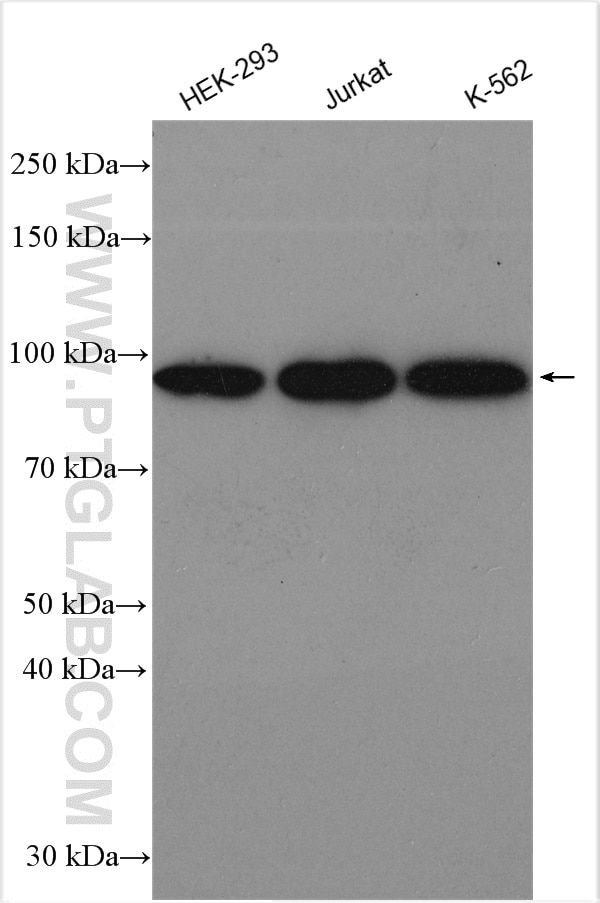
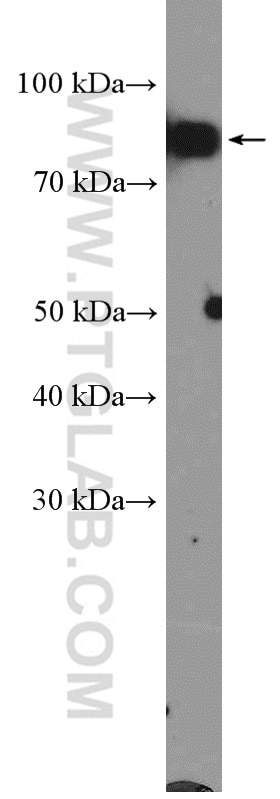
| Positive WB detected in | HEK-293 cells, K-562 cells, Jurkat cells |
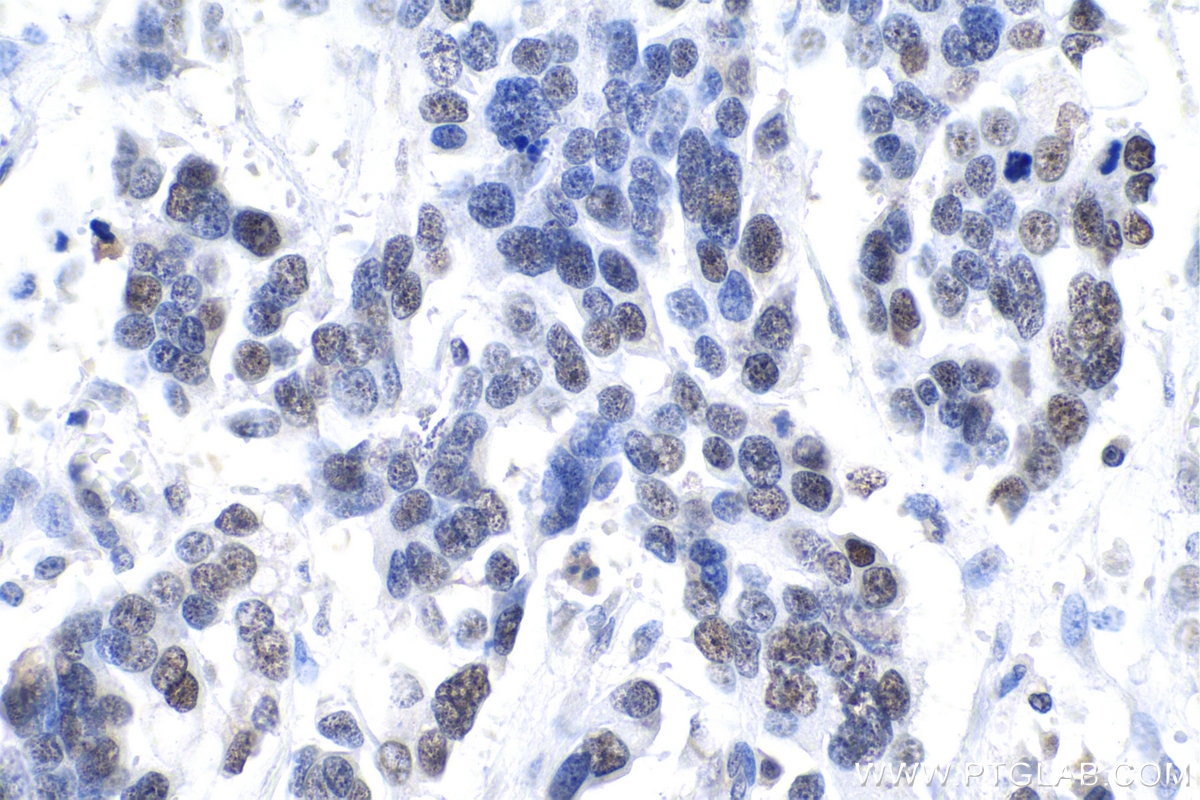
| Positive IHC detected in | human colon cancer tissue Note: suggested antigen retrieval with TE buffer pH 9.0; (*) Alternatively, antigen retrieval may be performed with citrate buffer pH 6.0 |
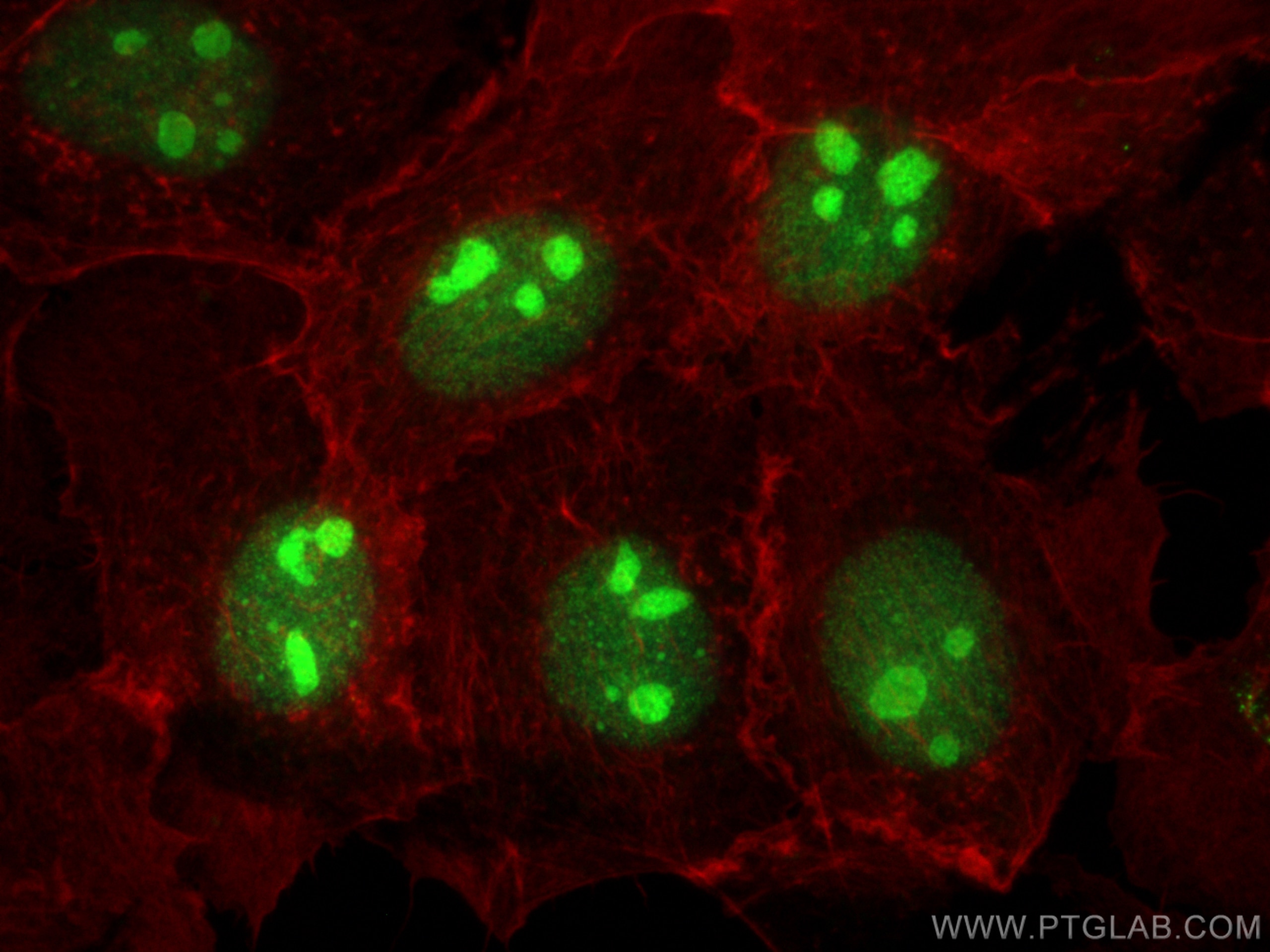
| Positive IF/ICC detected in | A431 cells |
Recommended dilution
| Application | Dilution |
|---|---|
| Western Blot (WB) | WB : 1:2000-1:12000 |
| Immunohistochemistry (IHC) | IHC : 1:500-1:2000 |
| Immunofluorescence (IF)/ICC | IF/ICC : 1:200-1:800 |
| It is recommended that this reagent should be titrated in each testing system to obtain optimal results. | |
| Sample-dependent, Check data in validation data gallery. | |
Product Information
21468-1-AP targets XRCC1 in WB, IHC, IF/ICC, ELISA applications and shows reactivity with human samples.
| Tested Reactivity | human |
| Cited Reactivity | human, mouse |
| Host / Isotype | Rabbit / IgG |
| Class | Polyclonal |
| Type | Antibody |
| Immunogen |
CatNo: Ag15172 Product name: Recombinant human XRCC1 protein Source: e coli.-derived, PET28a Tag: 6*His Domain: 284-633 aa of BC023593 Sequence: TAPVPARAQGAVTGKPRGEGTEPRRPRAGPEELGKILQGVVVVLSGFQNPFRSELRDKALELGAKYRPDWTRDSTHLICAFANTPKYSQVLGLGGRIVRKEWVLDCHRMRRRLPSQRYLMAGPGSSSEEDEASHSGGSGDEAPKLPQKQPQTKTKPTQAAGPSSPQKPPTPEETKAASPVLQEDIDIEGVQSEGQDNGAEDSGDTEDELRRVAEQKEHRLPPGQEENGEDPYAGSTDENTDSEEHQEPPDLPVPELPDFFQGKHFFLYGEFPGDERRKLIRYVTAFNGELEDYMSDRVQFVITAQEWDPSFEEALMDNPSLAFVRPRWIYSCNEKQKLLPHQLYGVVPQA Predict reactive species |
| Full Name | X-ray repair complementing defective repair in Chinese hamster cells 1 |
| Calculated Molecular Weight | 633 aa, 70 kDa |
| Observed Molecular Weight | 80-90 kDa |
| GenBank Accession Number | BC023593 |
| Gene Symbol | XRCC1 |
| Gene ID (NCBI) | 7515 |
| RRID | AB_2878865 |
| Conjugate | Unconjugated |
| Form | Liquid |
| Purification Method | Antigen affinity purification |
| UNIPROT ID | P18887 |
| Storage Buffer | PBS with 0.02% sodium azide and 50% glycerol, pH 7.3. |
| Storage Conditions | Store at -20°C. Stable for one year after shipment. Aliquoting is unnecessary for -20oC storage. 20ul sizes contain 0.1% BSA. |
Background Information
XRCC1 (X-ray Repair Cross Complementing group 1) is a molecular scaffold protein that interacts with multiple enzymatic components of DNA single-strand break repair (SSBR) including DNA kinase, DNA phosphatase, DNA polymerase, DNA deadenylase, and DNA ligase activities that collectively are capable of accelerating the repair of a broad range of DNA single-strand breaks (SSBs) (PMID: 18515191). XRCC1 is 633 amino acids in length which is comprised of an N-terminal domain (NTD) of ˜160 amino acids that interacts with Pol β, a central BRCT domain of ˜90 amino acids that interacts with PARP1 (PMID: 9584196). This antibody is not suitable for murine samples.
Protocols
| Product Specific Protocols | |
|---|---|
| IF protocol for XRCC1 antibody 21468-1-AP | Download protocol |
| IHC protocol for XRCC1 antibody 21468-1-AP | Download protocol |
| WB protocol for XRCC1 antibody 21468-1-AP | Download protocol |
| Standard Protocols | |
|---|---|
| Click here to view our Standard Protocols |
Publications
What published studies show
| Species | Application | Title |
|---|---|---|
Cell Extrachromosomal DNA replication and maintenance couple with DNA damage pathway in tumors | ||
Nucleic Acids Res KDM6B promotes PARthanatos via suppression of O6-methylguanine DNA methyltransferase repair and sustained checkpoint response. | ||
J Cell Mol Med Berberine attenuates XRCC1-mediated base excision repair and sensitizes breast cancer cells to the chemotherapeutic drugs. | ||
Int J Environ Res Public Health Effects of DNA Damage and Oxidative Stress in Human Bronchial Epithelial Cells Exposed to PM2.5 from Beijing, China, in Winter. | ||
Toxicol Appl Pharmacol Polychlorinated biphenyl quinone induces oxidative DNA damage and repair responses: The activations of NHEJ, BER and NER via ATM-p53 signaling axis. |

