


Tested Applications
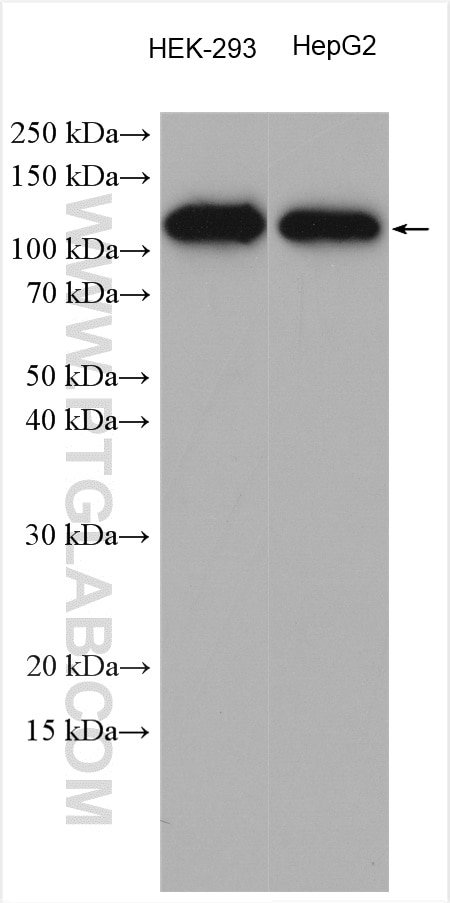
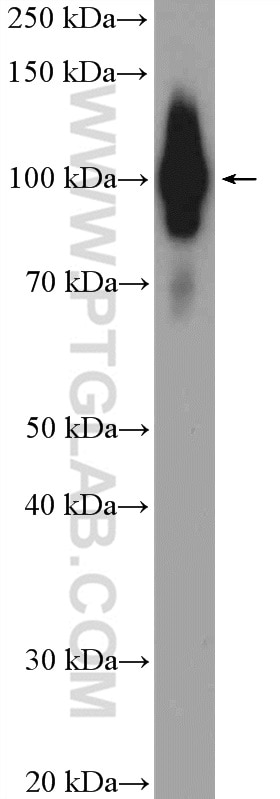
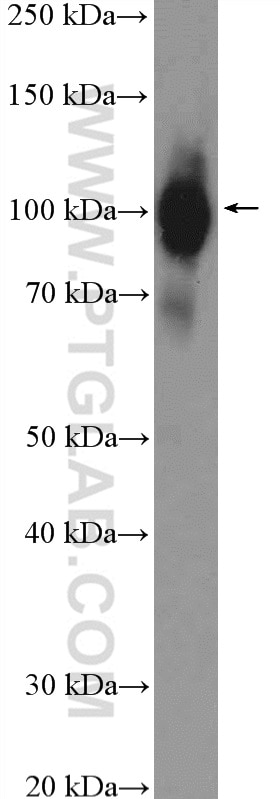
| Positive WB detected in | HEK-293 cells, mouse thymus tissue, HepG2 cells |
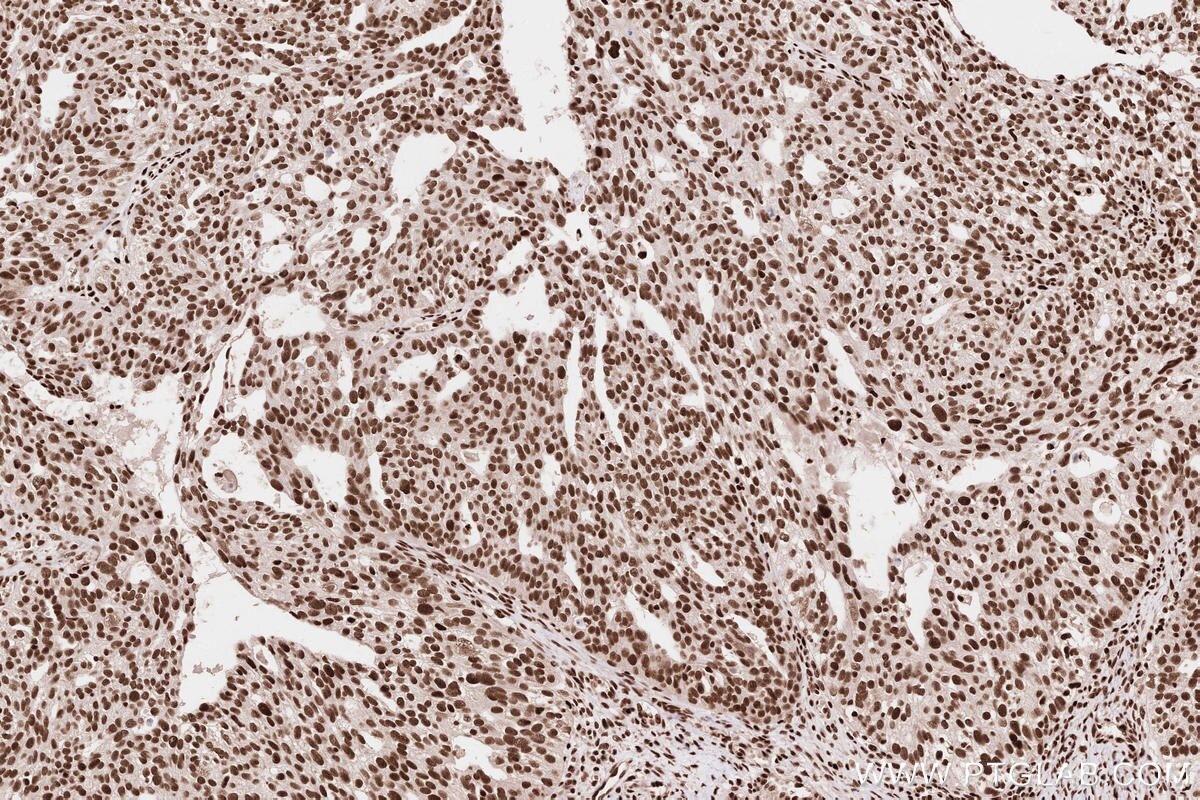
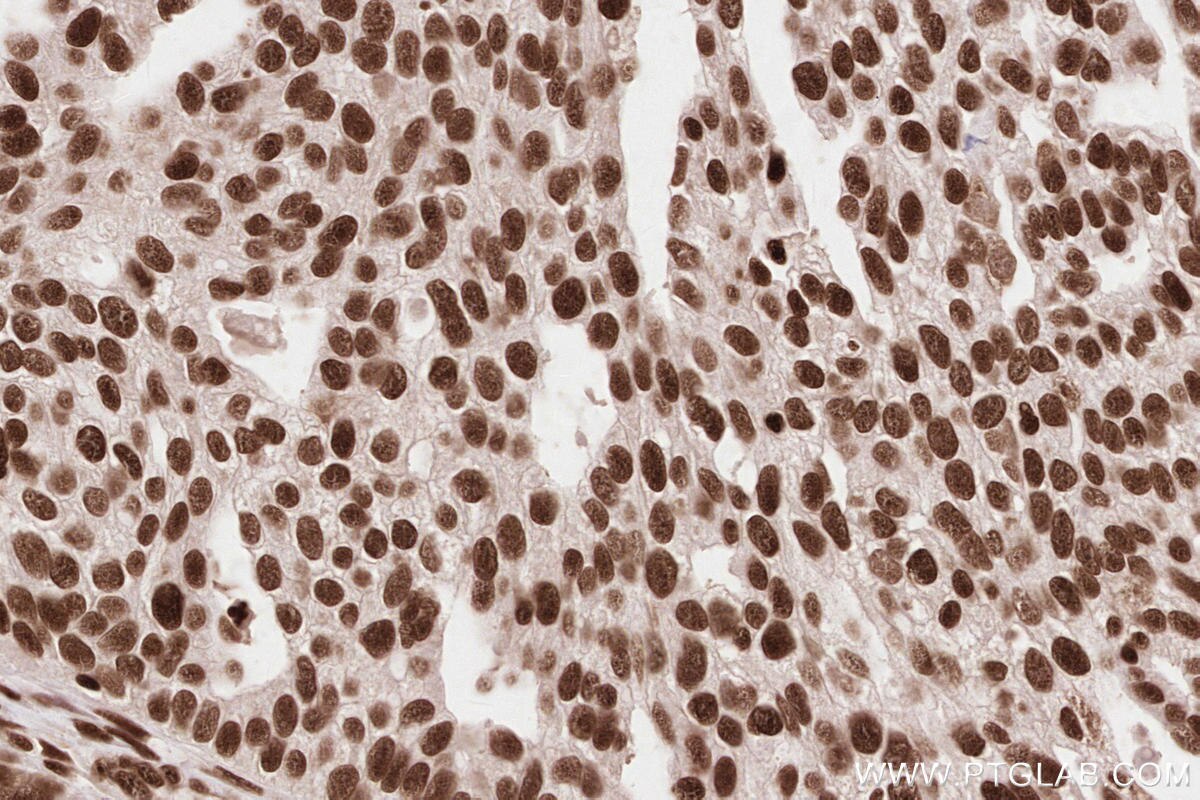
| Positive IHC detected in | human ovary cancer tissue Note: suggested antigen retrieval with TE buffer pH 9.0; (*) Alternatively, antigen retrieval may be performed with citrate buffer pH 6.0 |
| Positive IF/ICC detected in | HepG2 cells |
Recommended dilution
| Application | Dilution |
|---|---|
| Western Blot (WB) | WB : 1:2000-1:12000 |
| Immunohistochemistry (IHC) | IHC : 1:500-1:2000 |
| Immunofluorescence (IF)/ICC | IF/ICC : 1:50-1:500 |
| It is recommended that this reagent should be titrated in each testing system to obtain optimal results. | |
| Sample-dependent, Check data in validation data gallery. | |
Product Information
23374-1-AP targets ZCCHC8 in WB, IHC, IF/ICC, IP, CoIP, RIP, ELISA applications and shows reactivity with human, mouse samples.
| Tested Reactivity | human, mouse |
| Cited Reactivity | human, mouse |
| Host / Isotype | Rabbit / IgG |
| Class | Polyclonal |
| Type | Antibody |
| Immunogen |
CatNo: Ag19985 Product name: Recombinant human ZCCHC8 protein Source: e coli.-derived, PGEX-4T Tag: GST Domain: 355-707 aa of BC065918 Sequence: KSVTYDLSKLVNYPGFNISTPRGIPDEWRIFGSIPMQACQQKDVFANYLTSNFQAPGVKSGNKRSSSHSSPGSPKKQKNESNSAGSPADMELDSDMEVPHGSQSSESFQFQPPLPPDTPPLPRGTPPPVFTPPLPKGTPPLTPSDSPQTRTASGAVDEDALTLEELEEQQRRIWAALEQAESVNSDSDVPVDTPLTGNSVASSPCPNELDLPVPEGKTSEKQTLDEPEVPEIFTKKSEAGHASSPDSEVTSLCQKEKAELAPVNTEGALLDNGSVVPNCDISNGGSQKLFPADTSPSTATKIHSPIPDMSKFATGITPFEFENMAESTGMYLRIRSLLKNSPRNQQKNKKASE Predict reactive species |
| Full Name | zinc finger, CCHC domain containing 8 |
| Calculated Molecular Weight | 707 aa, 79 kDa |
| Observed Molecular Weight | 90-100 kDa |
| GenBank Accession Number | BC065918 |
| Gene Symbol | ZCCHC8 |
| Gene ID (NCBI) | 55596 |
| RRID | AB_2879269 |
| Conjugate | Unconjugated |
| Form | Liquid |
| Purification Method | Antigen affinity purification |
| UNIPROT ID | Q6NZY4 |
| Storage Buffer | PBS with 0.02% sodium azide and 50% glycerol, pH 7.3. |
| Storage Conditions | Store at -20°C. Stable for one year after shipment. Aliquoting is unnecessary for -20oC storage. 20ul sizes contain 0.1% BSA. |
Background Information
The eukaryotic RNA exosome participates extensively in RNA processing and degradation. In human cells, three accessory factors (RBM7, ZCCHC8 and hMTR4) interact to form the nuclear exosome targeting (NEXT) complex, which directs a subset of non-coding RNAs for exosomal degradation. ZCCHC8 acts as a scaffold, mediating the interaction between RBM7 and MTR4. NEXT is involved in exosome-mediated surveillance and decay of noncoding RNAs, such as enhancer RNAs (eRNAs) and aberrant 3′-extended transcripts from small nuclear RNA (snRNA), telomerase RNA, and replication-dependent histone genes. NEXT is an important node in regulating nuclear exosome activities and takes part in several biological processes, including DNA damage response, stress response, and viral ribogenesis . ZCCHC8 also has a robust interaction with YTHDC1 (PMID: 28984244).
Protocols
| Product Specific Protocols | |
|---|---|
| IF protocol for ZCCHC8 antibody 23374-1-AP | Download protocol |
| IHC protocol for ZCCHC8 antibody 23374-1-AP | Download protocol |
| WB protocol for ZCCHC8 antibody 23374-1-AP | Download protocol |
| Standard Protocols | |
|---|---|
| Click here to view our Standard Protocols |
Publications
What published studies show
Able is busy answering your previous question. Please try again later.
| Species | Application | Title |
|---|---|---|
Nat Neurosci Globally reduced N6-methyladenosine (m6A) in C9ORF72-ALS/FTD dysregulates RNA metabolism and contributes to neurodegeneration
| ||
Mol Cell Nuclear RNA catabolism controls endogenous retroviruses, gene expression asymmetry, and dedifferentiation
| ||
Nucleic Acids Res Concurrent binding to DNA and RNA facilitates the pluripotency reprogramming activity of Sox2. | ||
Nucleic Acids Res mRNAs are sorted for export or degradation before passing through nuclear speckles. | ||
Nucleic Acids Res The NEXT complex regulates H3K27me3 levels to affect cancer progression by degrading G4/U-rich lncRNAs
| ||
Nat Struct Mol Biol m6A and the NEXT complex direct Xist RNA turnover and X-inactivation dynamics |
Reviews
What customers say
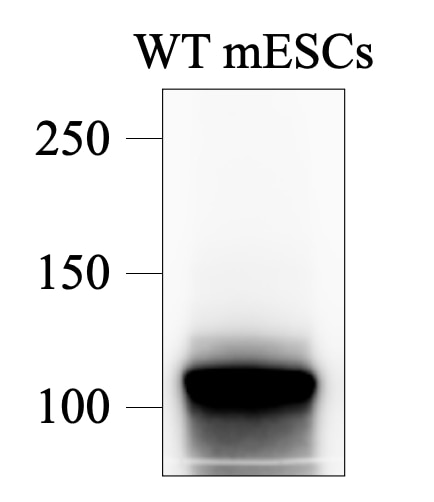
All four reviews rate the antibody 5 stars for Western blot detection of ZCCHC8. Users tested it across multiple cell types including Jurkat, mESCs, HEK293T, and HeLa, with dilutions ranging from 1:1000 to 1:3000. Reviewers consistently reported strong, specific signal with no unspecific bands. One user highlighted that a 1-hour incubation at room temperature was sufficient. Overall, the antibody is praised for reliable and clean ZCCHC8 detection in nuclear extracts and whole-cell lysates.
The reviews below have been submitted by verified Proteintech customers who received an incentive for providing their feedback.
Fabienne (Verified Customer) (05-09-2025) | Perfect for detecting ZCCHC8 by western blot. Tested on nuclear cell extracts
 |
Tsimafei (Verified Customer) (04-22-2025) | Great antibody for Zcchc8 detection in mESCs
 |
Moritz (Verified Customer) (08-20-2024) | I used this antibody to detect ZCCHC8 in HEK293T WT cell lysate on Western blot, which worked perfectly. The signal was very specific, no unspecific bands were detectable.
|
Roy (Verified Customer) (06-15-2024) | Perfect for detecting the NEXT complex component ZCCHC8 by WB (1h incubation at room temperature, 1/1000 dilution)
|


