
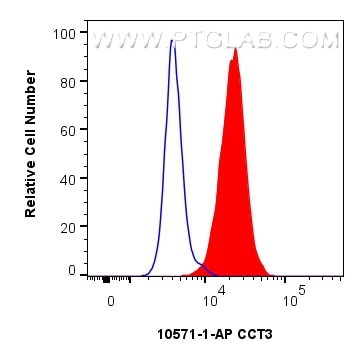
Tested Applications
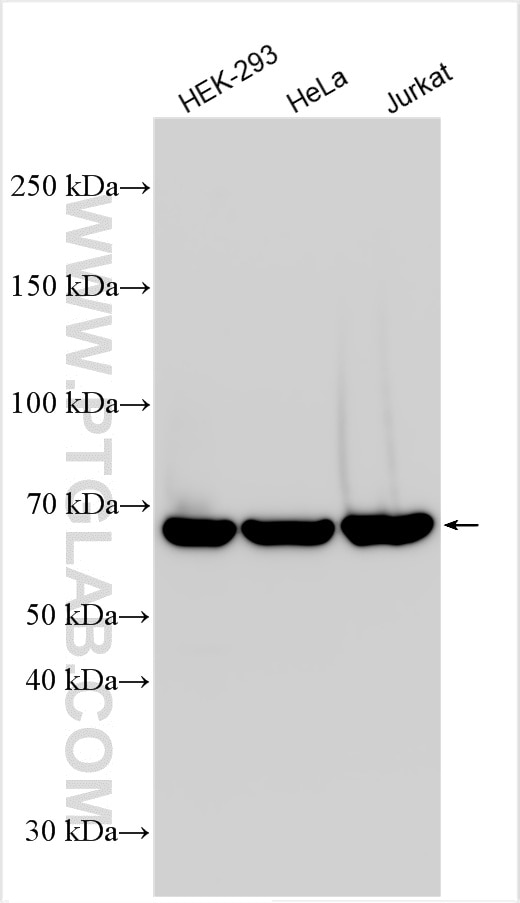
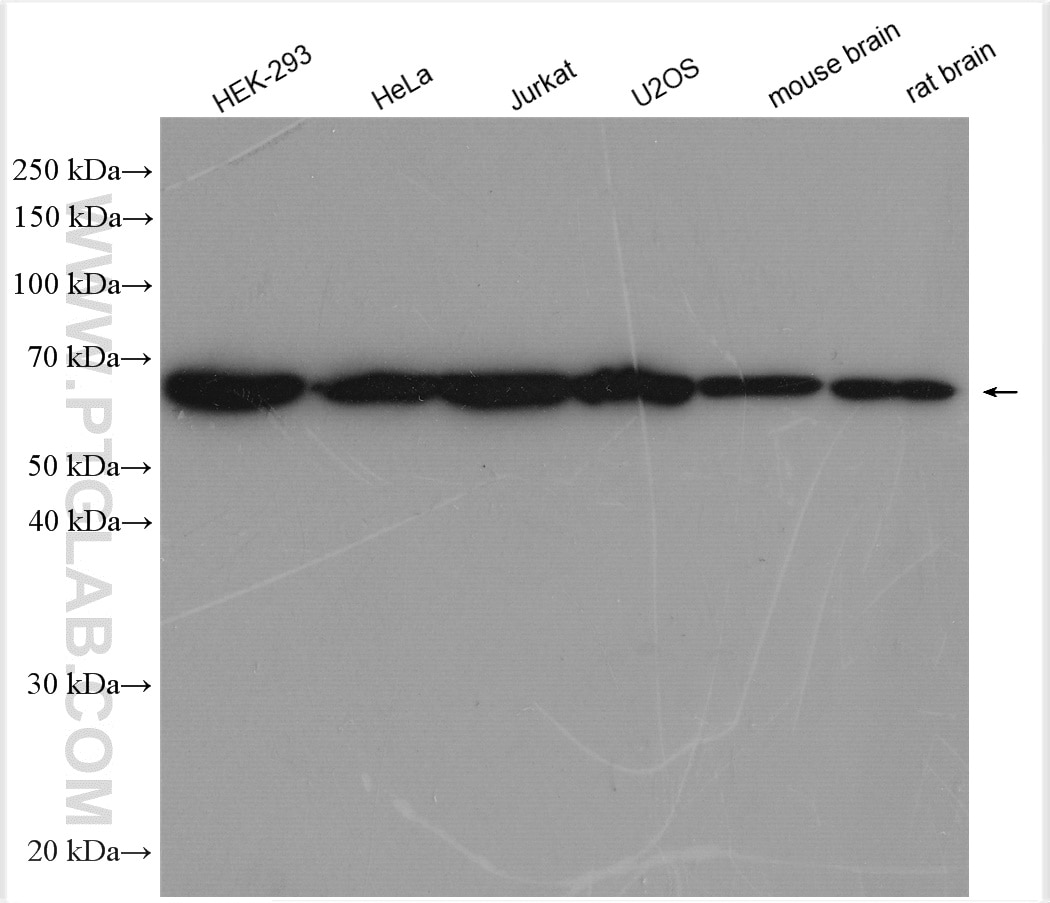
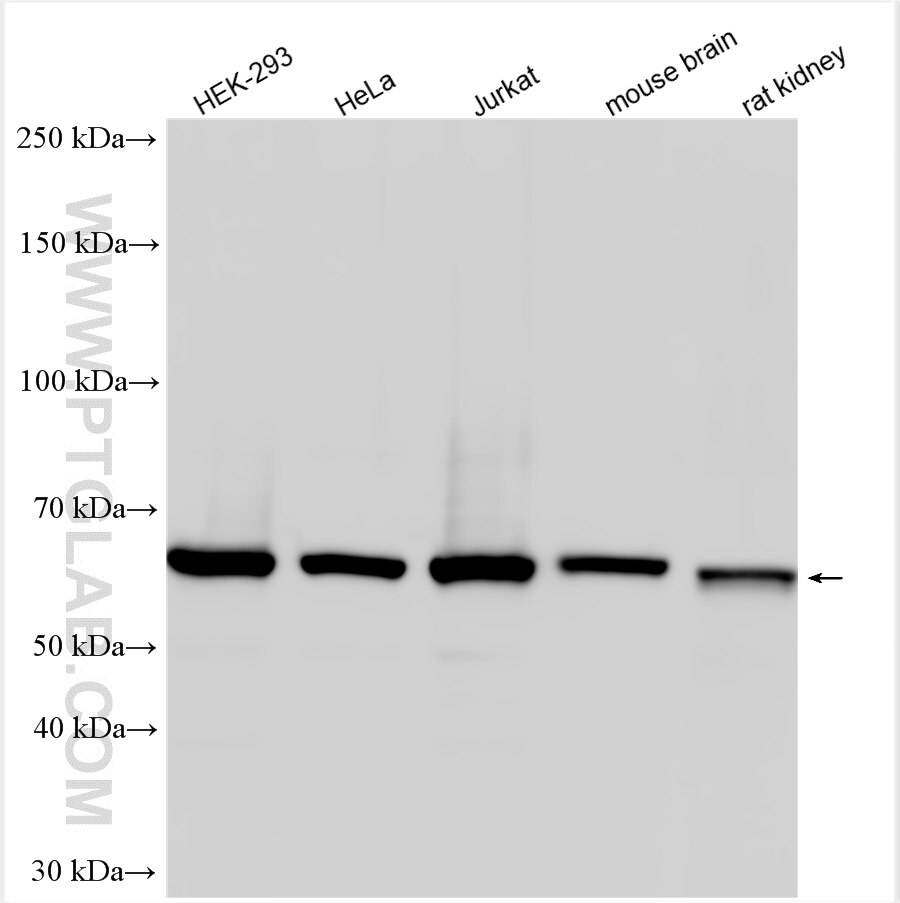
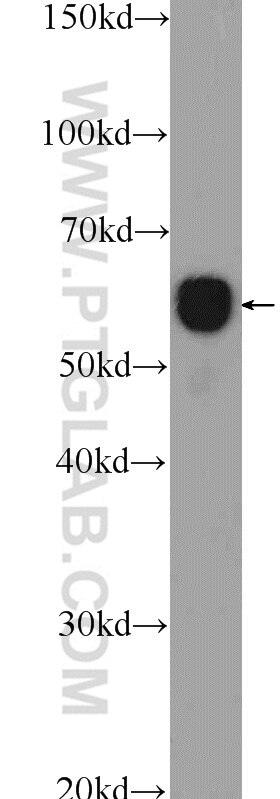
| Positive WB detected in | HEK-293 cells, rat kidney tissue, HeLa cells, Jurkat cells, mouse brain tissue, mouse kidney tissue, U2OS cells, rat brain tissue |
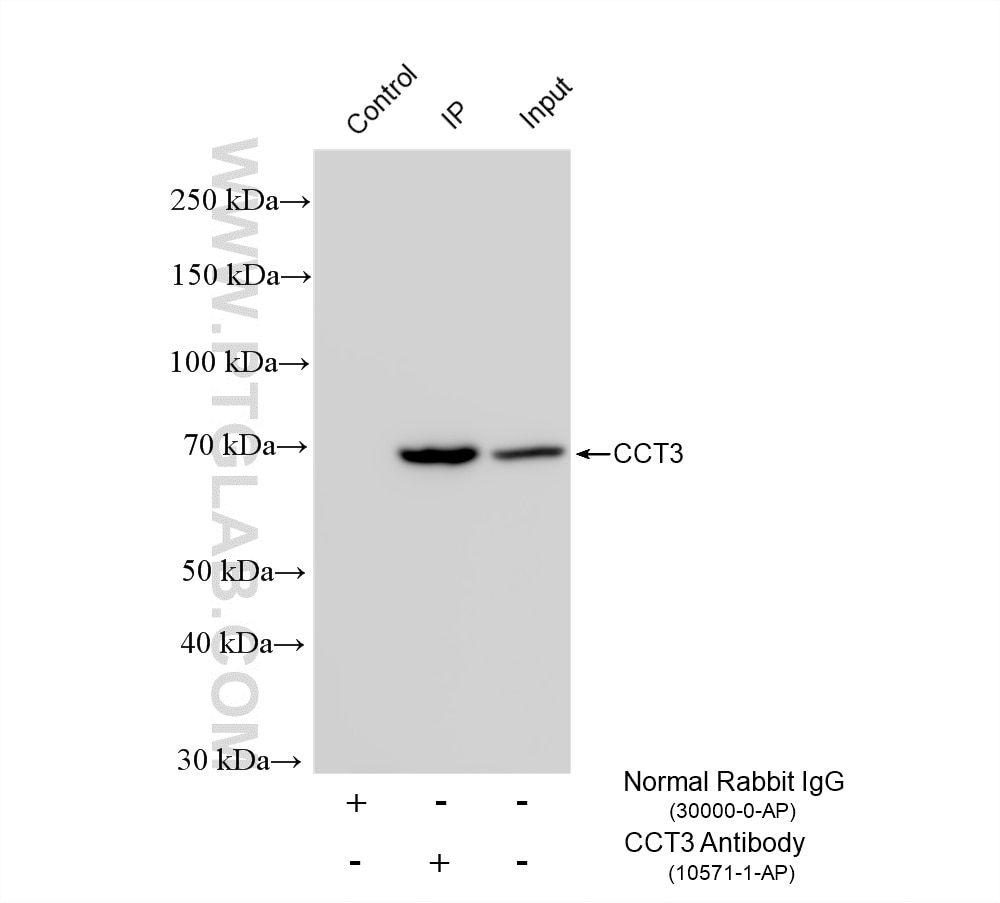
| Positive IP detected in | mouse brain tissue |
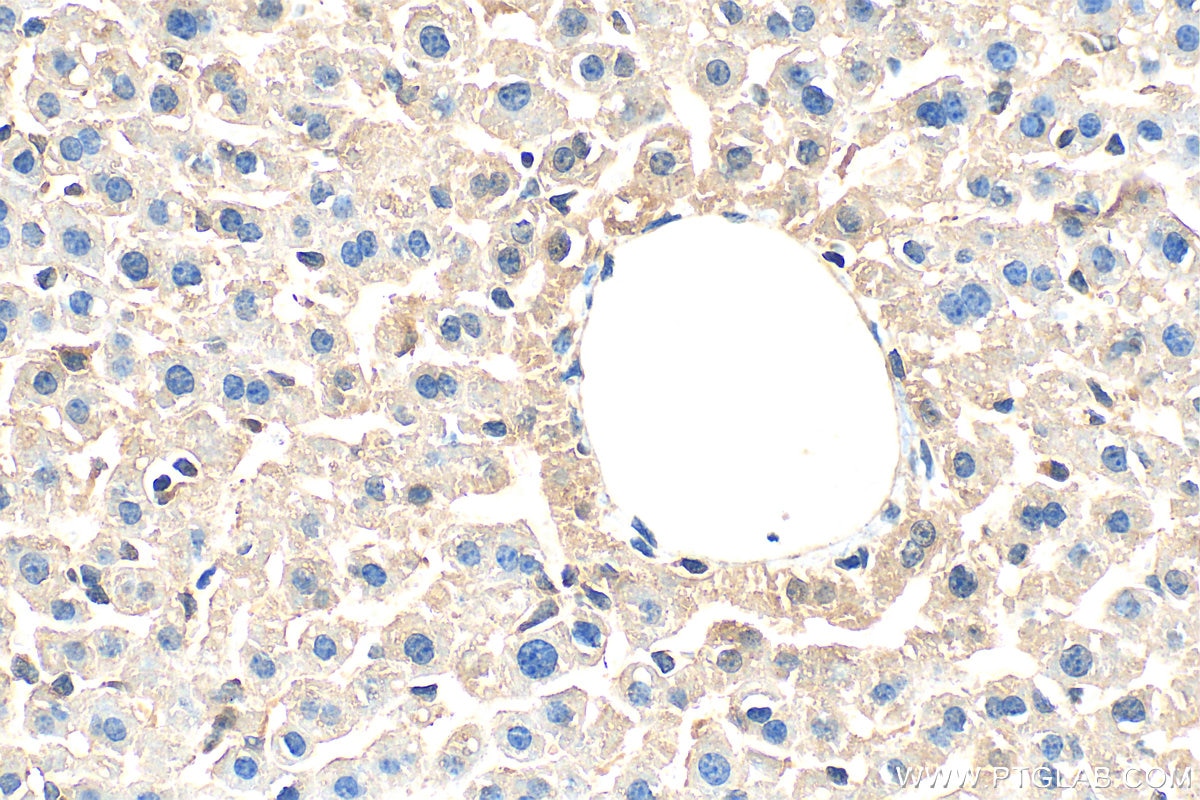
| Positive IHC detected in | mouse liver tissue Note: suggested antigen retrieval with TE buffer pH 9.0; (*) Alternatively, antigen retrieval may be performed with citrate buffer pH 6.0 |
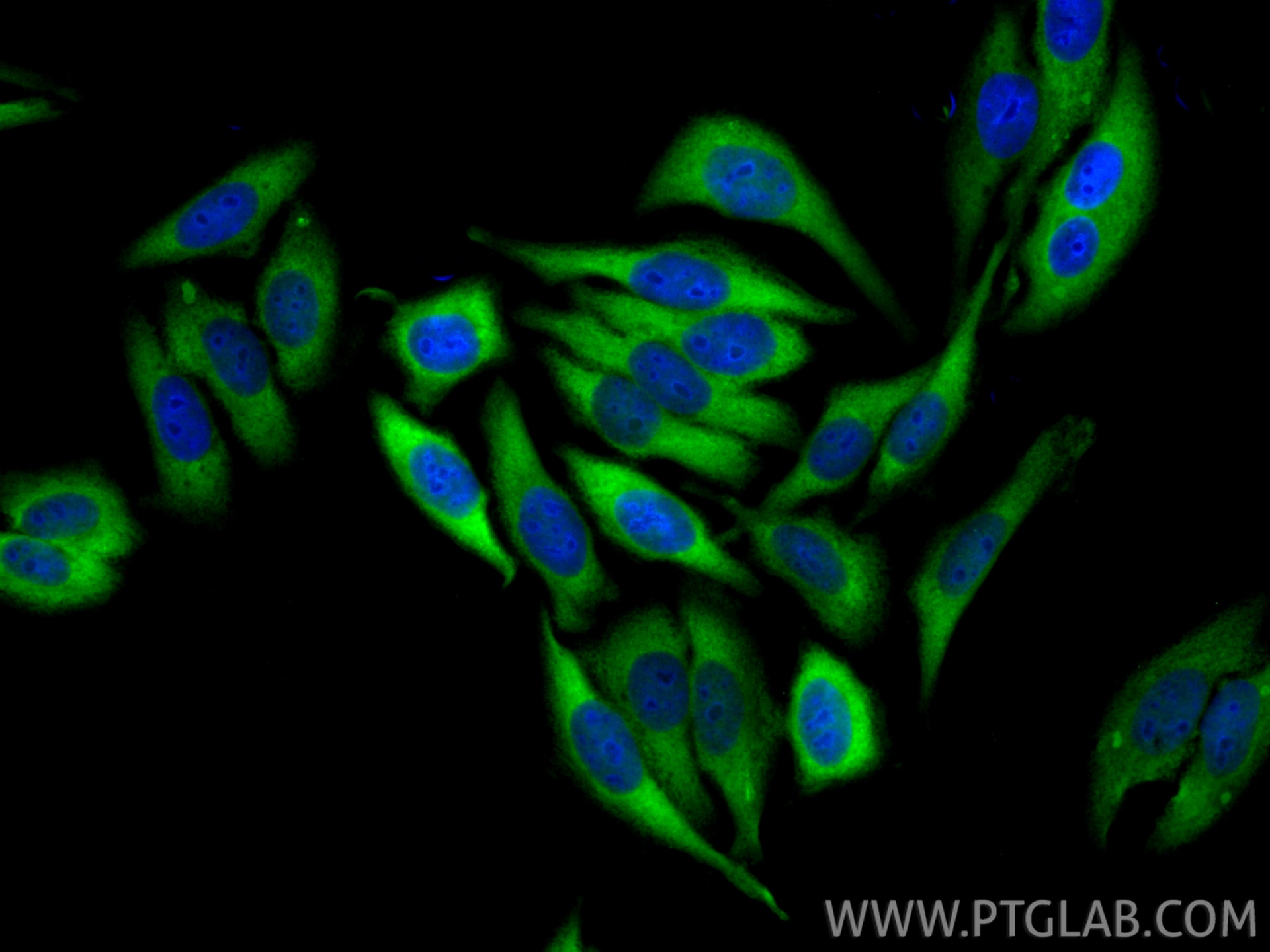
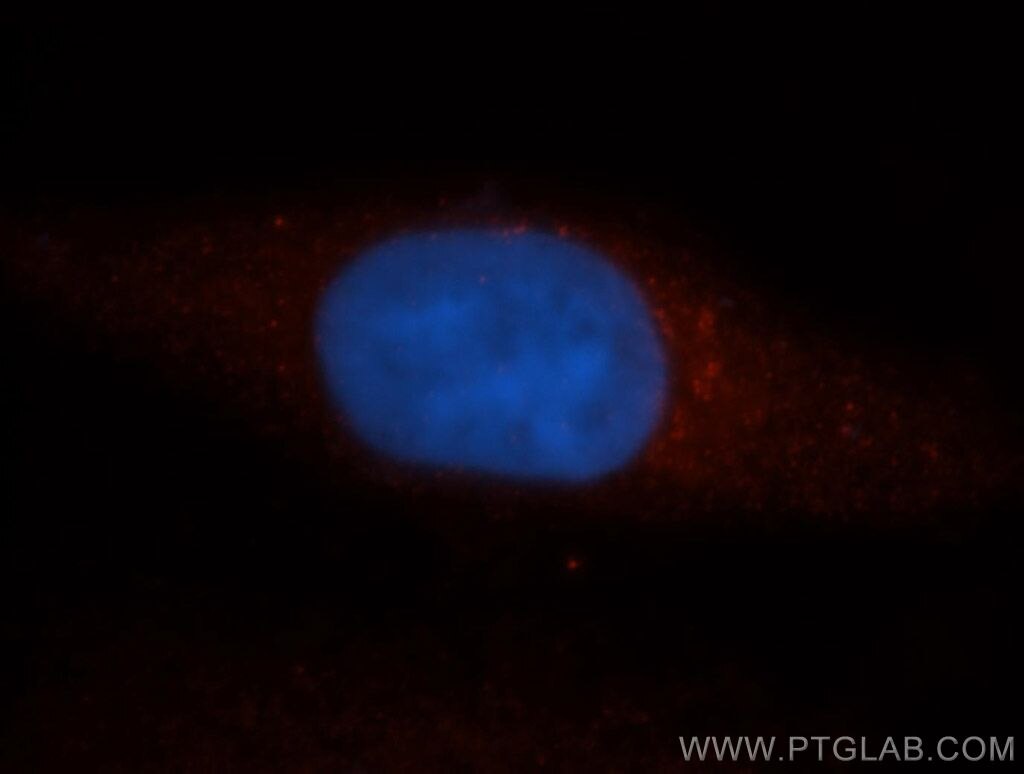
| Positive IF/ICC detected in | HepG2 cells |
| Positive FC (Intra) detected in | HepG2 cells |
Recommended dilution
| Application | Dilution |
|---|---|
| Western Blot (WB) | WB : 1:5000-1:50000 |
| Immunoprecipitation (IP) | IP : 0.5-4.0 ug for 1.0-3.0 mg of total protein lysate |
| Immunohistochemistry (IHC) | IHC : 1:50-1:500 |
| Immunofluorescence (IF)/ICC | IF/ICC : 1:50-1:500 |
| Flow Cytometry (FC) (INTRA) | FC (INTRA) : 0.25 ug per 10^6 cells in a 100 µl suspension |
| It is recommended that this reagent should be titrated in each testing system to obtain optimal results. | |
| Sample-dependent, Check data in validation data gallery. | |
Product Information
10571-1-AP targets CCT3 in WB, IHC, IF/ICC, IP, CoIP, ELISA applications and shows reactivity with human, mouse, rat samples.
| Tested Reactivity | human, mouse, rat |
| Cited Reactivity | human, mouse |
| Host / Isotype | Rabbit / IgG |
| Class | Polyclonal |
| Type | Antibody |
| Immunogen |
CatNo: Ag0843 Product name: Recombinant human CCT3 protein Source: e coli.-derived, PGEX-4T Tag: GST Domain: 246-545 aa of BC006501 Sequence: EYKKGESQTDIEITREEDFTRILQMEEEYIQQLCEDIIQLKPDVVITEKGISDLAQHYLMRANITAIRRVRKTDNNRIARACGARIVSRPEELREDDVGTGAGLLEIKKIGDEYFTFITDCKDPKACTILLRGASKEILSEVERNLQDAMQVCRNVLLDPQLVPGGGASEMAVAHALTEKSKAMTGVEQWPYRAVAQALEVIPRTLIQNCGASTIRLLTSLRAKHTQENCETWGVNGETGTLVDMKELGIWEPLAVKLQTYKTAVETAVLLLRIDDIVSGHKKKGDDQSRQGGAPDAGQE Predict reactive species |
| Full Name | chaperonin containing TCP1, subunit 3 (gamma) |
| Calculated Molecular Weight | 60 kDa |
| Observed Molecular Weight | 60 kDa |
| GenBank Accession Number | BC006501 |
| Gene Symbol | CCT3 |
| Gene ID (NCBI) | 7203 |
| RRID | AB_2073658 |
| Conjugate | Unconjugated |
| Form | Liquid |
| Purification Method | Antigen affinity purification |
| UNIPROT ID | P49368 |
| Storage Buffer | PBS with 0.02% sodium azide and 50% glycerol, pH 7.3. |
| Storage Conditions | Store at -20°C. Stable for one year after shipment. Aliquoting is unnecessary for -20oC storage. 20ul sizes contain 0.1% BSA. |
Background Information
CCT3 protein (full name: chaperonin containing TCP1 subunit 3, also known as the gamma subunit of TCP-1 protein) is an important member of the TCP-1 chaperonin family. As one of the eight essential subunits of the CCT/TRiC complex, its core function is to act as a molecular chaperone that assists in the correct folding of other cellular proteins under ATP hydrolysis. It is particularly involved in the folding process of key cytoskeletal components such as actin and tubulin, while also participating in important biological activities including ciliogenesis and telomere maintenance.
Protocols
| Product Specific Protocols | |
|---|---|
| FC protocol for CCT3 antibody 10571-1-AP | Download protocol |
| IF protocol for CCT3 antibody 10571-1-AP | Download protocol |
| IHC protocol for CCT3 antibody 10571-1-AP | Download protocol |
| IP protocol for CCT3 antibody 10571-1-AP | Download protocol |
| WB protocol for CCT3 antibody 10571-1-AP | Download protocol |
| Standard Protocols | |
|---|---|
| Click here to view our Standard Protocols |
Publications
What published studies show
| Species | Application | Title |
|---|---|---|
Adv Sci (Weinh) Primate-Specific DAZ Regulates Translation of Cell Proliferation-Related mRNAs and is Essential for Maintenance of Spermatogonia | ||
Proc Natl Acad Sci U S A BBS6, BBS10, and BBS12 form a complex with CCT/TRiC family chaperonins and mediate BBSome assembly.
| ||
Dev Biol Involvement of multimeric protein complexes in mediating the capacitation-dependent binding of human spermatozoa to homologous zonae pellucidae. |

