

Tested Applications
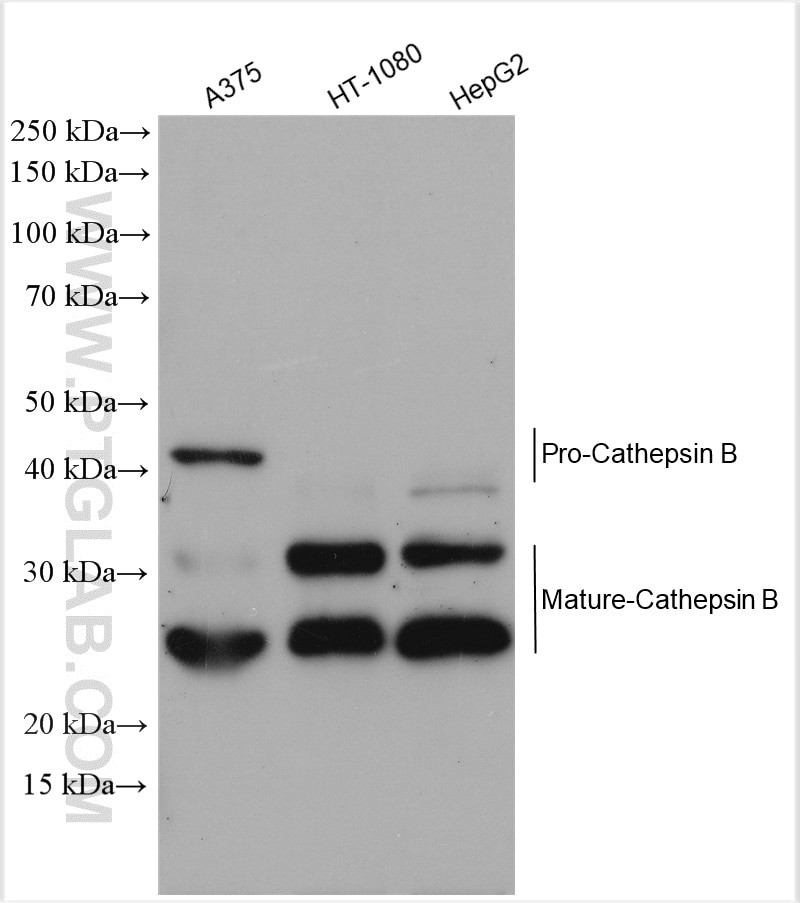
| Positive WB detected in | A375 cells, HepG2 cells, HT-1080 cells |
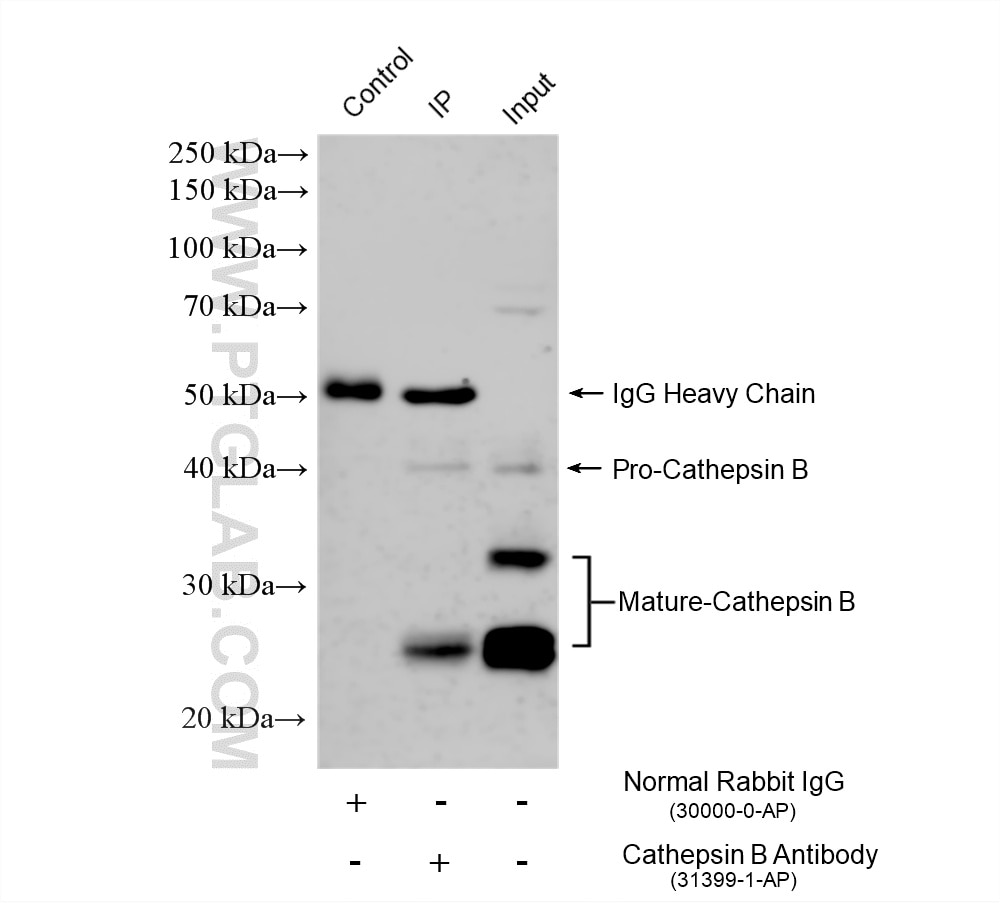
| Positive IP detected in | HepG2 cells |
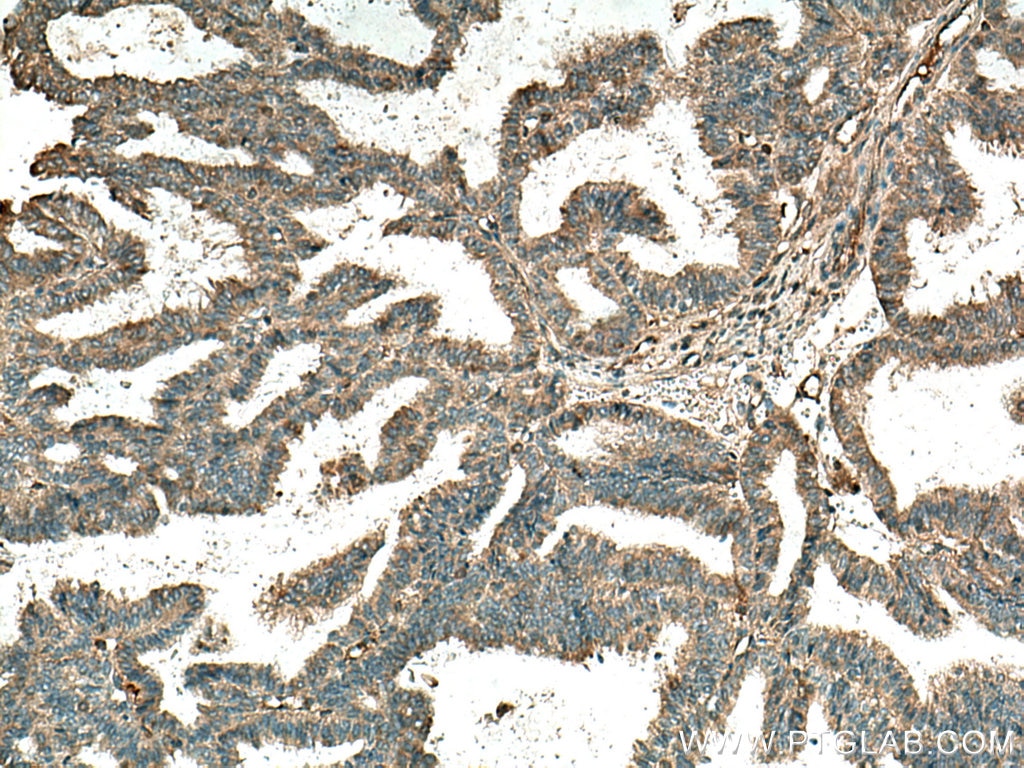
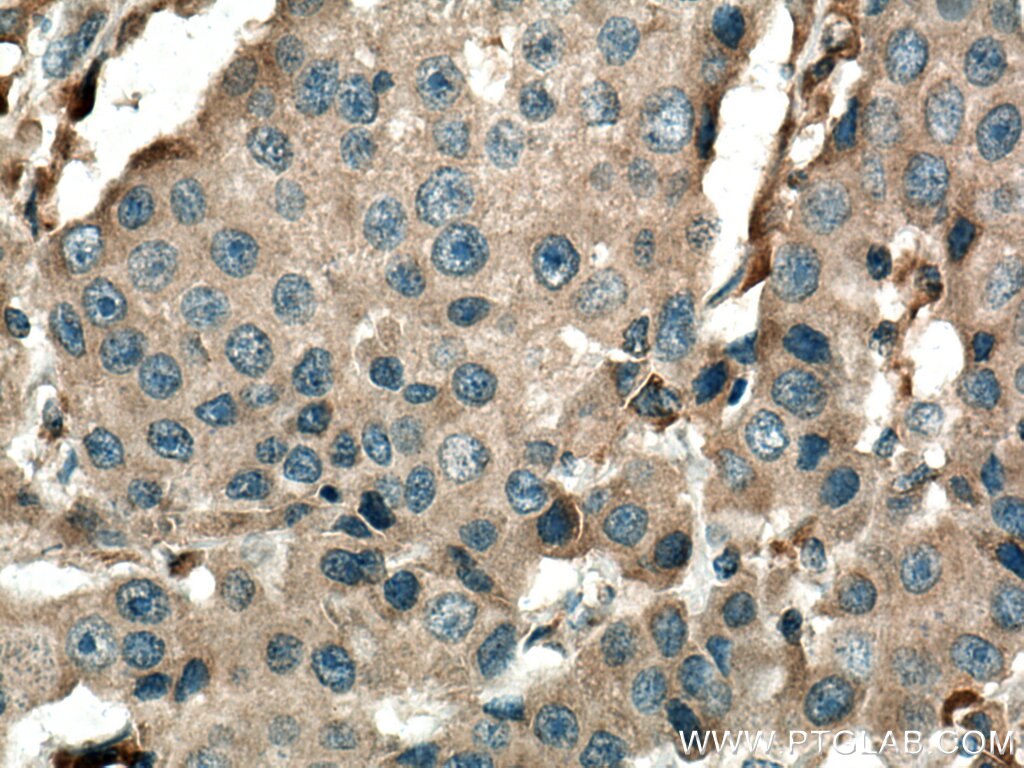
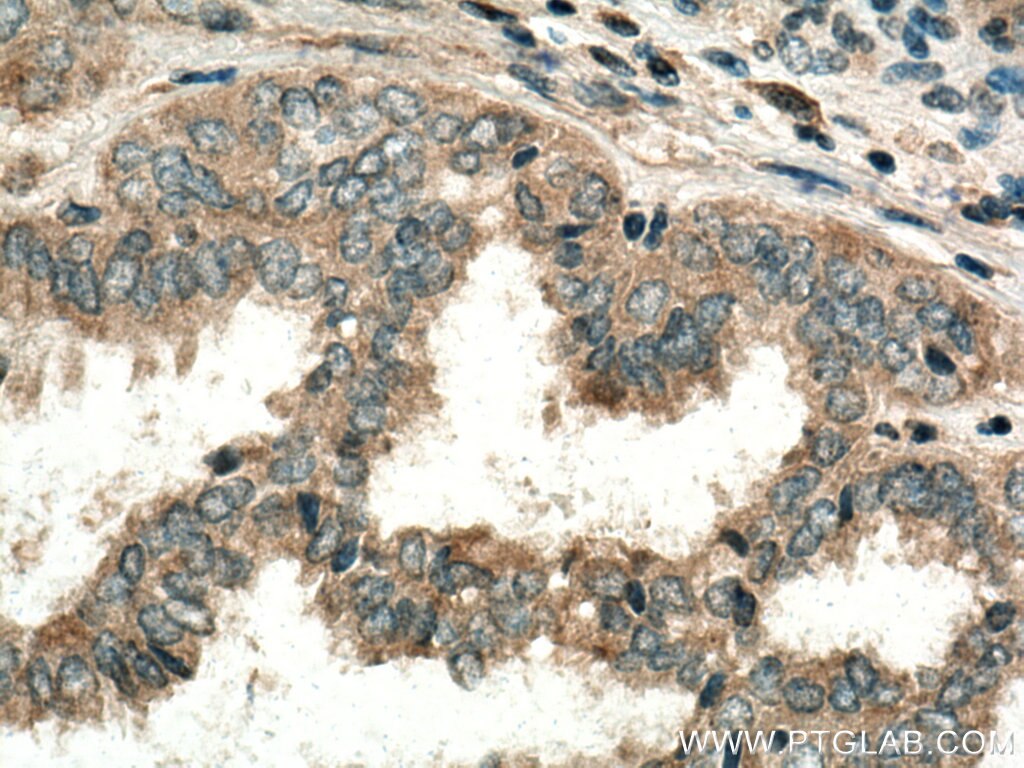
| Positive IHC detected in | human ovary tumor tissue, human breast cancer tissue Note: suggested antigen retrieval with TE buffer pH 9.0; (*) Alternatively, antigen retrieval may be performed with citrate buffer pH 6.0 |
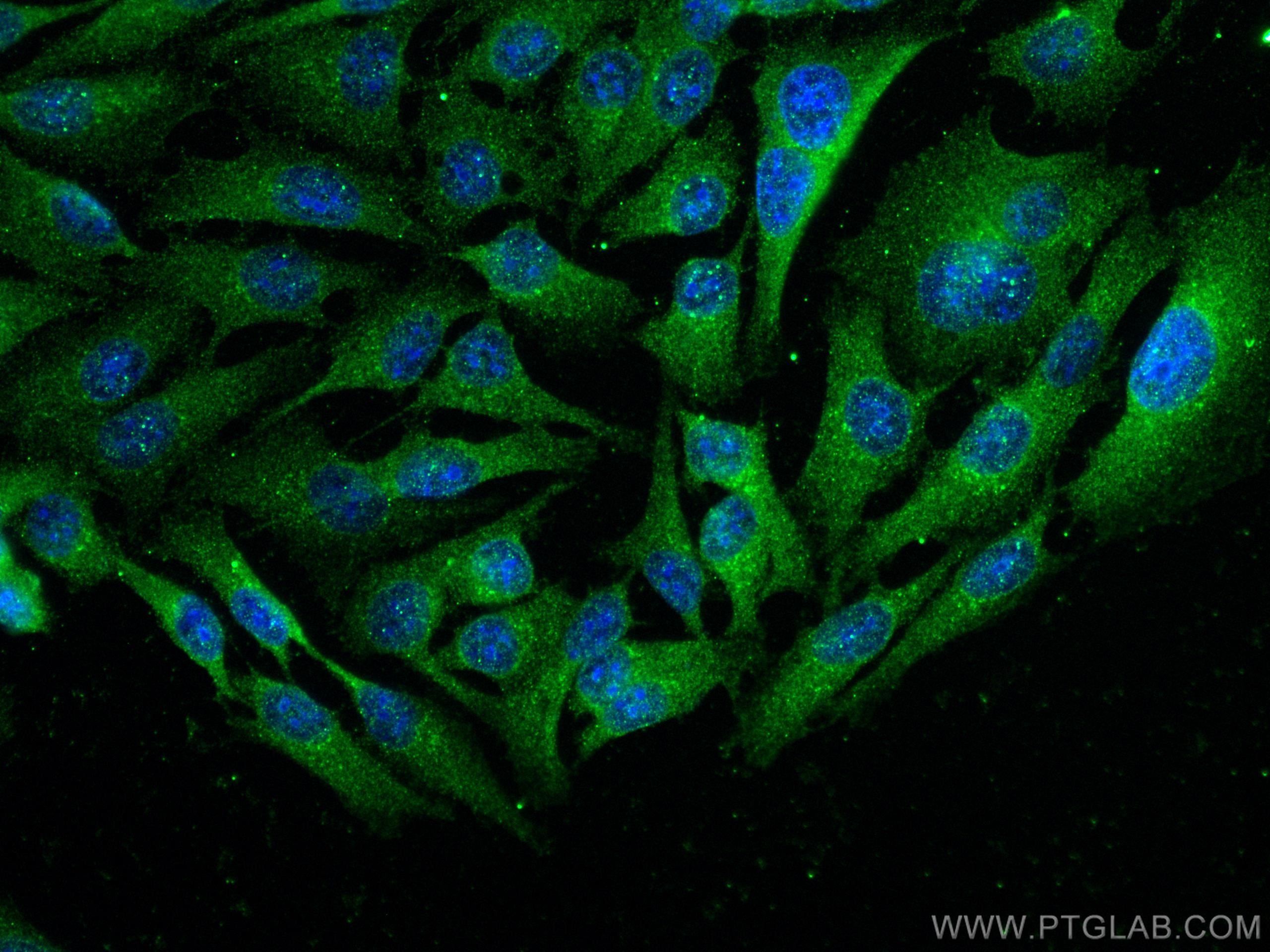
| Positive IF/ICC detected in | A375 cells |
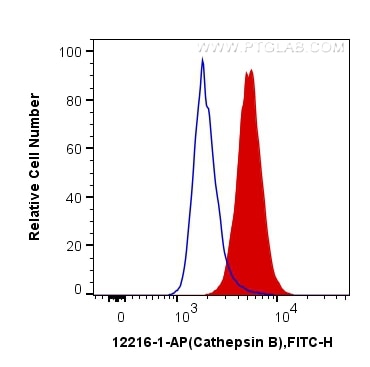
| Positive FC (Intra) detected in | MCF-7 cells |
Recommended dilution
| Application | Dilution |
|---|---|
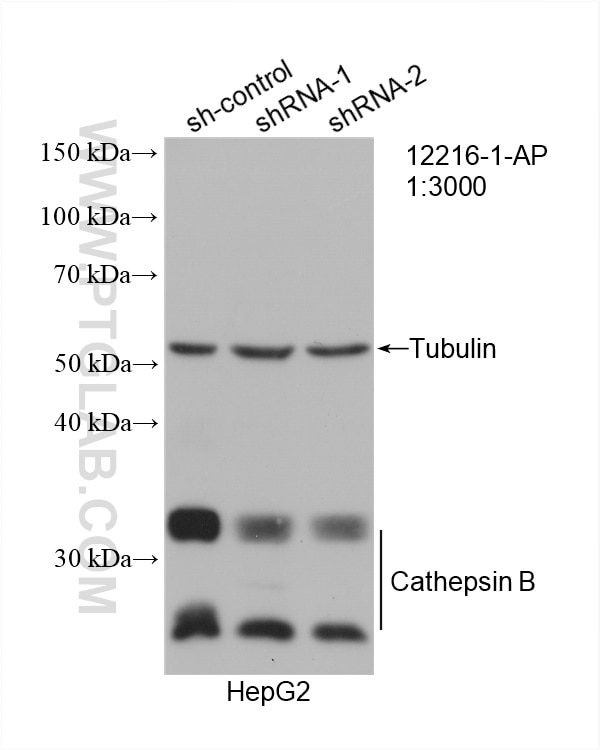
| Western Blot (WB) | WB : 1:1000-1:4000 |
| Immunoprecipitation (IP) | IP : 0.5-4.0 ug for 1.0-3.0 mg of total protein lysate |
| Immunohistochemistry (IHC) | IHC : 1:50-1:500 |
| Immunofluorescence (IF)/ICC | IF/ICC : 1:200-1:800 |
| Flow Cytometry (FC) (INTRA) | FC (INTRA) : 0.20 ug per 10^6 cells in a 100 µl suspension |
| It is recommended that this reagent should be titrated in each testing system to obtain optimal results. | |
| Sample-dependent, Check data in validation data gallery. | |
Product Information
12216-1-AP targets Cathepsin B in WB, IHC, IF/ICC, FC (Intra), IP, ELISA applications and shows reactivity with human samples.
| Tested Reactivity | human |
| Cited Reactivity | human, mouse, rat, pig, zebrafish, bovine, frog |
| Host / Isotype | Rabbit / IgG |
| Class | Polyclonal |
| Type | Antibody |
| Immunogen |
CatNo: Ag2898 Product name: Recombinant human Cathepsin B protein Source: e coli.-derived, PGEX-4T Tag: GST Domain: 1-339 aa of BC010240 Sequence: MWQLWASLCCLLVLANARSRPSFHPVSDELVNYVNKRNTTWQAGHNFYNVDMGYLKRLCGTFLGGPKPPQRVMFTEDLKLPASFDAREQWPQCPTIKEIRDQGSCGSCWAFGAVEAISDRICIHTNAHVSVEVSAEDLLTCCGSMCGDGCNGGYPAEAWNFWTRKGLVSGGLYESHVGCRPYSIPPCEHHVNGSRPPCTGEGDTPKCSKICEPGYSPTYKQDKHYGYNSYSVSNSEKDIMAEIYKNGPVEGAFSVYSDFLLYKSGVYQHVTGEMMGGHAIRILGWGVENGTPYWLVANSWNTDWGDNGFFKILRGQDHCGIESEVVAGIPRTDQYWEKI Predict reactive species |
| Full Name | cathepsin B |
| Calculated Molecular Weight | 339 aa, 38 kDa |
| Observed Molecular Weight | 25 kDa, 31 kDa, 43 kDa |
| GenBank Accession Number | BC010240 |
| Gene Symbol | Cathepsin B |
| Gene ID (NCBI) | 1508 |
| RRID | AB_2086929 |
| Conjugate | Unconjugated |
| Form | Liquid |
| Purification Method | Antigen affinity purification |
| UNIPROT ID | P07858 |
| Storage Buffer | PBS with 0.02% sodium azide and 50% glycerol, pH 7.3. |
| Storage Conditions | Store at -20°C. Stable for one year after shipment. Aliquoting is unnecessary for -20oC storage. 20ul sizes contain 0.1% BSA. |
Background Information
CTSB(Cathepsin B) is also named as CPSB and belongs to the peptidase C1 family. It participates in intracellular degradation and turnover of proteins. Cathepsin B precursors found in human malignant ascites fluid do not possess mannose-rich carbohydrates suggesting that a defect in the post translational processing of carbohydrate moieties on tumor. Cathepsin B exists as both glycosylated and unglycosylated forms(PMID:1637335). In rat macrophages and hepatocytes pro- cathepsin B is 39 kDa (unglycosylated =35 kDa), whereas in human fibroblasts procathepsin B is 44.5-46kDa (unglycosylated=39kDa)(PMID:2097084). It can be detected the 43 kDa form of pro-CTSB, 31 kDa and 25 kDa mature forms in mouse brain by western blot(PMID:20616152).
Protocols
| Product Specific Protocols | |
|---|---|
| FC protocol for Cathepsin B antibody 12216-1-AP | Download protocol |
| IF protocol for Cathepsin B antibody 12216-1-AP | Download protocol |
| IHC protocol for Cathepsin B antibody 12216-1-AP | Download protocol |
| IP protocol for Cathepsin B antibody 12216-1-AP | Download protocol |
| WB protocol for Cathepsin B antibody 12216-1-AP | Download protocol |
| Standard Protocols | |
|---|---|
| Click here to view our Standard Protocols |
Publications
What published studies show
Cathepsin B Polyclonal Antibody (Cat# 12216-1-AP) has accumulated 128 citations published in high-impact journals including Nature, Science, Autophagy, Nature Communications, Cell Death & Differentiation, Redox Biology, Advanced Science, and Phytomedicine. The associated research fields encompass autophagy-lysosome pathway regulation, neurodegenerative diseases, cancer biology, ferroptosis, pyroptosis, neuroinflammation, drug resistance, environmental toxicology, and cardiovascular disease.
| Species | Application | Title |
|---|---|---|
Science Atlas of lysosomal aging reveals a metabolite signature shared with lysosomal storage disorders. | ||
Immunity Repression of RIPK1 kinase by INPP5D inhibits expression of diverse proinflammatory mediators and late-onset Alzheimer's disease risk factors | ||
Drug Resist Updat TMOD3 accelerated resistance to immunotherapy in KRAS-mutated pancreatic cancer through promoting autophagy-dependent degradation of ASCL4 | ||
Autophagy Atractylenolide I inhibits angiogenesis and reverses sunitinib resistance in clear cell renal cell carcinoma through ATP6V0D2-mediated autophagic degradation of EPAS1/HIF2α | ||
Autophagy LAMP2-FLOT2 interaction enhances autophagosome-lysosome fusion to protect the septic heart in response to ILC2 |
Reviews
What customers say
This product has received one review with a 5-star rating. The reviewer used it at a 1:500 dilution for immunofluorescence and reported that it works well for both mouse BMDM and human macrophages, recommending the antibody overall.
The reviews below have been submitted by verified Proteintech customers who received an incentive for providing their feedback.
Weihao (Verified Customer) (02-03-2022) | Works well for mouse BMDM and human macrophages, recommend it
|

