

Tested Applications
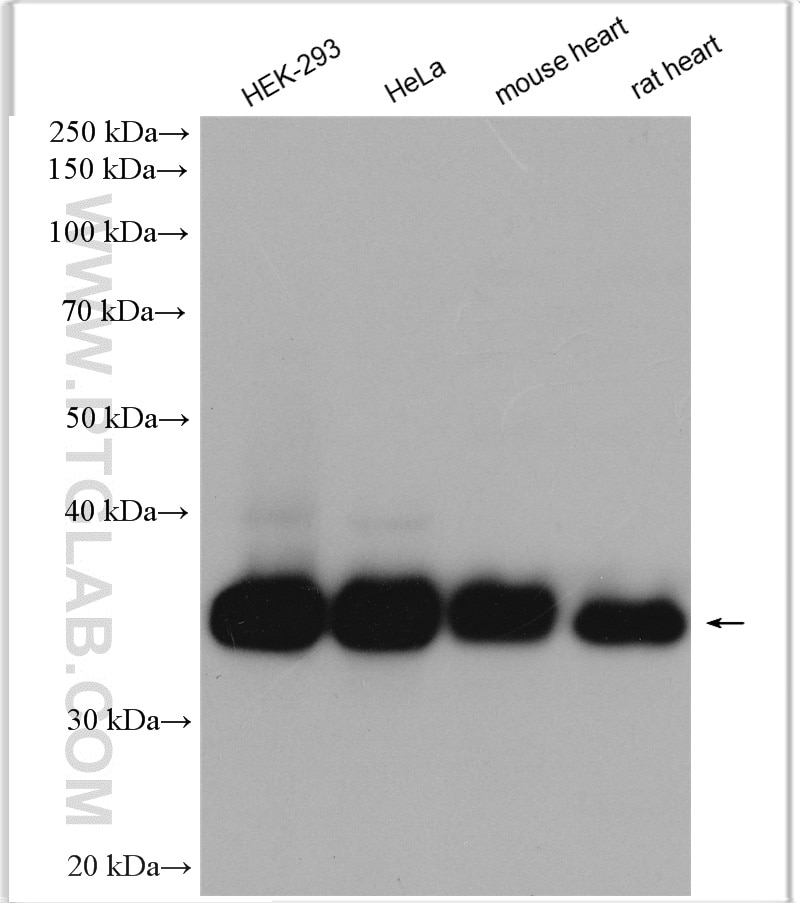
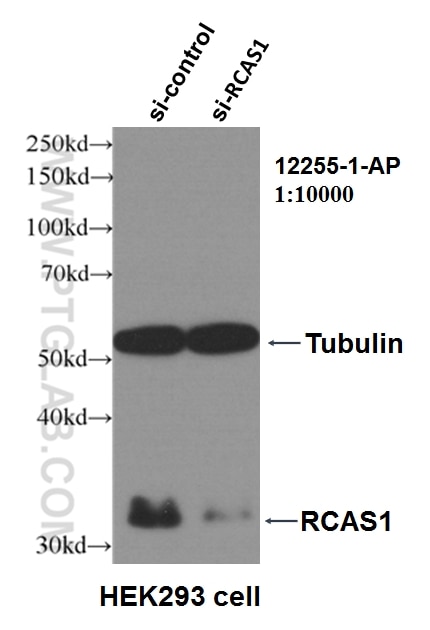
| Positive WB detected in | HEK-293 cells, HeLa cells, mouse heart tissue, rat heart tissue |
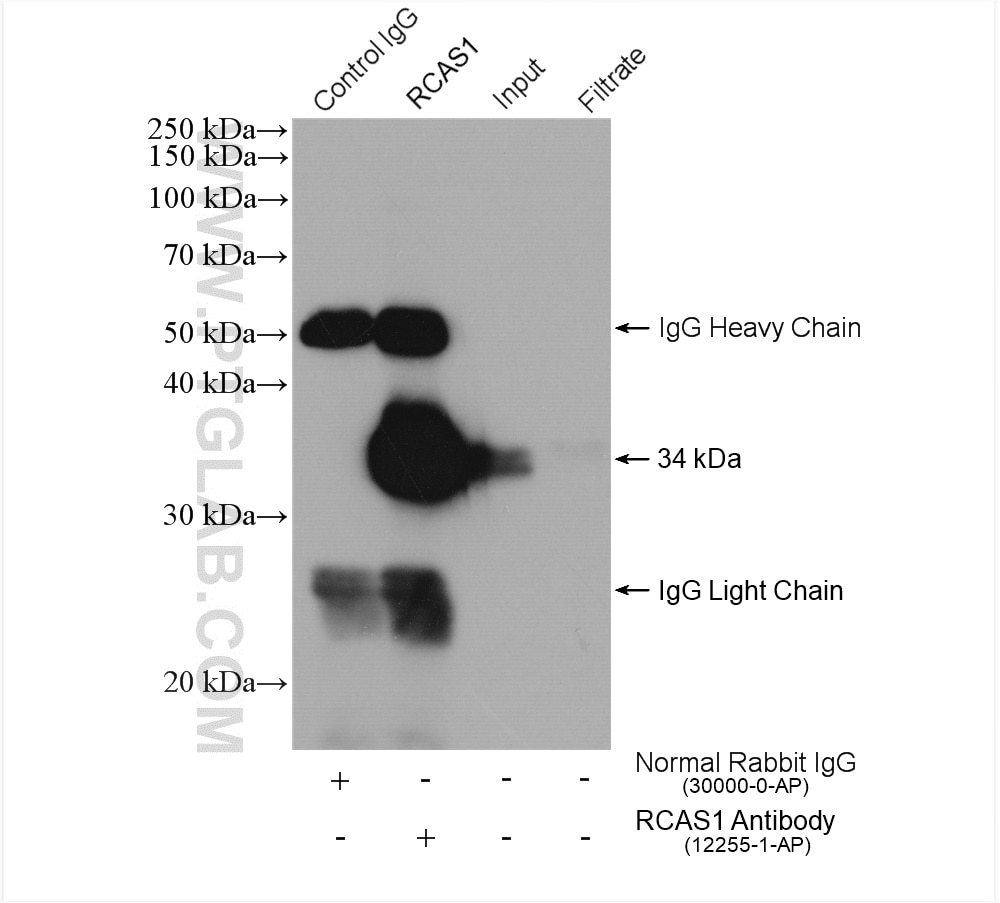
| Positive IP detected in | HeLa cells |
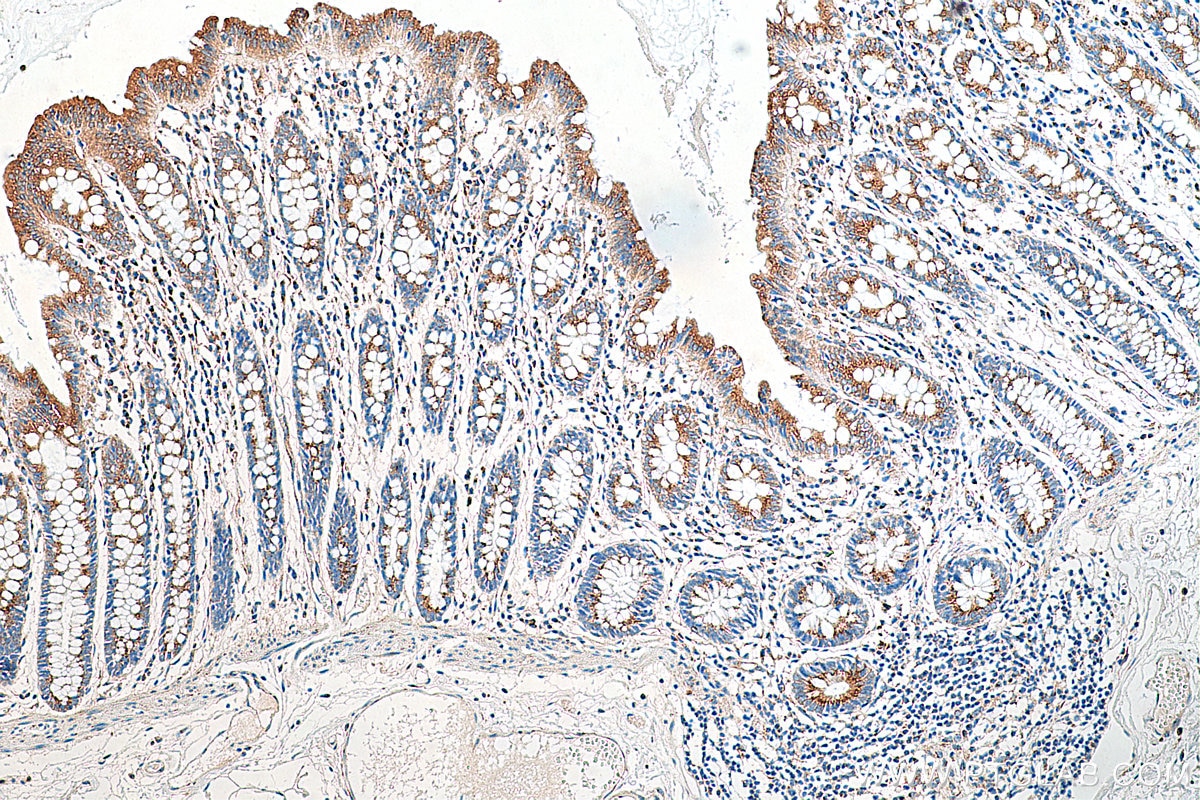
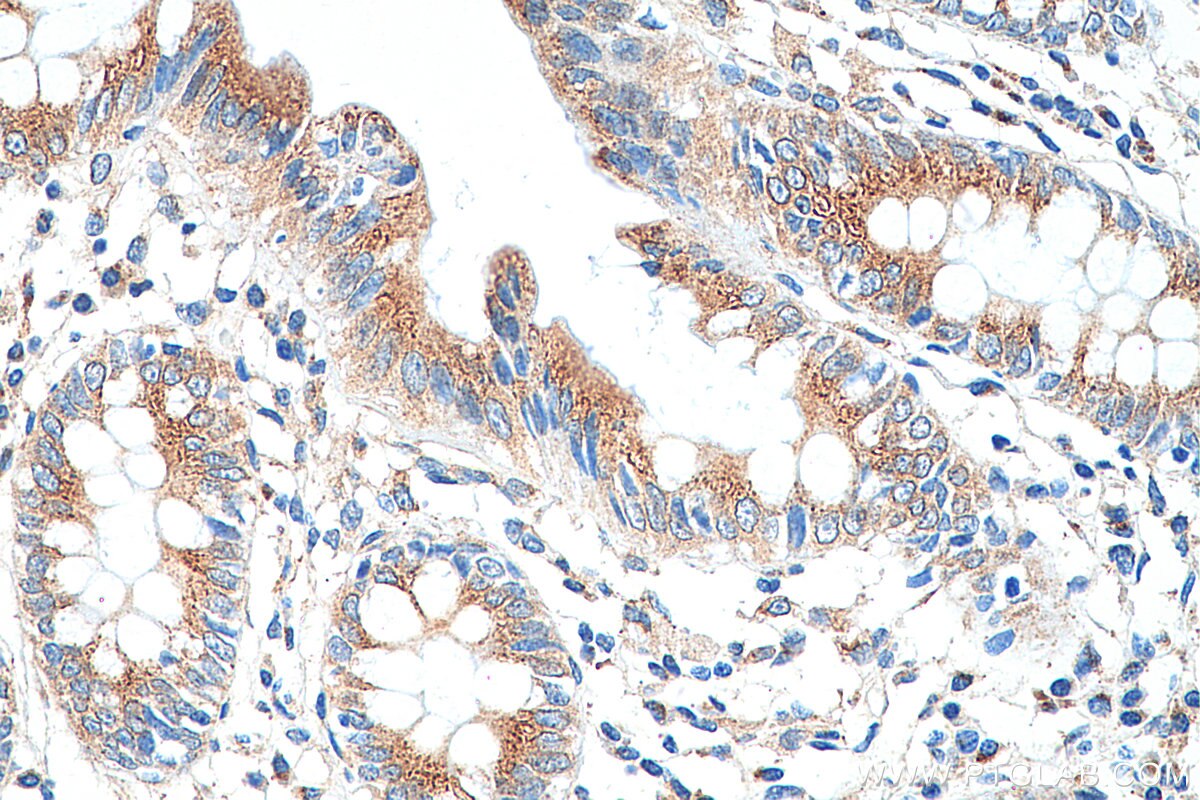
| Positive IHC detected in | human colon tissue Note: suggested antigen retrieval with TE buffer pH 9.0; (*) Alternatively, antigen retrieval may be performed with citrate buffer pH 6.0 |
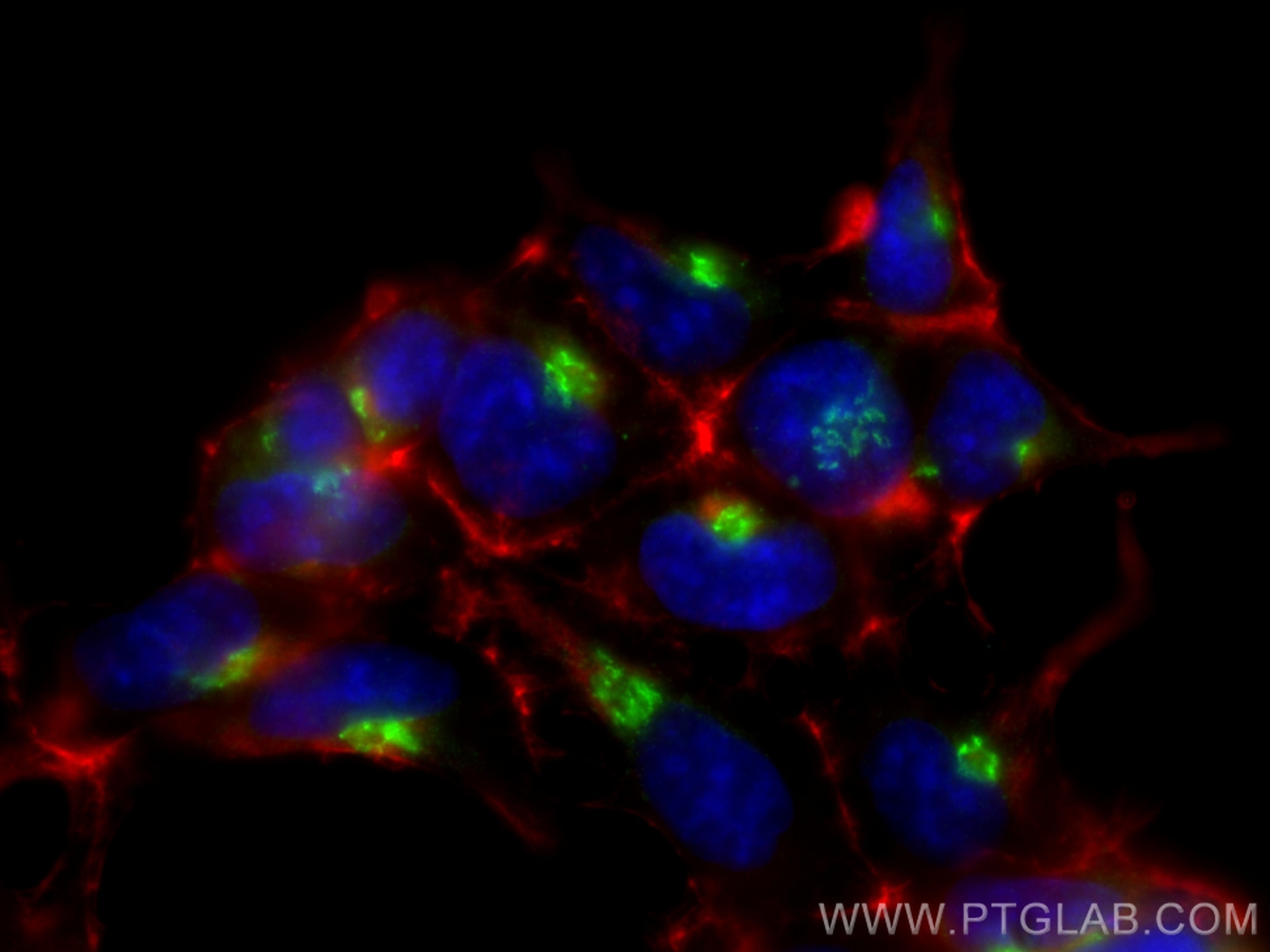
| Positive IF/ICC detected in | HEK-293 cells |
Recommended dilution
| Application | Dilution |
|---|---|
| Western Blot (WB) | WB : 1:1000-1:4000 |
| Immunoprecipitation (IP) | IP : 0.5-4.0 ug for 1.0-3.0 mg of total protein lysate |
| Immunohistochemistry (IHC) | IHC : 1:250-1:1000 |
| Immunofluorescence (IF)/ICC | IF/ICC : 1:600-1:2400 |
| It is recommended that this reagent should be titrated in each testing system to obtain optimal results. | |
| Sample-dependent, Check data in validation data gallery. | |
Product Information
12255-1-AP targets RCAS1 in WB, IHC, IF/ICC, IP, ELISA applications and shows reactivity with human, mouse, rat samples.
| Tested Reactivity | human, mouse, rat |
| Cited Reactivity | rat |
| Host / Isotype | Rabbit / IgG |
| Class | Polyclonal |
| Type | Antibody |
| Immunogen |
CatNo: Ag2905 Product name: Recombinant human EBAG9 protein Source: e coli.-derived, PGEX-4T Tag: GST Domain: 1-213 aa of BC017729 Sequence: MAITQFRLFKFCTCLATVFSFLKRLICRSGRGRKLSGDQITLPTTVDYSSVPKQTDVEEWTSWDEDAPTSVKIEGGNGNVATQQNSLEQLEPDYFKDMTPTIRKTQKIVIKKREPLNFGIPDGSTGFSSRLAATQDLPFIHQSSELGDLDTWQENTNAWEEEEDAAWQAEEVLRQQKLADREKRAAEQQRKKMEKEAQRLMKKEQNKIGVKLS Predict reactive species |
| Full Name | estrogen receptor binding site associated, antigen, 9 |
| Calculated Molecular Weight | 213 aa, 24 kDa |
| Observed Molecular Weight | 32 kDa |
| GenBank Accession Number | BC017729 |
| Gene Symbol | RCAS1 |
| Gene ID (NCBI) | 9166 |
| RRID | AB_2246420 |
| Conjugate | Unconjugated |
| Form | Liquid |
| Purification Method | Antigen affinity purification |
| UNIPROT ID | O00559 |
| Storage Buffer | PBS with 0.02% sodium azide and 50% glycerol, pH 7.3. |
| Storage Conditions | Store at -20°C. Stable for one year after shipment. Aliquoting is unnecessary for -20oC storage. 20ul sizes contain 0.1% BSA. |
Background Information
Estrogen receptor-binding fragment-associated antigen 9 (EBAG9) gene was identified as an estrogen-responsive gene. The gene product, receptor-binding cancer antigen expressed on SiSo cells (RCAS1), is associated with aggressive characteristics and poor overall survival for 15 different human malignancies. The correlation between RCAS1 expression and several clinicopathological variables, including tumor size, clinical stage, invasion depth and lymph node metastasis highlights this molecule's clinical significance. Expression of RCAS1 in tumor cells plays an important role in evasion from host immune system resulting tumor progression, invasion and metastasis. Further exploration of RCAS1 biological function will facilitate development of novel therapeutic strategies that target RCAS1.
Protocols
| Product Specific Protocols | |
|---|---|
| IF protocol for RCAS1 antibody 12255-1-AP | Download protocol |
| IHC protocol for RCAS1 antibody 12255-1-AP | Download protocol |
| IP protocol for RCAS1 antibody 12255-1-AP | Download protocol |
| WB protocol for RCAS1 antibody 12255-1-AP | Download protocol |
| Standard Protocols | |
|---|---|
| Click here to view our Standard Protocols |
Publications
What published studies show
The RCAS1 (EBAG9) Polyclonal Antibody, catalog number 12255-1-AP, has 1 total citation. It was cited in Journal of Ethnopharmacology (IF 6.8) in a 2024 study investigating the inhibitory effects of Mongolian medicinal He-Zi-3 soup on estrogen- and progestogen-induced mammary gland hyperplasia in rats. The research field is ethnopharmacology and mammary gland pathology. The antibody was used for WB and IHC applications in rat samples.
| Species | Application | Title |
|---|---|---|
J Ethnopharmacol Exploring the inhibitory impact of Mongolian medicinal He-Zi-3 soup on mammary gland hyperplasia in rats induced by estrogen and progestogen |

