

Tested Applications
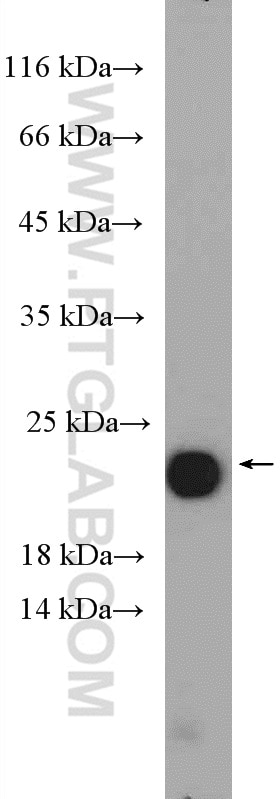
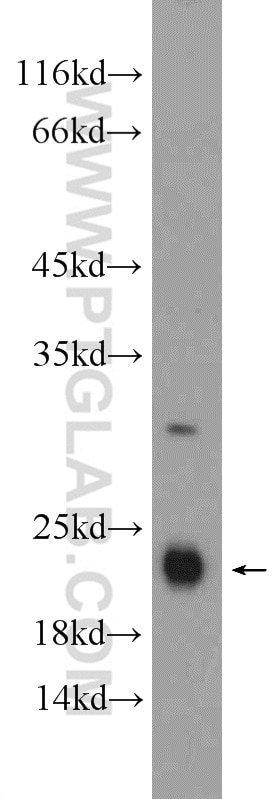
| Positive WB detected in | rat kidney tissue, mouse kidney tissue |
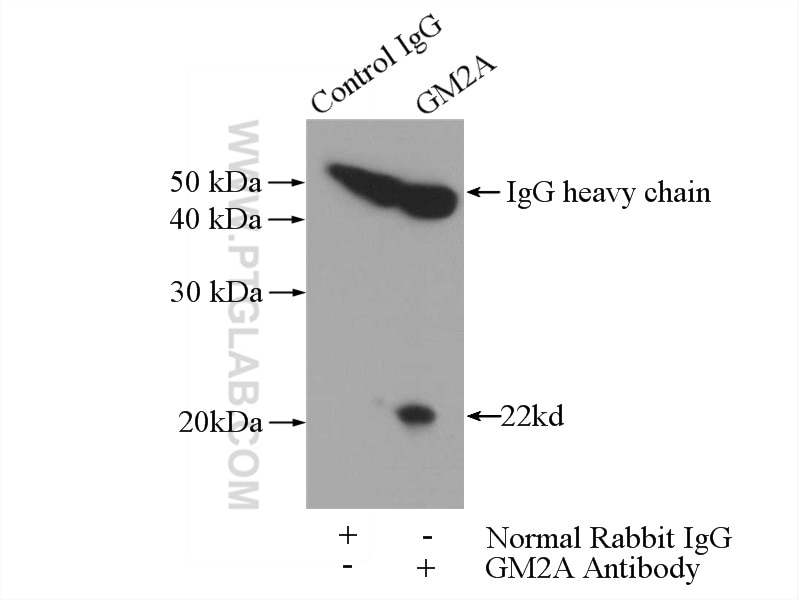
| Positive IP detected in | HEK-293 cells |
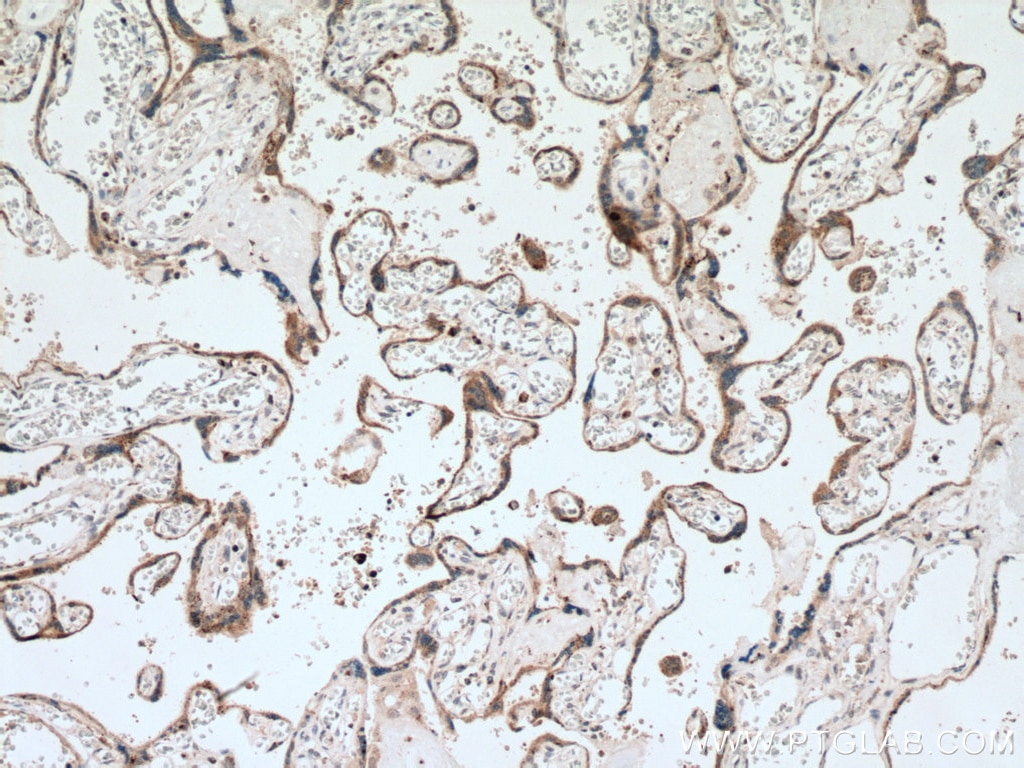
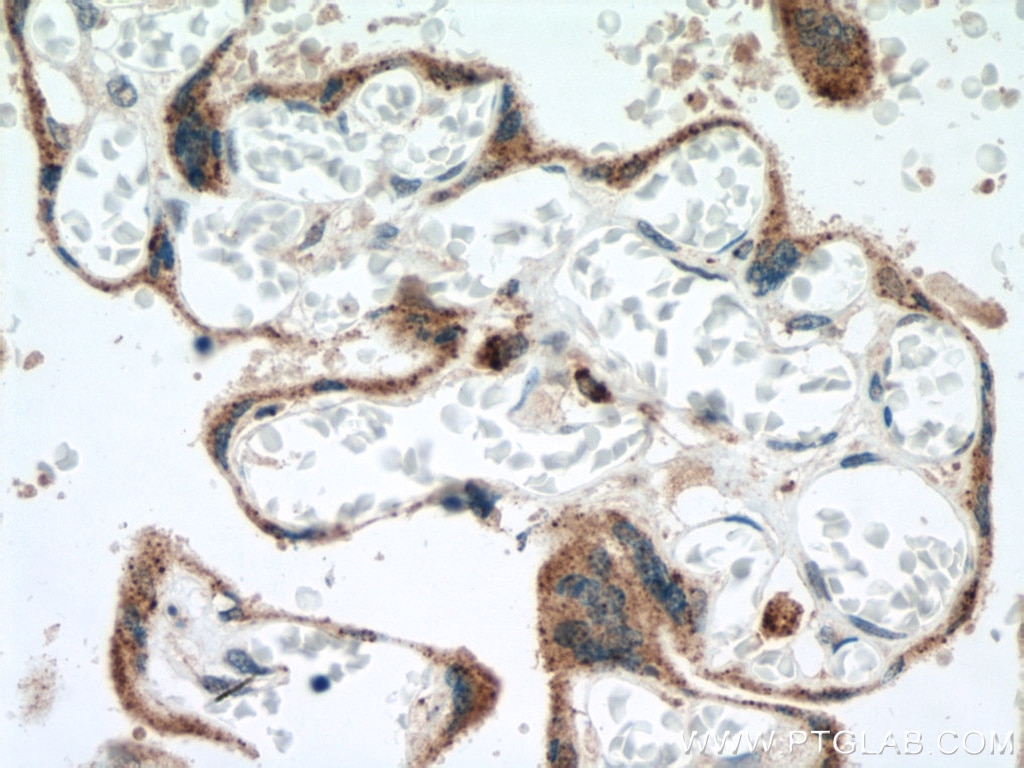
| Positive IHC detected in | human placenta tissue Note: suggested antigen retrieval with TE buffer pH 9.0; (*) Alternatively, antigen retrieval may be performed with citrate buffer pH 6.0 |
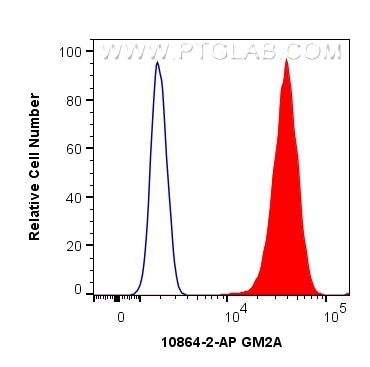
| Positive FC (Intra) detected in | HEK-293 cells |
Recommended dilution
| Application | Dilution |
|---|---|
| Western Blot (WB) | WB : 1:500-1:1000 |
| Immunoprecipitation (IP) | IP : 0.5-4.0 ug for 1.0-3.0 mg of total protein lysate |
| Immunohistochemistry (IHC) | IHC : 1:50-1:500 |
| Flow Cytometry (FC) (INTRA) | FC (INTRA) : 0.40 ug per 10^6 cells in a 100 ul suspension |
| It is recommended that this reagent should be titrated in each testing system to obtain optimal results. | |
| Sample-dependent, Check data in validation data gallery. | |
Product Information
10864-2-AP targets GM2A in WB, IHC, FC (Intra), IP, ELISA applications and shows reactivity with human, mouse, rat samples.
| Tested Reactivity | human, mouse, rat |
| Cited Reactivity | human, rat |
| Host / Isotype | Rabbit / IgG |
| Class | Polyclonal |
| Type | Antibody |
| Immunogen |
CatNo: Ag1295 Product name: Recombinant human GM2A protein Source: e coli.-derived, PGEX-4T Tag: GST Domain: 1-193 aa of BC009273 Sequence: MQSLMQAPLLIALGLLLAAPAQAHLKKPSQLSSFSWDNCDEGKDPAVIRSLTLEPDPIVVPGNVTLSVVGSTSVPLSSPLKVDLVLEKEVAGLWIKIPCTDYIGSCTFEHFCDVLDMLIPTGEPCPEPLRTYGLPCHCPFKEGTYSLPKSEFVVPDLELPSWLTTGNYRIESVLSSSGKRLGCIKIAASLKGI Predict reactive species |
| Full Name | GM2 ganglioside activator |
| Calculated Molecular Weight | 22 kDa |
| Observed Molecular Weight | 22 kDa |
| GenBank Accession Number | BC009273 |
| Gene Symbol | GM2A |
| Gene ID (NCBI) | 2760 |
| RRID | AB_2110807 |
| Conjugate | Unconjugated |
| Form | Liquid |
| Purification Method | Antigen affinity purification |
| UNIPROT ID | P17900 |
| Storage Buffer | PBS with 0.02% sodium azide and 50% glycerol, pH 7.3. |
| Storage Conditions | Store at -20°C. Stable for one year after shipment. Aliquoting is unnecessary for -20oC storage. 20ul sizes contain 0.1% BSA. |
Background Information
GM2A, also named as GM2-AP and SAP-3, is the large binding pocket which can accommodate several single chain phospholipids and fatty acids. GM2A also exhibits some calcium-independent phospholipase activity. It plays a key role in the degradation of ganglioside GM2 (GM2). GM2A stimulates only the breakdown of ganglioside GM2 and glycolipid GA2 by beta-hexosaminidase A.
Protocols
| Product Specific Protocols | |
|---|---|
| FC protocol for GM2A antibody 10864-2-AP | Download protocol |
| IHC protocol for GM2A antibody 10864-2-AP | Download protocol |
| IP protocol for GM2A antibody 10864-2-AP | Download protocol |
| WB protocol for GM2A antibody 10864-2-AP | Download protocol |
| Standard Protocols | |
|---|---|
| Click here to view our Standard Protocols |
Publications
What published studies show
The GM2A Polyclonal antibody (Cat# 10864-2-AP) has 6 total citations, mostly in Western blot across human and rat samples. It appears in journals including Molecular Neurodegeneration, Nature Communications, Basic Research in Cardiology, Cell Structure and Function, Frontiers in Neurology, and International Immunopharmacology. Research fields span neuroscience and neurodegeneration (ganglioside/GM2 function, frontotemporal dementia GRN deficiency), cardiology (protein phosphatase signaling in cardiac hypertrophy), oncology (lung cancer invasiveness), and immunology/disease biology (intervertebral disc degeneration and psoriasis).
| Species | Application | Title |
|---|---|---|
Mol Neurodegener Elevated ganglioside GM2 activator (GM2A) in human brain tissue reduces neurite integrity and spontaneous neuronal activity | ||
Basic Res Cardiol Expression and regulation of type 2A protein phosphatases and alpha4 signalling in cardiac health and hypertrophy. | ||
Cell Struct Funct Glycosphingolipid GM2 Induces Invasiveness in Irradiation-tolerant Lung Cancer Cells.
| ||
Int Immunopharmacol GM2A links keratinocyte metabolism to inflammation in psoriasis: Integrated transcriptomic and functional analyses. | ||
Front Neurol Integrating multi-omics and machine learning to explore the role of amino acid metabolism in intervertebral disk degeneration. |

