
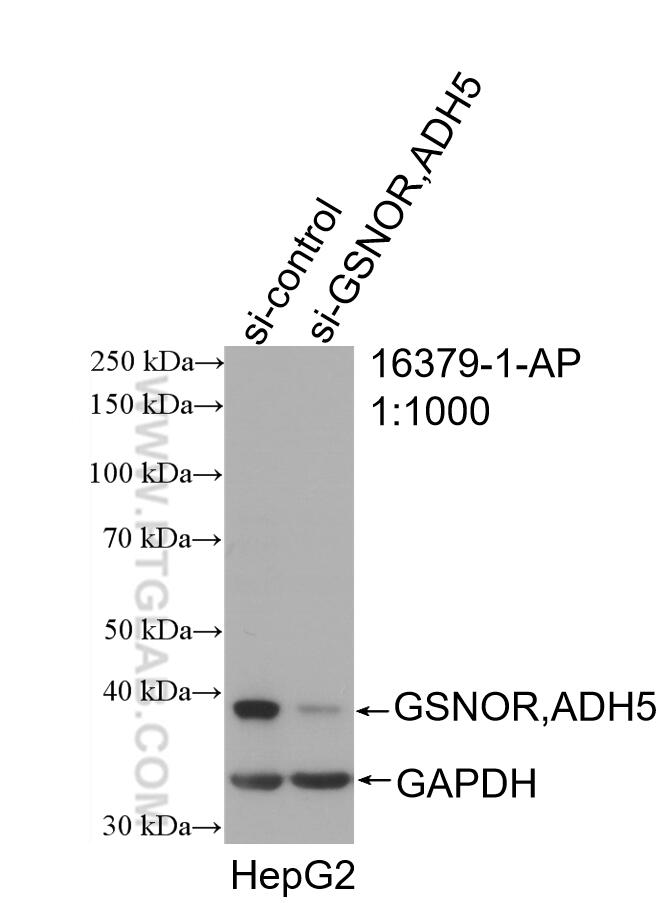
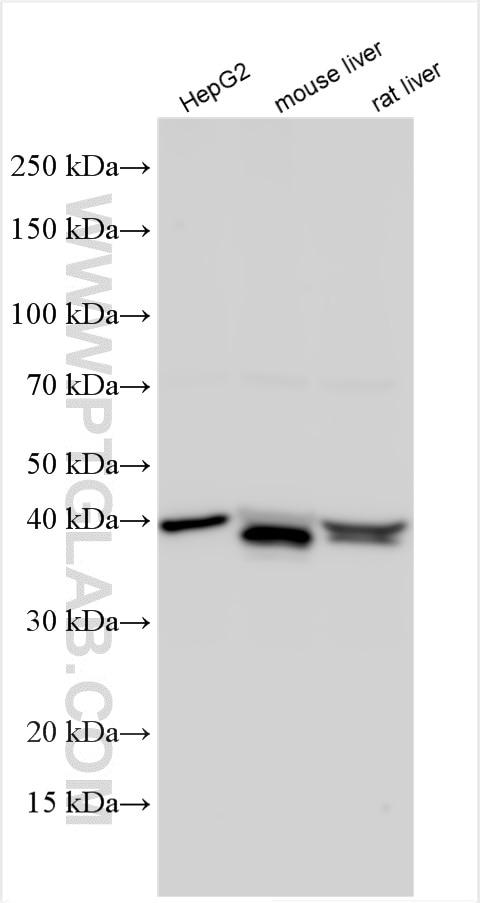
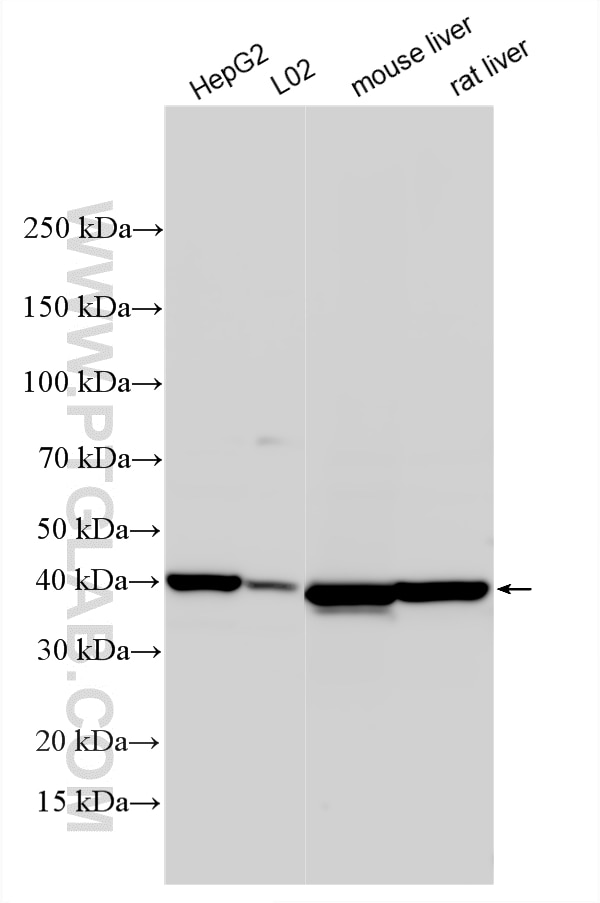
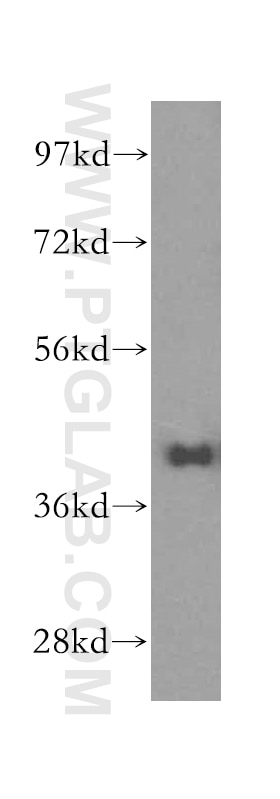
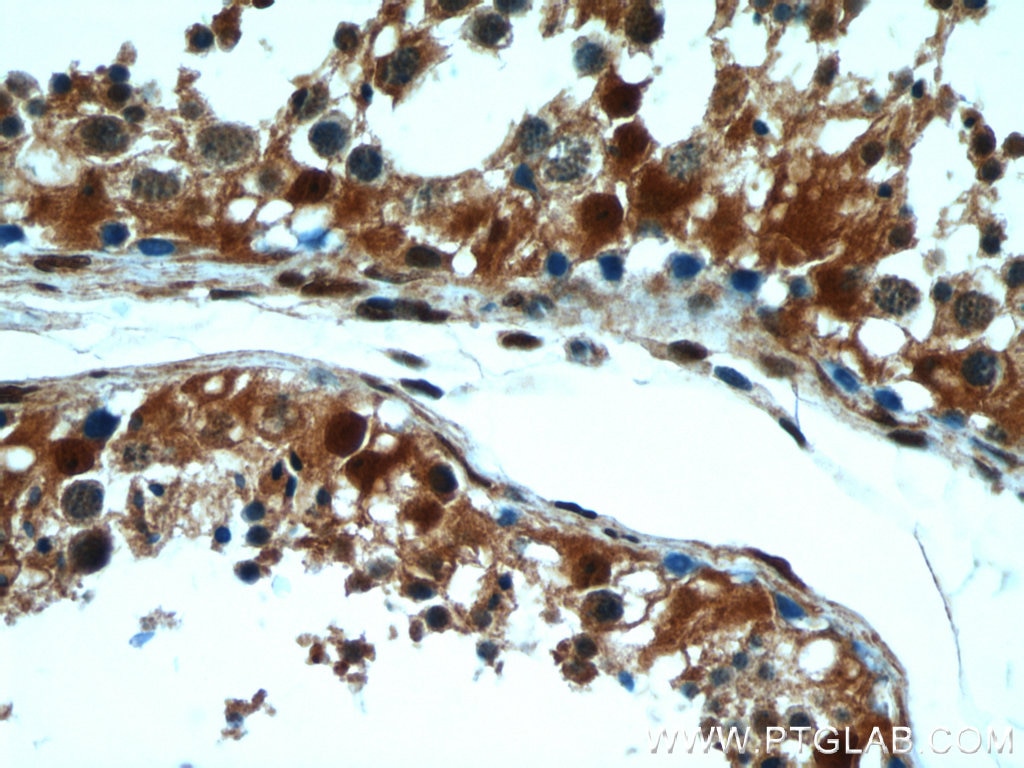
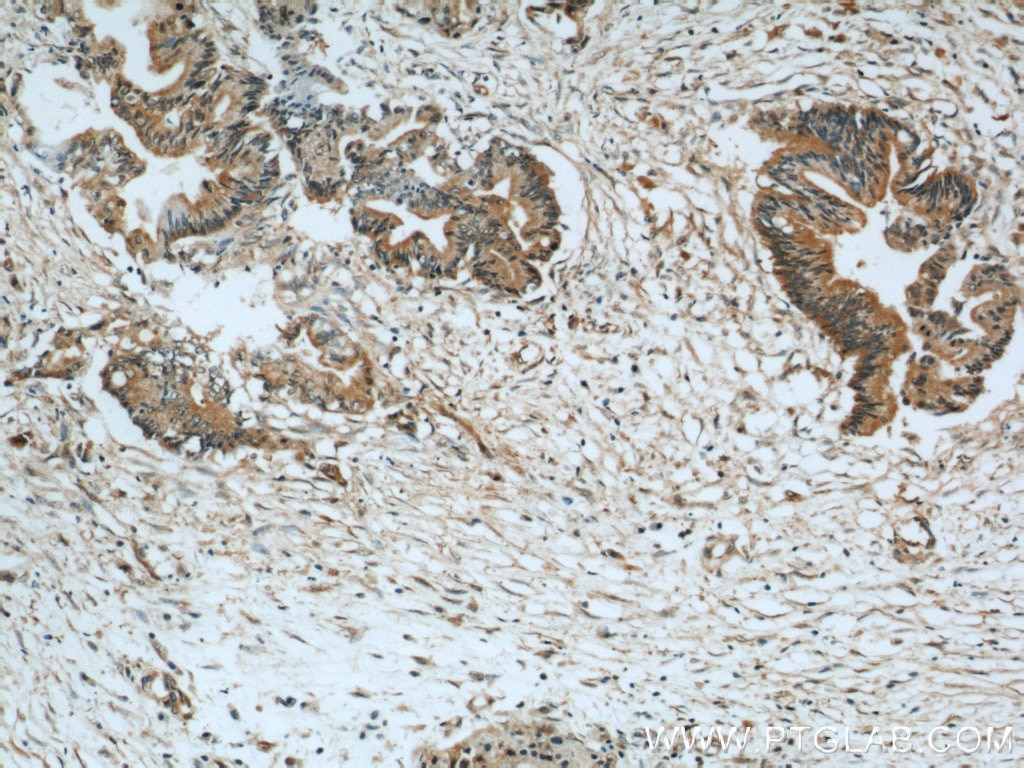
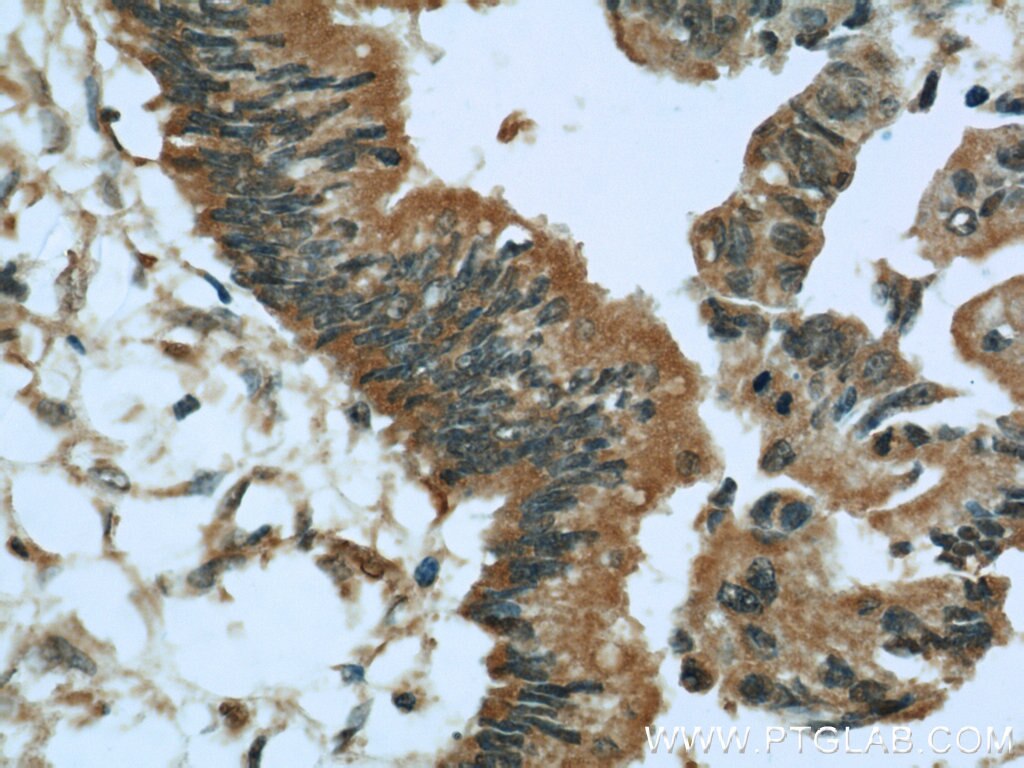
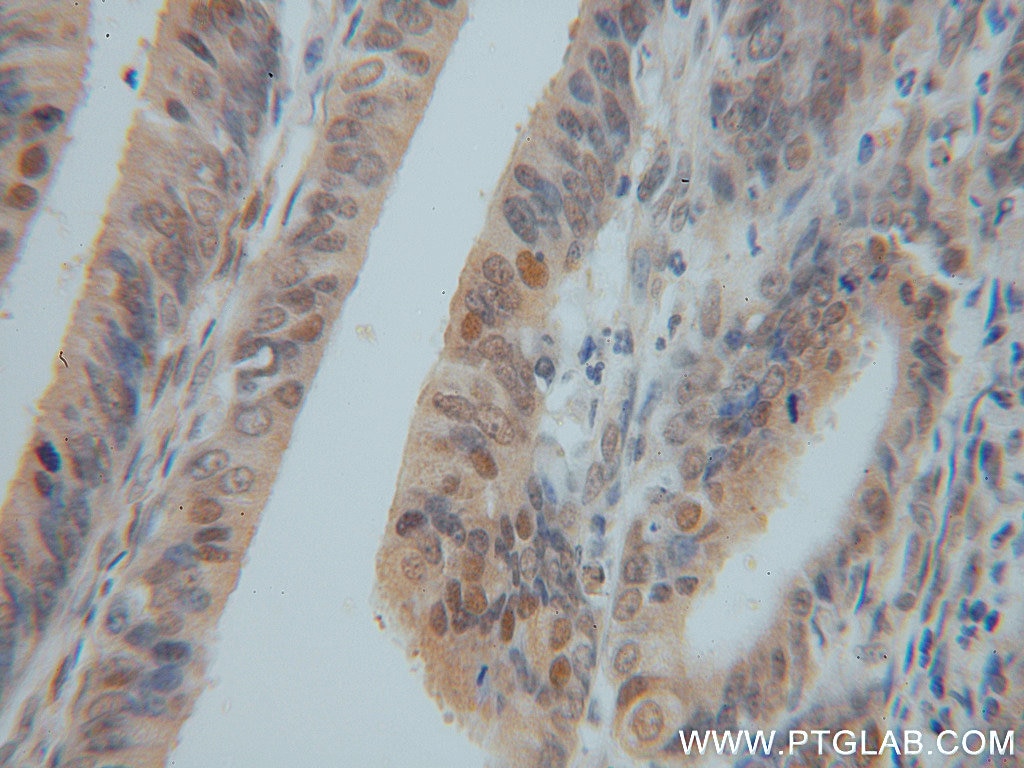

Tested Applications
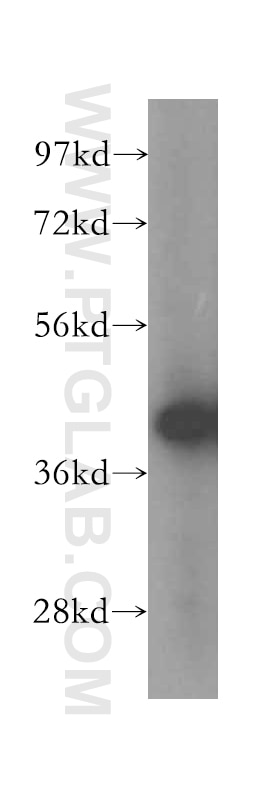
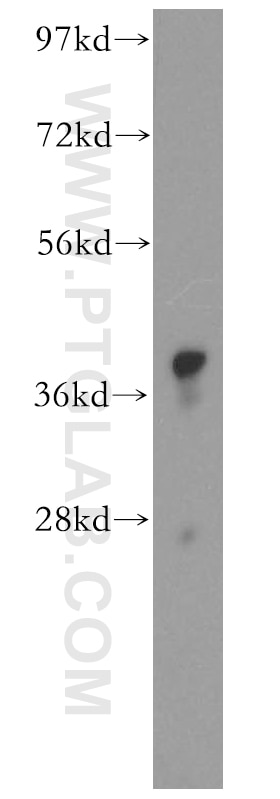
| Positive WB detected in | HepG2 cells, human brain tissue, human liver tissue, human testis tissue, mouse liver tissue, rat liver tissue, L02 cells |
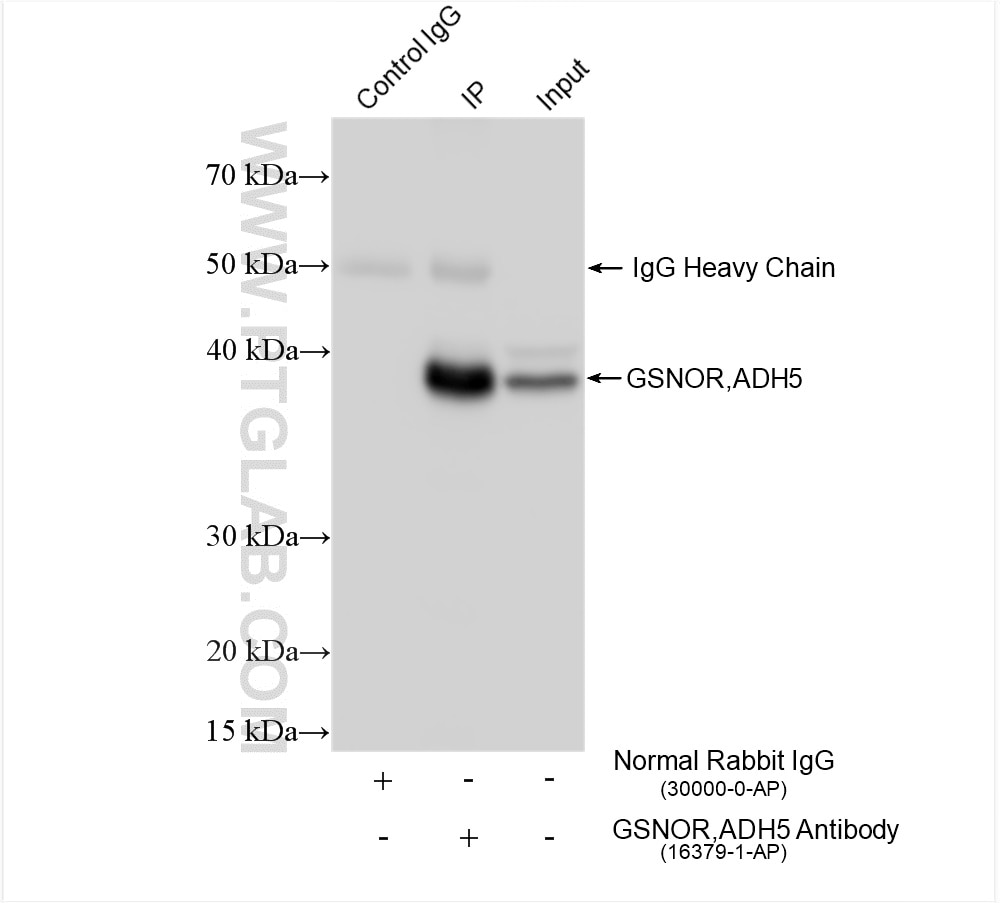
| Positive IP detected in | mouse liver tissue |
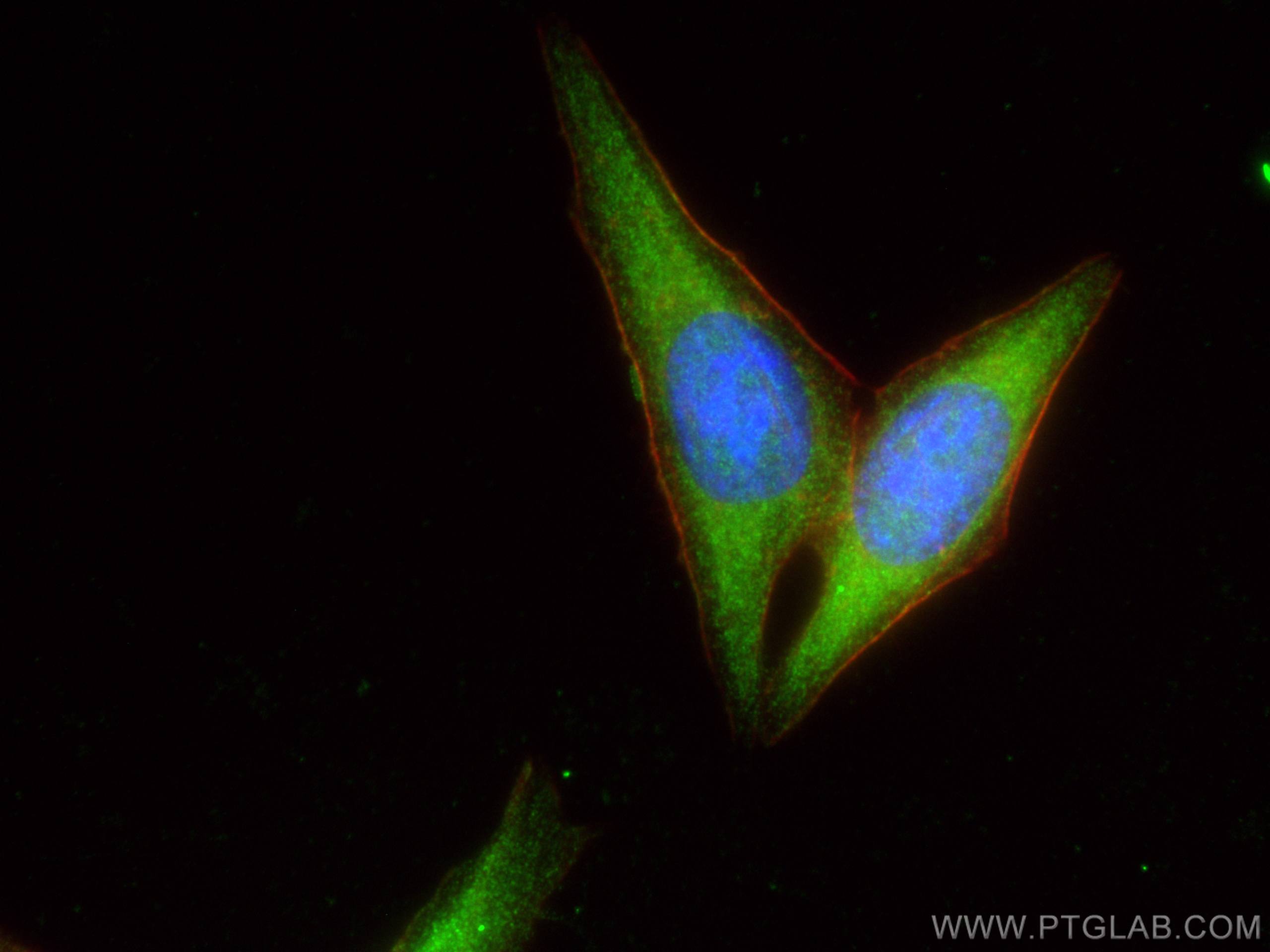
| Positive IF/ICC detected in | HepG2 cells |
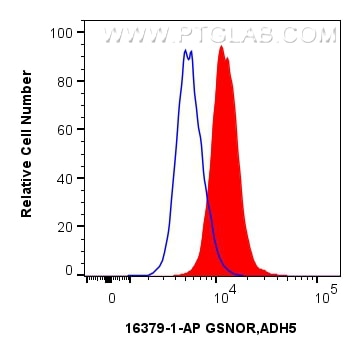
| Positive FC (Intra) detected in | HepG2 cells |
Recommended dilution
| Application | Dilution |
|---|---|
| Western Blot (WB) | WB : 1:2000-1:16000 |
| Immunoprecipitation (IP) | IP : 0.5-4.0 ug for 1.0-3.0 mg of total protein lysate |
| Immunofluorescence (IF)/ICC | IF/ICC : 1:200-1:800 |
| Flow Cytometry (FC) (INTRA) | FC (INTRA) : 0.25 ug per 10^6 cells in a 100 ul suspension |
| It is recommended that this reagent should be titrated in each testing system to obtain optimal results. | |
| Sample-dependent, Check data in validation data gallery. | |
Product Information
16379-1-AP targets GSNOR,ADH5 in WB, IF/ICC, FC (Intra), IP, ELISA applications and shows reactivity with human, mouse, rat samples.
| Tested Reactivity | human, mouse, rat |
| Cited Reactivity | human |
| Host / Isotype | Rabbit / IgG |
| Class | Polyclonal |
| Type | Antibody |
| Immunogen |
CatNo: Ag9360 Product name: Recombinant human GSNOR,ADH5 protein Source: e coli.-derived, PGEX-4T Tag: GST Domain: 1-374 aa of BC014665 Sequence: MANEVIKCKAAVAWEAGKPLSIEEIEVAPPKAHEVRIKIIATAVCHTDAYTLSGADPEGCFPVILGHEGAGIVESVGEGVTKLKAGDTVIPLYIPQCGECKFCLNPKTNLCQKIRVTQGKGLMPDGTSRFTCKGKTILHYMGTSTFSEYTVVADISVAKIDPLAPLDKVCLLGCGISTGYGAAVNTAKLEPGSVCAVFGLGGVGLAVIMGCKVAGASRIIGVDINKDKFARAKEFGATECINPQDFSKPIQEVLIEMTDGGVDYSFECIGNVKVMRAALEACHKGWGVSVVVGVAASGEEIATRPFQLVTGRTWKGTAFGGWKSVESVPKLVSEYMSKKIKVDEFVTHNLSFDEINKAFELMHSGKSIRTVVKI Predict reactive species |
| Full Name | alcohol dehydrogenase 5 (class III), chi polypeptide |
| Calculated Molecular Weight | 374 aa, 40 kDa |
| Observed Molecular Weight | 40 kDa |
| GenBank Accession Number | BC014665 |
| Gene Symbol | ADH5 |
| Gene ID (NCBI) | 128 |
| RRID | AB_2289298 |
| Conjugate | Unconjugated |
| Form | Liquid |
| Purification Method | Antigen affinity purification |
| UNIPROT ID | P11766 |
| Storage Buffer | PBS with 0.02% sodium azide and 50% glycerol, pH 7.3. |
| Storage Conditions | Store at -20°C. Stable for one year after shipment. Aliquoting is unnecessary for -20oC storage. 20ul sizes contain 0.1% BSA. |
Background Information
ADH5, also named as ADHX, FDH FALDH GSH-FDH ADH3 and GSNOR, belongs to the zinc-containing alcohol dehydrogenase family and Class-III subfamily. It is remarkably ineffective in oxidizing ethanol, but it readily catalyzes the oxidation of long-chain primary alcohols and the oxidation of S-(hydroxymethyl) glutathione. ADH5 mediates multiple cardiovascular functions. It plays in regulating heterocellular communication in the artery wall. (PMID:21071693). ADH5 immunostaining is distributed in both the nucleus and cytoplasm of the retinal ganglion cells(PMID:22117533).
Protocols
| Product Specific Protocols | |
|---|---|
| FC protocol for GSNOR,ADH5 antibody 16379-1-AP | Download protocol |
| IF protocol for GSNOR,ADH5 antibody 16379-1-AP | Download protocol |
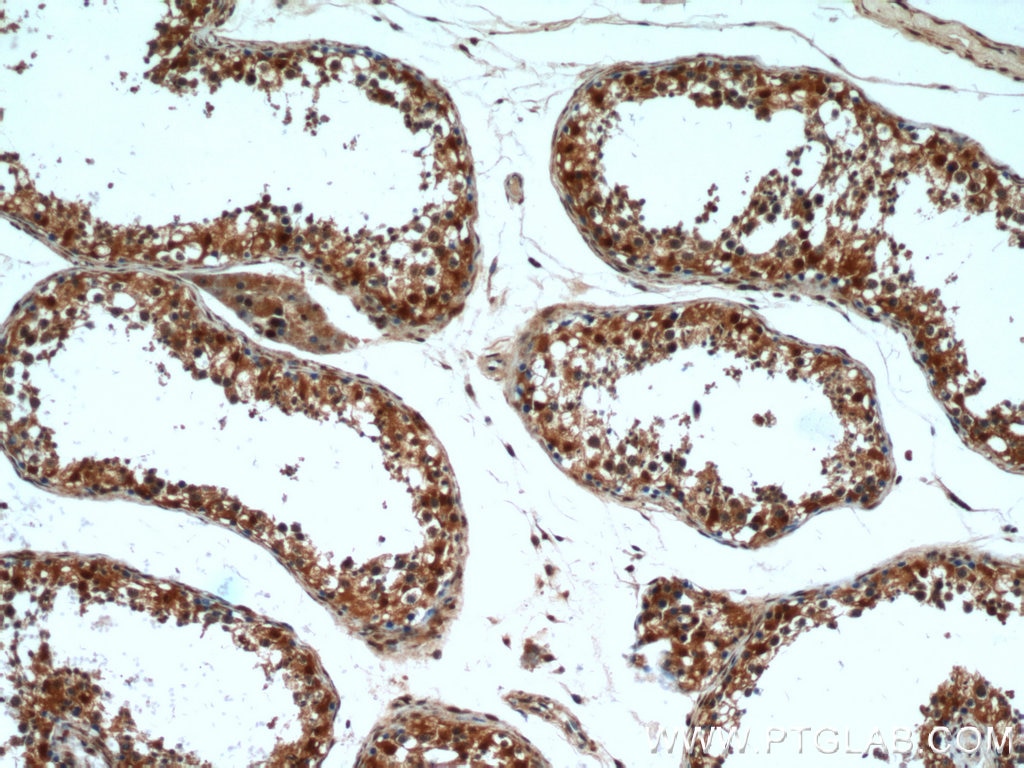
| IHC protocol for GSNOR,ADH5 antibody 16379-1-AP | Download protocol |
| IP protocol for GSNOR,ADH5 antibody 16379-1-AP | Download protocol |
| WB protocol for GSNOR,ADH5 antibody 16379-1-AP | Download protocol |
| Standard Protocols | |
|---|---|
| Click here to view our Standard Protocols |
Publications
What published studies show
The GSNOR, ADH5 Polyclonal antibody (Cat# 16379-1-AP) has 2 citations. One appears in International Journal of Molecular Sciences (2019), investigating TRAP1 expression regulation in human colorectal carcinomas via gene copy number and post-transductional mechanisms, using WB. The other is in Journal of Inflammation Research (2026), exploring ADH5 K113 lactylation's role in enhanced glycolysis and bladder epithelial cell proliferation in cystitis glandularis. The research fields span oncology (colorectal cancer) and inflammatory disease (bladder pathology).
| Species | Application | Title |
|---|---|---|
Int J Mol Sci Gene Copy Number and Post-Transductional Mechanisms Regulate TRAP1 Expression in Human Colorectal Carcinomas.
| ||
J Inflamm Res ADH5 K113 Lactylation is Associated with Enhanced Glycolysis and Bladder Epithelial Cell Proliferation in Cystitis Glandularis. |

