
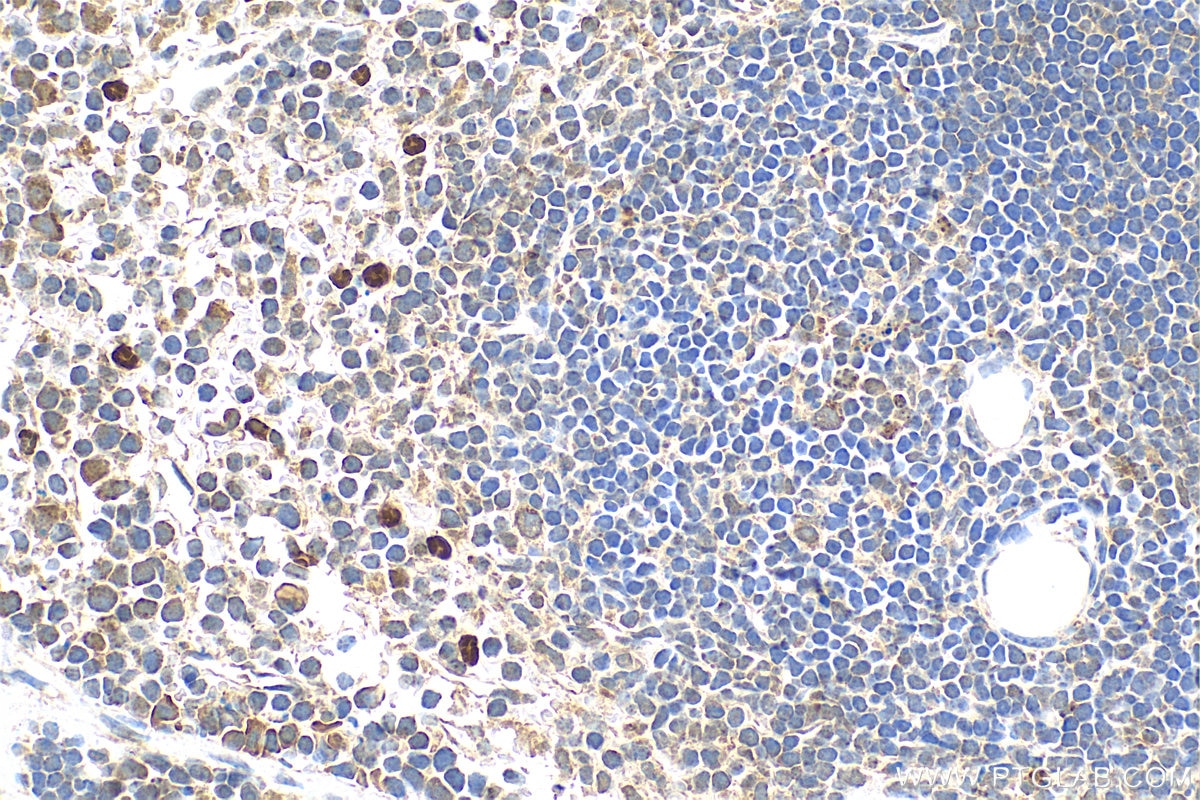
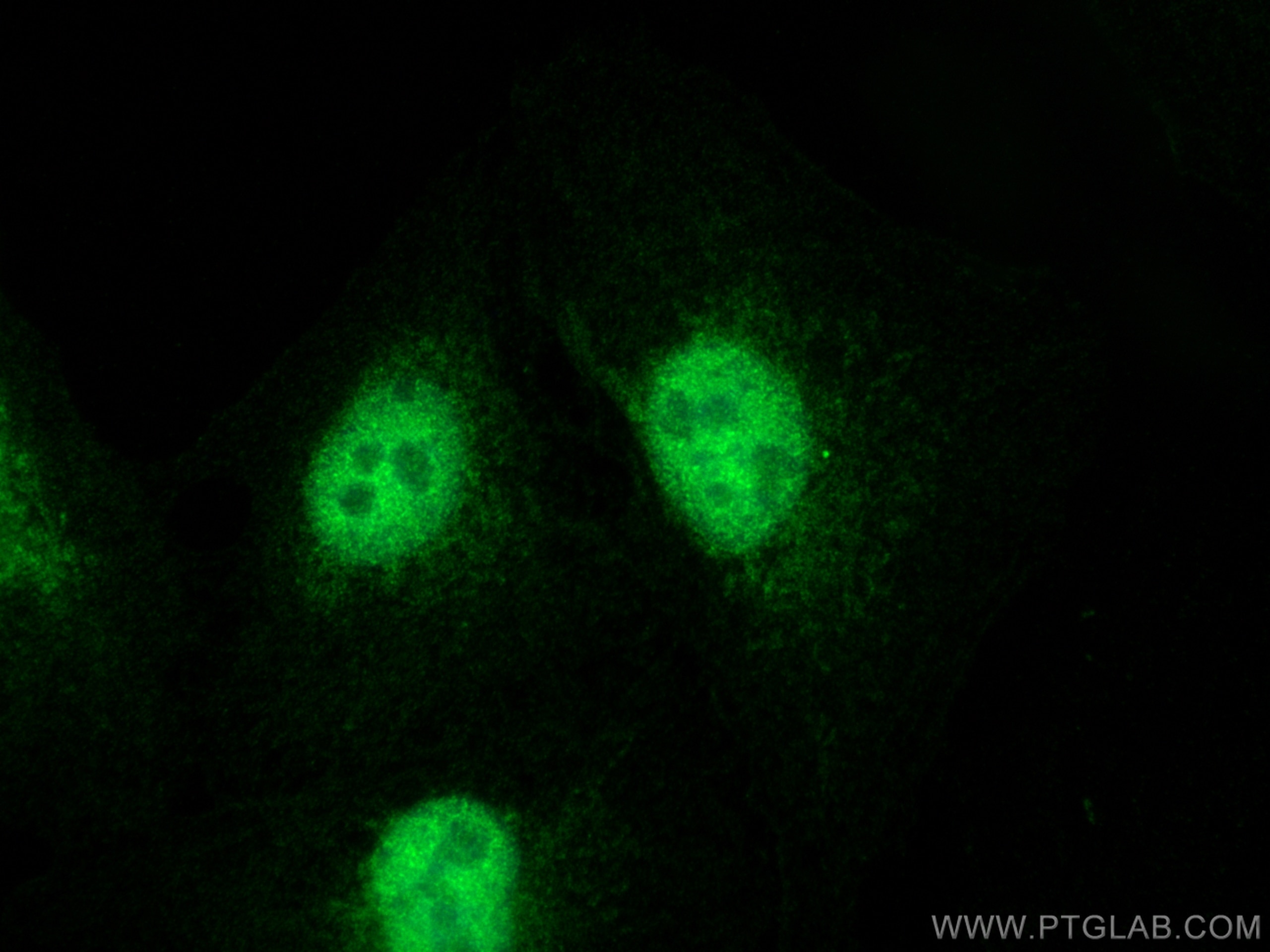
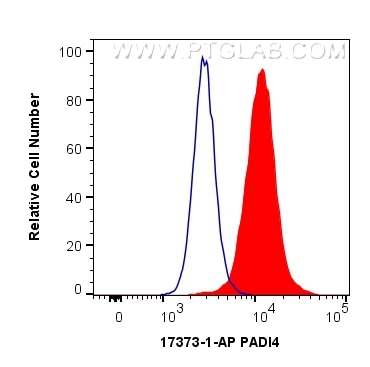

Tested Applications
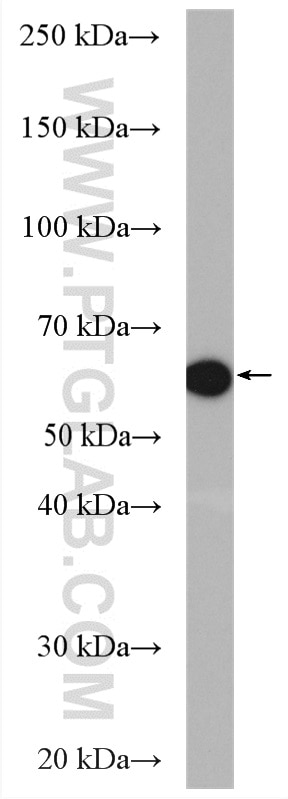
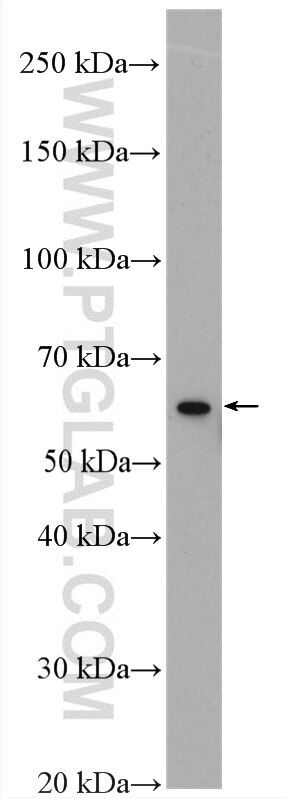
| Positive WB detected in | SKOV-3 cells, mouse spleen tissue |
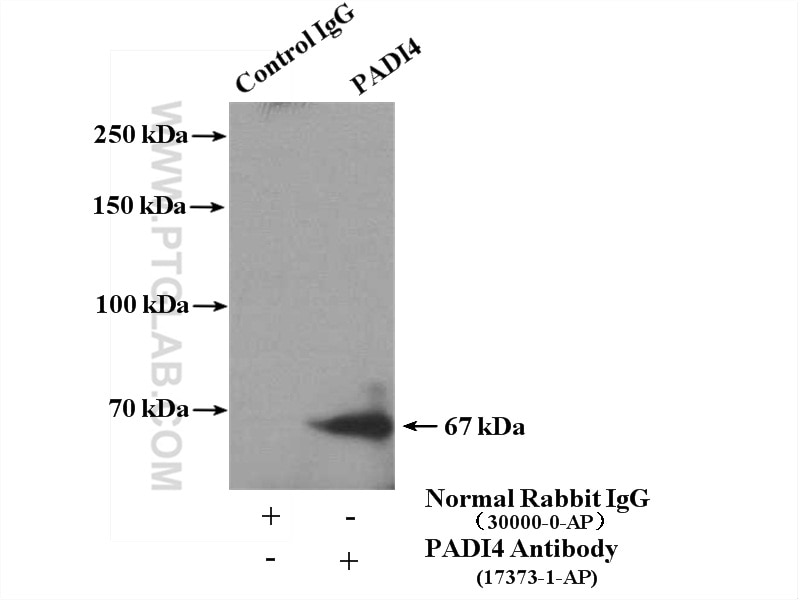
| Positive IP detected in | mouse spleen tissue |
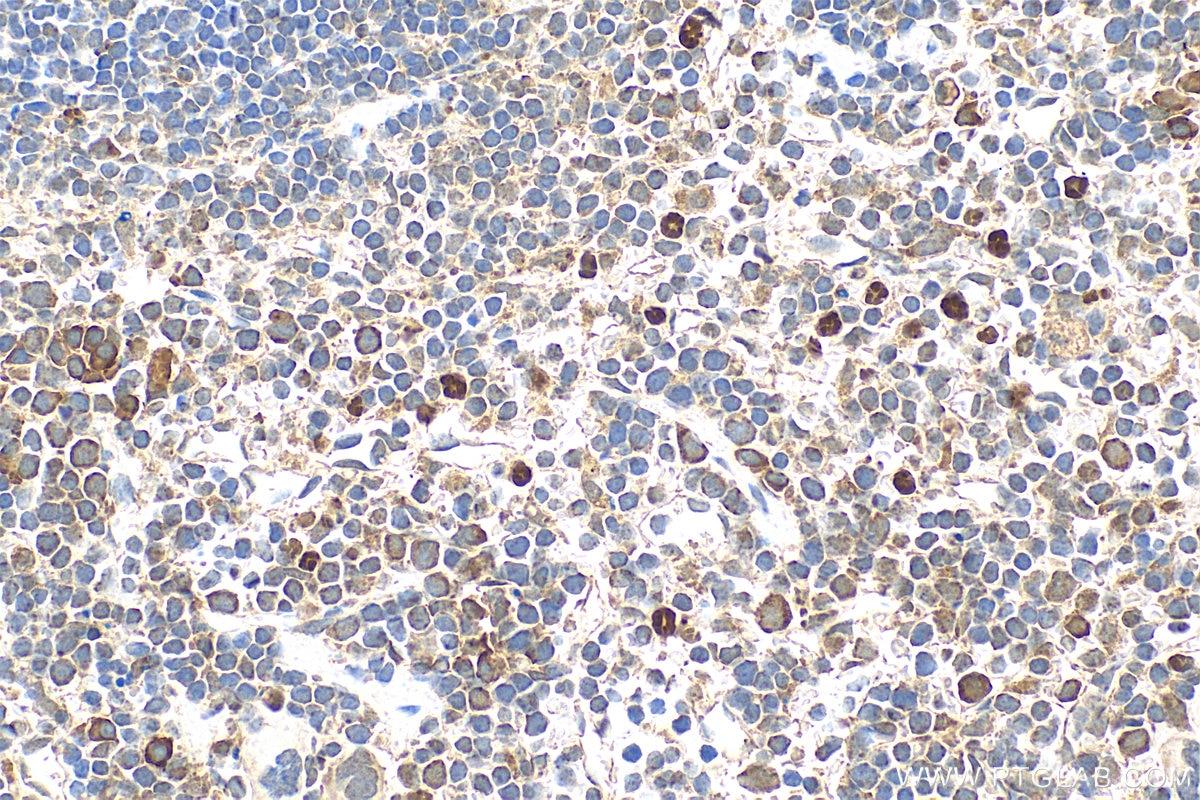
| Positive IHC detected in | mouse spleen tissue Note: suggested antigen retrieval with TE buffer pH 9.0; (*) Alternatively, antigen retrieval may be performed with citrate buffer pH 6.0 |
| Positive IF/ICC detected in | A549 cells |
| Positive FC (Intra) detected in | HeLa cells |
Recommended dilution
| Application | Dilution |
|---|---|
| Western Blot (WB) | WB : 1:1000-1:6000 |
| Immunoprecipitation (IP) | IP : 0.5-4.0 ug for 1.0-3.0 mg of total protein lysate |
| Immunohistochemistry (IHC) | IHC : 1:50-1:500 |
| Immunofluorescence (IF)/ICC | IF/ICC : 1:200-1:800 |
| Flow Cytometry (FC) (INTRA) | FC (INTRA) : 0.40 ug per 10^6 cells in a 100 ul suspension |
| It is recommended that this reagent should be titrated in each testing system to obtain optimal results. | |
| Sample-dependent, Check data in validation data gallery. | |
Product Information
17373-1-AP targets PADI4/PAD4 in WB, IHC, IF/ICC, FC (Intra), IP, CoIP, ELISA applications and shows reactivity with human, mouse, rat samples.
| Tested Reactivity | human, mouse, rat |
| Cited Reactivity | human, mouse, rat |
| Host / Isotype | Rabbit / IgG |
| Class | Polyclonal |
| Type | Antibody |
| Immunogen |
CatNo: Ag11068 Product name: Recombinant human PADI4 protein Source: e coli.-derived, PGEX-4T Tag: GST Domain: 317-663 aa of BC025718 Sequence: EDFLKSVTTLAMKAKCKLTICPEEENMDDQWMQDEMEIGYIQAPHKTLPVVFDSPRNRGLKEFPIKRVMGPDFGYVTRGPQTGGISGLDSFGNLEVSPPVTVRGKEYPLGRILFGDSCYPSNDSRQMHQALQDFLSAQQVQAPVKLYSDWLSVGHVDEFLSFVPAPDRKGFRLLLASPRSCYKLFQEQQNEGHGEALLFEGIKKKKQQKIKNILSNKTLREHNSFVERCIDWNRELLKRELGLAESDIIDIPQLFKLKEFSKAEAFFPNMVNMLVLGKHLGIPKPFGPVINGRCCLEEKVCSLLEPLGLQCTFINDFFTYHIRHGEVHCGTNVRRKPFSFKWWNMVP Predict reactive species |
| Full Name | peptidyl arginine deiminase, type IV |
| Calculated Molecular Weight | 663 aa, 74 kDa |
| Observed Molecular Weight | 67 kDa |
| GenBank Accession Number | BC025718 |
| Gene Symbol | PADI4 |
| Gene ID (NCBI) | 23569 |
| RRID | AB_2878398 |
| Conjugate | Unconjugated |
| Form | Liquid |
| Purification Method | Antigen affinity purification |
| UNIPROT ID | Q9UM07 |
| Storage Buffer | PBS with 0.02% sodium azide and 50% glycerol, pH 7.3. |
| Storage Conditions | Store at -20°C. Stable for one year after shipment. Aliquoting is unnecessary for -20oC storage. 20ul sizes contain 0.1% BSA. |
Background Information
PADI4, also named PADI5 and PDI5, catalyzes the citrullination/deimination of arginine residues of proteins such as histones, thereby playing a key role in histone code and regulation of stem cell maintenance. PADI4 is expressed in hematologic and rheumatoid arthritis synovial tissues. PADI4 haplotype associated with susceptibility to rheumatoid arthritis increases the production of citrullinated peptides, leading, in a cytokine-rich milieu, to a break in tolerance to citrullinated peptides processed and presented in the appropriate HLA context. Immunohistochemistry detected significant PADI4 expression in various malignancies and PADI4 expression was not detected in non-tumor tissues. (PMID: 19183436)
Protocols
| Product Specific Protocols | |
|---|---|
| FC protocol for PADI4/PAD4 antibody 17373-1-AP | Download protocol |
| IF protocol for PADI4/PAD4 antibody 17373-1-AP | Download protocol |
| IHC protocol for PADI4/PAD4 antibody 17373-1-AP | Download protocol |
| IP protocol for PADI4/PAD4 antibody 17373-1-AP | Download protocol |
| WB protocol for PADI4/PAD4 antibody 17373-1-AP | Download protocol |
| Standard Protocols | |
|---|---|
| Click here to view our Standard Protocols |
Publications
What published studies show
PADI4/PAD4 Polyclonal Antibody (catalog 17373-1-AP) has 118 citations. The antibody is used mainly in WB, IHC, IF, IP, and CoIP across multiple species. Papers appear in high-impact journals including Immunity, Cancer Discov, Nat Cancer, Nat Commun, Mol Cell, Adv Sci, J Exp Clin Cancer Res, Acta Neuropathol, and many others.
Research fields: The citations center on neutrophil extracellular trap (NET) formation and NETosis—covering sepsis, myocardial infarction/ischemia-reperfusion injury, rheumatoid arthritis, ulcerative colitis, asthma, liver injury, cancer (breast, pancreatic, esophageal), diabetes, atherosclerosis, thrombosis, and retinal degeneration.
---
Related-target alternatives (PADI4/protein arginine deiminase family) are available; please confirm if you'd like specific product suggestions.
| Species | Application | Title |
|---|---|---|
Immunity A bladder-blood immune barrier constituted by suburothelial perivascular macrophages restrains uropathogen dissemination | ||
Cancer Discov An African-specific variant of TP53 reveals PADI4 as a regulator of p53-mediated tumor suppression | ||
Nat Cancer Cardiomyocyte-localized CCDC25 senses NET DNA to promote doxorubicin cardiotoxicity by activating autophagic flux | ||
Bioact Mater TLR2 inhibition attenuates NET-driven inflammation and restenosis during poly-lactic acid bioresorbable scaffold degradation. | ||
Nat Commun S100A12 triggers NETosis to aggravate myocardial infarction injury via the Annexin A5-calcium axis |

