

Tested Applications
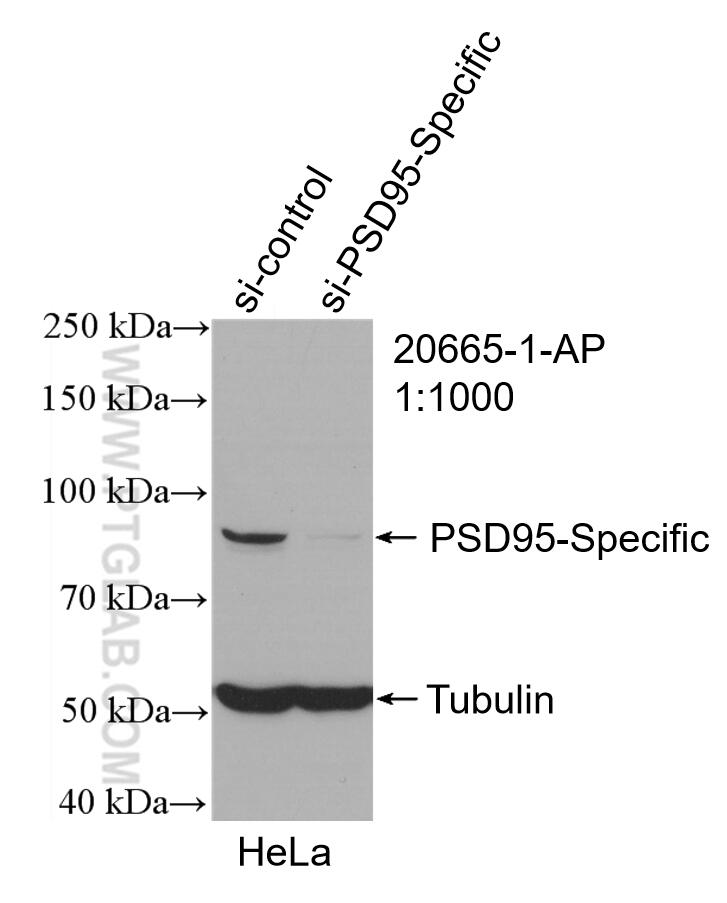
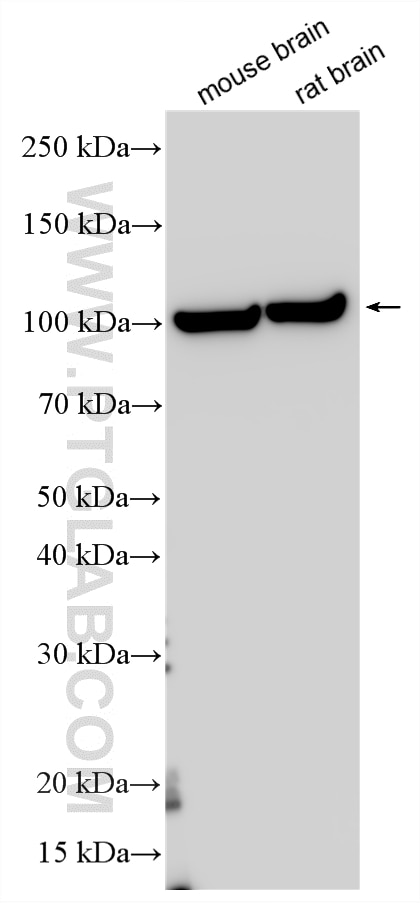
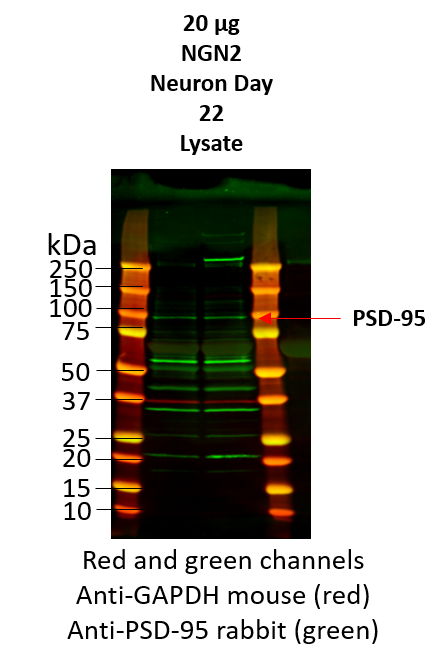
| Positive WB detected in | mouse brain tissue, HeLa cells, rat brain tissue |
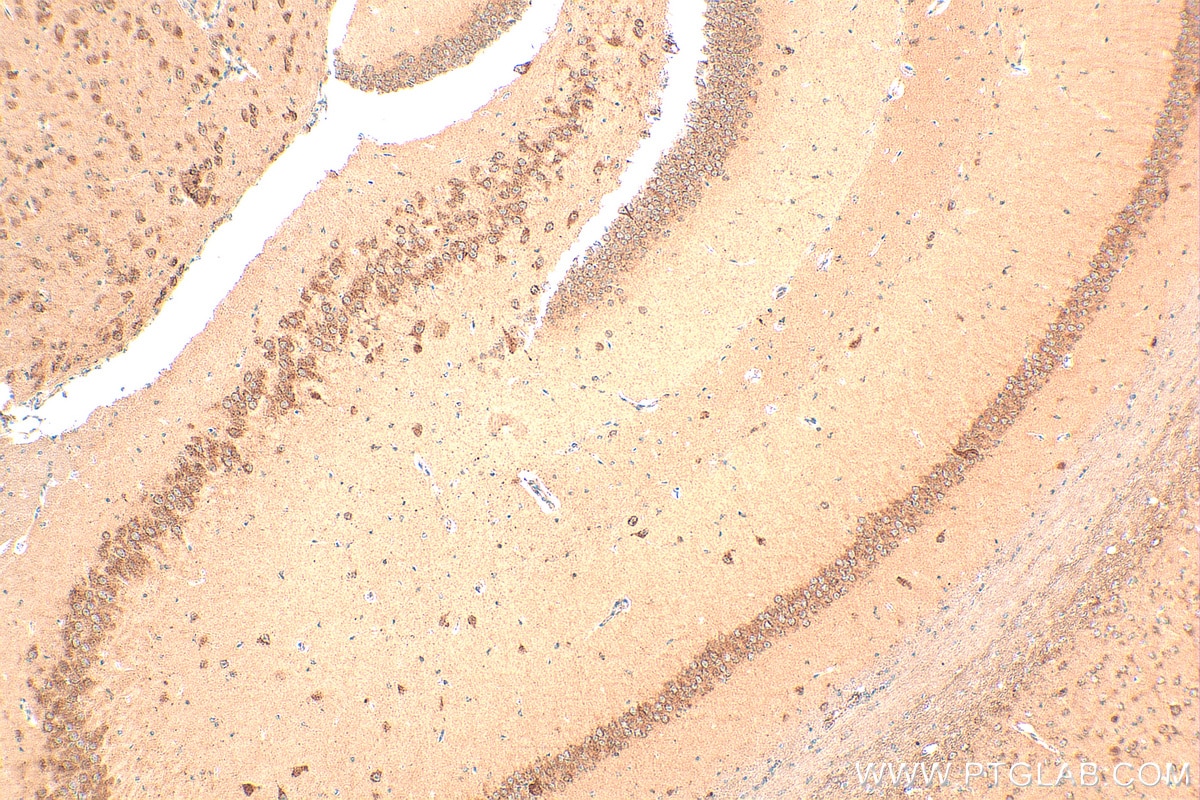
| Positive IHC detected in | mouse brain tissue Note: suggested antigen retrieval with TE buffer pH 9.0; (*) Alternatively, antigen retrieval may be performed with citrate buffer pH 6.0 |
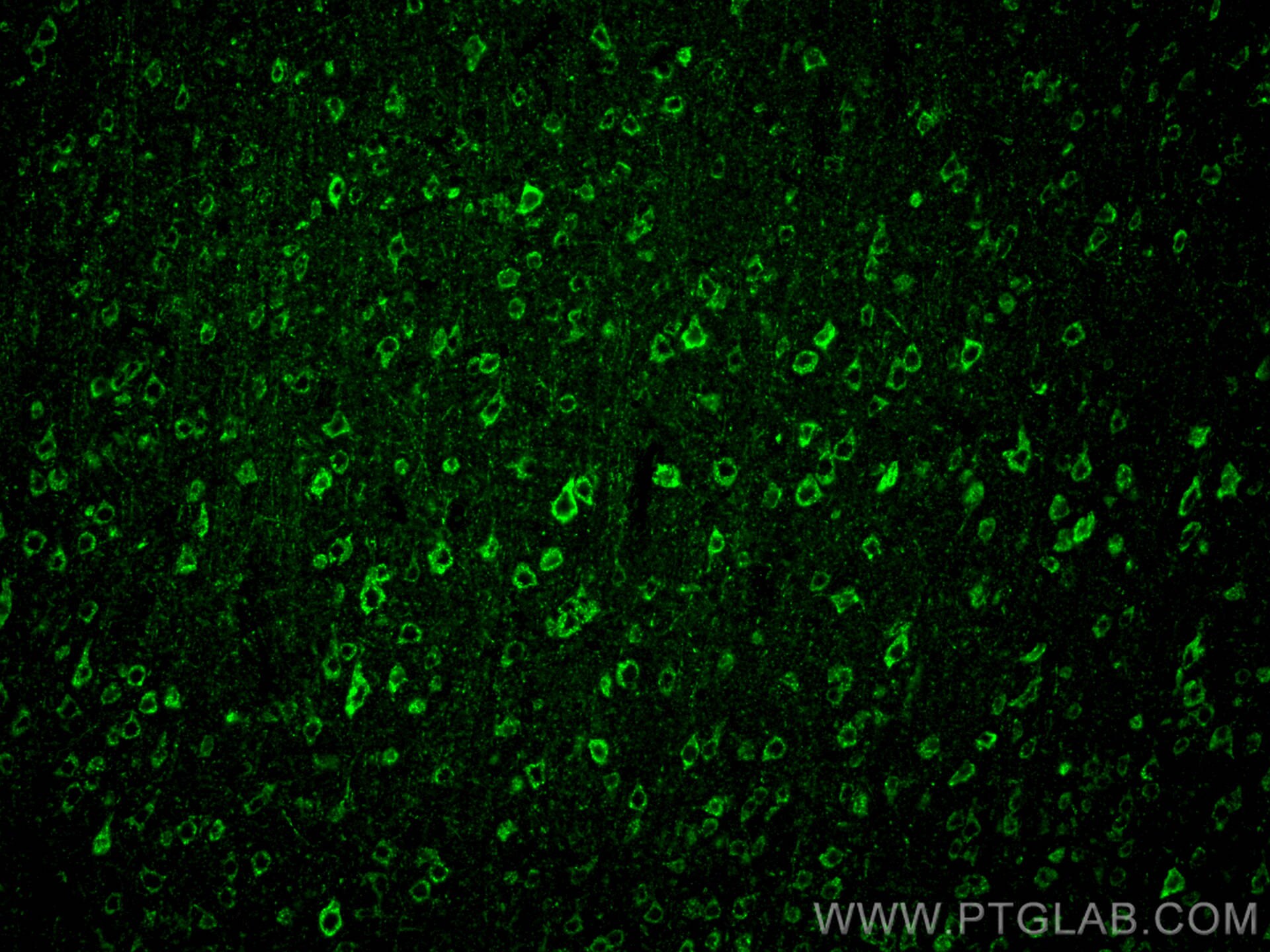
| Positive IF-P detected in | mouse brain tissue |
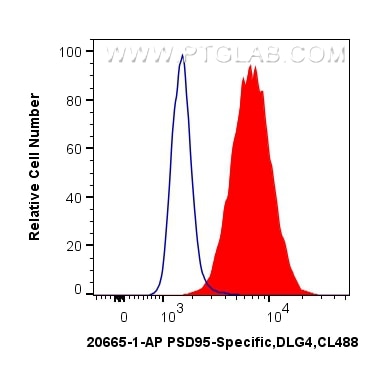
| Positive FC (Intra) detected in | Neuro-2a cells |
Recommended dilution
| Application | Dilution |
|---|---|
| Western Blot (WB) | WB : 1:5000-1:50000 |
| Immunohistochemistry (IHC) | IHC : 1:200-1:800 |
| Immunofluorescence (IF)-P | IF-P : 1:200-1:800 |
| Flow Cytometry (FC) (INTRA) | FC (INTRA) : 0.40 ug per 10^6 cells in a 100 ul suspension |
| It is recommended that this reagent should be titrated in each testing system to obtain optimal results. | |
| Sample-dependent, Check data in validation data gallery. | |
Product Information
20665-1-AP targets PSD95-Specific in WB, IHC, IF-P, FC (Intra), IP, CoIP, ELISA applications and shows reactivity with human, mouse, rat samples.
| Tested Reactivity | human, mouse, rat |
| Cited Reactivity | human, mouse, rat, canine, chicken, zebrafish, hamster |
| Host / Isotype | Rabbit / IgG |
| Class | Polyclonal |
| Type | Antibody |
| Immunogen |
Peptide Predict reactive species |
| Full Name | discs, large homolog 4 (Drosophila) |
| Calculated Molecular Weight | 85 kDa |
| Observed Molecular Weight | 90-95 kDa |
| GenBank Accession Number | NM_001365 |
| Gene Symbol | PSD95 |
| Gene ID (NCBI) | 1742 |
| RRID | AB_2687961 |
| Conjugate | Unconjugated |
| Form | Liquid |
| Purification Method | Antigen affinity purification |
| UNIPROT ID | P78352 |
| Storage Buffer | PBS with 0.02% sodium azide and 50% glycerol, pH 7.3. |
| Storage Conditions | Store at -20°C. Stable for one year after shipment. Aliquoting is unnecessary for -20oC storage. 20ul sizes contain 0.1% BSA. |
Background Information
PSD-95 (postsynaptic density protein 95) also known as SAP-90 (synapse-associated protein 90) is a protein that in humans is encoded by the DLG4 (disks large homolog 4) gene. PSD-95 is a scaffolding protein of the MAGUK protein family, and engages in several vital protein-protein interactions in the brain with its PDZ domains. It has been suggested that PSD-95 is composed of two supramodules, one of which is the PDZ1-2 tandem domain. It plays an important role in synaptic plasticity and the stabilization of synaptic changes during long-term potentiation. Observed MW of PSD95 is 90-95 kDa due to phosphorylation (PMID: 20682303).
Protocols
| Product Specific Protocols | |
|---|---|
| FC protocol for PSD95-Specific antibody 20665-1-AP | Download protocol |
| IF protocol for PSD95-Specific antibody 20665-1-AP | Download protocol |
| IHC protocol for PSD95-Specific antibody 20665-1-AP | Download protocol |
| WB protocol for PSD95-Specific antibody 20665-1-AP | Download protocol |
| Standard Protocols | |
|---|---|
| Click here to view our Standard Protocols |
Publications
What published studies show
The PSD95-Specific Polyclonal Antibody (20665-1-AP) has 400 total citations. It appears extensively in journals including Cell Metabolism, Nature Neuroscience, Nature Communications, Neuron, Molecular Psychiatry, Cell Reports, Alzheimer's & Dementia, Science Advances, Redox Biology, Journal of Neuroinflammation, and Phytomedicine. Research fields span neurobiology and neuroscience, focusing heavily on synaptic plasticity, cognitive impairment, neuroinflammation, depression, Alzheimer's disease, microglial function, stroke, autism spectrum disorder, and neurotoxicity studies, predominantly using WB, IF, and IHC applications across mouse, rat, and human models.
| Species | Application | Title |
|---|---|---|
Cell Metab Gut bacteria-driven homovanillic acid alleviates depression by modulating synaptic integrity | ||
Bioact Mater Bioengineering an improved three-dimensional vascularized co-culture model for studying Neuron-Microglia interactions. | ||
Bioact Mater Construction of functional neural network tissue combining CBD-NT3-modified linear-ordered collagen scaffold and TrkC-modified iPSC-derived neural stem cells for spinal cord injury repair | ||
J Extracell Vesicles Nose-to-Brain Delivery of Chlorella vulgaris Extracellular Vesicles for Antidepressant Effects. | ||
Nat Neurosci Foxp2 controls synaptic wiring of corticostriatal circuits and vocal communication by opposing Mef2c. | ||
Nat Neurosci The mitochondrial unfolded protein response in human microglia disrupts neuronal-glial communication and promotes senescence. |
Reviews
What customers say
Able is busy answering your previous question. Please try again later.
The reviews below have been submitted by verified Proteintech customers who received an incentive for providing their feedback.
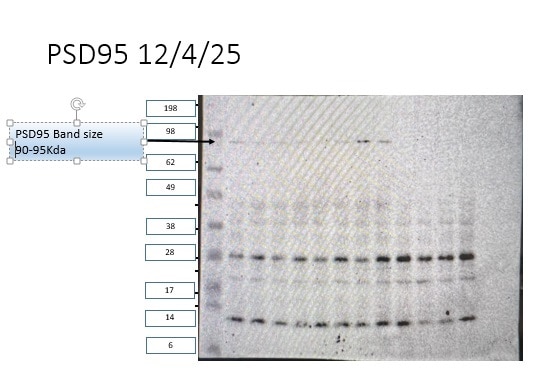
Zakia (Verified Customer) (12-04-2025) | I used the PSD95 rabbit antibody on mice brain lysate, and overall it performed well. The antibody detected PSD95 reliably without major non-specific band, making it suitable for routine western blot experiments.
 |
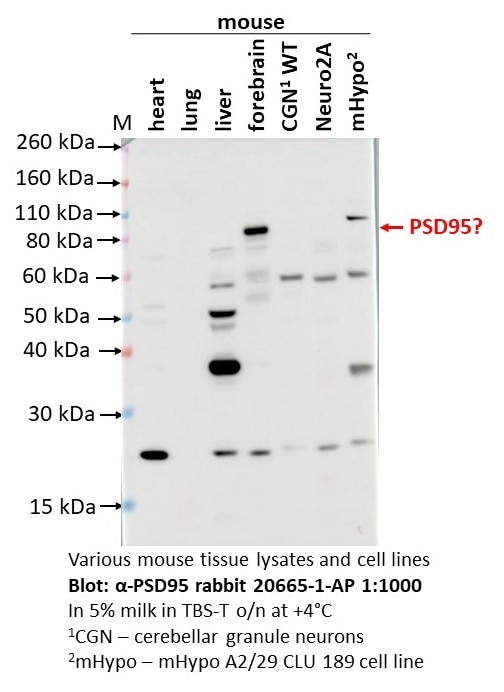
Olga (Verified Customer) (09-12-2025) | The band of right size is present in mouse brain, however, there are lots of non-specific parasite bands in other mouse cells and tissues.
 |
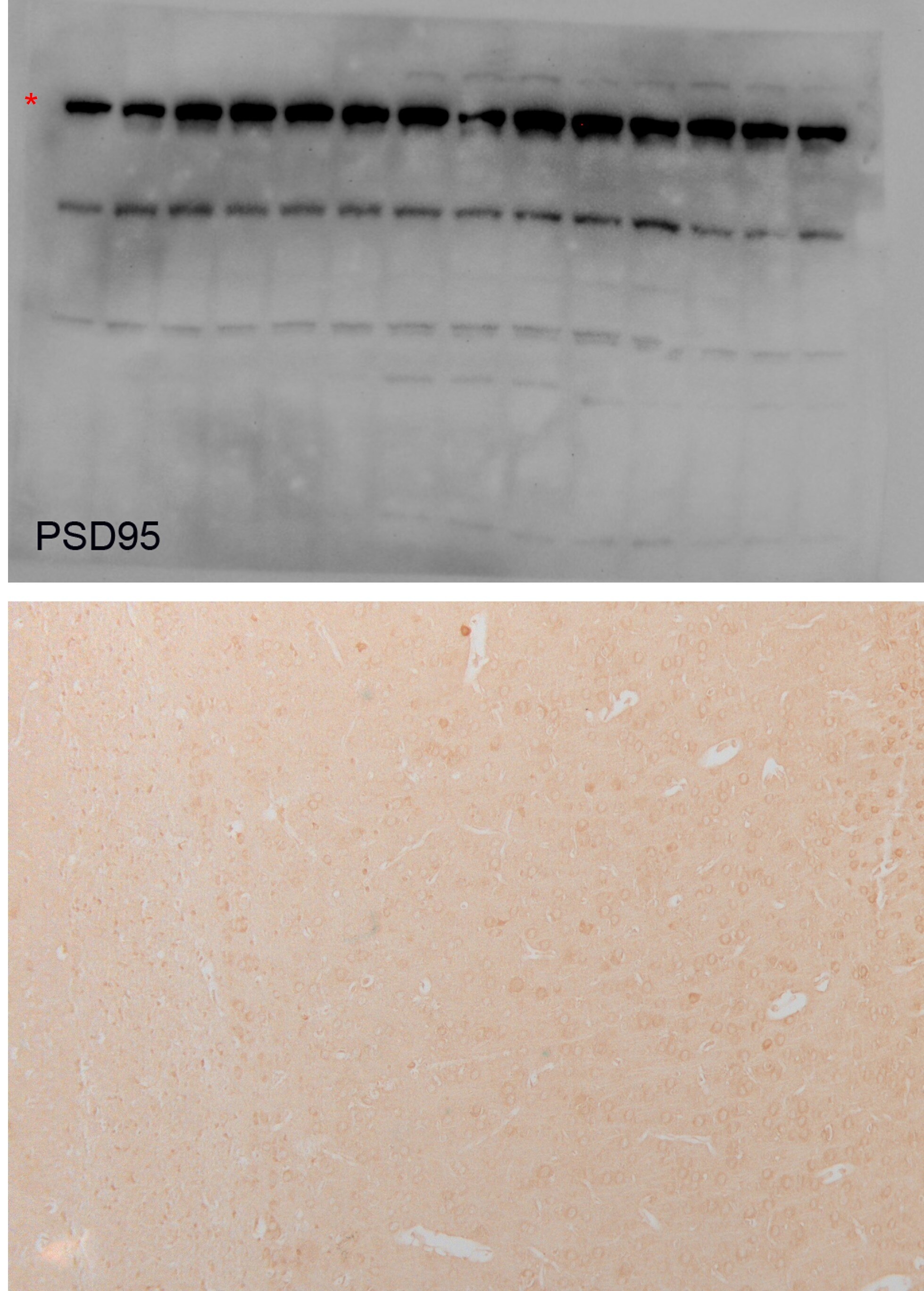
Tatyana (Verified Customer) (03-11-2023) | Works well in IHC and WB in mouse brain. WB: 4% milk in TBST and semi-dry transfer; detects a double band at ~100kDa. IHC: 4% PFA fixed and paraffinized sections; standard antigen retrieval and DAB detection. Used at 1:1000, with incubation overnight at 4C.
 |
Lisa (Verified Customer) (03-17-2022) | The antibody works well for WB
|
James (Verified Customer) (09-29-2021) | Antibody was not as specific as I had hoped. I used the antibody at 1:1000, I detected a band at 95kDa which is PSD-95, however, other bands were also detected. I will be looking to purchase a more specific monoclonal antibody for my next experiments as the specificity is an issue for me.
 |

