

Tested Applications
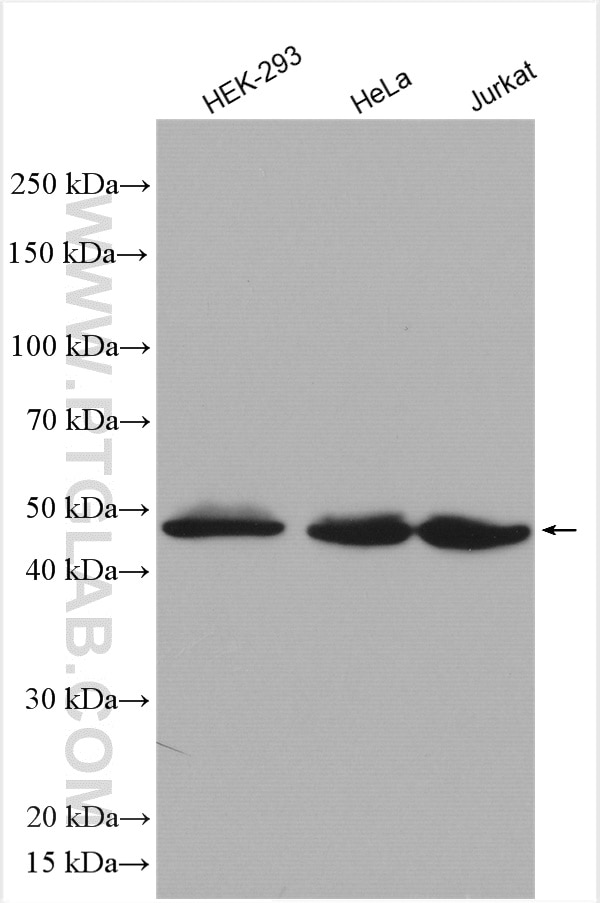
| Positive WB detected in | HEK-293 cells, HeLa cells, Jurkat cells |
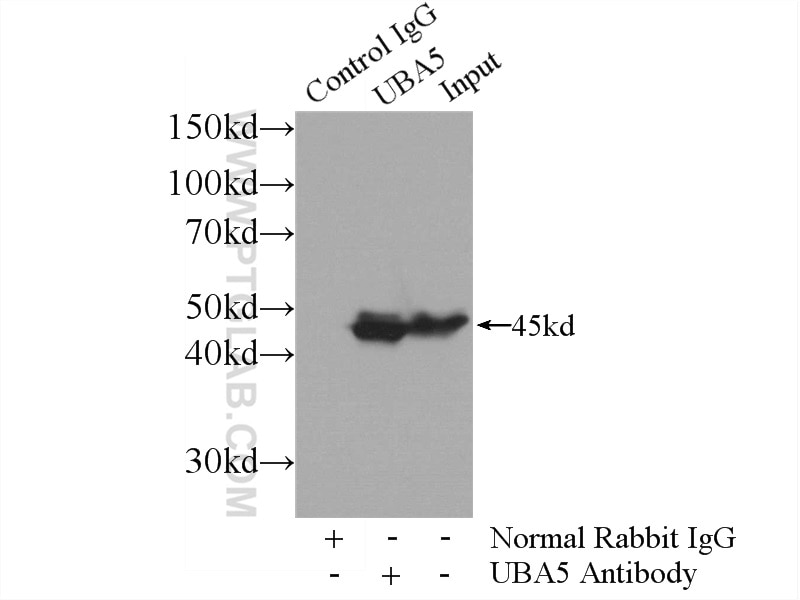
| Positive IP detected in | HeLa cells |
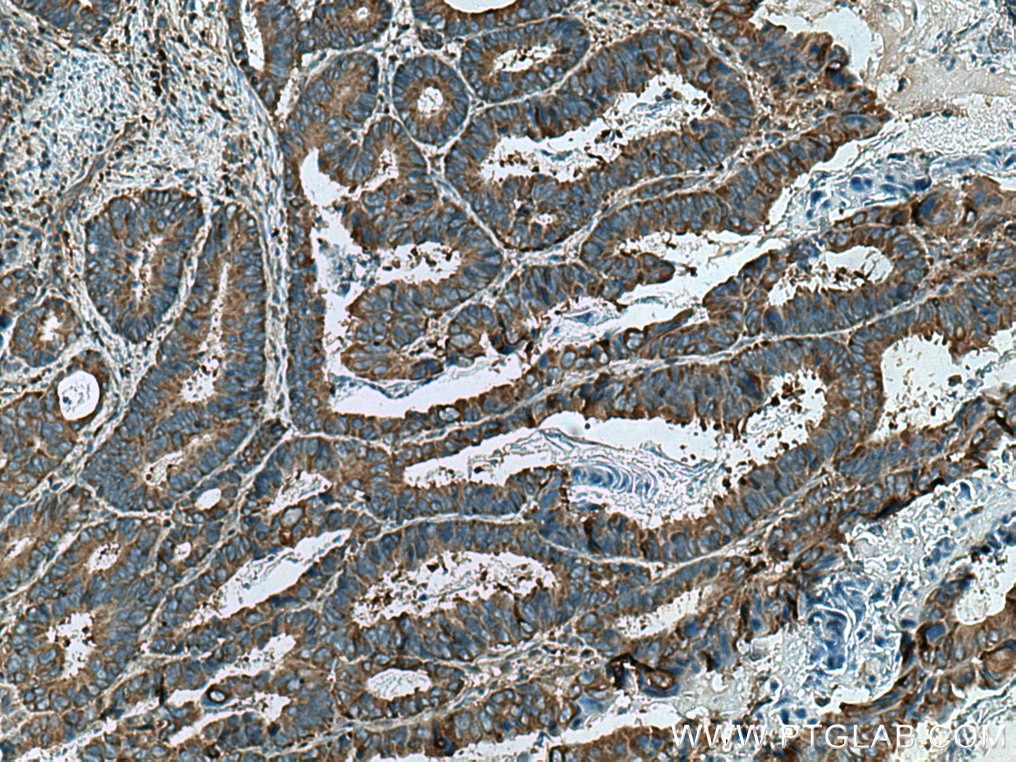
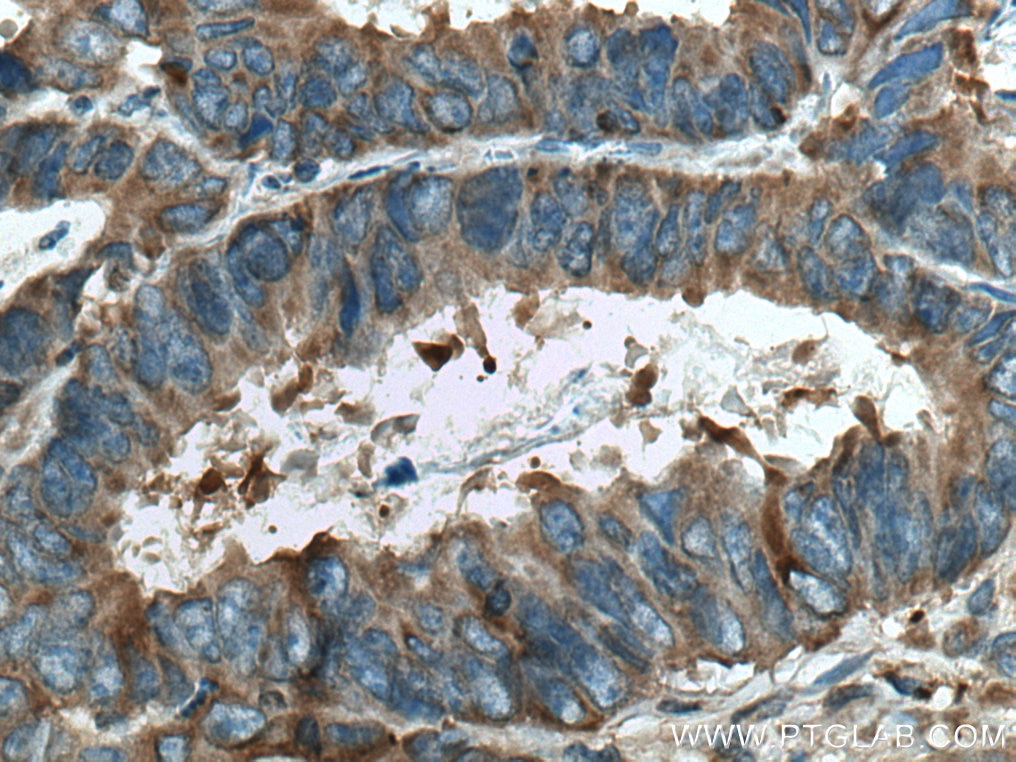
| Positive IHC detected in | human colon cancer tissue Note: suggested antigen retrieval with TE buffer pH 9.0; (*) Alternatively, antigen retrieval may be performed with citrate buffer pH 6.0 |
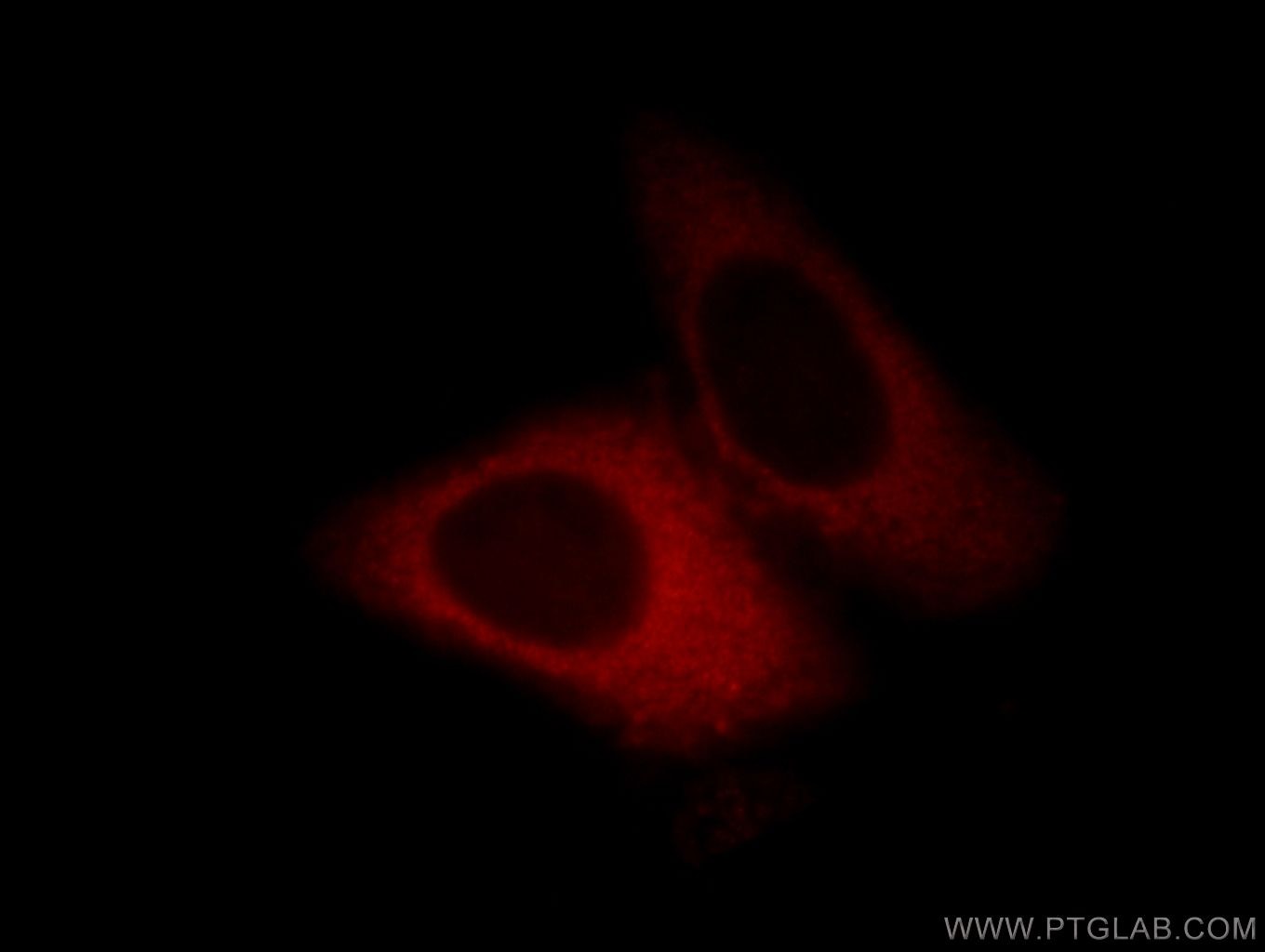
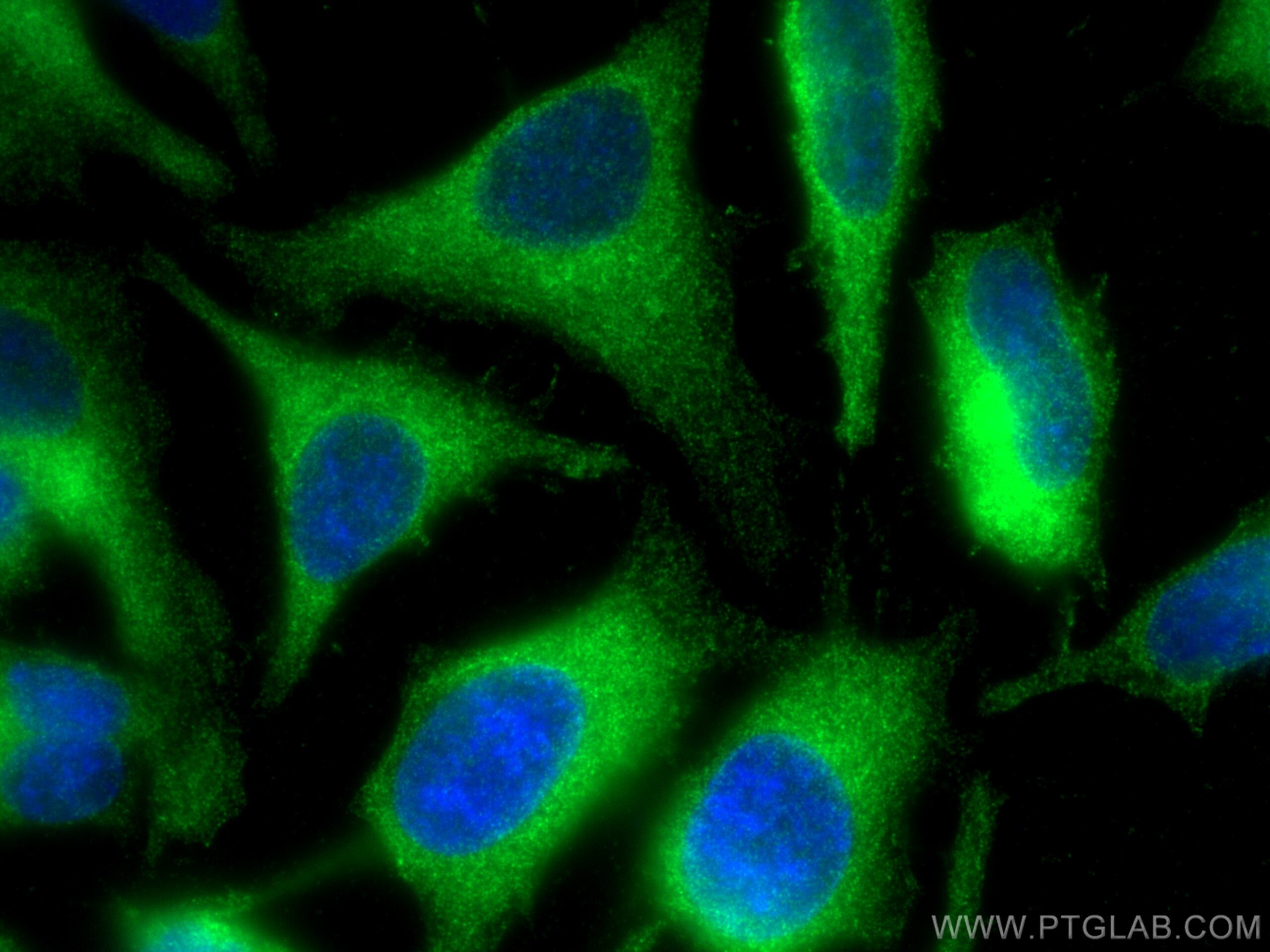
| Positive IF/ICC detected in | HepG2 cells, HeLa cells |
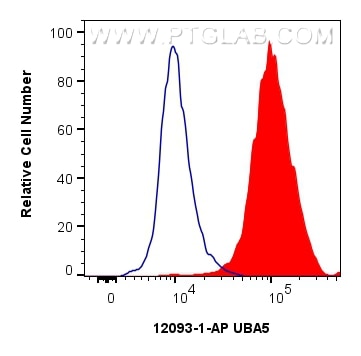
| Positive FC (Intra) detected in | HeLa cells |
Recommended dilution
| Application | Dilution |
|---|---|
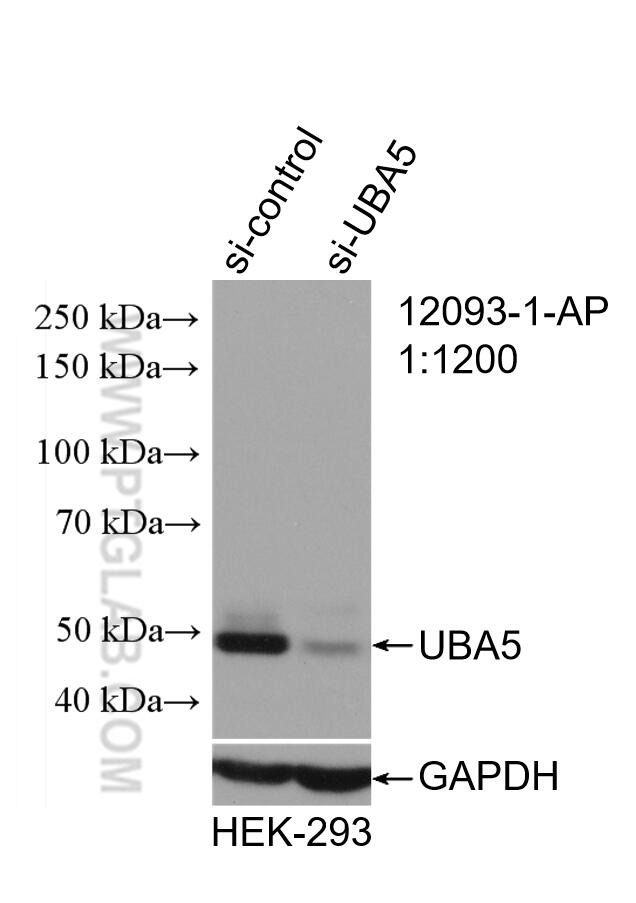
| Western Blot (WB) | WB : 1:500-1:3000 |
| Immunoprecipitation (IP) | IP : 0.5-4.0 ug for 1.0-3.0 mg of total protein lysate |
| Immunohistochemistry (IHC) | IHC : 1:50-1:500 |
| Immunofluorescence (IF)/ICC | IF/ICC : 1:10-1:100 |
| Flow Cytometry (FC) (INTRA) | FC (INTRA) : 0.40 ug per 10^6 cells in a 100 ul suspension |
| It is recommended that this reagent should be titrated in each testing system to obtain optimal results. | |
| Sample-dependent, Check data in validation data gallery. | |
Product Information
12093-1-AP targets UBA5 in WB, IHC, IF/ICC, FC (Intra), IP, ELISA applications and shows reactivity with human, mouse samples.
| Tested Reactivity | human, mouse |
| Cited Reactivity | human, mouse |
| Host / Isotype | Rabbit / IgG |
| Class | Polyclonal |
| Type | Antibody |
| Immunogen |
CatNo: Ag2734 Product name: Recombinant human UBA5 protein Source: e coli.-derived, PGEX-4T Tag: GST Domain: 105-404 aa of BC009737 Sequence: YDKVELANMNRLFFQPHQAGLSKVQAAEHTLRNINPDVLFEVHNYNITTVENFQHFMDRISNGGLEEGKPVDLVLSCVDNFEARMTINTACNELGQTWMESGVSENAVSGHIQLIIPGESACFACAPPLVVAANIDEKTLKREGVCAASLPTTMGVVAGILVQNVLKFLLNFGTVSFYLGYNAMQDFFPTMSMKPNPQCDDRNCRKQQEEYKKKVAALPKQEVIQEEEEIIHEDNEWGIELVSEVSEEELKNFSGPVPDLPEGITVAYTIPKKQEDSVTELTVEDSGESLEDLMAKMKNM Predict reactive species |
| Full Name | ubiquitin-like modifier activating enzyme 5 |
| Calculated Molecular Weight | 404 aa, 45 kDa |
| Observed Molecular Weight | 45 kDa |
| GenBank Accession Number | BC009737 |
| Gene Symbol | UBA5 |
| Gene ID (NCBI) | 79876 |
| RRID | AB_2211743 |
| Conjugate | Unconjugated |
| Form | Liquid |
| Purification Method | Antigen affinity purification |
| UNIPROT ID | Q9GZZ9 |
| Storage Buffer | PBS with 0.02% sodium azide and 50% glycerol, pH 7.3. |
| Storage Conditions | Store at -20°C. Stable for one year after shipment. Aliquoting is unnecessary for -20oC storage. 20ul sizes contain 0.1% BSA. |
Background Information
UBA5(Ubiquitin-like modifier-activating enzyme 5) is also named as UBE1DC1,ThiFP1.It has been detected highest UBE1DC1 expression in spleen, high expression in most other tissues examined, and low expression in colon, prostate, brain, and ovary by RT-PCR analysis(PMID:16328888).
Protocols
| Product Specific Protocols | |
|---|---|
| FC protocol for UBA5 antibody 12093-1-AP | Download protocol |
| IF protocol for UBA5 antibody 12093-1-AP | Download protocol |
| IHC protocol for UBA5 antibody 12093-1-AP | Download protocol |
| IP protocol for UBA5 antibody 12093-1-AP | Download protocol |
| WB protocol for UBA5 antibody 12093-1-AP | Download protocol |
| Standard Protocols | |
|---|---|
| Click here to view our Standard Protocols |
Publications
What published studies show
12093-1-AP UBA5 Polyclonal antibody has 18 citations. These appear in journals including Nature, Molecular Neurodegeneration, Nature Communications, Molecular Cell, Science Advances, EMBO Journal, American Journal of Human Genetics, Cell Reports, Biochemical Pharmacology, Cells, Biological Research, Journal of Biological Chemistry, Journal of Cell Science, BMC Cardiovascular Disorders, bioRxiv, and International Journal of Biological Sciences. Research fields span UFMylation/UFM1 pathway biology, neurodegenerative diseases (Alzheimer's, encephalopathy), cancer immunology and tumor progression, antiviral mechanisms, ribosomal subunit recycling, ER/Golgi transport, and mitochondrial or autophagic processes.
| Species | Application | Title |
|---|---|---|
Nat Commun The UFL1-AKT positive feedback loop promotes breast cancer progression by enhancing lipid synthesis. | ||
Nat Commun A genus-wide interaction atlas across NS4B orthologues identifies a conserved role for UFMylation in orthoflavivirus replication.
| ||
Mol Cell UFL1 ablation in T cells suppresses PD-1 UFMylation to enhance anti-tumor immunity
| ||
Mol Cell The UFSP2-ODR4 complex spatially confines and dynamically controls UFM1 deconjugation to safeguard neuronal proteostasis. |

