ALG3 Polyklonaler Antikörper
ALG3 Polyklonal Antikörper für WB, IHC, ELISA
Wirt / Isotyp
Kaninchen / IgG
Getestete Reaktivität
human, Maus
Anwendung
WB, IHC, IF, ELISA
Konjugation
Unkonjugiert
Kat-Nr. : 28084-1-AP
Synonyme
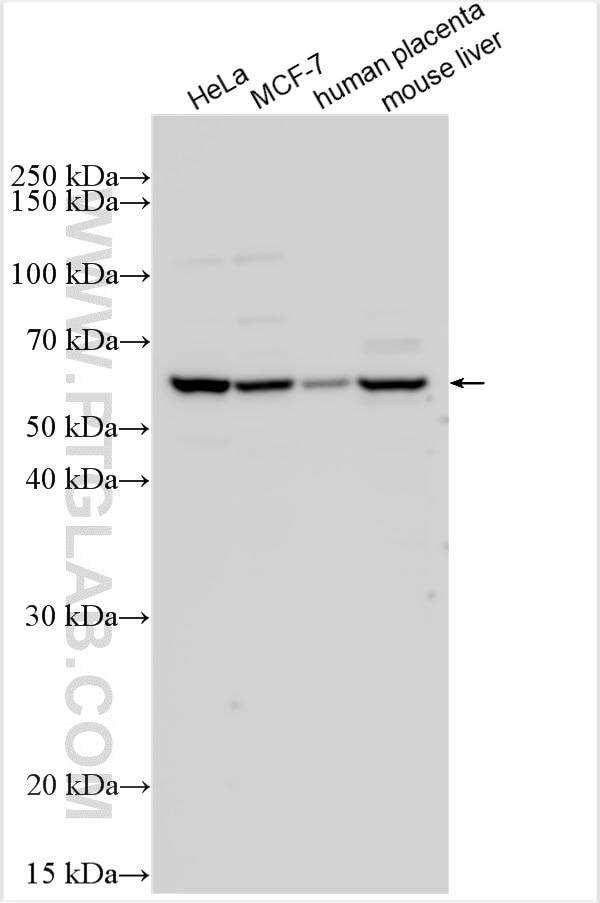
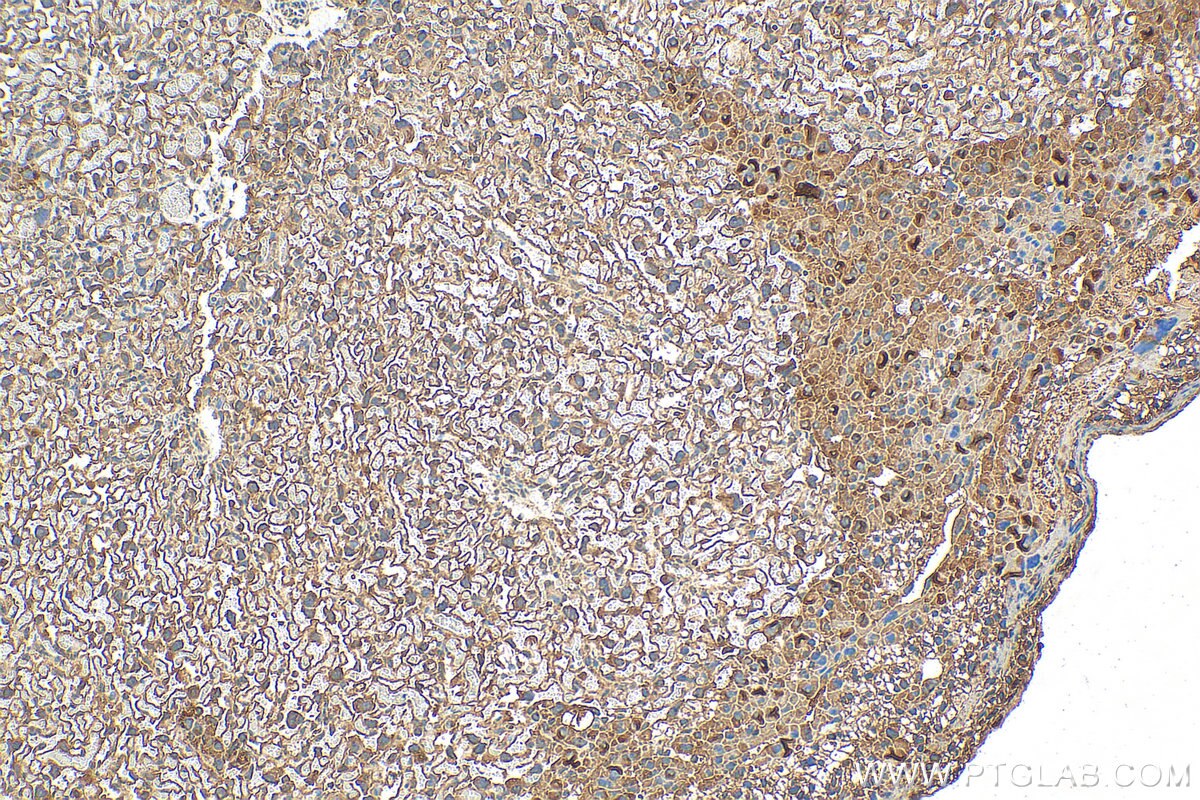
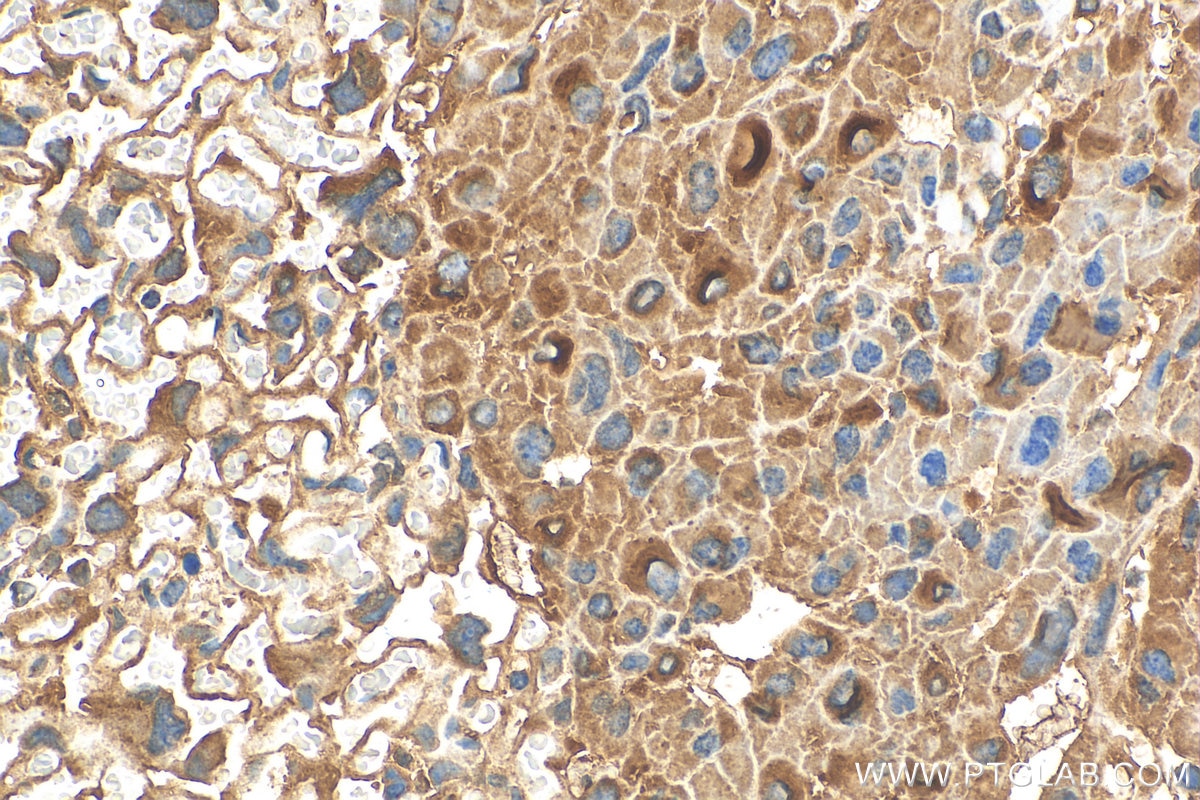
Geprüfte Anwendungen
| Erfolgreiche Detektion in WB | HeLa-Zellen, humanes Plazenta-Gewebe, MCF-7-Zellen, Mauslebergewebe |
| Erfolgreiche Detektion in IHC | Maus-Plazenta-Gewebe Hinweis: Antigendemaskierung mit TE-Puffer pH 9,0 empfohlen. (*) Wahlweise kann die Antigendemaskierung auch mit Citratpuffer pH 6,0 erfolgen. |
Empfohlene Verdünnung
| Anwendung | Verdünnung |
|---|---|
| Western Blot (WB) | WB : 1:500-1:2000 |
| Immunhistochemie (IHC) | IHC : 1:50-1:500 |
| It is recommended that this reagent should be titrated in each testing system to obtain optimal results. | |
| Sample-dependent, check data in validation data gallery | |
Veröffentlichte Anwendungen
| WB | See 1 publications below |
| IF | See 1 publications below |
Produktinformation
28084-1-AP bindet in WB, IHC, IF, ELISA ALG3 und zeigt Reaktivität mit human, Maus
| Getestete Reaktivität | human, Maus |
| In Publikationen genannte Reaktivität | human |
| Wirt / Isotyp | Kaninchen / IgG |
| Klonalität | Polyklonal |
| Typ | Antikörper |
| Immunogen | ALG3 fusion protein Ag26382 |
| Vollständiger Name | asparagine-linked glycosylation 3, alpha-1,3- mannosyltransferase homolog (S. cerevisiae) |
| Berechnetes Molekulargewicht | 438 aa, 50 kDa |
| Beobachtetes Molekulargewicht | 50-60 kDa |
| GenBank-Zugangsnummer | BC002839 |
| Gene symbol | ALG3 |
| Gene ID (NCBI) | 10195 |
| Konjugation | Unkonjugiert |
| Form | Liquid |
| Reinigungsmethode | Antigen-Affinitätsreinigung |
| Lagerungspuffer | PBS with 0.02% sodium azide and 50% glycerol |
| Lagerungsbedingungen | Bei -20°C lagern. Nach dem Versand ein Jahr lang stabil Aliquotieren ist bei -20oC Lagerung nicht notwendig. 20ul Größen enthalten 0,1% BSA. |
Hintergrundinformationen
Alpha-1,3-mannosyltransferase (ALG3) encodes an endoplasmic reticulum-localized ALG3 family member that participates in N-glycan synthesis. ALG3 contributes to high mannose-type N-glycans in several cancers, and mannose-type N-glycan upregulation has been shown to be related to cancer progression. ALG3 is overexpressed in oral squamous cell carcinoma(PMID: 33084111), non-small cell lung cancer(PMID: 31899049), and breast cancer(PMID: 33931075) and hepatocellular carcinoma(PMID: 35782861).
Protokolle
| PRODUKTSPEZIFISCHE PROTOKOLLE | |
|---|---|
| WB protocol for ALG3 antibody 28084-1-AP | Protokoll herunterladen |
| IHC protocol for ALG3 antibody 28084-1-AP | Protokoll herunterladenl |
| STANDARD-PROTOKOLLE | |
|---|---|
| Klicken Sie hier, um unsere Standardprotokolle anzuzeigen |

