- Featured Product
- KD/KO Validated
AP3B1 Polyklonaler Antikörper
AP3B1 Polyklonal Antikörper für WB, IHC, IP, Indirect ELISA
Wirt / Isotyp
Kaninchen / IgG
Getestete Reaktivität
human, Maus, Ratte
Anwendung
WB, IHC, IP, Indirect ELISA
Konjugation
Unkonjugiert
Kat-Nr. : 13384-1-PBS
Synonyme
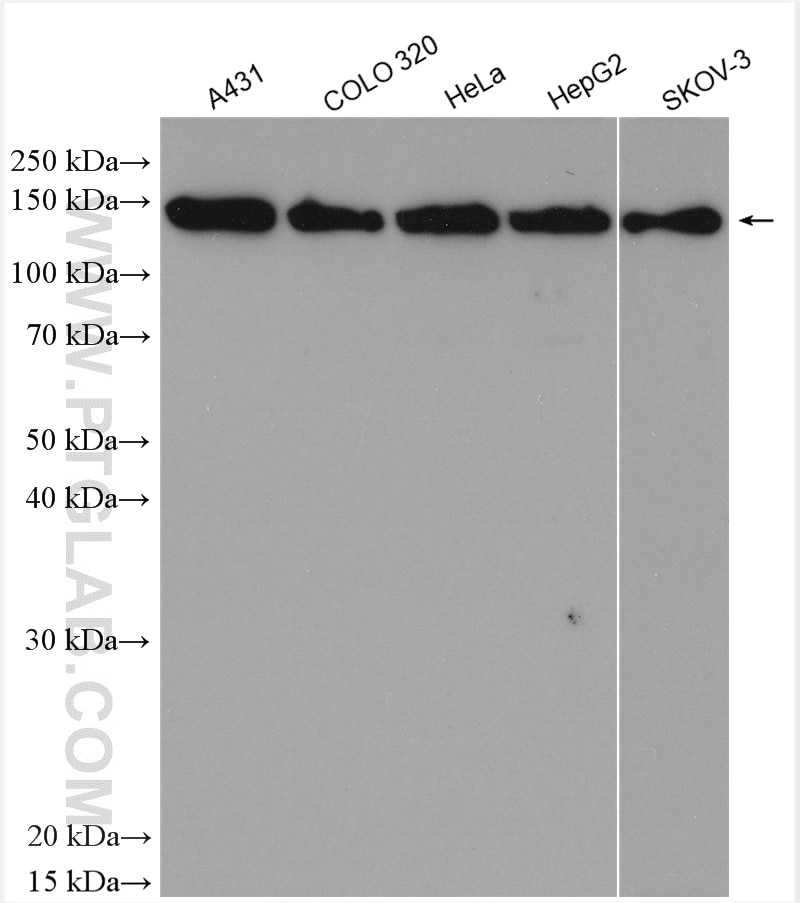
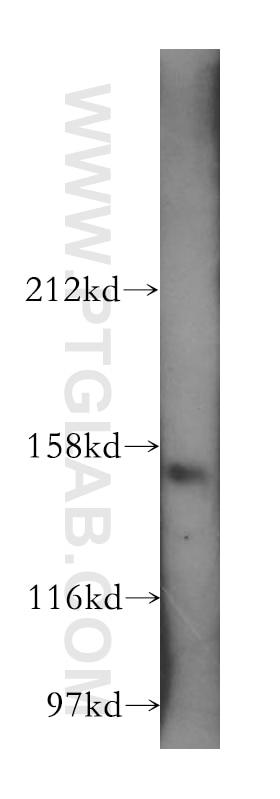
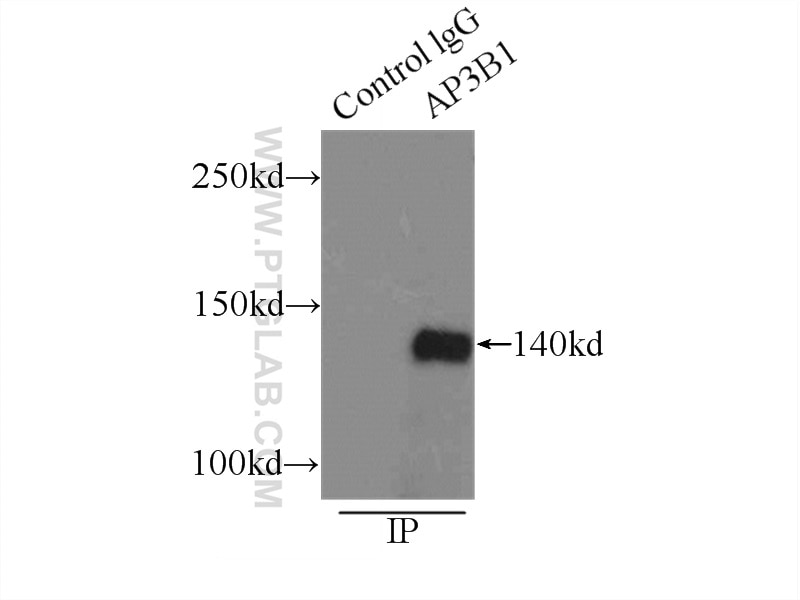
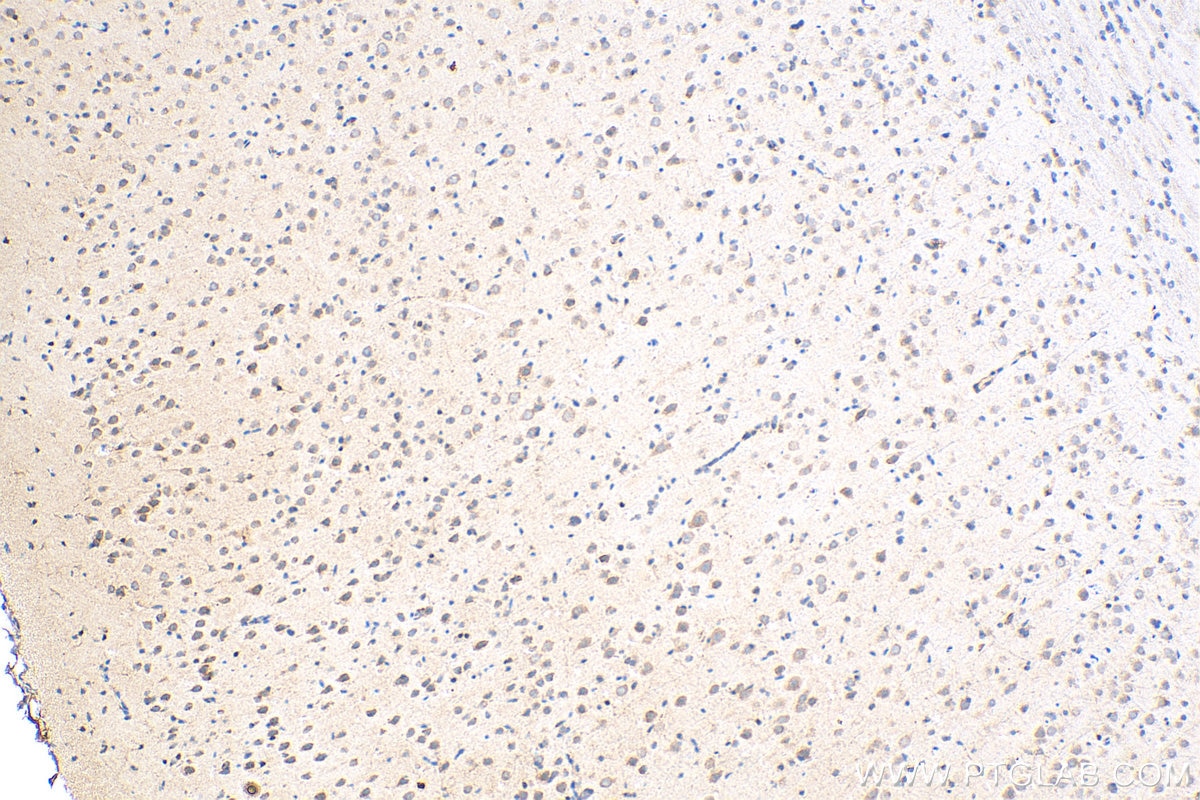
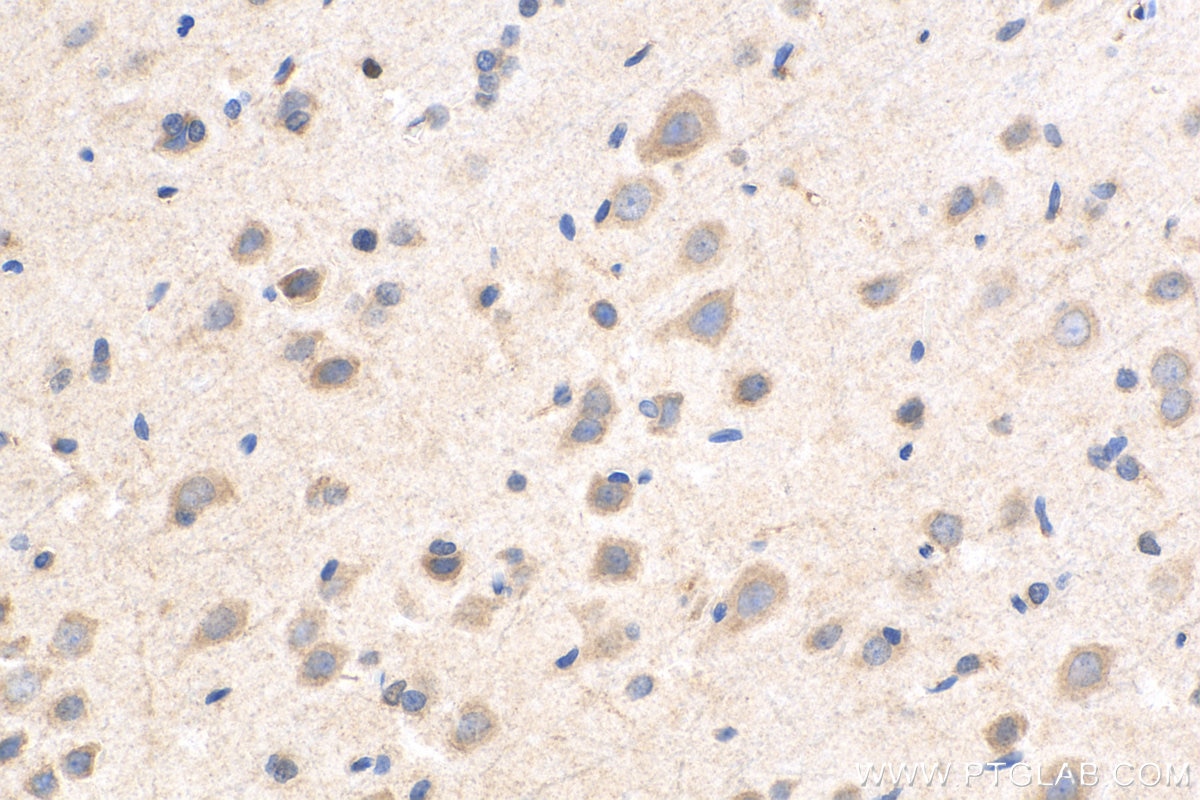
Geprüfte Anwendungen
Produktinformation
13384-1-PBS bindet in WB, IHC, IP, Indirect ELISA AP3B1 und zeigt Reaktivität mit human, Maus, Ratten
| Getestete Reaktivität | human, Maus, Ratte |
| Wirt / Isotyp | Kaninchen / IgG |
| Klonalität | Polyklonal |
| Typ | Antikörper |
| Immunogen | AP3B1 fusion protein Ag4225 |
| Vollständiger Name | adaptor-related protein complex 3, beta 1 subunit |
| Berechnetes Molekulargewicht | 1094 aa, 121 kDa |
| Beobachtetes Molekulargewicht | 140 kDa |
| GenBank-Zugangsnummer | BC038444 |
| Gene symbol | AP3B1 |
| Gene ID (NCBI) | 8546 |
| Konjugation | Unkonjugiert |
| Form | Liquid |
| Reinigungsmethode | Antigen-Affinitätsreinigung |
| Lagerungspuffer | PBS only |
| Lagerungsbedingungen | Store at -80°C. 20ul Größen enthalten 0,1% BSA. |
Hintergrundinformationen
AP3B1 is the 140-kDa β3A subunit of the adaptor-related protein complex-3 (AP-3), a ubiquitous heterotetrameric complex that is localized to the trans-Golgi network and endosomes and is involved in protein trafficking to lysosomes or specialized endosomal-lysosomal organelles (PMID: 9182526; 9545220). This complex is composed of two larger subunits (δ and β3A or β3B), a medium subunit (μ3A or μ3B), and a small subunit (σ3A or σ3B). The absence of the β3A subunit (AP3B1) results in the loss of stability of AP3 and leads to degradation of μ3A, to which β3A is directly bound, while the other subunits are variably affected (PMID: 16507770). AP3B1 contains three main domains: the N-terminal head domain, the hinge, and the C-terminal ear domain. It has been reported as a target of IP(7)-mediated pyrophosphorylation (PMID: 19934039). Defects in AP3B1 are the cause of Hermansky-Pudlak syndrome type 2 (HPS2) (PMID: 10024875; 16507770).


