- Featured Product
- KD/KO Validated
ARNT2 Polyklonaler Antikörper
ARNT2 Polyklonal Antikörper für WB, IHC, Indirect ELISA
Wirt / Isotyp
Kaninchen / IgG
Getestete Reaktivität
human, Maus, Ratte
Anwendung
WB, IHC, Indirect ELISA
Konjugation
Unkonjugiert
Kat-Nr. : 12810-1-PBS
Synonyme
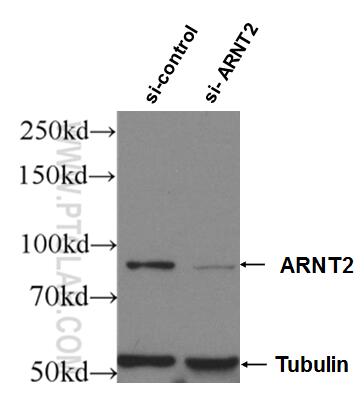
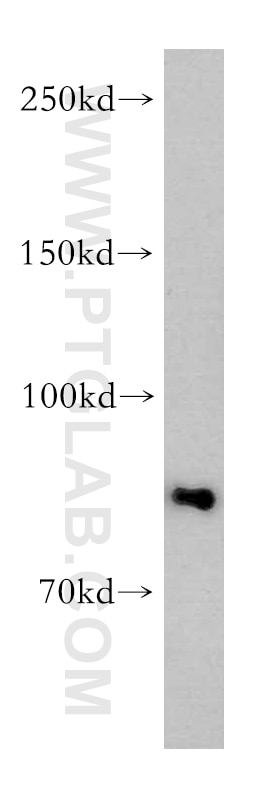
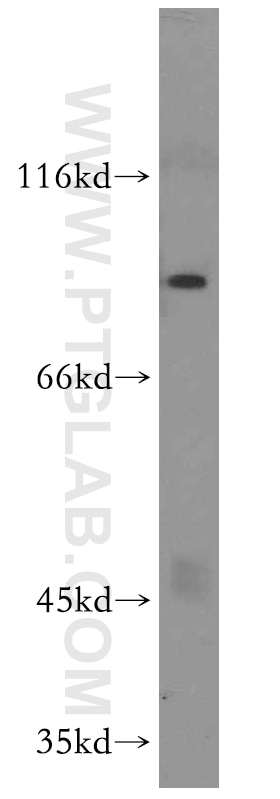
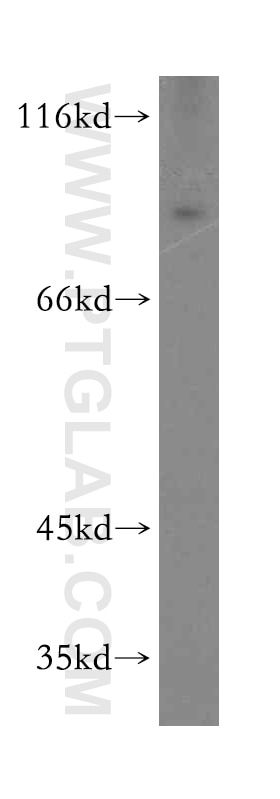
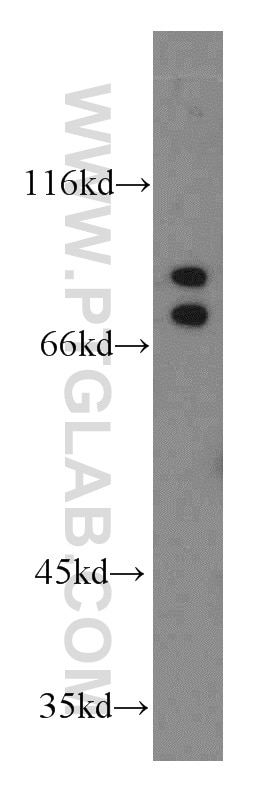
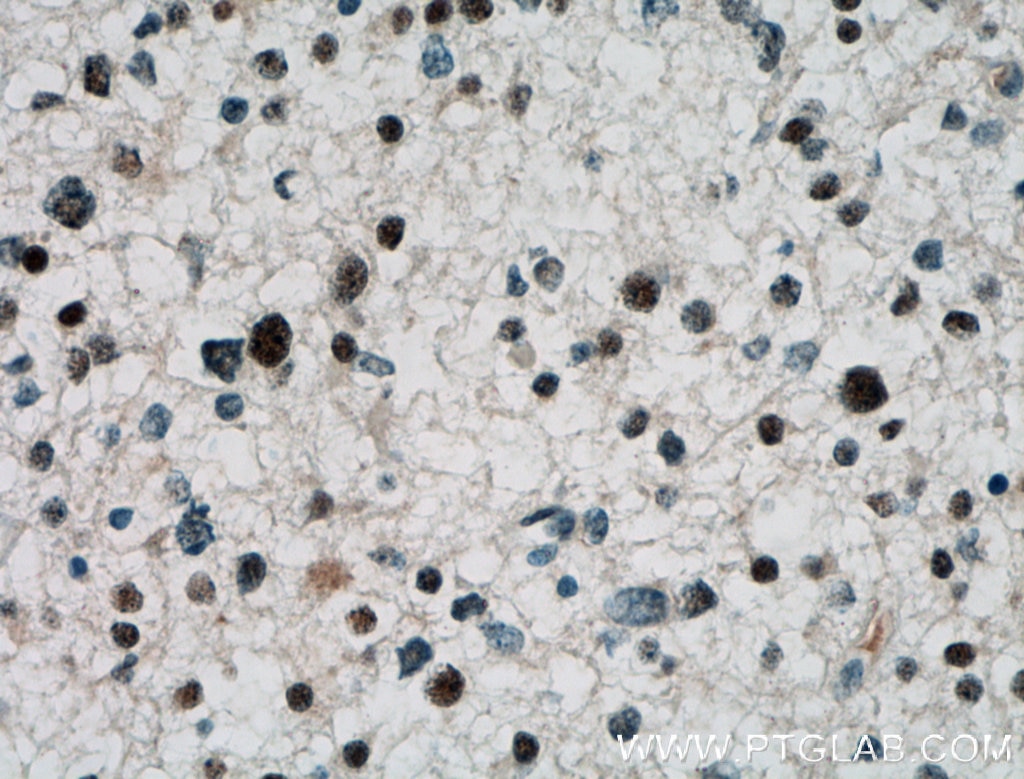
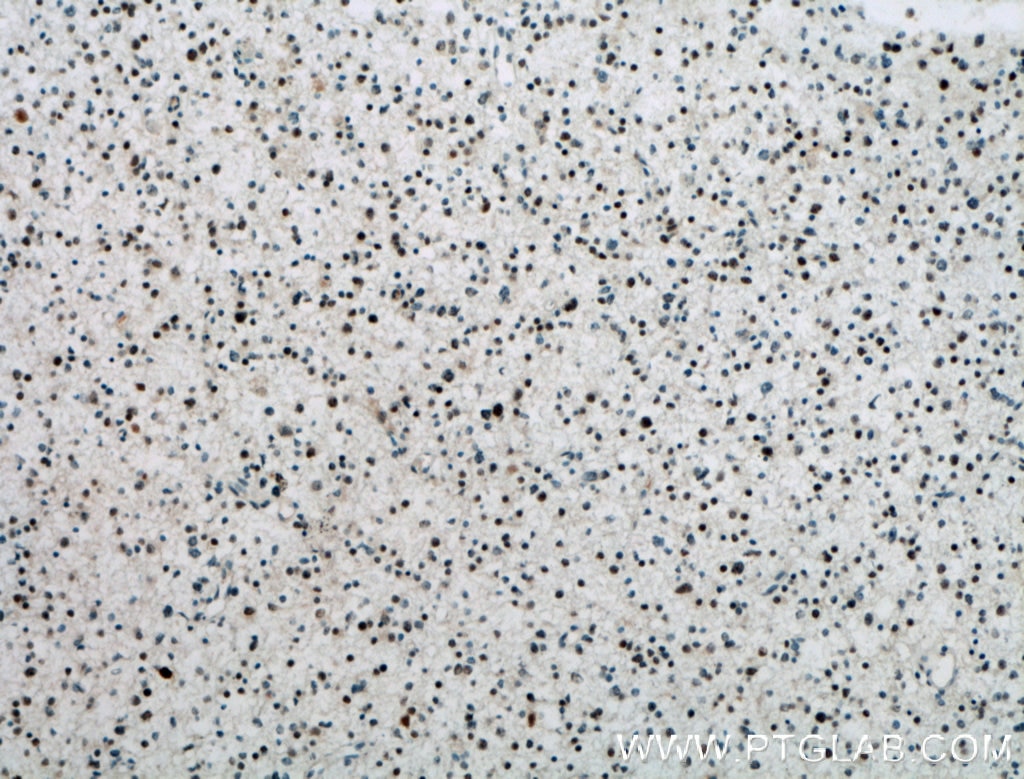
Geprüfte Anwendungen
Produktinformation
12810-1-PBS bindet in WB, IHC, Indirect ELISA ARNT2 und zeigt Reaktivität mit human, Maus, Ratten
| Getestete Reaktivität | human, Maus, Ratte |
| Wirt / Isotyp | Kaninchen / IgG |
| Klonalität | Polyklonal |
| Typ | Antikörper |
| Immunogen | ARNT2 fusion protein Ag3536 |
| Vollständiger Name | aryl-hydrocarbon receptor nuclear translocator 2 |
| Berechnetes Molekulargewicht | 716 aa, 79 kDa |
| Beobachtetes Molekulargewicht | 80-85 kDa |
| GenBank-Zugangsnummer | BC036099 |
| Gene symbol | ARNT2 |
| Gene ID (NCBI) | 9915 |
| Konjugation | Unkonjugiert |
| Form | Liquid |
| Reinigungsmethode | Antigen-Affinitätsreinigung |
| Lagerungspuffer | PBS only |
| Lagerungsbedingungen | Store at -80°C. 20ul Größen enthalten 0,1% BSA. |
Hintergrundinformationen
Aryl-hydrocarbon receptor nuclear translocator 2(ARNT2), is a member of the basic-helix-loop-helix-Per-Arnt-Sim (bHLH-PAS) superfamily of transcription factors. It specifically recognizes the xenobiotic response element(XRE). ARNT2 plays an important role in normal glucose handling in pancreatic beta cell function in humans and mice. ARNT2 proteins are dimeric partners for other PAS proteins such as HIF and SIM. ARNT2 and the other ARNT family members, e.g., ARNT, hypoxin inducible factor 1α (HIF1α), HIF2α, and aryl hydrocarbon receptor (AhR), are thought to function as heterodimers, and regulate the expression, and thereby the function, of many genes. Under hypoxic conditions, it complexes with hypoxia-inducible factor 1alpha in the nucleus and this complex binds to hypoxia-responsive elements in enhancers and promoters of oxygen-responsive genes. Modulation of ARNT2 in pancreatic beta cells affects glucose stimulated INS secretion (GSIS). This antibody is a rabbit polyclonal antibody raised against residues near the C terminus of human ARNT2.


