SLC10A2/ASBT Polyklonaler Antikörper
SLC10A2/ASBT Polyklonal Antikörper für WB, IP, ELISA
Wirt / Isotyp
Kaninchen / IgG
Getestete Reaktivität
human, Maus und mehr (1)
Anwendung
WB, IHC, IF, IP, ELISA
Konjugation
Unkonjugiert
Kat-Nr. : 25245-1-AP
Synonyme
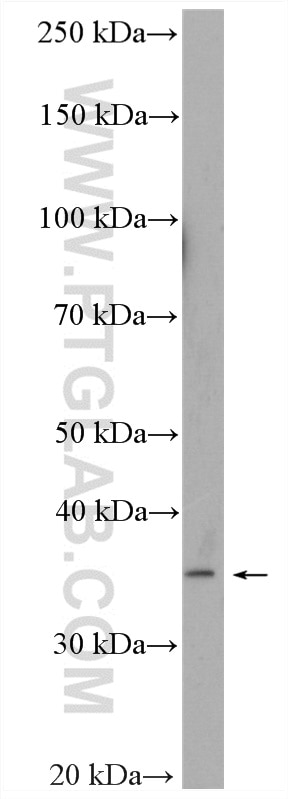
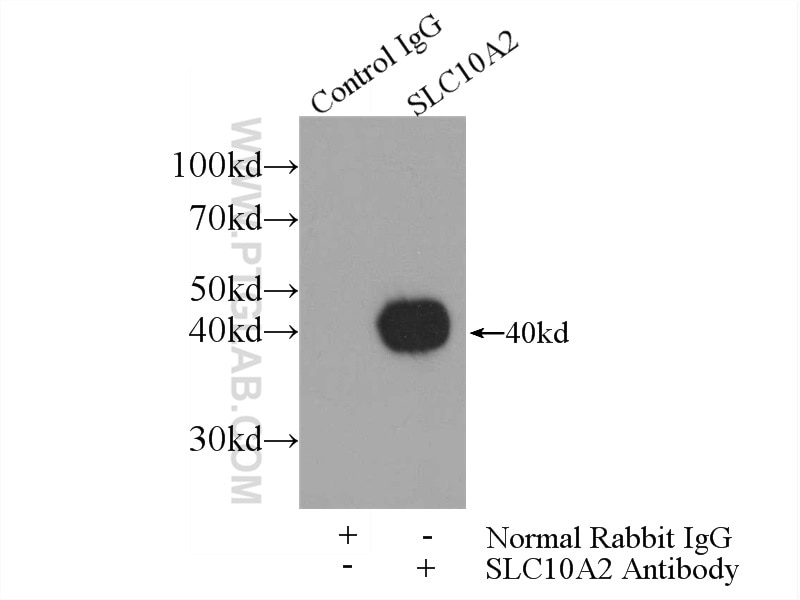
Geprüfte Anwendungen
| Erfolgreiche Detektion in WB | Maus-Dünndarmgewebe |
| Erfolgreiche IP | Mausnierengewebe |
Empfohlene Verdünnung
| Anwendung | Verdünnung |
|---|---|
| Western Blot (WB) | WB : 1:200-1:1000 |
| Immunpräzipitation (IP) | IP : 0.5-4.0 ug for 1.0-3.0 mg of total protein lysate |
| It is recommended that this reagent should be titrated in each testing system to obtain optimal results. | |
| Sample-dependent, check data in validation data gallery | |
Veröffentlichte Anwendungen
| WB | See 18 publications below |
| IHC | See 2 publications below |
| IF | See 1 publications below |
Produktinformation
25245-1-AP bindet in WB, IHC, IF, IP, ELISA SLC10A2/ASBT und zeigt Reaktivität mit human, Maus
| Getestete Reaktivität | human, Maus |
| In Publikationen genannte Reaktivität | human, hamster, Maus |
| Wirt / Isotyp | Kaninchen / IgG |
| Klonalität | Polyklonal |
| Typ | Antikörper |
| Immunogen | SLC10A2/ASBT fusion protein Ag18808 |
| Vollständiger Name | solute carrier family 10 (sodium/bile acid cotransporter family), member 2 |
| Berechnetes Molekulargewicht | 348 aa, 38 kDa |
| Beobachtetes Molekulargewicht | 38-40 kDa |
| GenBank-Zugangsnummer | BC130523 |
| Gene symbol | ASBT |
| Gene ID (NCBI) | 6555 |
| Konjugation | Unkonjugiert |
| Form | Liquid |
| Reinigungsmethode | Antigen-Affinitätsreinigung |
| Lagerungspuffer | PBS with 0.02% sodium azide and 50% glycerol |
| Lagerungsbedingungen | Bei -20°C lagern. Nach dem Versand ein Jahr lang stabil Aliquotieren ist bei -20oC Lagerung nicht notwendig. 20ul Größen enthalten 0,1% BSA. |
Hintergrundinformationen
SLC10A2 also known as ASBT, ISBT, and NTCP2, is a sodium/bile acid cotransporter that is primarily responsible for the uptake of bile acids by apical cells in the distal ileum(PMID: 8661017). Mutations in SLC10A2 cause primary bile acid malabsorption (PBAM) and may be associated with other diseases of the liver and intestines, such as familial hypertriglyceridemia (FHTG)(PMID: 9109432).
Protokolle
| PRODUKTSPEZIFISCHE PROTOKOLLE | |
|---|---|
| WB protocol for SLC10A2/ASBT antibody 25245-1-AP | Protokoll herunterladen |
| IP protocol for SLC10A2/ASBT antibody 25245-1-AP | Protokoll herunterladen |
| STANDARD-PROTOKOLLE | |
|---|---|
| Klicken Sie hier, um unsere Standardprotokolle anzuzeigen |
Publikationen
| Species | Application | Title |
|---|---|---|
Gastroenterology Solute Carrier Organic Anion Transporter Family Member 3A1 Is a Bile Acid Efflux Transporter in Cholestasis. | ||
Cell Host Microbe Veillonella intestinal colonization promotes C. difficile infection in Crohn's disease | ||
Nat Commun Hypothalamic SLC7A14 accounts for aging-reduced lipolysis in white adipose tissue of male mice | ||
Pharmacol Res Geniposide reduces cholesterol accumulation and increases its excretion by regulating the FXR-mediated liver-gut crosstalk of bile acids. | ||
Mol Nutr Food Res The Effect of Coenzyme Q10 Supplementation on Bile Acid Metabolism: Insights from Network Pharmacology, Molecular Docking, and Experimental Validation | ||
J Agric Food Chem Novel Metabolic Regulation of Bile Acid Responses to Low Cholesterol in Whole-Grain-Diet-Fed Mice. |
Rezensionen
The reviews below have been submitted by verified Proteintech customers who received an incentive for providing their feedback.
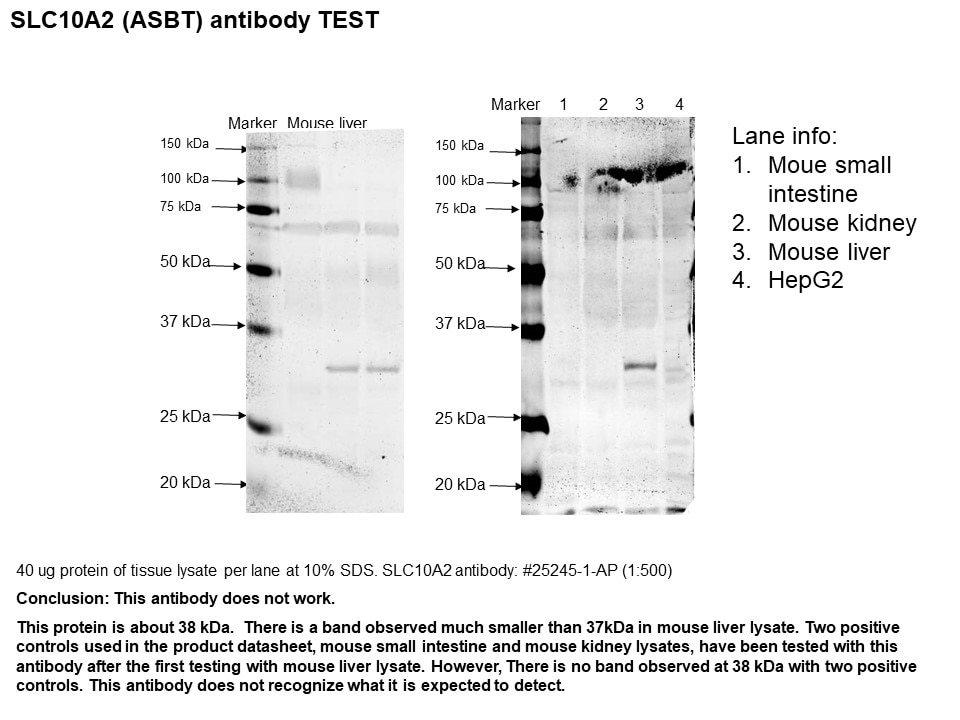
FH Hua (Verified Customer) (12-01-2020) | It does not work as expected.
 |

