- Featured Product
- KD/KO Validated
Alpha-1-Antitrypsin Monoklonaler Antikörper
Alpha-1-Antitrypsin Monoklonal Antikörper für WB, IHC, IF/ICC, FC (Intra), IP, ELISA
Wirt / Isotyp
Maus / IgG1
Getestete Reaktivität
Hausschwein, human, Maus, Ratte
Anwendung
WB, IHC, IF/ICC, FC (Intra), IP, ELISA
Konjugation
Unkonjugiert
CloneNo.
1A9G6
Kat-Nr. : 66135-1-PBS
Synonyme
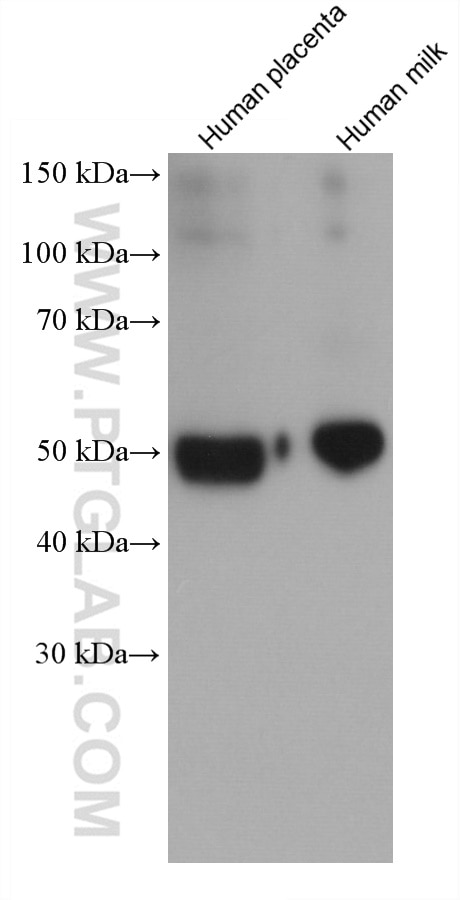
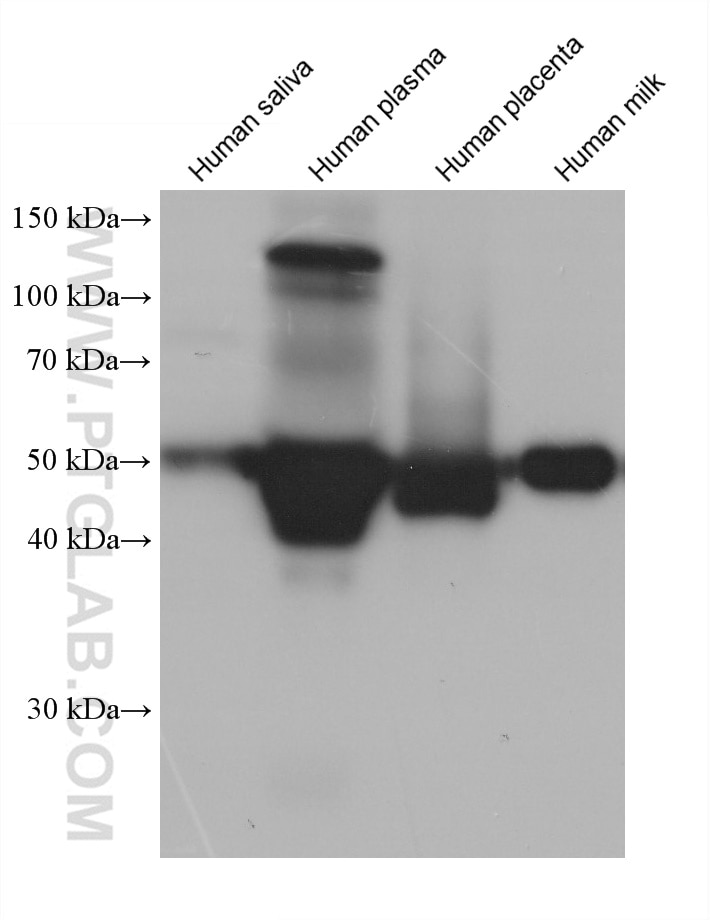
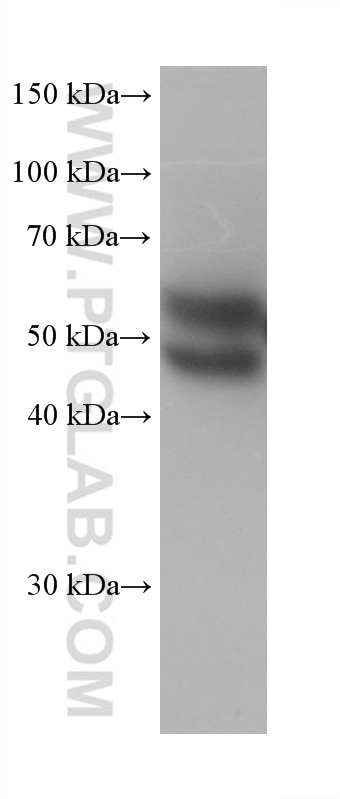
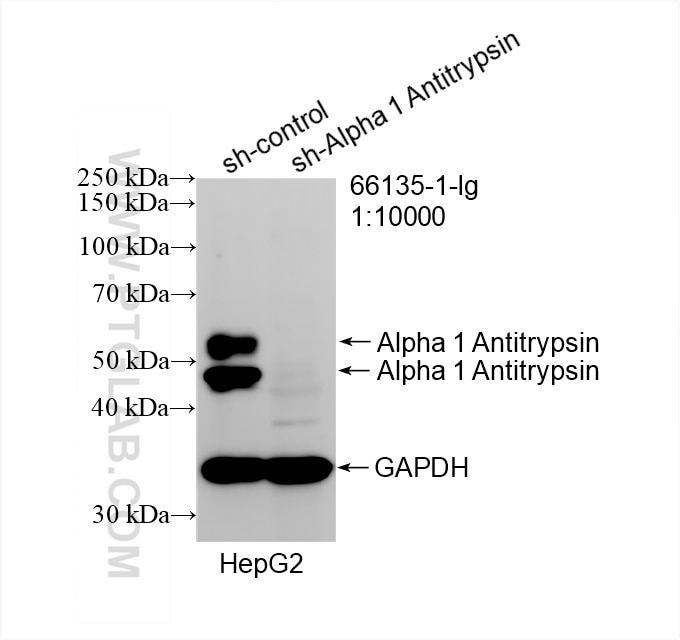
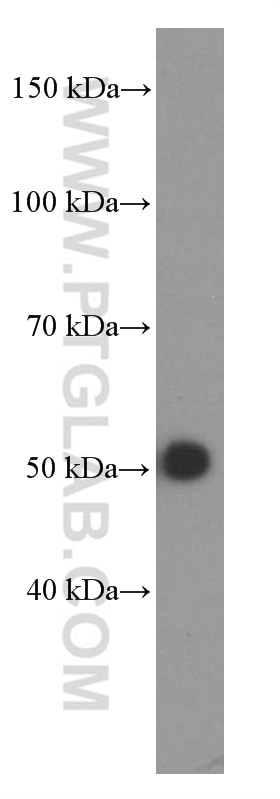
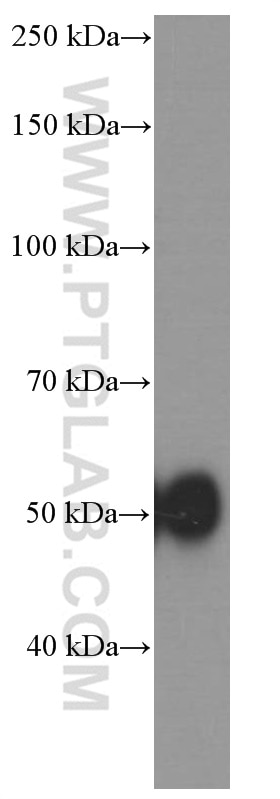
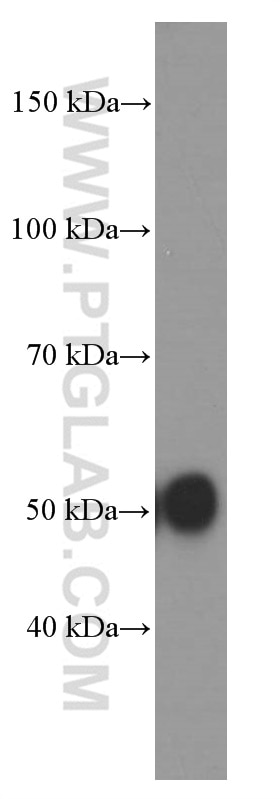
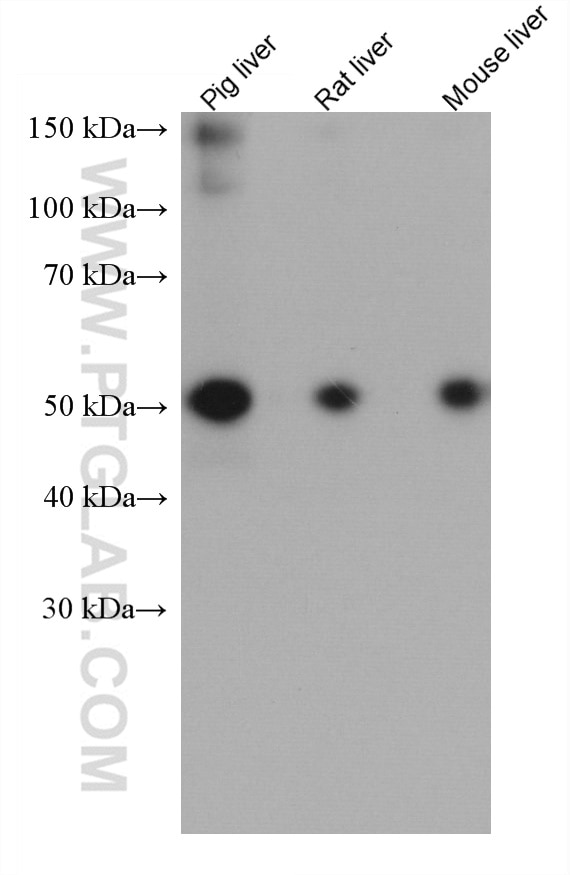
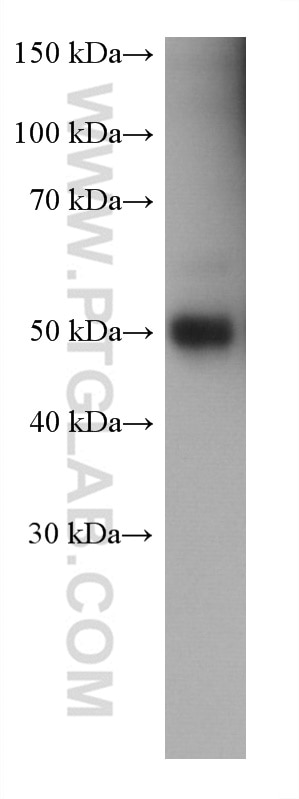
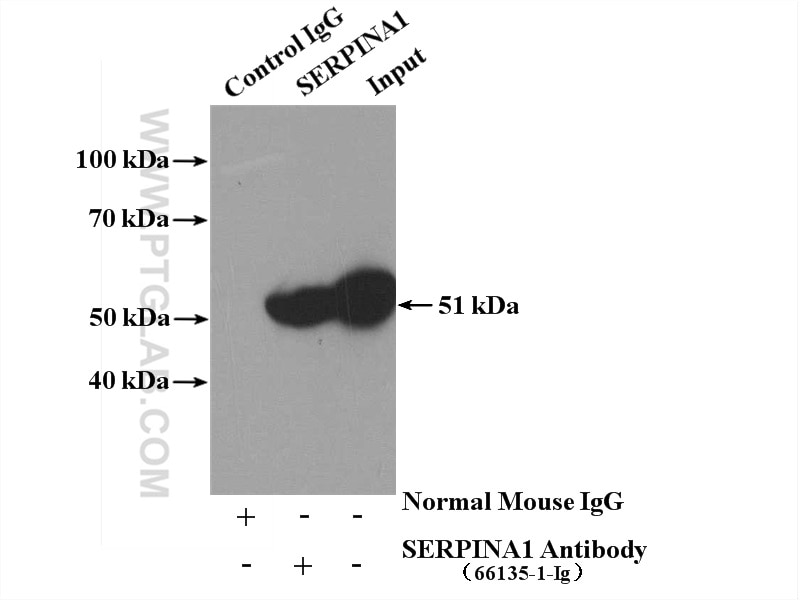
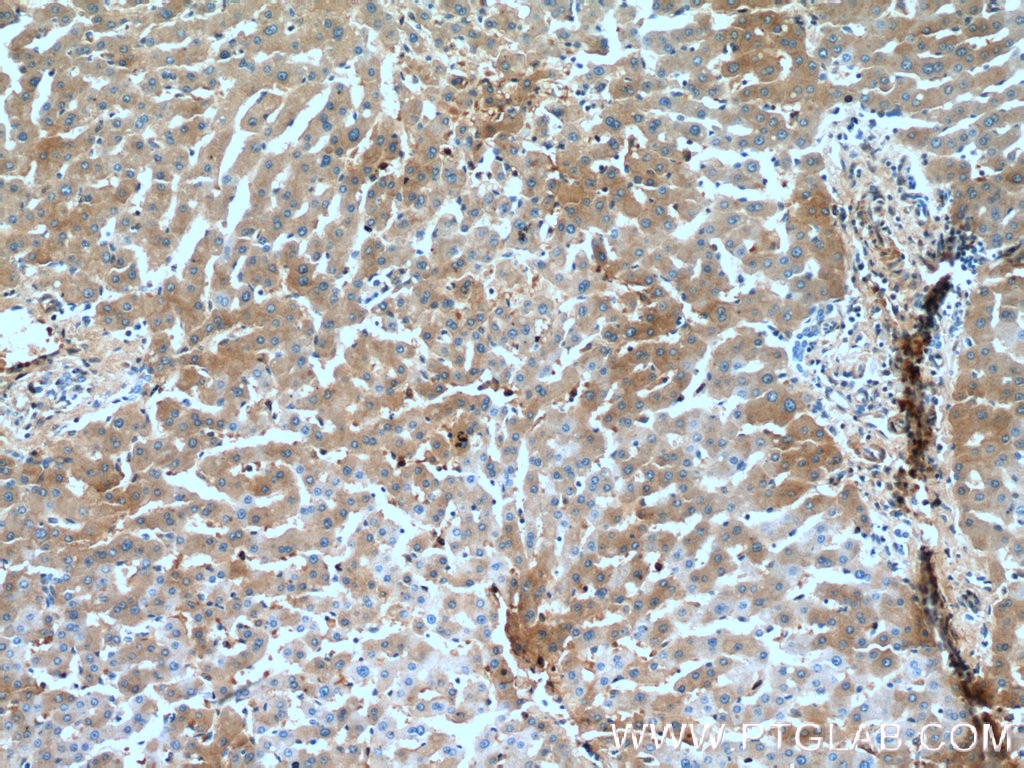
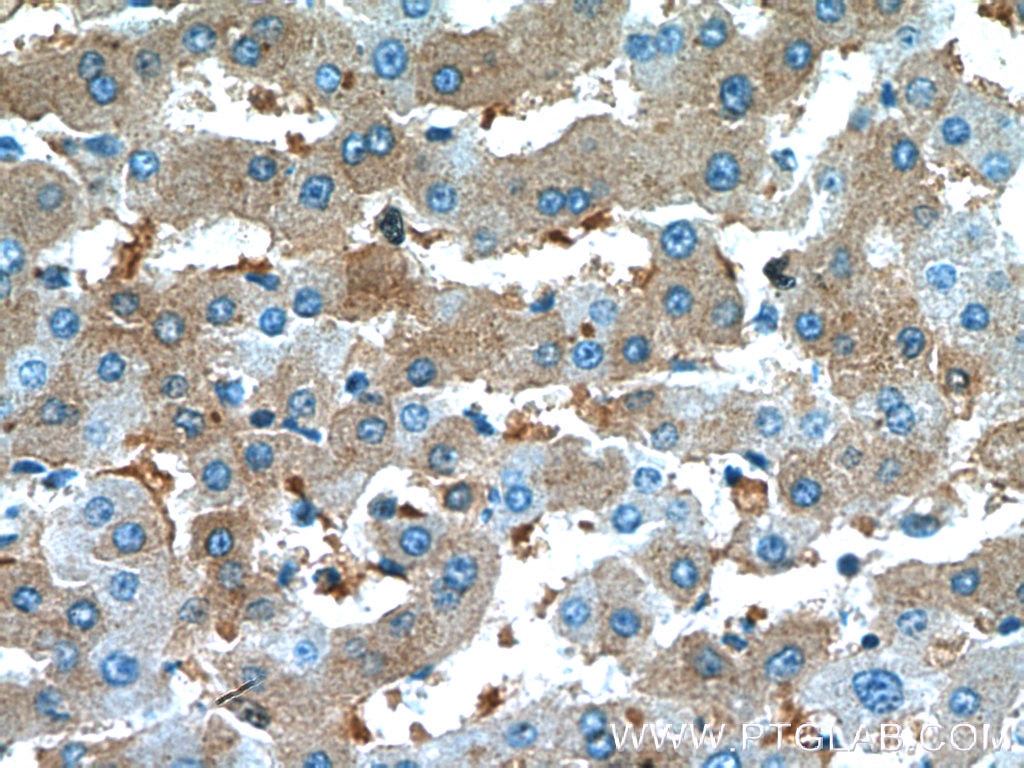
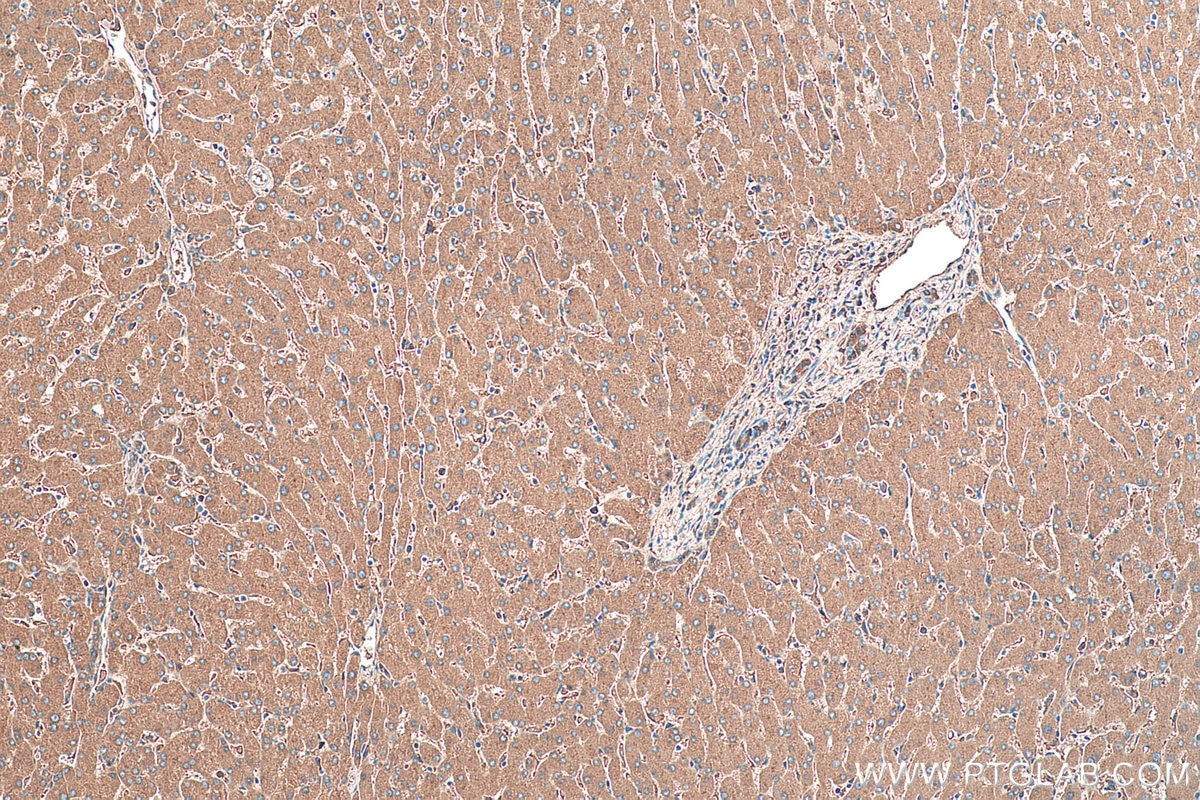
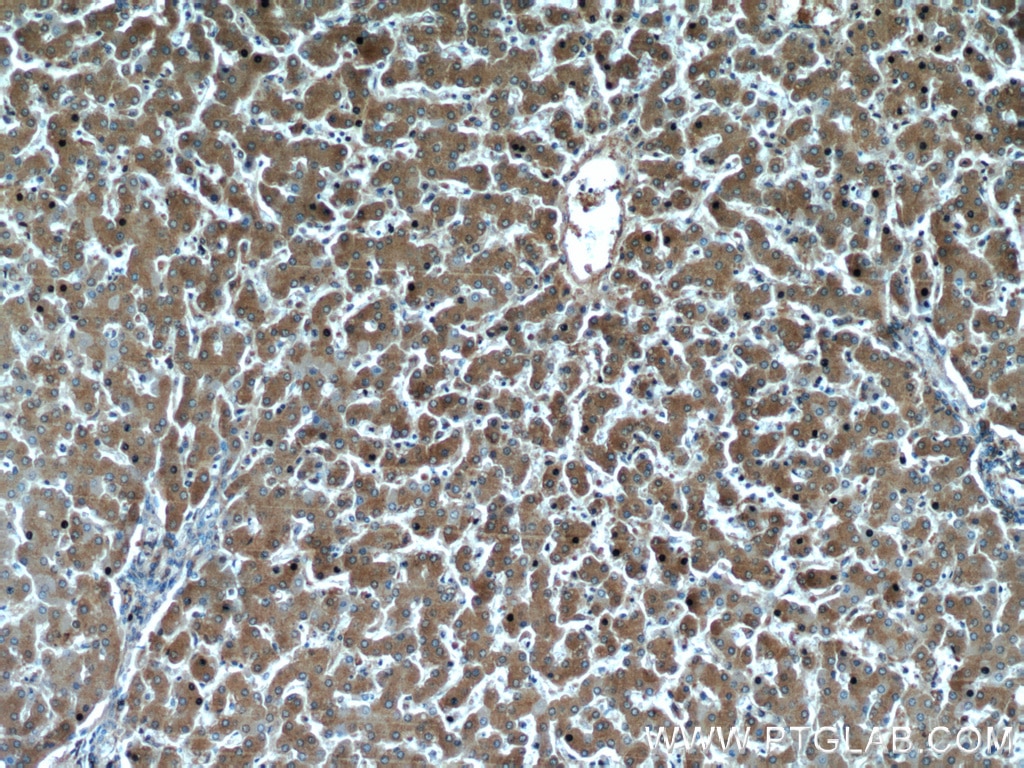
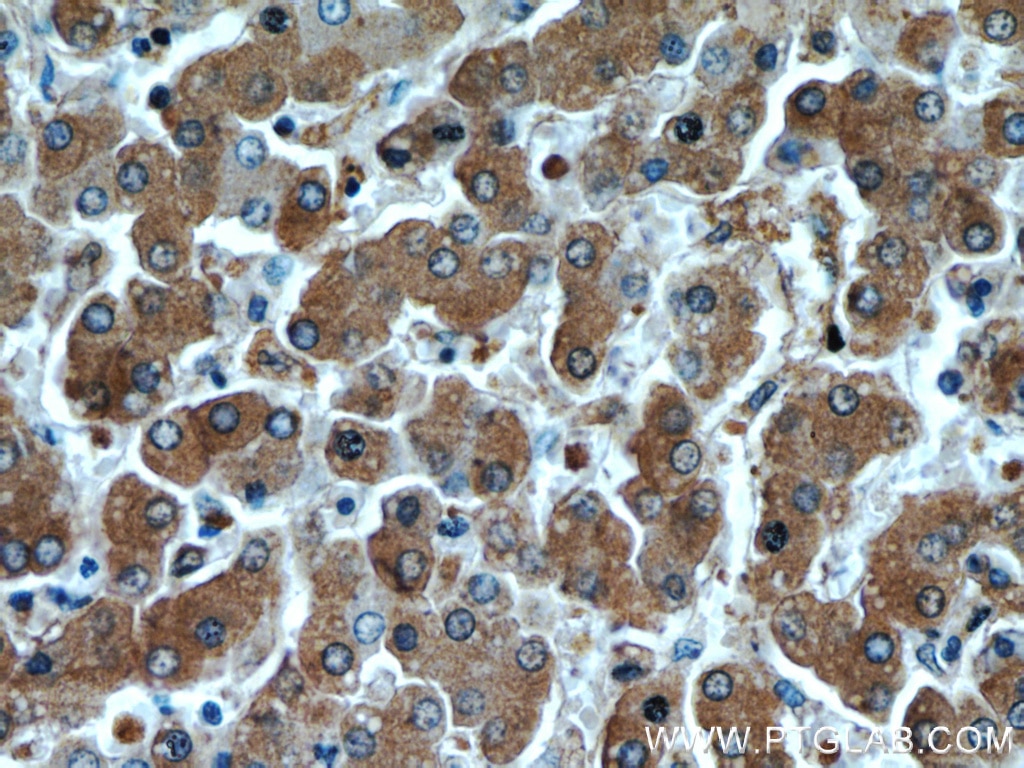
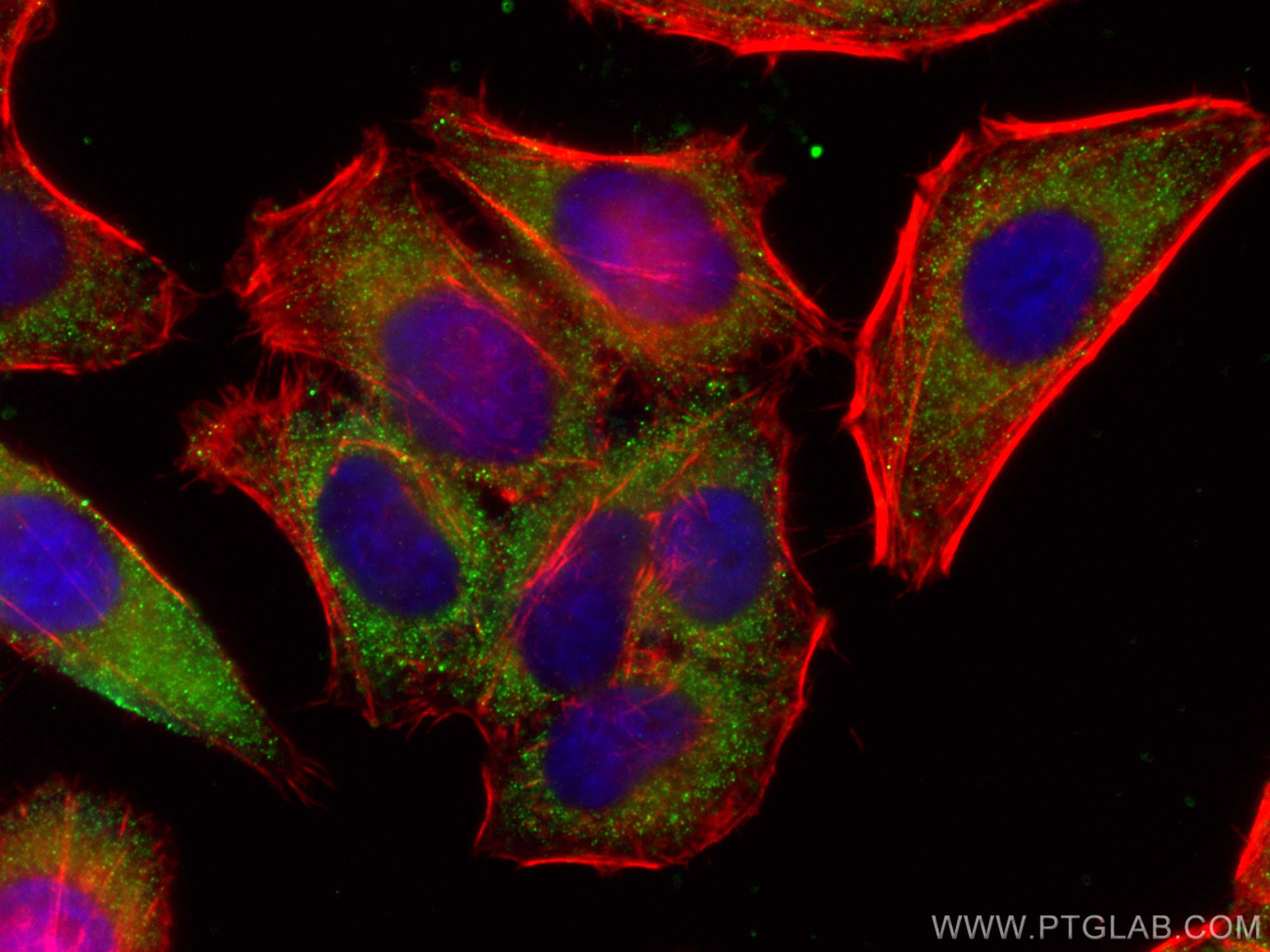
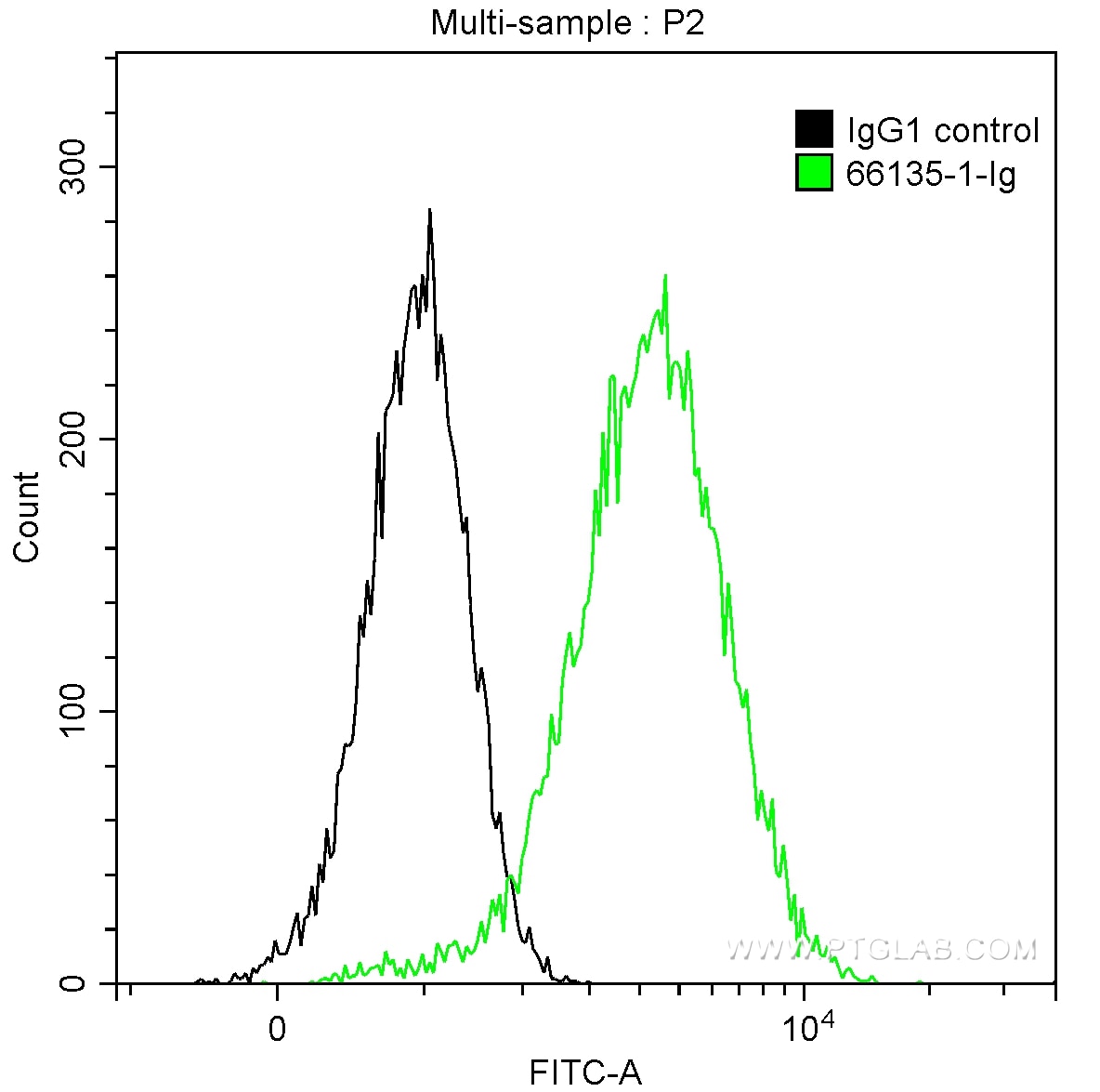
Geprüfte Anwendungen
Produktinformation
66135-1-PBS bindet in WB, IHC, IF/ICC, FC (Intra), IP, ELISA Alpha-1-Antitrypsin und zeigt Reaktivität mit Hausschwein, human, Maus, Ratten
| Getestete Reaktivität | Hausschwein, human, Maus, Ratte |
| Wirt / Isotyp | Maus / IgG1 |
| Klonalität | Monoklonal |
| Typ | Antikörper |
| Immunogen | Alpha-1-Antitrypsin fusion protein Ag9516 |
| Vollständiger Name | serpin peptidase inhibitor, clade A (alpha-1 antiproteinase, antitrypsin), member 1 |
| Berechnetes Molekulargewicht | 418 aa, 47 kDa |
| Beobachtetes Molekulargewicht | 51 kDa |
| GenBank-Zugangsnummer | BC015642 |
| Gene symbol | Alpha 1-Antitrypsin |
| Gene ID (NCBI) | 5265 |
| Konjugation | Unkonjugiert |
| Form | Liquid |
| Reinigungsmethode | Protein-G-Reinigung |
| Lagerungspuffer | PBS only |
| Lagerungsbedingungen | Store at -80°C. 20ul Größen enthalten 0,1% BSA. |
Hintergrundinformationen
SERPINA1 is the gene for a protein called alpha-1-antitrypsin (AAT), which is a serine protease inhibitor whose targets include elastase, plasmin, thrombin, trypsin, chymotrypsin, and plasminogen activator. AAT is a glycoprotein synthesized primarily by hepatocytes, with smaller amountssynthesized by intestinal epithelial cells, neutrophils, pulmonary alveolar cells and macrophages. AAT is the most abundant, endogenous serine protease inhibitor in blood circulation and it has been implicated in regulating vital fluid phase biological events such as blood coagulation, fibrinolysis, complement activation, apoptosis, reproduction, tumor progression and inflammatory response. The primary function of AAT is thought to be the inactivation of neutrophil elastase and other endogenous serine proteases. Defects in SERPINA1 can cause emphysema or liver disease.


