Angiogenin Polyklonaler Antikörper
Angiogenin Polyklonal Antikörper für WB, IHC, Indirect ELISA
Wirt / Isotyp
Kaninchen / IgG
Getestete Reaktivität
human, Maus
Anwendung
WB, IHC, Indirect ELISA
Konjugation
Unkonjugiert
Kat-Nr. : 18302-1-PBS
Synonyme
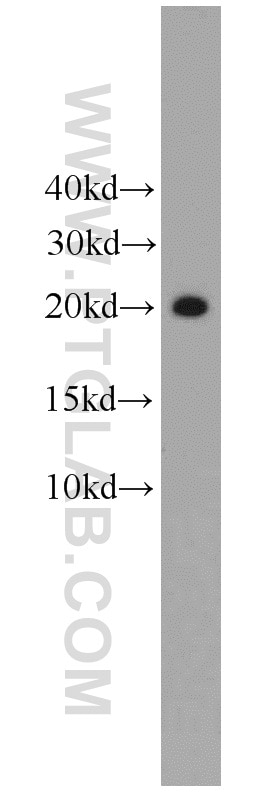
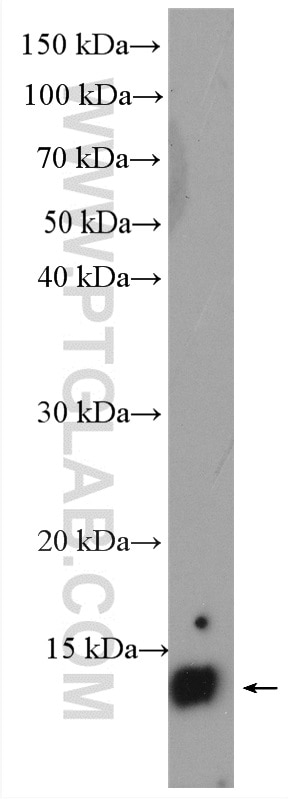
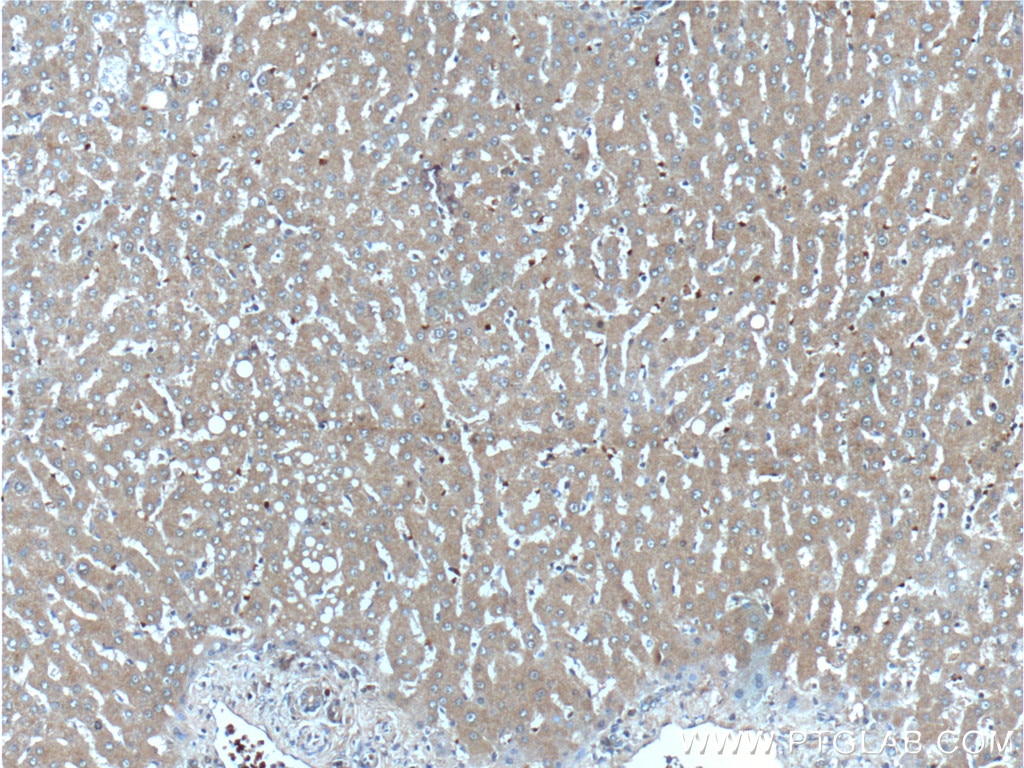
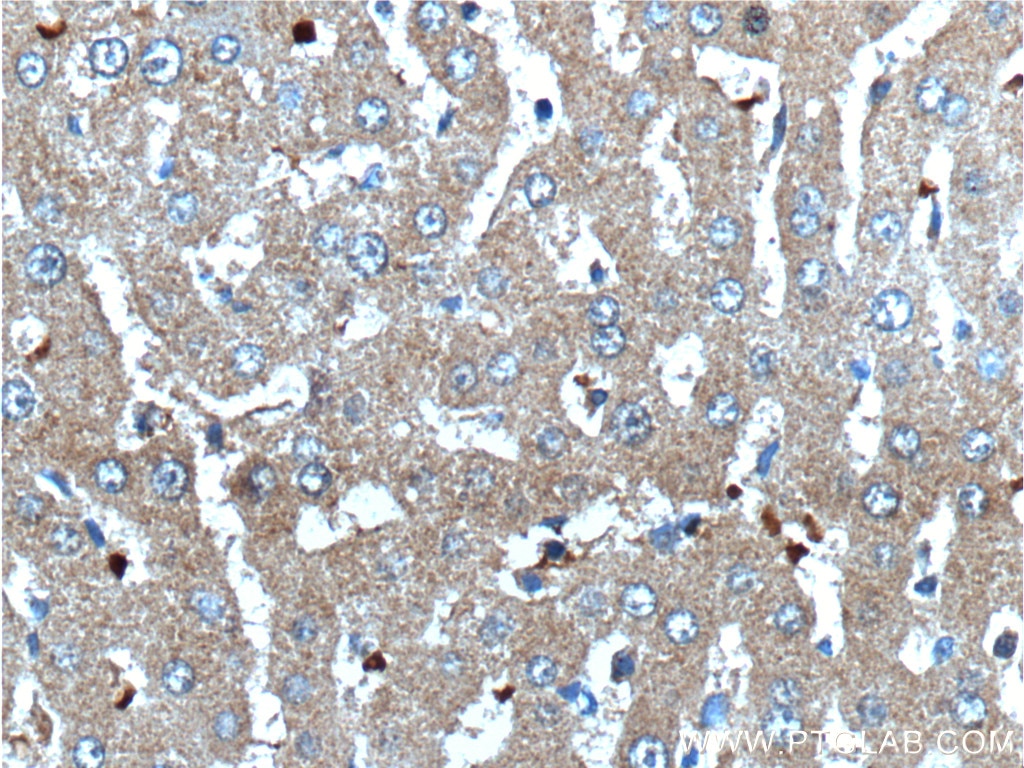
Geprüfte Anwendungen
Produktinformation
18302-1-PBS bindet in WB, IHC, Indirect ELISA Angiogenin und zeigt Reaktivität mit human, Maus
| Getestete Reaktivität | human, Maus |
| Wirt / Isotyp | Kaninchen / IgG |
| Klonalität | Polyklonal |
| Typ | Antikörper |
| Immunogen | Peptid |
| Vollständiger Name | angiogenin, ribonuclease, RNase A family, 5 |
| Berechnetes Molekulargewicht | 17 kDa |
| Beobachtetes Molekulargewicht | 17 kDa |
| GenBank-Zugangsnummer | BC054880 |
| Gene symbol | Angiogenin |
| Gene ID (NCBI) | 283 |
| Konjugation | Unkonjugiert |
| Form | Liquid |
| Reinigungsmethode | Antigen-Affinitätsreinigung |
| Lagerungspuffer | PBS only |
| Lagerungsbedingungen | Store at -80°C. 20ul Größen enthalten 0,1% BSA. |
Hintergrundinformationen
Angiogenin (ANG), an angiogenic ribonuclease, is a member of the vertebrate-specific, secreted RNASE superfamily. Angiogenin, originally identified as a tumor angiogenic factor, was related with the growth and metastasis of numerous tumors. Angiogenin has been proposed as a permissive factor for angiogenesis induced by other angiogenic factors, including vascular endothelial growth factor (VEGF), basic fibroblast growth factor, acidic fibroblast growth factor, and epidermal growth factor. Angiogenin production and secretion may be stimulated by hypoxia. Increased angiogenin serum levels have been associated with the incidence and severity of several human tumors, including HCC. It is a 17 kDa precursor which is cleaved to generate the 14 kDa mature protein.


