CD36 Polyklonaler Antikörper
CD36 Polyklonal Antikörper für WB, IHC, ELISA
Wirt / Isotyp
Kaninchen / IgG
Getestete Reaktivität
human und mehr (1)
Anwendung
WB, IHC, ELISA
Konjugation
Unkonjugiert
Kat-Nr. : 32181-1-AP
Synonyme
Geprüfte Anwendungen
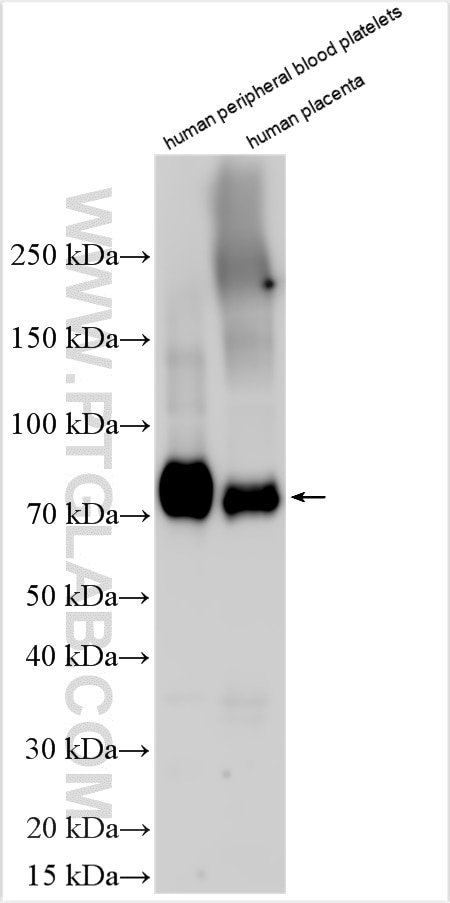
| Erfolgreiche Detektion in WB | human peripheral blood platelets, humanes Plazenta-Gewebe |
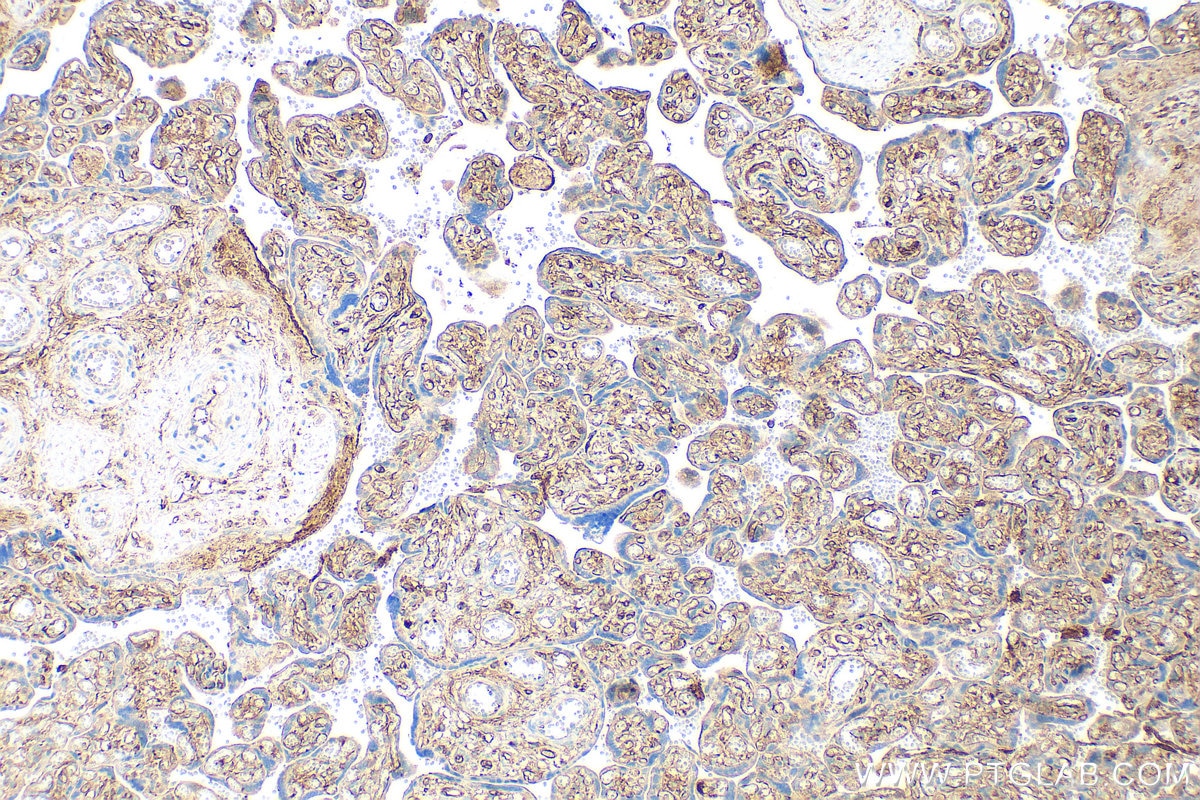
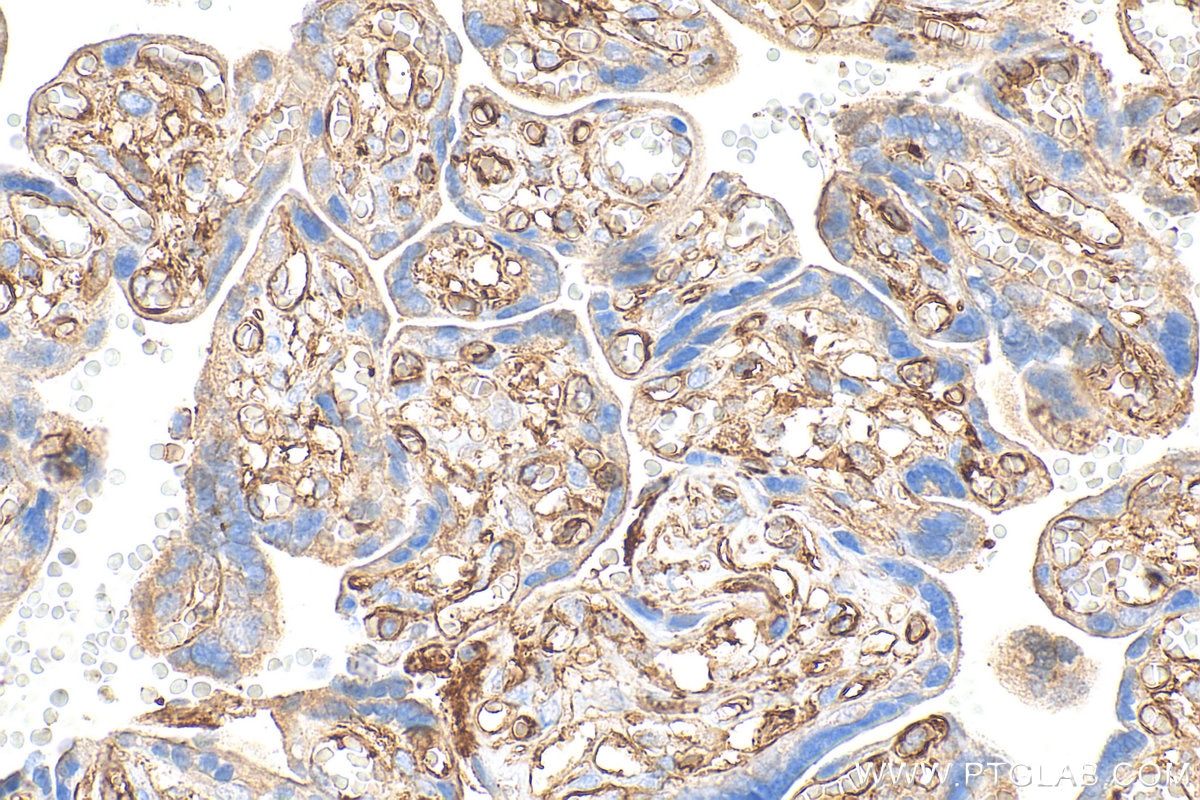
| Erfolgreiche Detektion in IHC | humanes Plazenta-Gewebe Hinweis: Antigendemaskierung mit TE-Puffer pH 9,0 empfohlen. (*) Wahlweise kann die Antigendemaskierung auch mit Citratpuffer pH 6,0 erfolgen. |
Empfohlene Verdünnung
| Anwendung | Verdünnung |
|---|---|
| Western Blot (WB) | WB : 1:2000-1:10000 |
| Immunhistochemie (IHC) | IHC : 1:500-1:2000 |
| It is recommended that this reagent should be titrated in each testing system to obtain optimal results. | |
| Sample-dependent, check data in validation data gallery | |
Veröffentlichte Anwendungen
| WB | See 1 publications below |
Produktinformation
32181-1-AP bindet in WB, IHC, ELISA CD36 und zeigt Reaktivität mit human
| Getestete Reaktivität | human |
| In Publikationen genannte Reaktivität | Maus |
| Wirt / Isotyp | Kaninchen / IgG |
| Klonalität | Polyklonal |
| Typ | Antikörper |
| Immunogen | Rekombinantes Protein |
| Vollständiger Name | CD36 molecule (thrombospondin receptor) |
| Berechnetes Molekulargewicht | 53 kDa |
| Beobachtetes Molekulargewicht | 80 kDa |
| GenBank-Zugangsnummer | NM_001001548.3 |
| Gene symbol | CD36 |
| Gene ID (NCBI) | 948 |
| Konjugation | Unkonjugiert |
| Form | Liquid |
| Reinigungsmethode | Antigen-Affinitätsreinigung |
| Lagerungspuffer | PBS with 0.02% sodium azide and 50% glycerol |
| Lagerungsbedingungen | Bei -20°C lagern. Nach dem Versand ein Jahr lang stabil Aliquotieren ist bei -20oC Lagerung nicht notwendig. 20ul Größen enthalten 0,1% BSA. |
Hintergrundinformationen
Function
CD36, also known as platelet glycoprotein 4, is an integral membrane glycoprotein that acts as a scavenger receptor. CD36 can bind to multiple ligands, including thrombospondin-1, collagen, oxidized phospholipids, oxidized low-density lipoprotein, and long-chain fatty acids. CD36 can also bind to erythrocytes parasitized by Plasmodium falciparum and apoptotic cells. CD36 mediates different biological processes, acting as a signaling hub in angiogenesis, inflammatory response, and fatty acid metabolism.
Tissue specificity
CD36 is present on the surface of various cells types, such as adipocytes, monocytes, macrophages, platelets, microvascular endothelial cells, dendritic cells, and hematopoietic precursors of red cells.
Involvement in disease
Mutations in CD36 can give rise to platelet glycoprotein IV deficiency, a type of macrothrombocytopenia.
Polymorphisms in CD36 can increase susceptibility to malaria.
AAGIC haplotype at the CD36 locus increases the risk of coronary heart disease.
Disruption of CD36-dependent pathways and certain SNPs in the CD36 gene are attributed to impaired fatty acid metabolism, glucose intolerance, Alzheimer's disease, atherosclerosis, arterial hypertension, diabetes, and cardiomyopathy.
Isoforms
Apart from the full-length protein (isoform 1), one additional shorter isoform has been reported (PMID: 7509795). Other alternative isoforms have also been detected on the mRNA level (PMID: 17673938).
Post-translational modifications
The extracellular domain of CD36 is extensively glycosylated. Glycosylation is needed for the transport of CD36 to the plasma membrane, as well as mediating recognition and binding to ligands. Cytoplasmic tails of transmembrane domains can be phosphorylated and play a role in signal transduction. Intracellular domains can be additionally acetylated, ubiquitinated, and palmitoylated (PMID: 28919632).
Cellular localization
CD36 is present on the cell surface.
Protokolle
| PRODUKTSPEZIFISCHE PROTOKOLLE | |
|---|---|
| WB protocol for CD36 antibody 32181-1-AP | Protokoll herunterladen |
| IHC protocol for CD36 antibody 32181-1-AP | Protokoll herunterladenl |
| STANDARD-PROTOKOLLE | |
|---|---|
| Klicken Sie hier, um unsere Standardprotokolle anzuzeigen |

