CEL Rekombinanter Antikörper
CEL Rekombinant Antikörper für WB, IHC, ELISA
Wirt / Isotyp
Kaninchen / IgG
Getestete Reaktivität
human
Anwendung
WB, IHC, ELISA
Konjugation
Unkonjugiert
CloneNo.
242761B11
Kat-Nr. : 85081-4-RR
Synonyme
Geprüfte Anwendungen
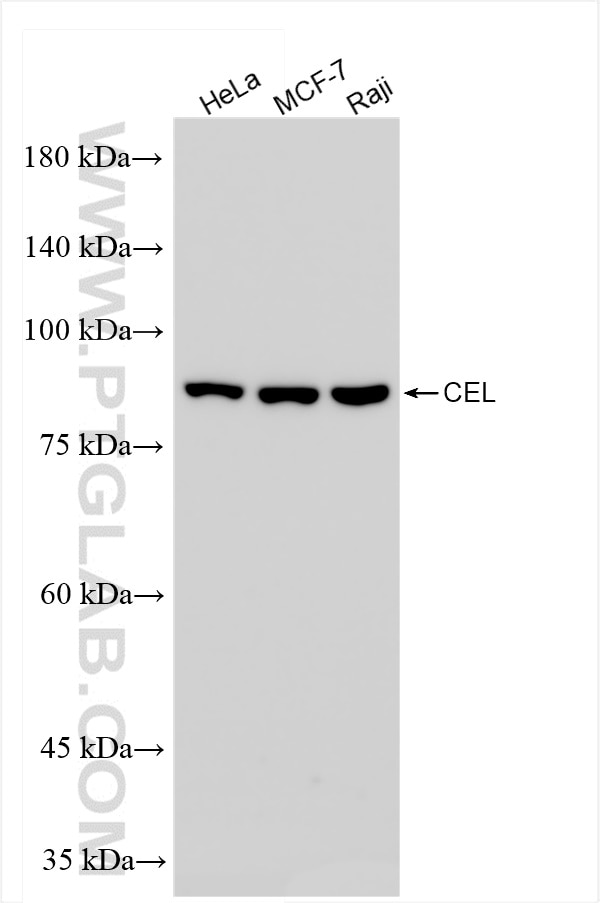
| Erfolgreiche Detektion in WB | HeLa-Zellen, MCF-7-Zellen, Raji-Zellen |
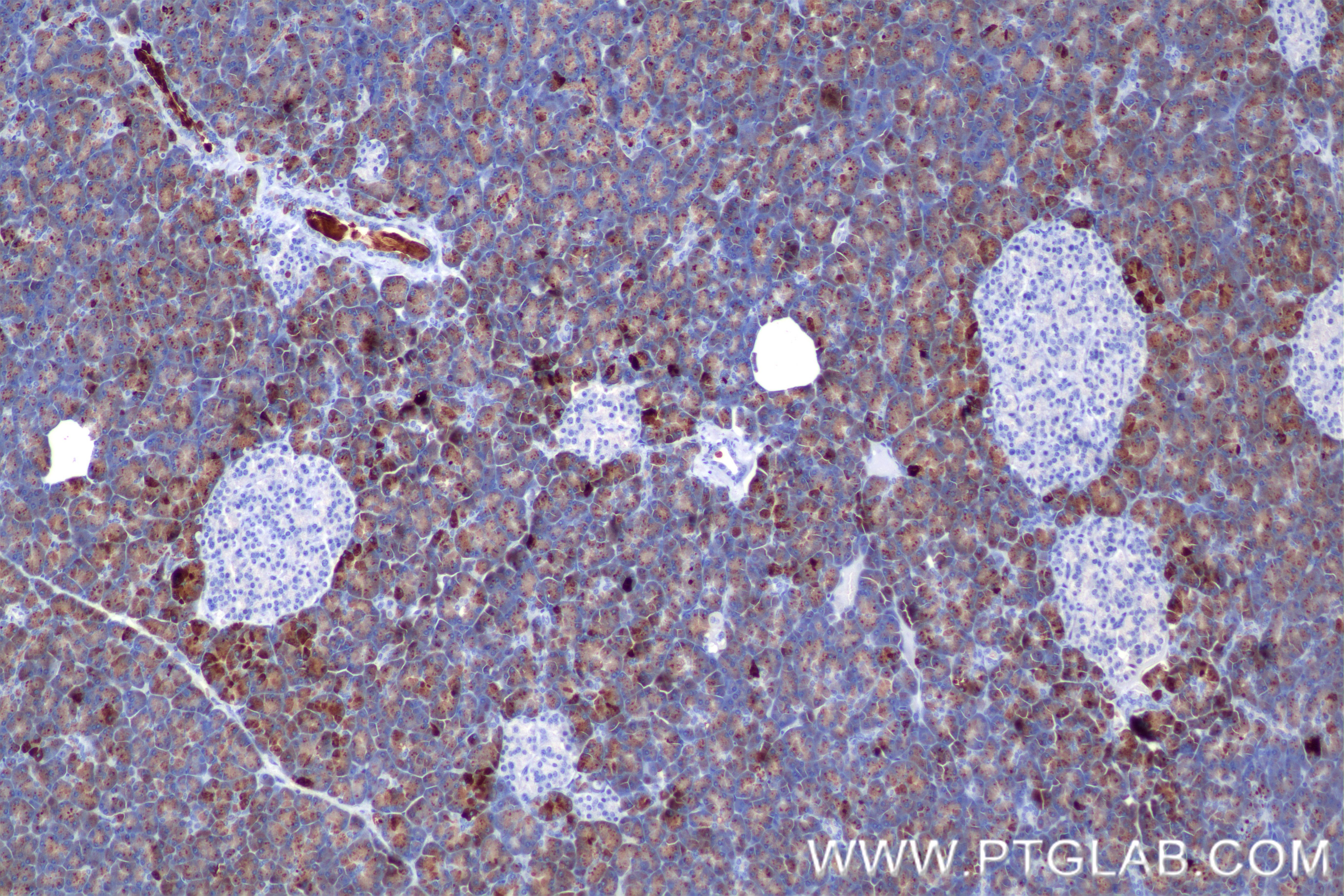
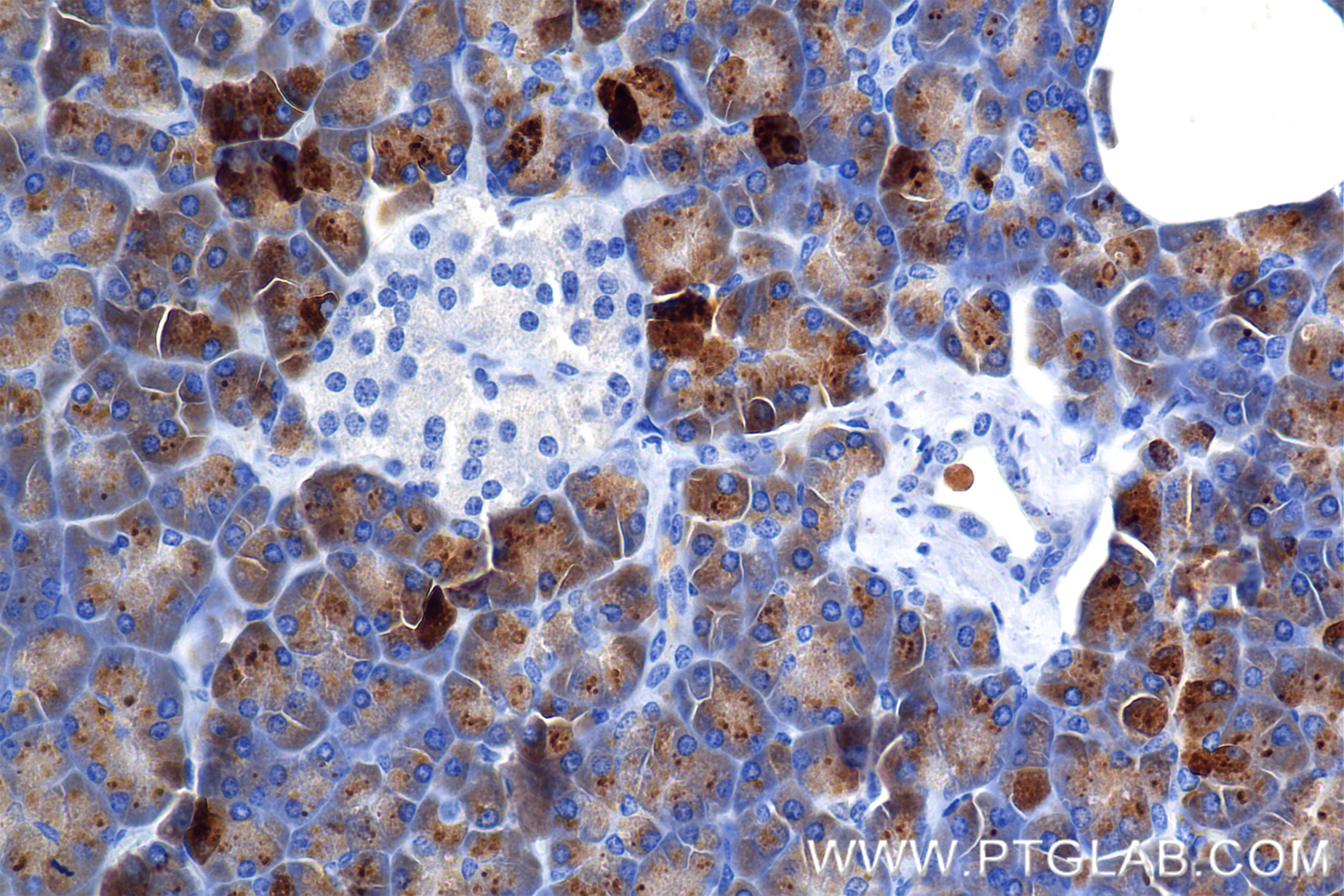
| Erfolgreiche Detektion in IHC | humanes Pankreasgewebe Hinweis: Antigendemaskierung mit TE-Puffer pH 9,0 empfohlen. (*) Wahlweise kann die Antigendemaskierung auch mit Citratpuffer pH 6,0 erfolgen. |
Empfohlene Verdünnung
| Anwendung | Verdünnung |
|---|---|
| Western Blot (WB) | WB : 1:5000-1:50000 |
| Immunhistochemie (IHC) | IHC : 1:400-1:1600 |
| It is recommended that this reagent should be titrated in each testing system to obtain optimal results. | |
| Sample-dependent, check data in validation data gallery | |
Produktinformation
85081-4-RR bindet in WB, IHC, ELISA CEL und zeigt Reaktivität mit human
| Getestete Reaktivität | human |
| Wirt / Isotyp | Kaninchen / IgG |
| Klonalität | Rekombinant |
| Typ | Antikörper |
| Immunogen | CEL fusion protein Ag5262 |
| Vollständiger Name | carboxyl ester lipase (bile salt-stimulated lipase) |
| Berechnetes Molekulargewicht | 79 kDa |
| Beobachtetes Molekulargewicht | 79 kDa |
| GenBank-Zugangsnummer | BC042510 |
| Gene symbol | CEL |
| Gene ID (NCBI) | 1056 |
| Konjugation | Unkonjugiert |
| Form | Liquid |
| Reinigungsmethode | Protein-A-Reinigung |
| Lagerungspuffer | PBS with 0.02% sodium azide and 50% glycerol |
| Lagerungsbedingungen | Bei -20°C lagern. Nach dem Versand ein Jahr lang stabil Aliquotieren ist bei -20oC Lagerung nicht notwendig. 20ul Größen enthalten 0,1% BSA. |
Hintergrundinformationen
Bile salt-activated lipase, previously named cholesterol esterase or bile salt-stimulated (or dependent) lipase, is a 74 kDa lipolytic enzyme capable of hydrolyzing cholesteryl esters, tri-, di-, and mono-acylglycerols, phospholipids, lysophospholipids, and ceramide(PMID:12454261). The same enzyme is present as a major protein in milk and as a minor constituent in liver, activated macrophages, and endothelial cells(PMID:11733511). Defects in CEL are a cause of maturity-onset diabetes of the young type 8 with exocrine dysfunction (MODY8)(PMID:16369531). The full length protein has 11 glycosylation sites. It has 2 isoforms produced by alternative splicing.
Protokolle
| PRODUKTSPEZIFISCHE PROTOKOLLE | |
|---|---|
| WB protocol for CEL antibody 85081-4-RR | Protokoll herunterladen |
| IHC protocol for CEL antibody 85081-4-RR | Protokoll herunterladenl |
| STANDARD-PROTOKOLLE | |
|---|---|
| Klicken Sie hier, um unsere Standardprotokolle anzuzeigen |


