CEP162 Polyklonaler Antikörper
CEP162 Polyklonal Antikörper für WB, IHC, Indirect ELISA
Wirt / Isotyp
Kaninchen / IgG
Getestete Reaktivität
human
Anwendung
WB, IHC, Indirect ELISA
Konjugation
Unkonjugiert
Kat-Nr. : 30210-1-PBS
Synonyme
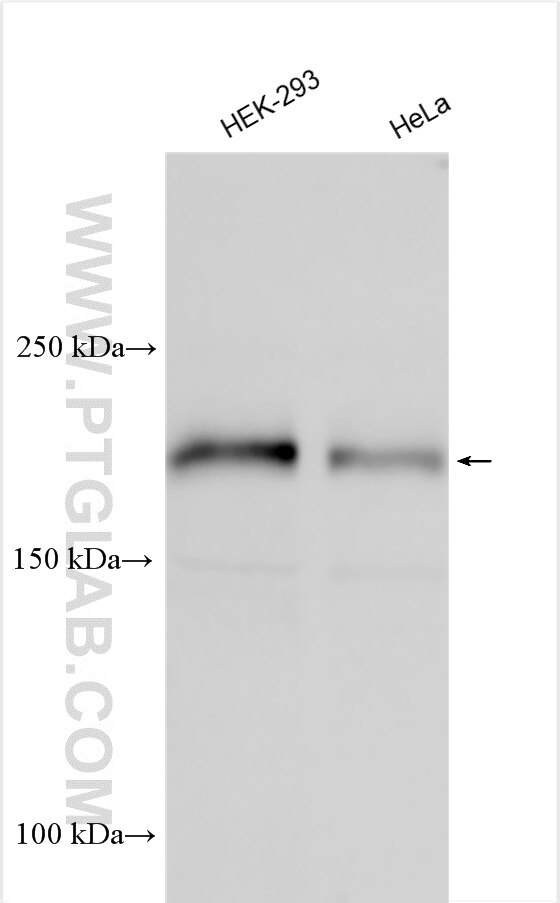
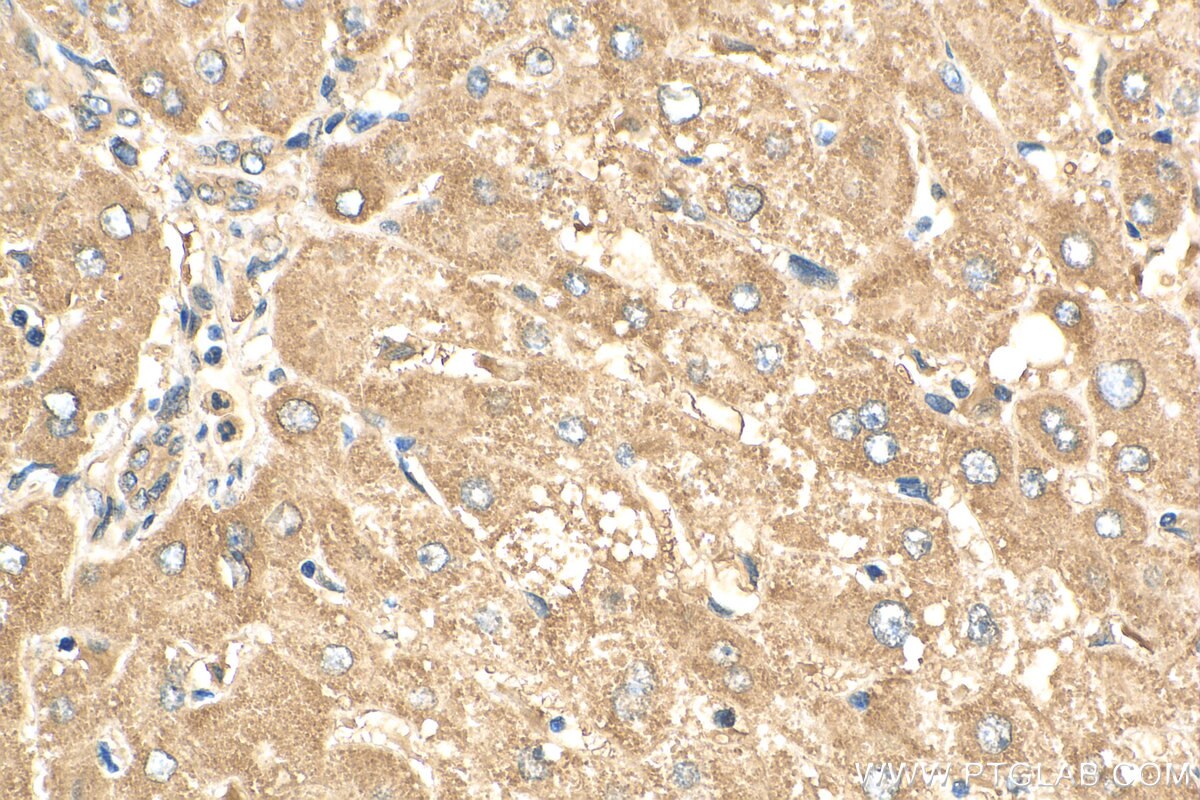
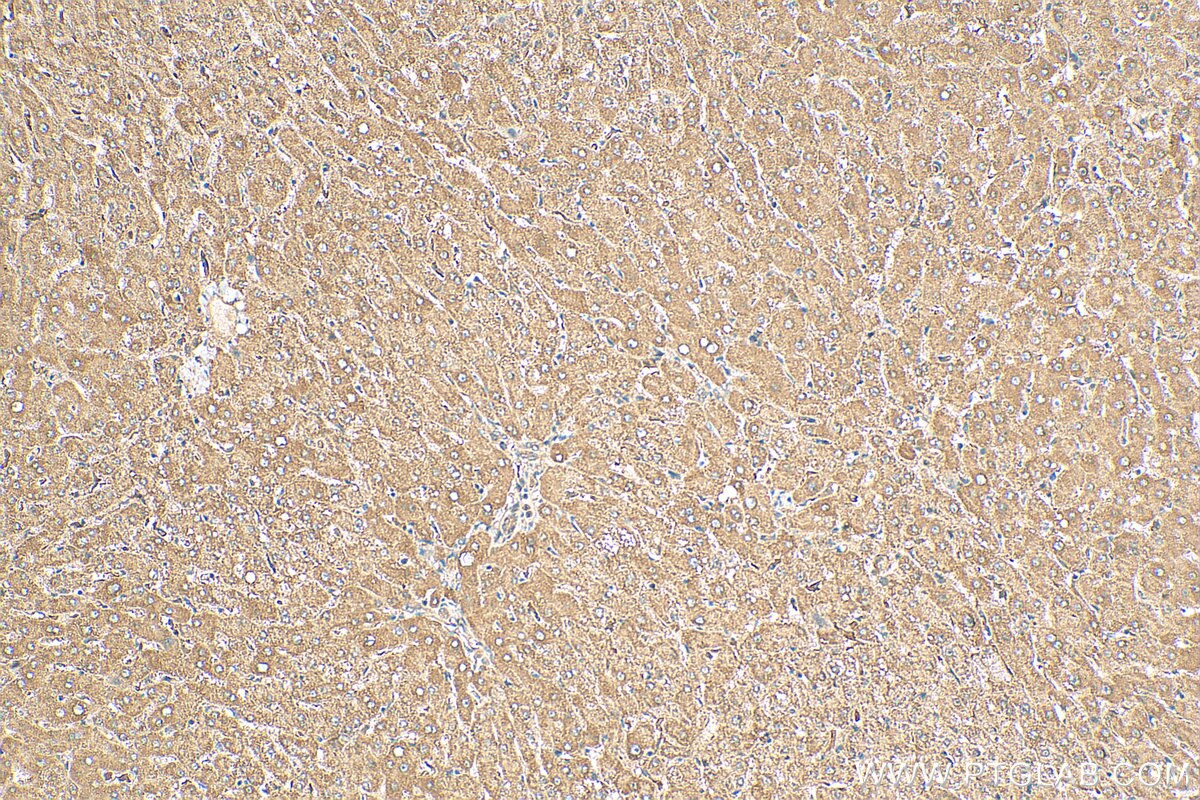
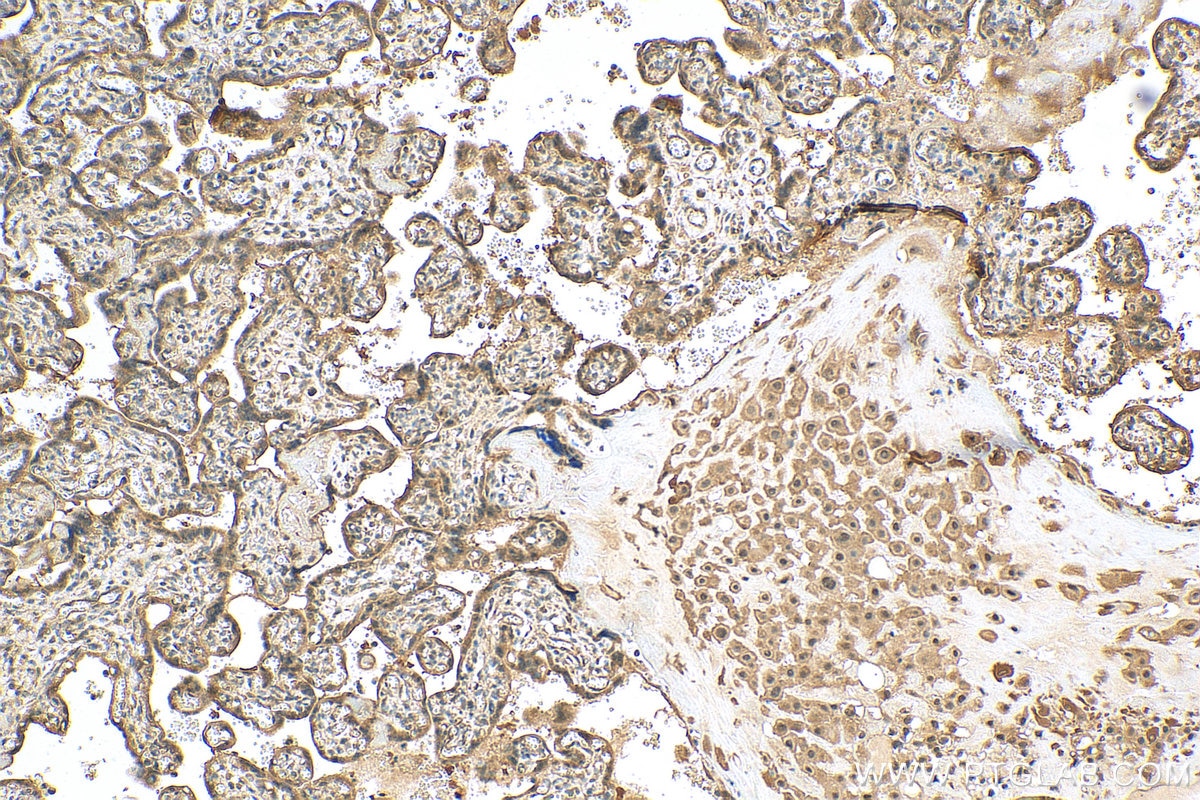
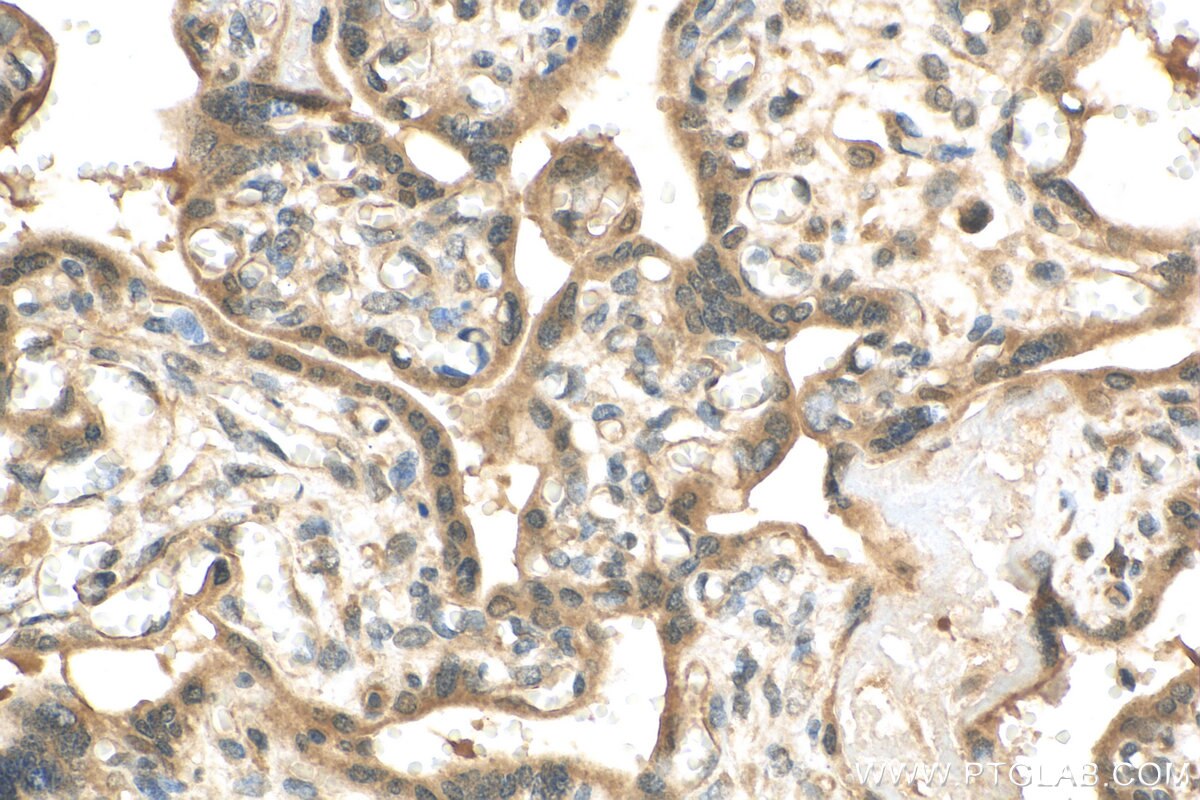
Geprüfte Anwendungen
Produktinformation
30210-1-PBS bindet in WB, IHC, Indirect ELISA CEP162 und zeigt Reaktivität mit human
| Getestete Reaktivität | human |
| Wirt / Isotyp | Kaninchen / IgG |
| Klonalität | Polyklonal |
| Typ | Antikörper |
| Immunogen | CEP162 fusion protein Ag32953 |
| Vollständiger Name | KIAA1009 |
| Berechnetes Molekulargewicht | 162 kDa |
| Beobachtetes Molekulargewicht | 180 kDa |
| GenBank-Zugangsnummer | NM_001286206.1 |
| Gene symbol | CEP162 |
| Gene ID (NCBI) | 22832 |
| Konjugation | Unkonjugiert |
| Form | Liquid |
| Reinigungsmethode | Antigen-Affinitätsreinigung |
| Lagerungspuffer | PBS only |
| Lagerungsbedingungen | Store at -80°C. 20ul Größen enthalten 0,1% BSA. |
Hintergrundinformationen
CEP162, also known as KIAA1009 and QN1, was found in organisms ranging from trypanosomes to vertebrates. A role for CEP162, involved in required to promote assembly of the transition zone in primary cilia. CEP162 acts by specifically recognizing and binding the axonemal microtubule. CEP162 localizes to the distal ends of centrioles before ciliogenesis and directly binds to axonemal microtubule, thereby promoting and restricting transition zone formation specifically at the cilia base.


