CFTR Polyklonaler Antikörper
CFTR Polyklonal Antikörper für IHC, FC (Intra), Indirect ELISA
Wirt / Isotyp
Kaninchen / IgG
Getestete Reaktivität
human
Anwendung
IHC, FC (Intra), Indirect ELISA
Konjugation
Unkonjugiert
Kat-Nr. : 20738-1-PBS
Synonyme
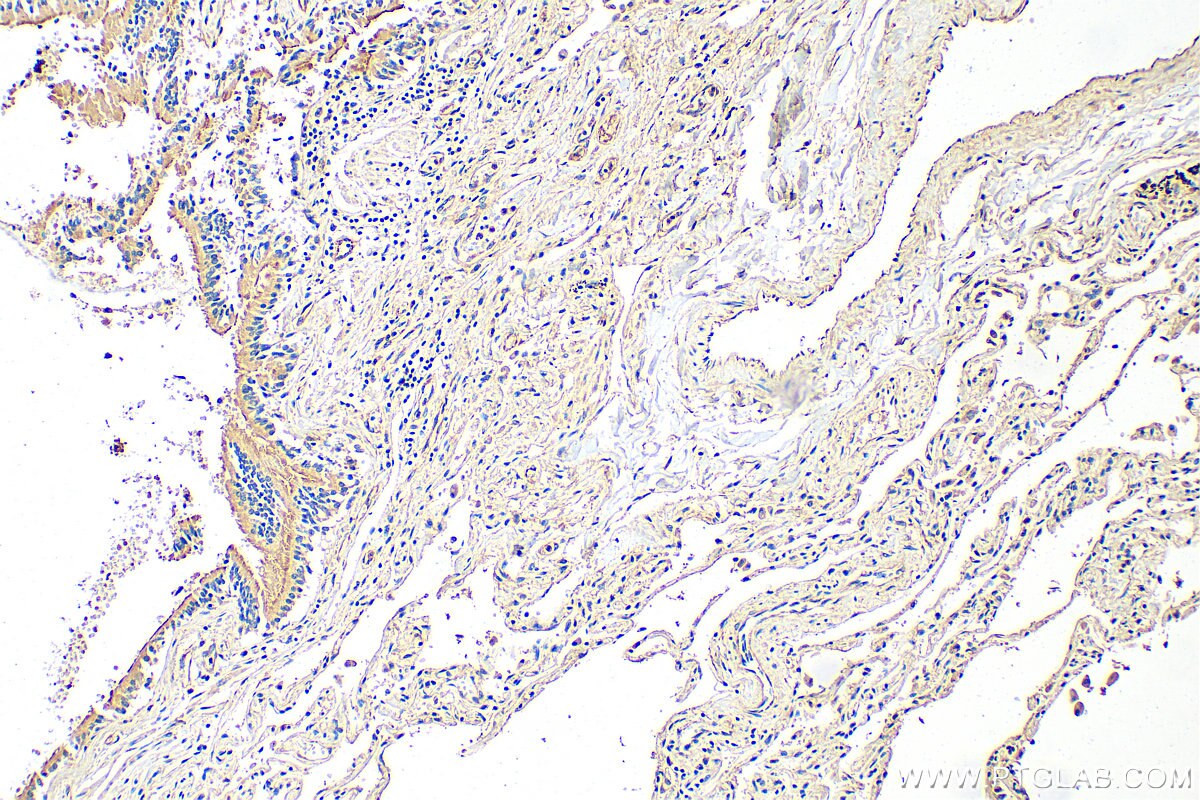
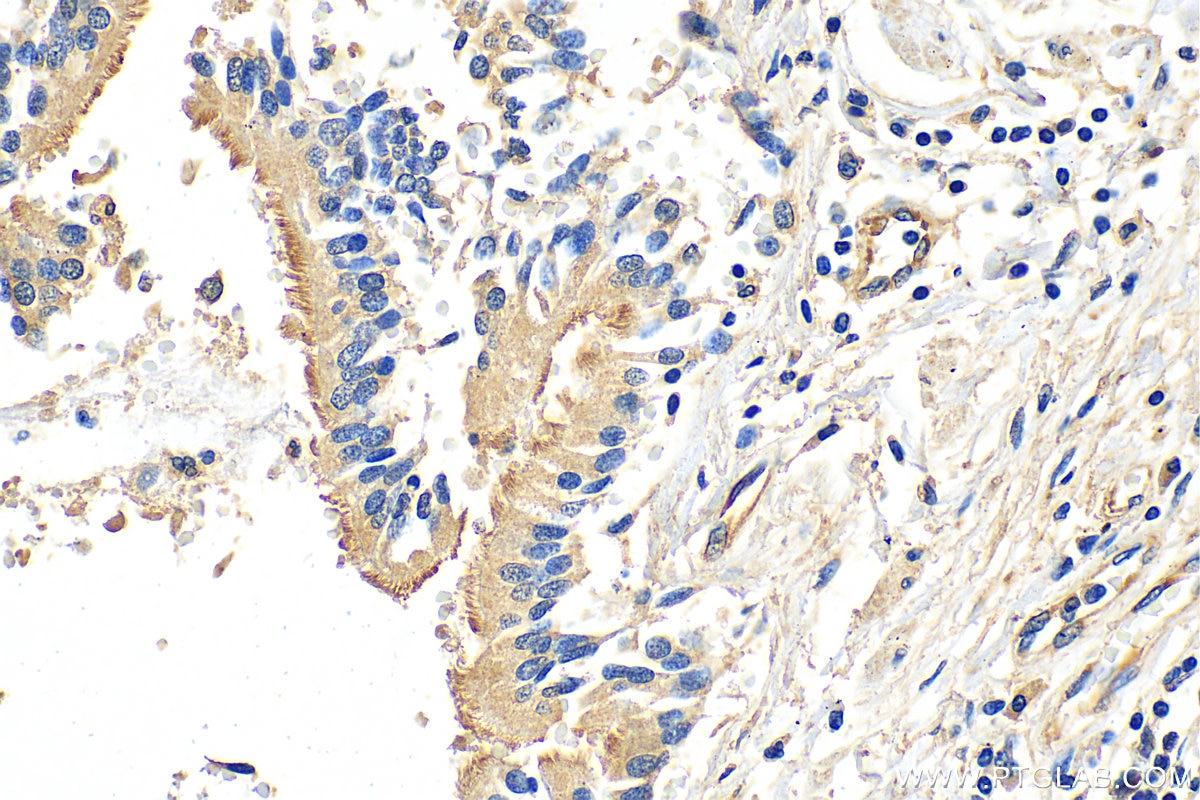
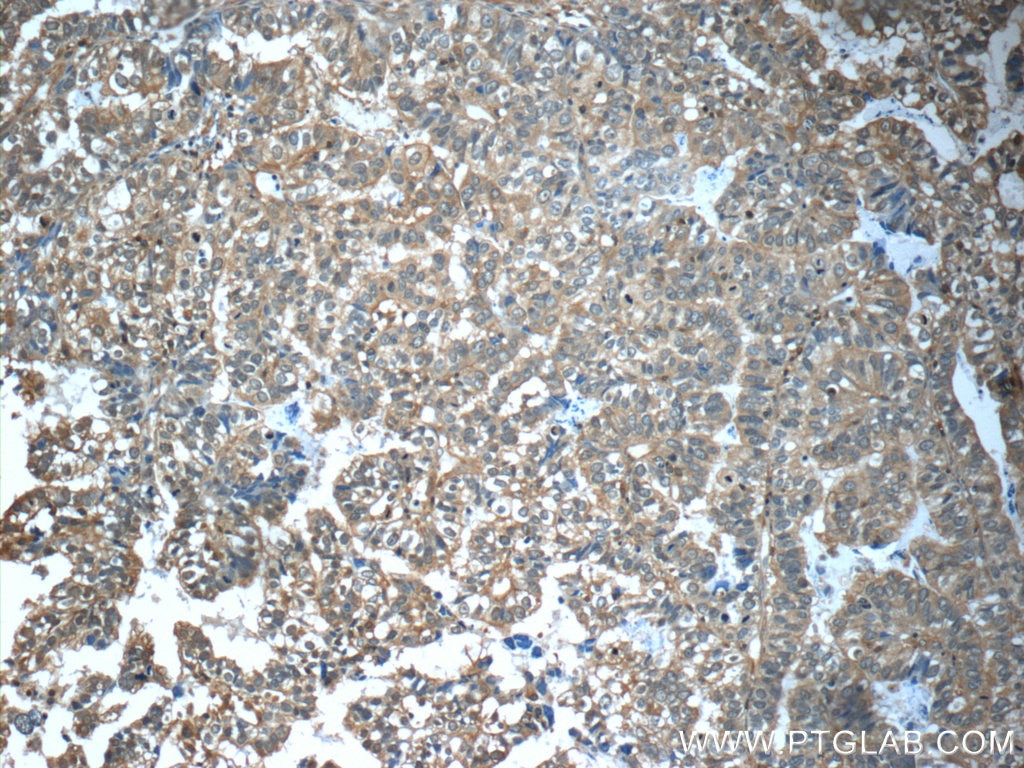
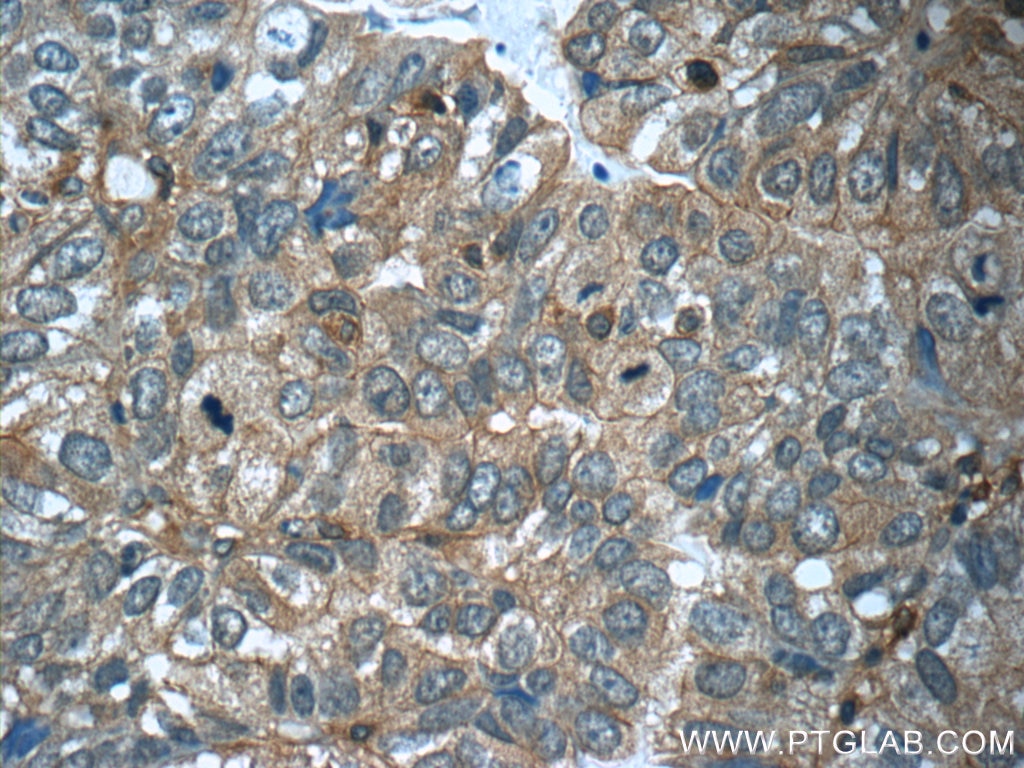
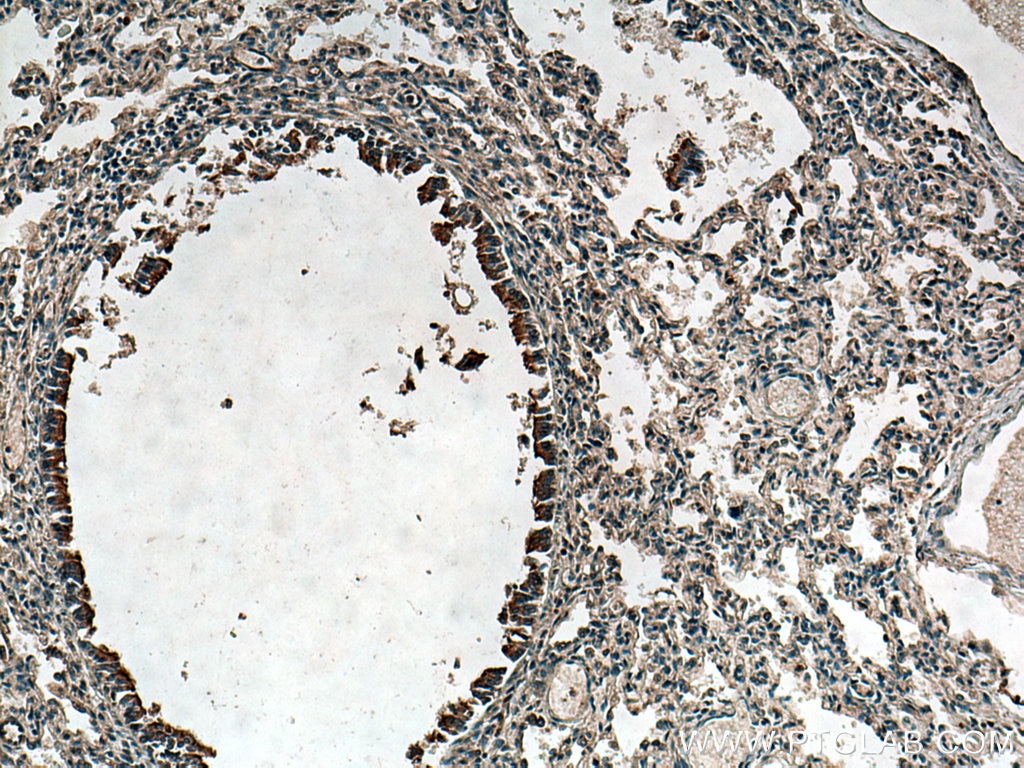
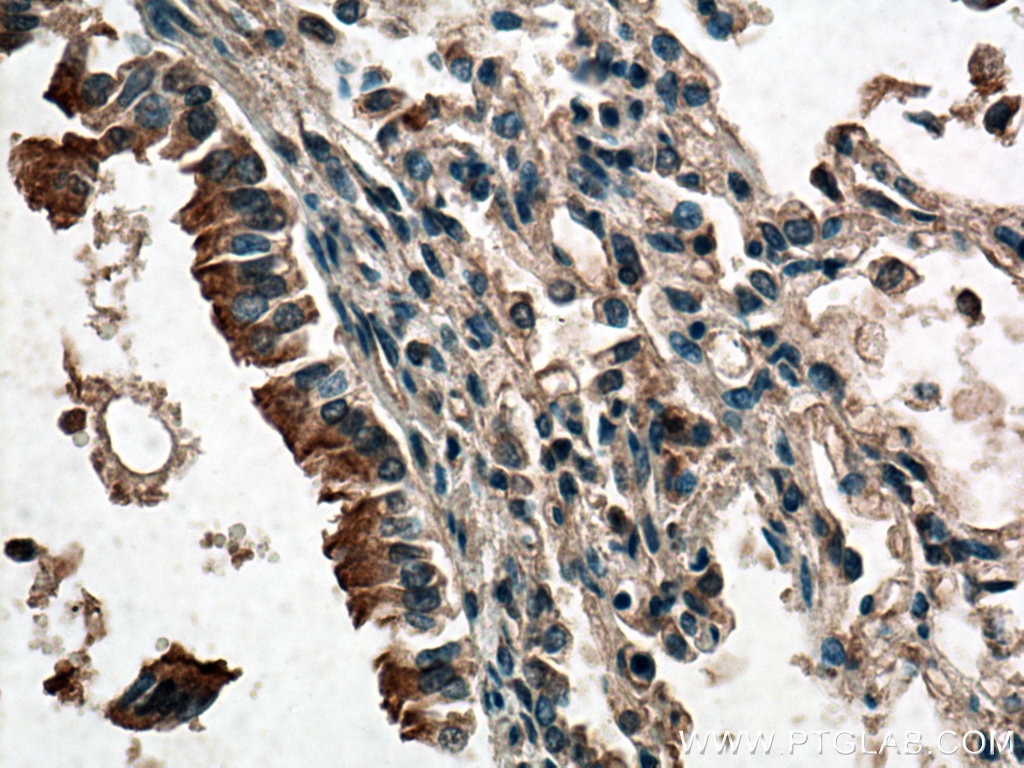
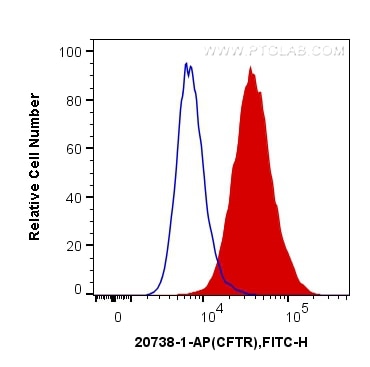
Geprüfte Anwendungen
Produktinformation
20738-1-PBS bindet in IHC, FC (Intra), Indirect ELISA CFTR und zeigt Reaktivität mit human
| Getestete Reaktivität | human |
| Wirt / Isotyp | Kaninchen / IgG |
| Klonalität | Polyklonal |
| Typ | Antikörper |
| Immunogen | Peptid |
| Vollständiger Name | cystic fibrosis transmembrane conductance regulator (ATP-binding cassette sub-family C, member 7) |
| Berechnetes Molekulargewicht | 168 kDa |
| GenBank-Zugangsnummer | NM_000492 |
| Gene symbol | CFTR |
| Gene ID (NCBI) | 1080 |
| Konjugation | Unkonjugiert |
| Form | Liquid |
| Reinigungsmethode | Antigen-Affinitätsreinigung |
| Lagerungspuffer | PBS only |
| Lagerungsbedingungen | Store at -80°C. 20ul Größen enthalten 0,1% BSA. |
Hintergrundinformationen
What is the human cytogenetic location of the CFTR gene?
7q31.2
What is the predicted molecular weight of CFTR?
168 kDa
Where is CFTR expressed?
CFTR is mainly expressed in apical membranes of vertebrate epithelial cells.
What is the ion selectivity of CFTR?
CFTR is an anion-selective channel, responsible for regulating chloride and bicarbonate transport.
What is the process of CFTR trafficking?
The ER provides the first steps in CFTR folding quality control. CFTR can be degraded by the ER associated degradation (ERAD) pathway, or it is transported to the Golgi for maturation before being trafficked to the cell membrane.
What are the separate domains of CFTR?
CFTR consists of two transmembrane domains, two nucleotide binding domains, and a regulatory domain.
What regulates CFTR?
CFTR activity is ATP-dependent and is regulated by protein kinase A phosphorylation.
What is the role of CFTR?
CFTR functions as a channel for anions, regulating water and ionic homeostasis.
What mutations in CFTR leads to protein degradation?
Deletion of the regulatory domain or the phenylalanine 508 (F508del) results in an increase in CFTR degradation. This degradation then leads to a decrease of secretion product clearance and an increase in viscous mucosal buildup at the epithelial surface of affected organs, the primary symptom of cystic fibrosis. Mutations in CFTR can also lead congenital bilateral absence of vas deferens (CBAVD) or sperm abnormalities in men.
How does CFTR differ from other ATP-binding cassette proteins?
Unlike other proteins in the ABC family, CFTR functions as an ion channel.
PMIDs: 24513531, 24534272, 22966013, 22709980


