CPN1 Polyklonaler Antikörper
CPN1 Polyklonal Antikörper für WB, IHC, IF/ICC, Indirect ELISA
Wirt / Isotyp
Kaninchen / IgG
Getestete Reaktivität
human
Anwendung
WB, IHC, IF/ICC, Indirect ELISA
Konjugation
Unkonjugiert
Kat-Nr. : 13385-1-PBS
Synonyme
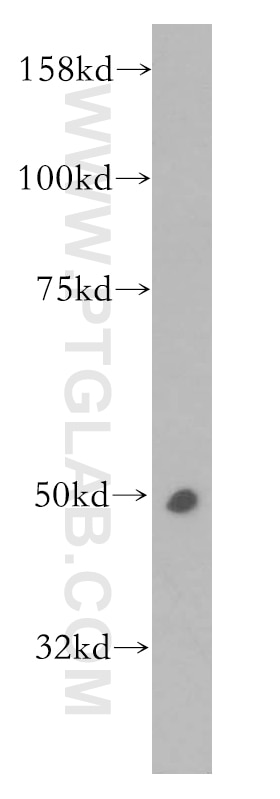
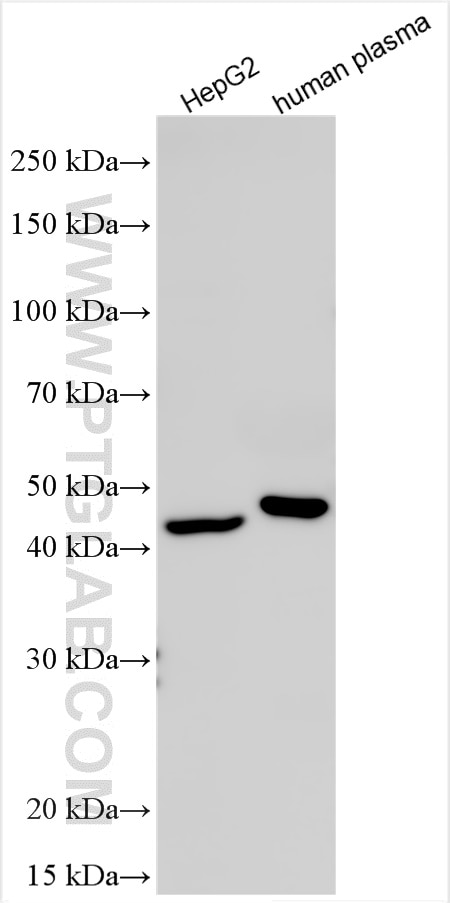
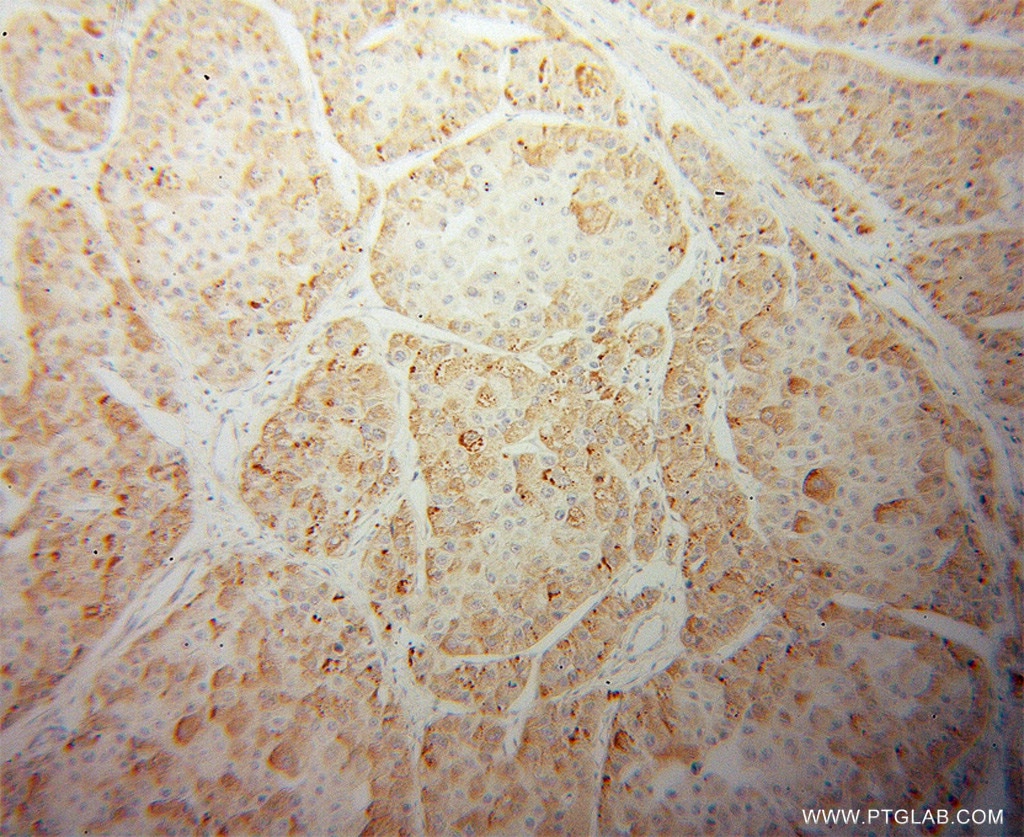
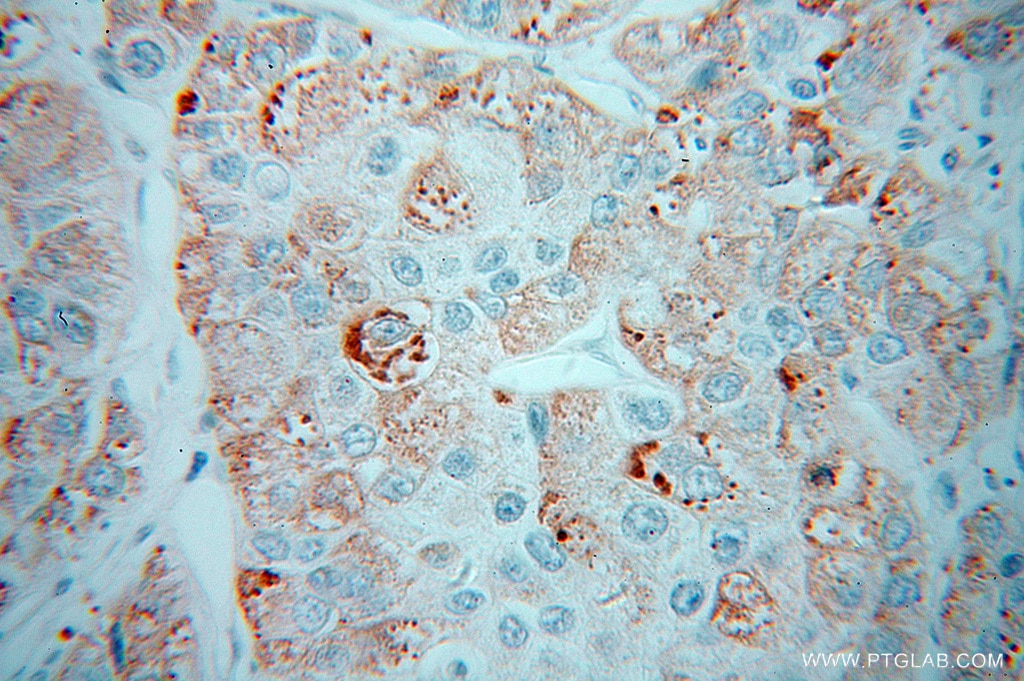
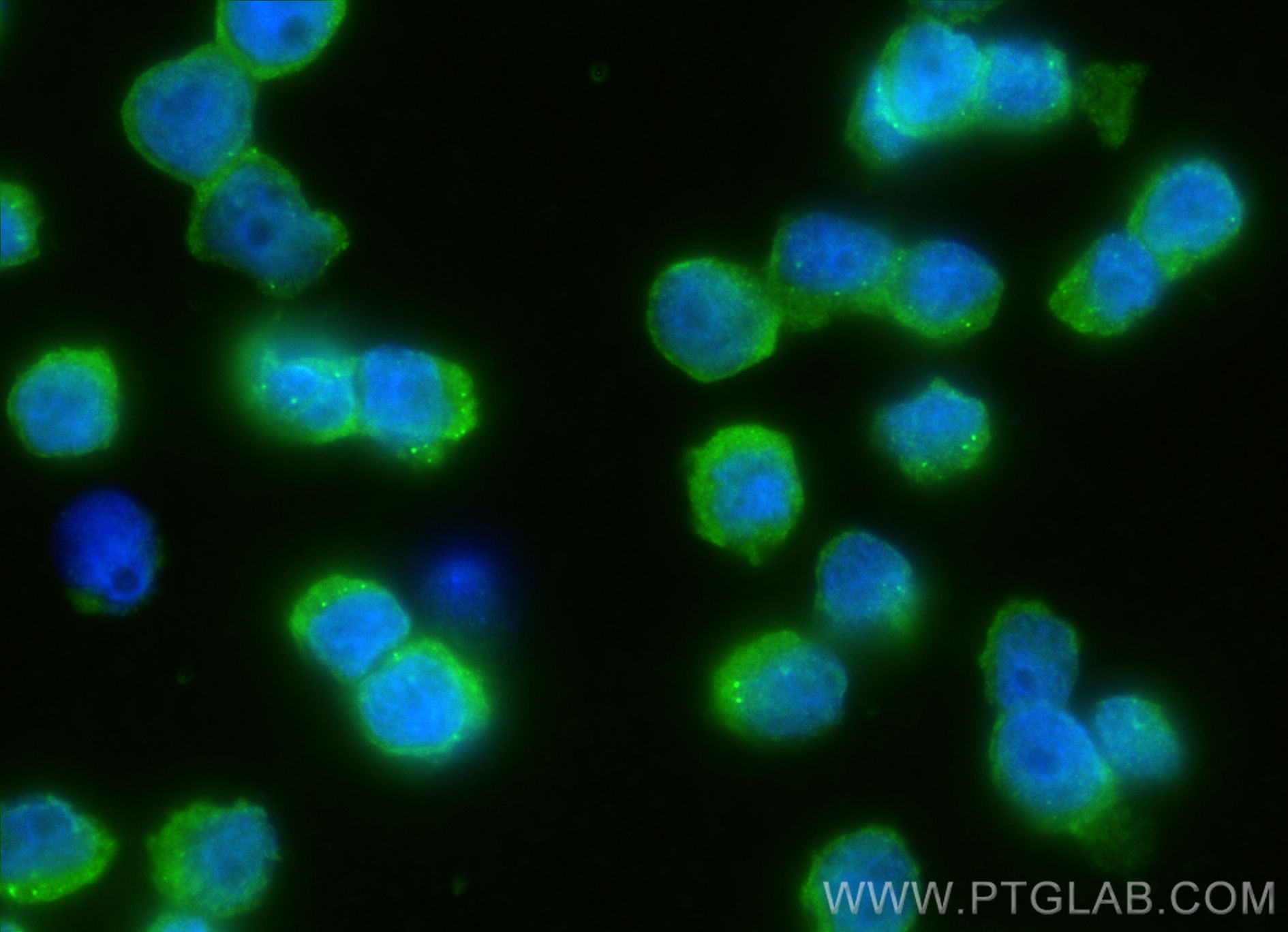
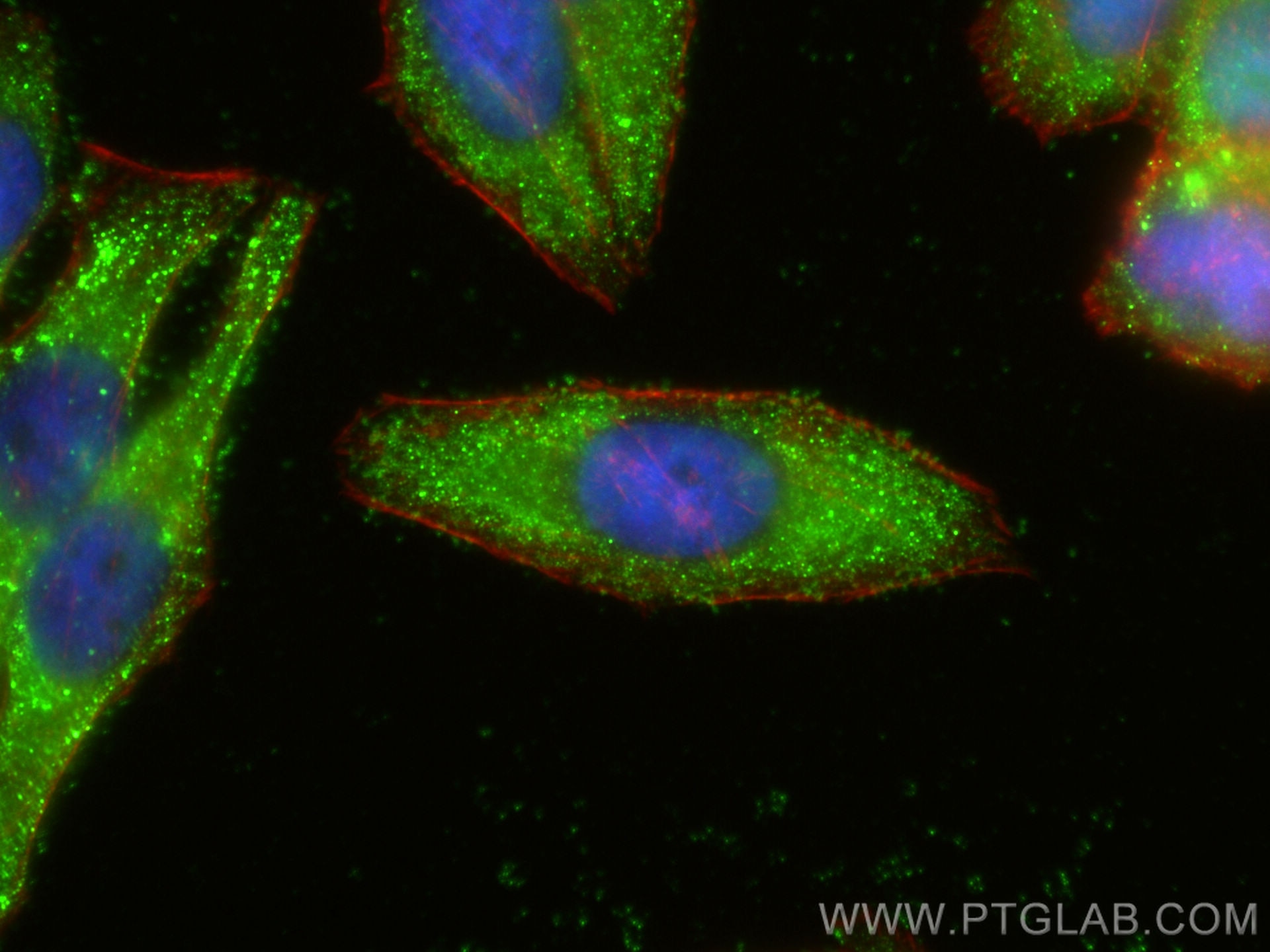
Geprüfte Anwendungen
Produktinformation
13385-1-PBS bindet in WB, IHC, IF/ICC, Indirect ELISA CPN1 und zeigt Reaktivität mit human
| Getestete Reaktivität | human |
| Wirt / Isotyp | Kaninchen / IgG |
| Klonalität | Polyklonal |
| Typ | Antikörper |
| Immunogen | CPN1 fusion protein Ag4035 |
| Vollständiger Name | carboxypeptidase N, polypeptide 1 |
| Berechnetes Molekulargewicht | 458 aa, 52 kDa |
| Beobachtetes Molekulargewicht | 40~50 kDa |
| GenBank-Zugangsnummer | BC027897 |
| Gene symbol | CPN1 |
| Gene ID (NCBI) | 1369 |
| Konjugation | Unkonjugiert |
| Form | Liquid |
| Reinigungsmethode | Antigen-Affinitätsreinigung |
| Lagerungspuffer | PBS only |
| Lagerungsbedingungen | Store at -80°C. 20ul Größen enthalten 0,1% BSA. |
Hintergrundinformationen
Human carboxypeptidase N (CPN), a member of the CPN/E subfamily of "regulatory" metallo-carboxypeptidases, is an extracellular glycoprotein synthesized in the liver and secreted into the blood, where it controls the activity of vasoactive peptide hormones, growth factors and cytokines by specifically removing C-terminal basic residues. Normally, CPN circulates in blood plasma as a hetero-tetramer consisting of two 83 kDa (CPN2) domains each flanked by a 48 to 55 kDa catalytic (CPN1) domain. The C terminal region of the CPN1 subunit differs from all other family members in that it contains numerous basic residues. Proteolysis at these sites apparently happens either constitutively in the blood or during processing and secretion from the liver.


