CPN1 Rekombinanter Antikörper
CPN1 Rekombinant Antikörper für WB, IHC, IF-P, ELISA
Wirt / Isotyp
Kaninchen / IgG
Getestete Reaktivität
human, Maus, Ratte
Anwendung
WB, IHC, IF-P, ELISA
Konjugation
Unkonjugiert
CloneNo.
241481A5
Kat-Nr. : 84218-1-RR
Synonyme
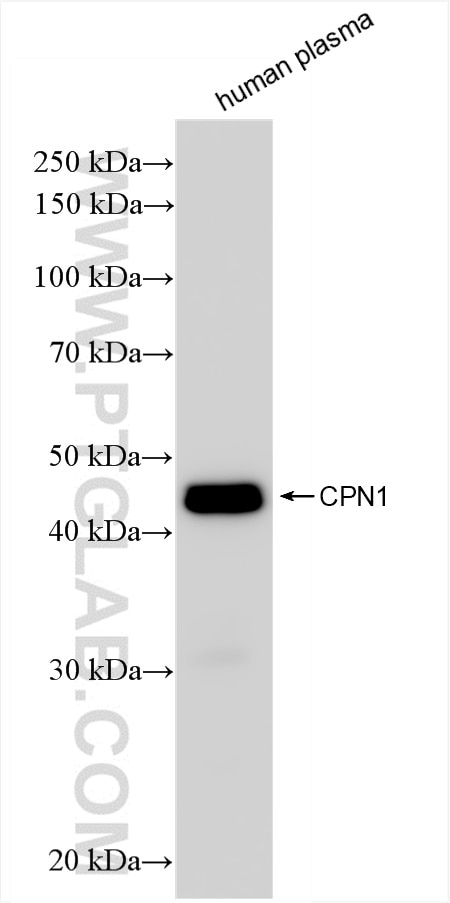
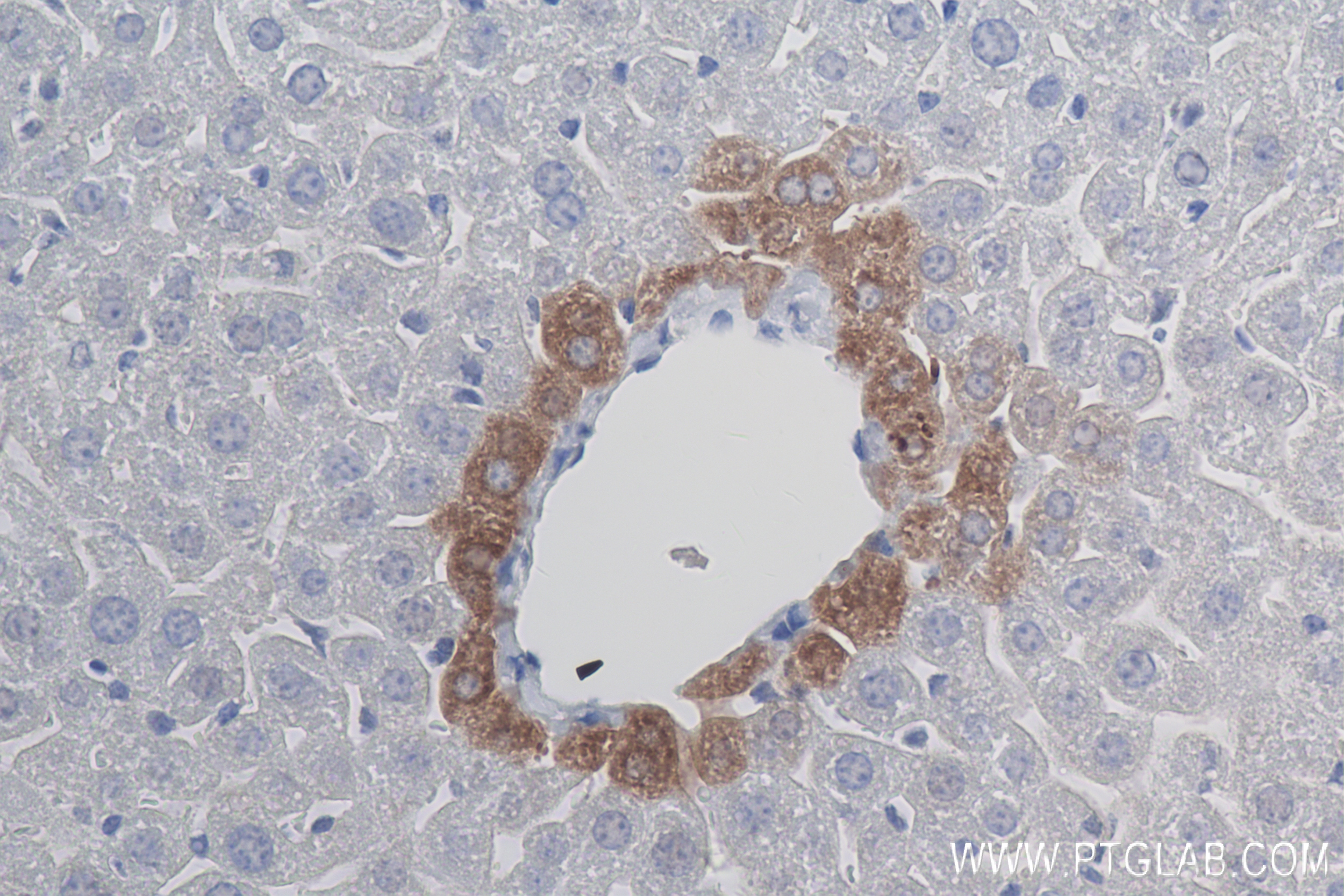
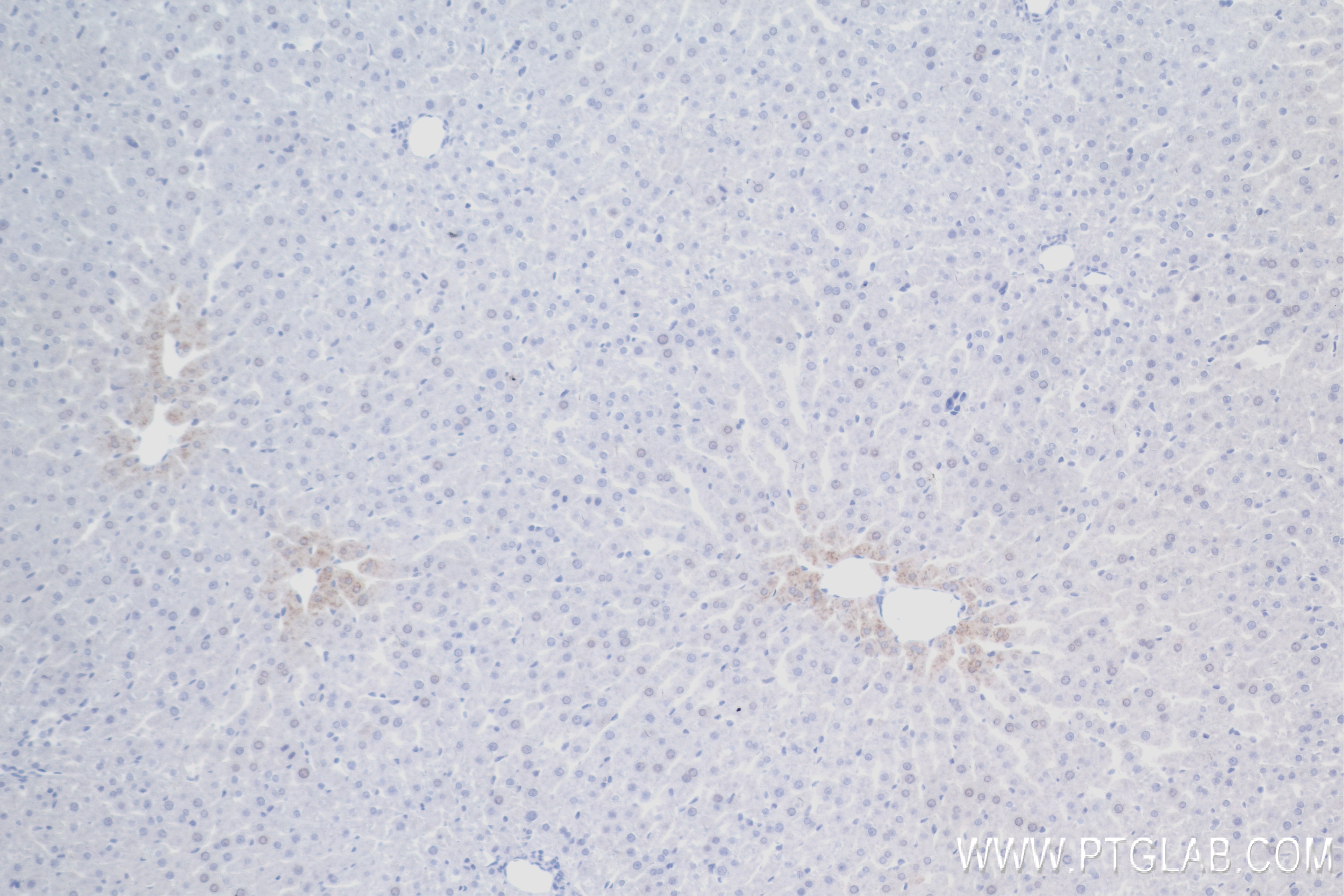
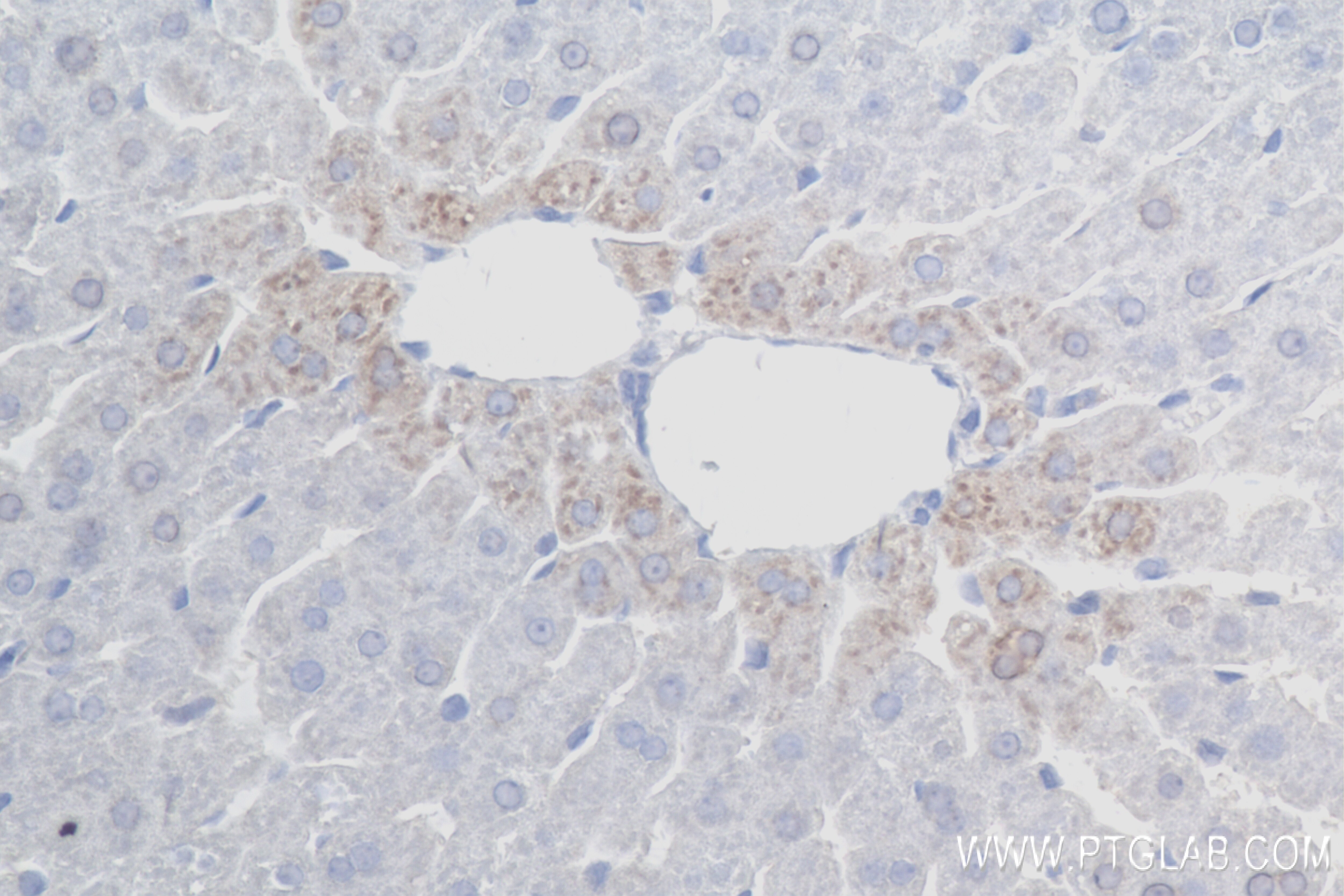
Geprüfte Anwendungen
| Erfolgreiche Detektion in WB | human plasma |
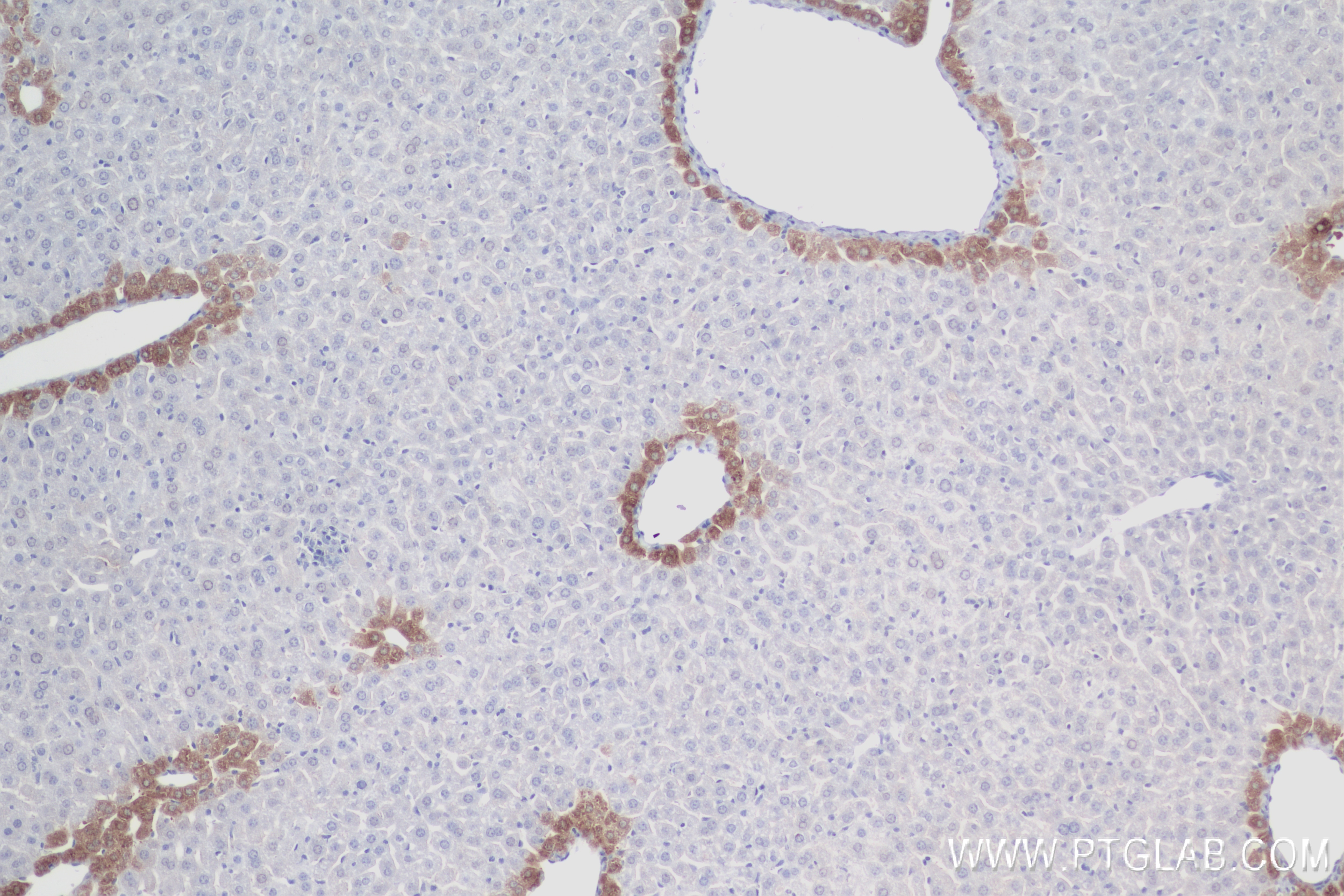
| Erfolgreiche Detektion in IHC | Mauslebergewebe, Rattenlebergewebe Hinweis: Antigendemaskierung mit TE-Puffer pH 9,0 empfohlen. (*) Wahlweise kann die Antigendemaskierung auch mit Citratpuffer pH 6,0 erfolgen. |
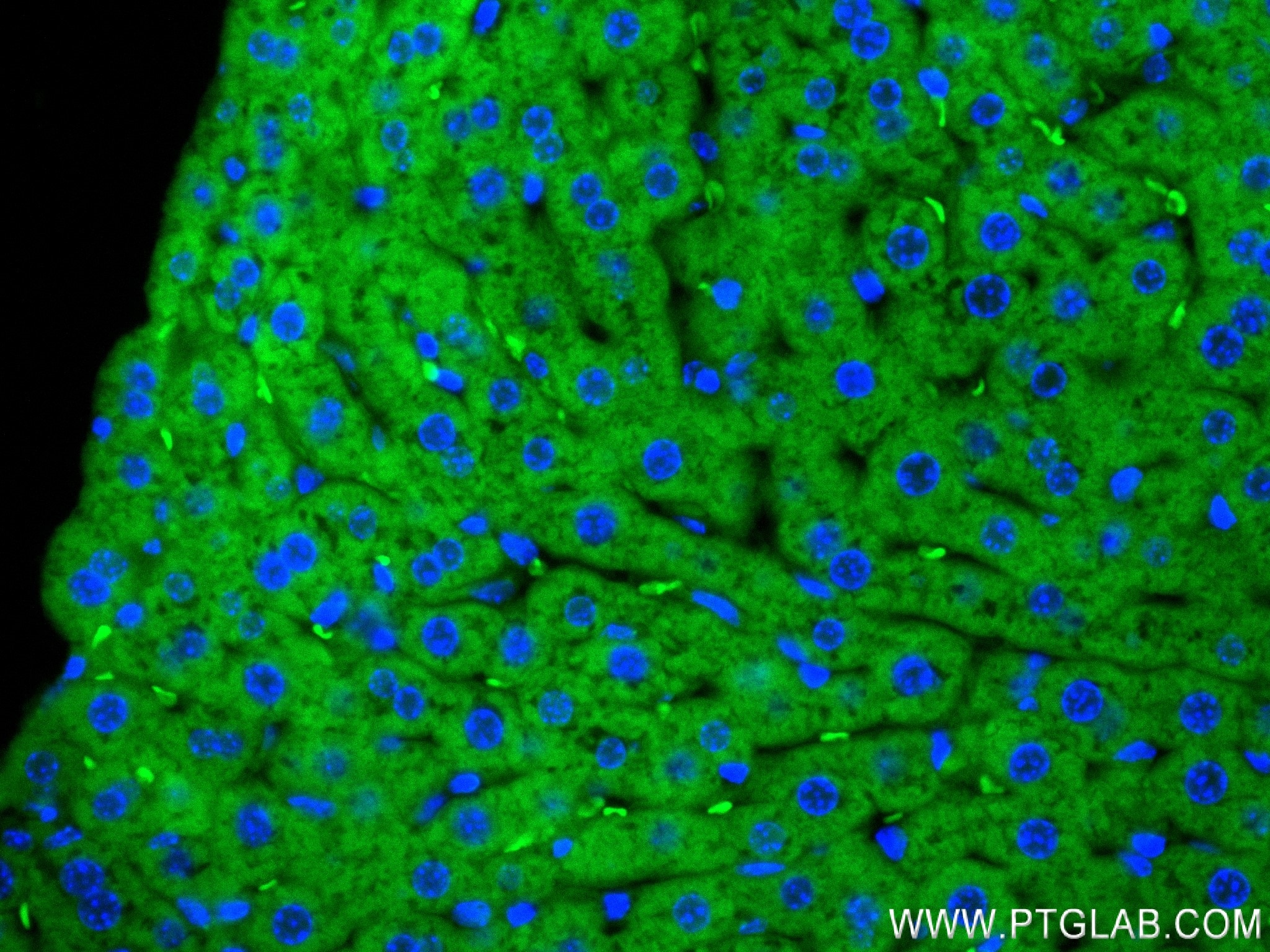
| Erfolgreiche Detektion in IF-P | Mauslebergewebe |
Empfohlene Verdünnung
| Anwendung | Verdünnung |
|---|---|
| Western Blot (WB) | WB : 1:5000-1:50000 |
| Immunhistochemie (IHC) | IHC : 1:200-1:800 |
| Immunfluoreszenz (IF)-P | IF-P : 1:125-1:500 |
| It is recommended that this reagent should be titrated in each testing system to obtain optimal results. | |
| Sample-dependent, check data in validation data gallery | |
Produktinformation
84218-1-RR bindet in WB, IHC, IF-P, ELISA CPN1 und zeigt Reaktivität mit human, Maus, Ratten
| Getestete Reaktivität | human, Maus, Ratte |
| Wirt / Isotyp | Kaninchen / IgG |
| Klonalität | Rekombinant |
| Typ | Antikörper |
| Immunogen | CPN1 fusion protein Ag4035 |
| Vollständiger Name | carboxypeptidase N, polypeptide 1 |
| Berechnetes Molekulargewicht | 458 aa, 52 kDa |
| Beobachtetes Molekulargewicht | 40~50 kDa |
| GenBank-Zugangsnummer | BC027897 |
| Gene symbol | CPN1 |
| Gene ID (NCBI) | 1369 |
| Konjugation | Unkonjugiert |
| Form | Liquid |
| Reinigungsmethode | Protein-A-Reinigung |
| Lagerungspuffer | PBS with 0.02% sodium azide and 50% glycerol |
| Lagerungsbedingungen | Bei -20°C lagern. Nach dem Versand ein Jahr lang stabil Aliquotieren ist bei -20oC Lagerung nicht notwendig. 20ul Größen enthalten 0,1% BSA. |
Hintergrundinformationen
Human carboxypeptidase N (CPN), a member of the CPN/E subfamily of "regulatory" metallo-carboxypeptidases, is an extracellular glycoprotein synthesized in the liver and secreted into the blood, where it controls the activity of vasoactive peptide hormones, growth factors and cytokines by specifically removing C-terminal basic residues. Normally, CPN circulates in blood plasma as a hetero-tetramer consisting of two 83 kDa (CPN2) domains each flanked by a 48 to 55 kDa catalytic (CPN1) domain. The C terminal region of the CPN1 subunit differs from all other family members in that it contains numerous basic residues. Proteolysis at these sites apparently happens either constitutively in the blood or during processing and secretion from the liver.
Protokolle
| PRODUKTSPEZIFISCHE PROTOKOLLE | |
|---|---|
| WB protocol for CPN1 antibody 84218-1-RR | Protokoll herunterladen |
| IHC protocol for CPN1 antibody 84218-1-RR | Protokoll herunterladenl |
| IF protocol for CPN1 antibody 84218-1-RR | Protokoll herunterladen |
| STANDARD-PROTOKOLLE | |
|---|---|
| Klicken Sie hier, um unsere Standardprotokolle anzuzeigen |

