- Featured Product
- KD/KO Validated
Cystatin SN/CST1 Polyklonaler Antikörper
Cystatin SN/CST1 Polyklonal Antikörper für WB, FC (Intra), ELISA
Wirt / Isotyp
Kaninchen / IgG
Getestete Reaktivität
human, Maus
Anwendung
WB, FC (Intra), ELISA
Konjugation
Unkonjugiert
Kat-Nr. : 16025-1-PBS
Synonyme
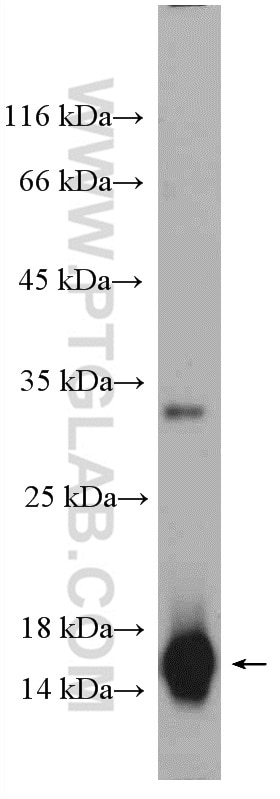
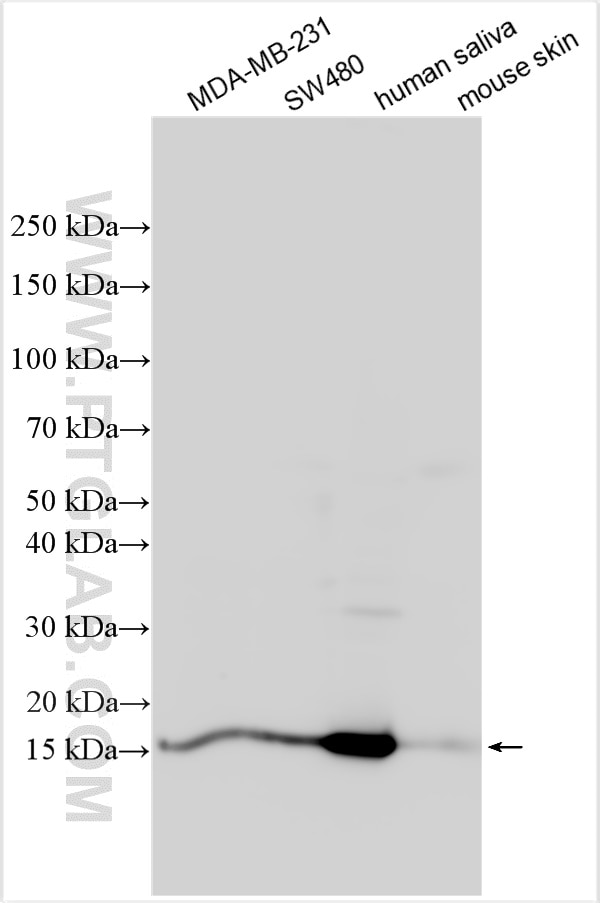
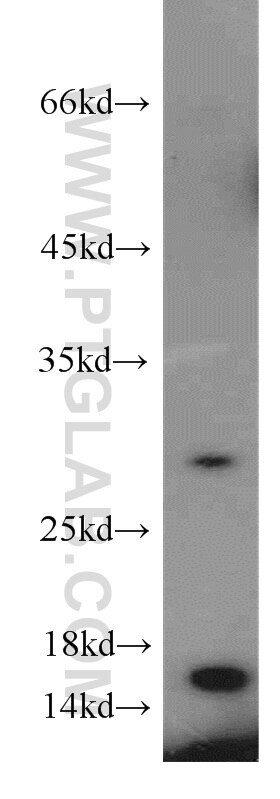
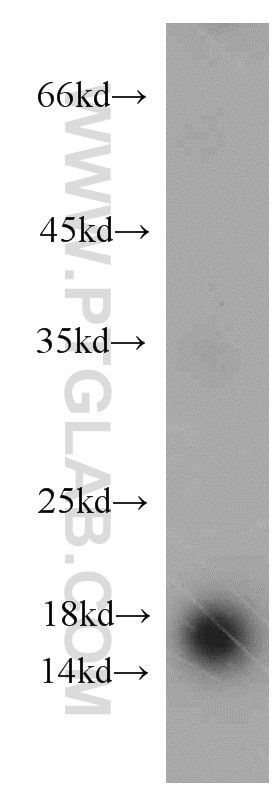
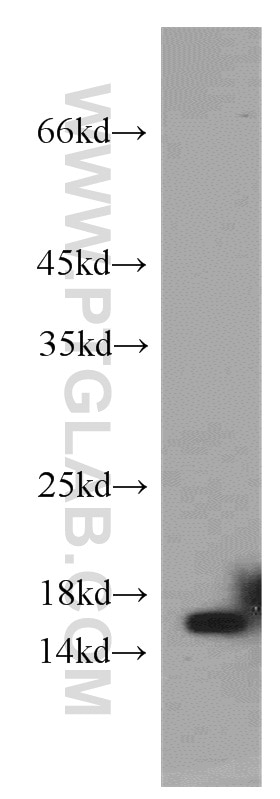
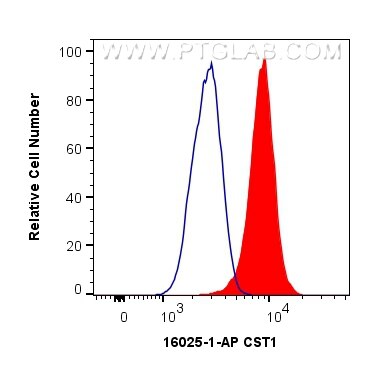
Geprüfte Anwendungen
Produktinformation
16025-1-PBS bindet in WB, FC (Intra), ELISA Cystatin SN/CST1 und zeigt Reaktivität mit human, Maus
| Getestete Reaktivität | human, Maus |
| Wirt / Isotyp | Kaninchen / IgG |
| Klonalität | Polyklonal |
| Typ | Antikörper |
| Immunogen | Cystatin SN/CST1 fusion protein Ag8862 |
| Vollständiger Name | cystatin SN |
| Berechnetes Molekulargewicht | 141 aa, 16 kDa |
| Beobachtetes Molekulargewicht | 14-16 kDa |
| GenBank-Zugangsnummer | BC021225 |
| Gene symbol | CST1 |
| Gene ID (NCBI) | 1469 |
| Konjugation | Unkonjugiert |
| Form | Liquid |
| Reinigungsmethode | Antigen-Affinitätsreinigung |
| Lagerungspuffer | PBS only |
| Lagerungsbedingungen | Store at -80°C. 20ul Größen enthalten 0,1% BSA. |
Hintergrundinformationen
CST1, or cystatin SN, is a gene in humans that encodes a secreted protein belonging to the type 2 cystatin superfamily, which includes CST1, CST2, CST3, CST4, and CST5. These proteins are cysteine proteinase inhibitors found in various human fluids and secretions, where they appear to provide protective functions. CST1 is specifically found in saliva, tears, urine, and seminal fluid, and it plays a role in inhibiting the activity of cysteine proteases. CST1 has been implicated in various pathological processes, including tumor invasion and metastasis. Overexpression of CST1 has been observed in several types of cancer, such as lung, breast, colorectal, and gastric cancer, suggesting its role in the proliferation, invasion, and metastasis of these tumors.


