- Featured Product
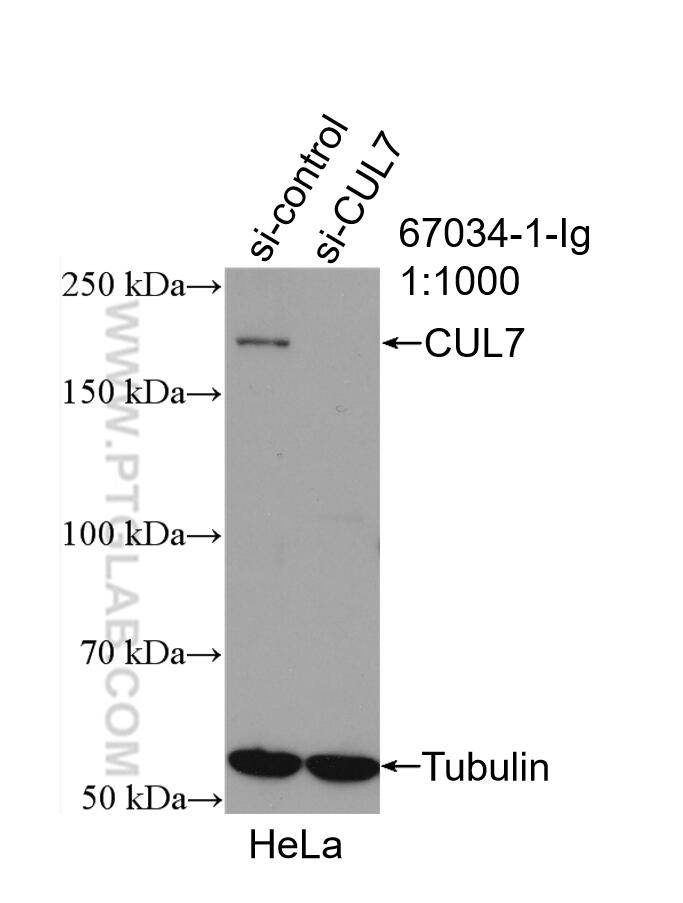
- KD/KO Validated
CUL7 Monoklonaler Antikörper
CUL7 Monoklonal Antikörper für WB, IHC, Indirect ELISA
Wirt / Isotyp
Maus / IgG2a
Getestete Reaktivität
human, Maus, Ratte
Anwendung
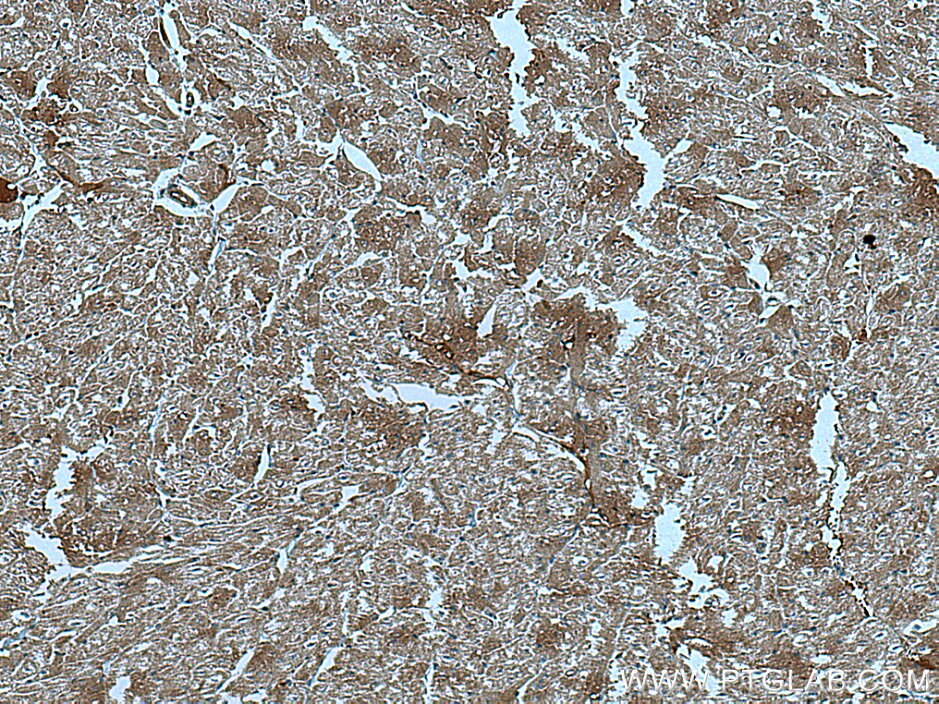
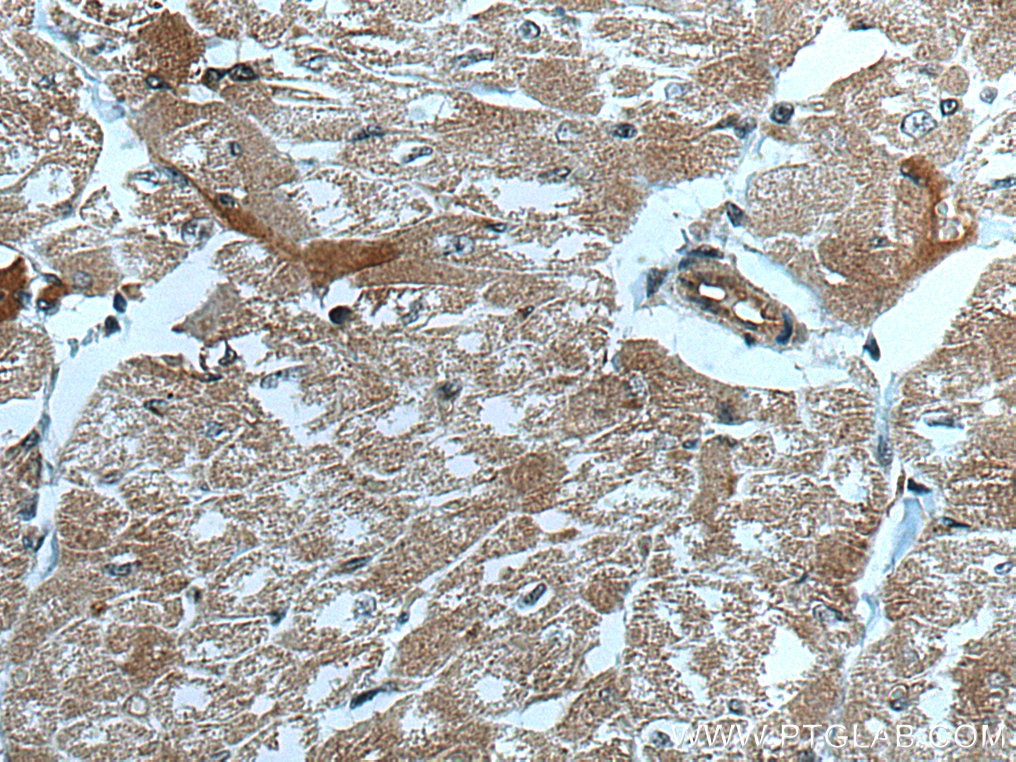
WB, IHC, Indirect ELISA
Konjugation
Unkonjugiert
CloneNo.
2E3G9
Kat-Nr. : 67034-1-PBS
Synonyme
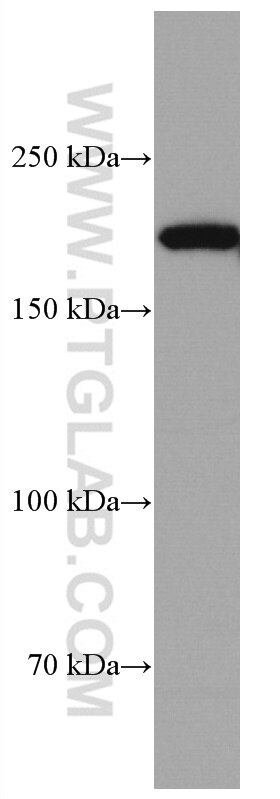
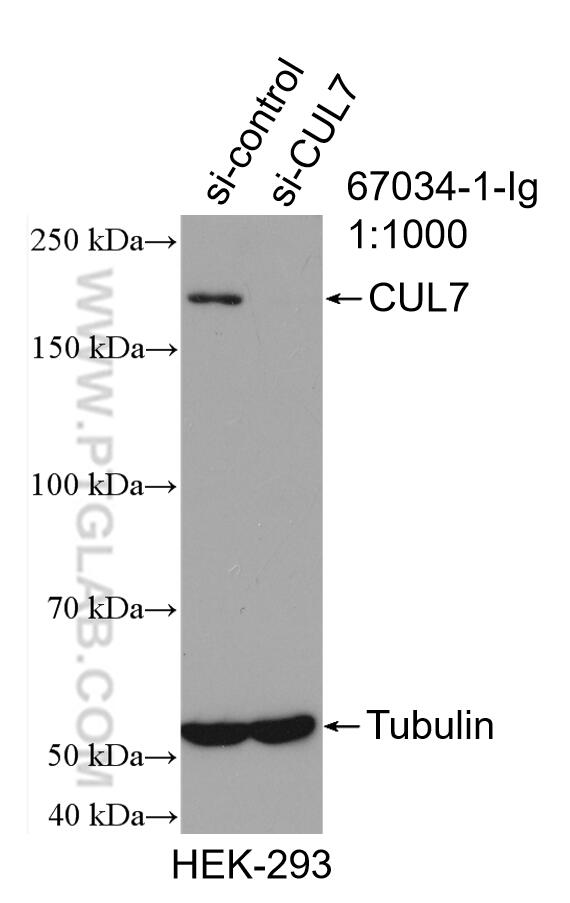
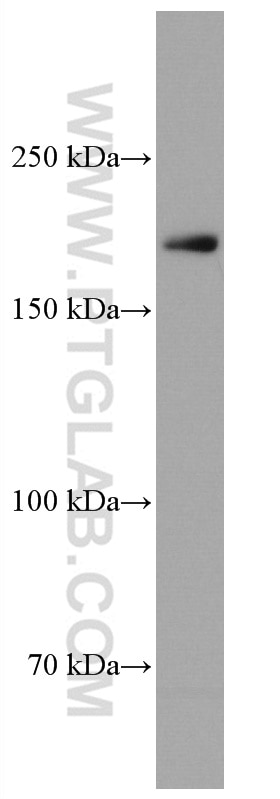
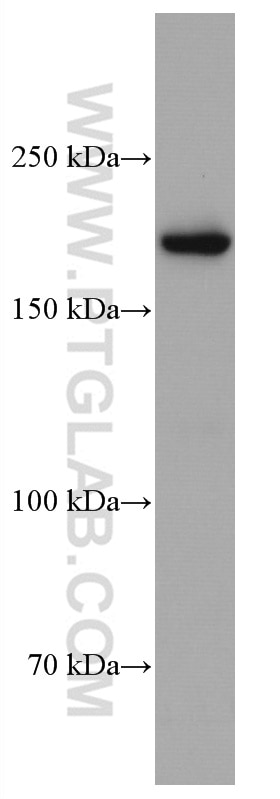
Geprüfte Anwendungen
Produktinformation
67034-1-PBS bindet in WB, IHC, Indirect ELISA CUL7 und zeigt Reaktivität mit human, Maus, Ratten
| Getestete Reaktivität | human, Maus, Ratte |
| Wirt / Isotyp | Maus / IgG2a |
| Klonalität | Monoklonal |
| Typ | Antikörper |
| Immunogen | CUL7 fusion protein Ag6943 |
| Vollständiger Name | cullin 7 |
| Berechnetes Molekulargewicht | 1698 aa, 191 kDa |
| Beobachtetes Molekulargewicht | 185 kDa |
| GenBank-Zugangsnummer | BC033647 |
| Gene symbol | CUL7 |
| Gene ID (NCBI) | 9820 |
| Konjugation | Unkonjugiert |
| Form | Liquid |
| Reinigungsmethode | Protein-A-Reinigung |
| Lagerungspuffer | PBS only |
| Lagerungsbedingungen | Store at -80°C. 20ul Größen enthalten 0,1% BSA. |
Hintergrundinformationen
he cullin family proteins are scaffold proteins for the Ring finger type E3 ligases, participating in the proteolysis through the ubiquitin-proteasome pathway. Humans express seven cullin proeins: CUL1-3, CUL4A, CUL4B, CUL5, and CUL7. Each cullin protein can form an E3 ligase similar to the prototype Ring-type E3 ligase Skp1-CUL1-F-box complex. The Cullin-RING-finger type E3 ligases are important regulators in early embryonic development, as highlighted by genetic studies demonstrating that knock-out of CUL1, CUL3, or CUL4A in mice results in early embryonic lethality. CUL7 was originally discovered as 185-kDa protein associated with the large T antigen of simian virus 40 (SV40). CUL7-deficient mice exhibit neonatal lethality with reduced size and vascular defects. CUL7 presumably plays a role in the DNA damage response by limiting p53 activity. CUL7 mutations have also been identified in 3-Msyndrome and the Yakuts short stature syndrome, both of which are characterized by pre- and post-natal growth retardation but with relatively normal mental and endocrine functions, suggesting that CUL7 may also be crucial for human placental development.


