CXCL10/IP-10 Rekombinanter Antikörper
CXCL10/IP-10 Rekombinant Antikörper für FC (Intra)
Wirt / Isotyp
Kaninchen / IgG
Getestete Reaktivität
human
Anwendung
FC (Intra)
Konjugation
Unkonjugiert
CloneNo.
242013E12
Kat-Nr. : 98265-1-PBS
Synonyme
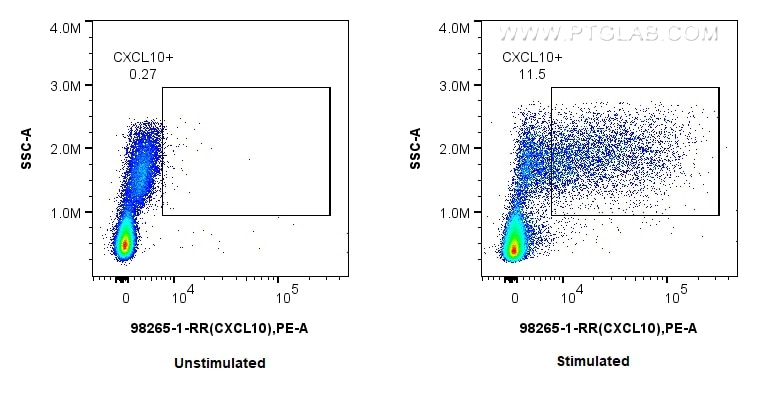
Geprüfte Anwendungen
Produktinformation
98265-1-PBS bindet in FC (Intra) CXCL10/IP-10 und zeigt Reaktivität mit human
| Getestete Reaktivität | human |
| Wirt / Isotyp | Kaninchen / IgG |
| Klonalität | Rekombinant |
| Typ | Antikörper |
| Immunogen | CXCL10/IP-10 fusion protein Eg2489 |
| Vollständiger Name | chemokine (C-X-C motif) ligand 10 |
| Berechnetes Molekulargewicht | 11 kDa |
| GenBank-Zugangsnummer | BC010954 |
| Gene symbol | CXCL10 |
| Gene ID (NCBI) | 3627 |
| Konjugation | Unkonjugiert |
| Form | Liquid |
| Reinigungsmethode | Protein A purfication |
| Lagerungspuffer | PBS only |
| Lagerungsbedingungen | Store at -80°C. |
Hintergrundinformationen
CXCL10 (also known as IP-10) is a member of the CXC chemokine family which binds to the CXCR3 receptor to exert its biological effects. CXCL10 is a 12-kDa protein and constitutes two internal disulfide cross bridges. The predicted signal peptidase cleavage generates a 10-kDa secreted polypeptide with four conserved cysteine residues in the N-terminal. The CXCL10 gene localizes on chromosome 4 at band q21, a locus associated with an acute monocytic/B-lymphocyte lineage leukemia exhibiting translocation of t (4; 11) (q21; q23). CXCL10 mediates leukocyte trafficking, adaptive immunity, inflammation, haematopoiesis and angiogenesis. Under proinflammatory conditions CXCL10 is secreted from a variety of cells, such as leukocytes, activated neutrophils, eosinophils, monocytes, epithelial cells, endothelial cells, stromal cells (fibroblasts) and keratinocytes in response to IFN-γ.


