Cathepsin C Polyklonaler Antikörper
Cathepsin C Polyklonal Antikörper für WB, IHC, IF/ICC, Indirect ELISA
Wirt / Isotyp
Kaninchen / IgG
Getestete Reaktivität
human
Anwendung
WB, IHC, IF/ICC, Indirect ELISA
Konjugation
Unkonjugiert
Kat-Nr. : 30790-1-PBS
Synonyme
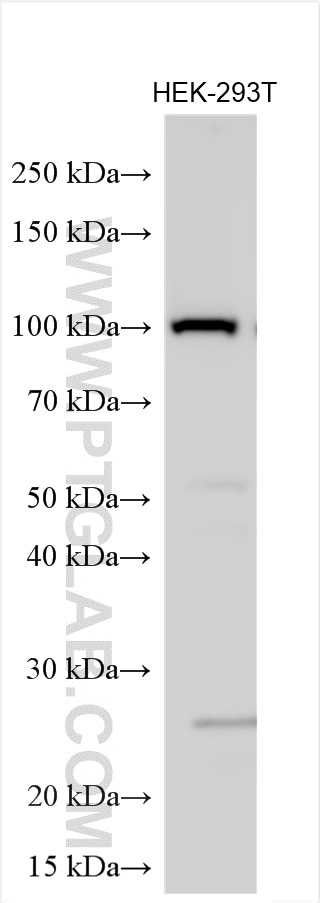
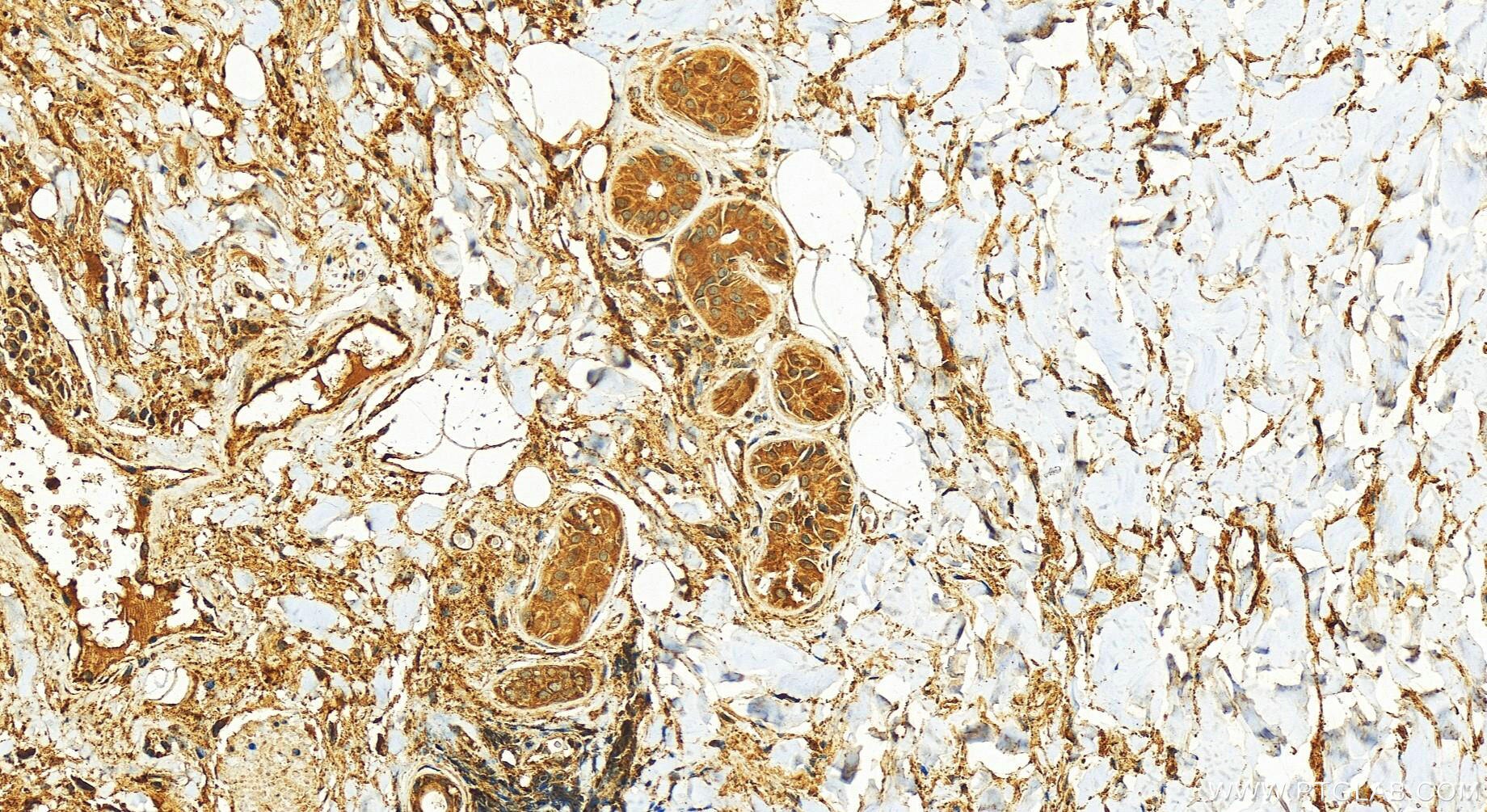
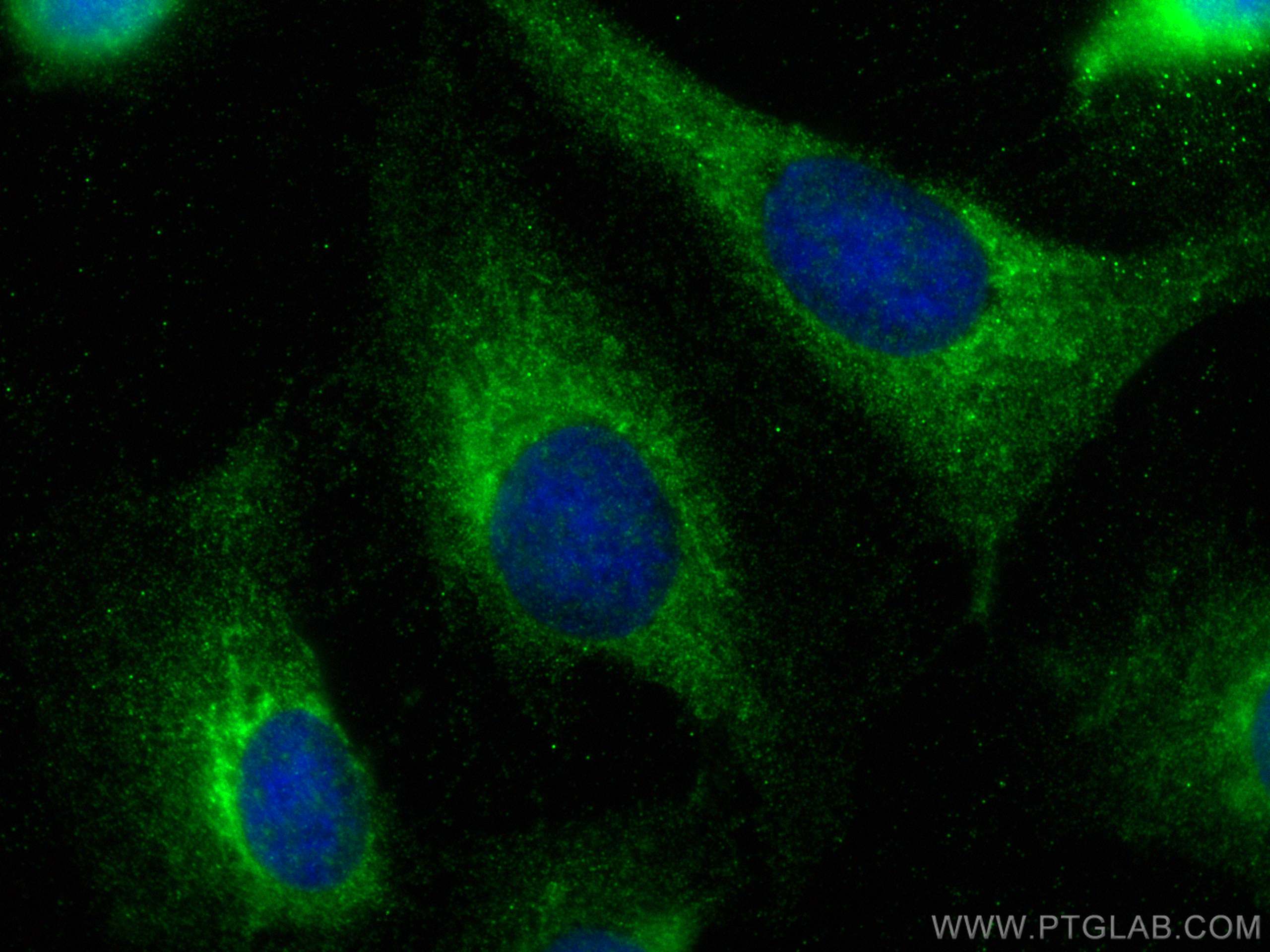
Geprüfte Anwendungen
Produktinformation
30790-1-PBS bindet in WB, IHC, IF/ICC, Indirect ELISA Cathepsin C und zeigt Reaktivität mit human
| Getestete Reaktivität | human |
| Wirt / Isotyp | Kaninchen / IgG |
| Klonalität | Polyklonal |
| Typ | Antikörper |
| Immunogen | Cathepsin C fusion protein Ag32420 |
| Vollständiger Name | cathepsin C |
| Berechnetes Molekulargewicht | 52 kDa |
| Beobachtetes Molekulargewicht | 100 kDa |
| GenBank-Zugangsnummer | NM_001814 |
| Gene symbol | Cathepsin C |
| Gene ID (NCBI) | 1075 |
| Konjugation | Unkonjugiert |
| Form | Liquid |
| Reinigungsmethode | Antigen-Affinitätsreinigung |
| Lagerungspuffer | PBS only |
| Lagerungsbedingungen | Store at -80°C. 20ul Größen enthalten 0,1% BSA. |
Hintergrundinformationen
Cathepsin C, also known as DPP-I. It is expected to be located in lysosome and highly expressed in lung, kidney and placenta (PMID: 9092576). This gene encodes a member of the peptidase C1 family and lysosomal cysteine proteinase that appears to be a central coordinator for activation of many serine proteinases in cells of the immune system. Alternative splicing results in multiple transcript variants, at least one of which encodes a preproprotein that is proteolytically processed to generate heavy and light chains that form a disulfide-linked dimer. Defects in the encoded protein have been shown to be a cause of Papillon-Lefevre syndrome, an autosomal recessive disorder characterized by palmoplantar keratosis and periodontitis. The calculated molecular weight of Cathepsin C is 51 kDa. The 23-kDa band may be a subunit of the protein monomer, while a 100-kda band is a dimer form (PMID: 26884336, 31557781).


