Cathepsin D Rekombinanter Antikörper
Cathepsin D Rekombinant Antikörper für WB, IF/ICC, FC (Intra), Cytometric bead array, Sandwich ELISA, Indirect ELISA, Sample test
Wirt / Isotyp
Kaninchen / IgG
Getestete Reaktivität
human
Anwendung
WB, IF/ICC, FC (Intra), Cytometric bead array, Sandwich ELISA, Indirect ELISA, Sample test
Konjugation
Unkonjugiert
CloneNo.
240775E7
Kat-Nr. : 83743-2-PBS
Synonyme
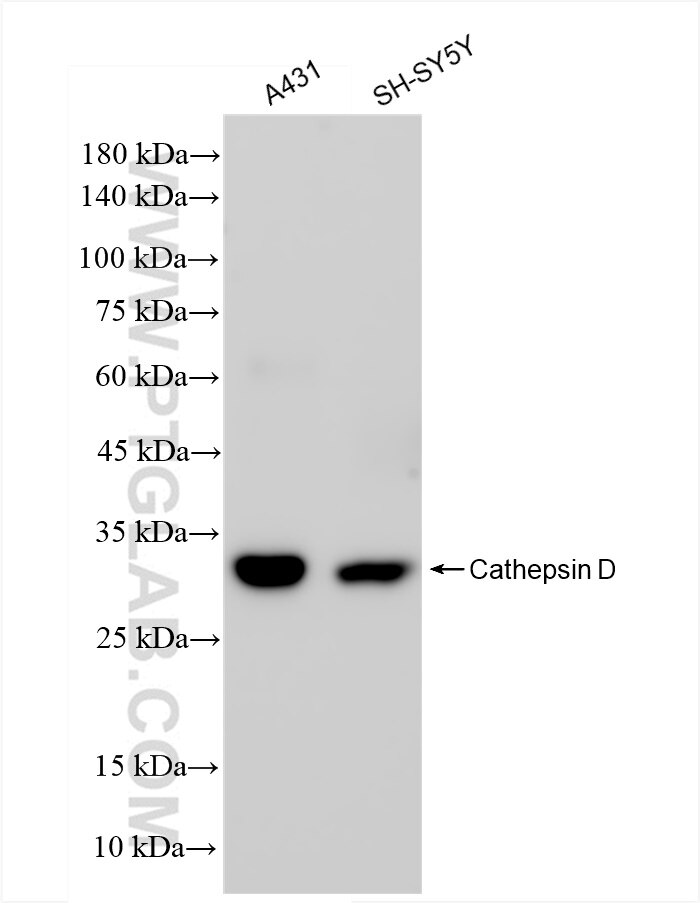
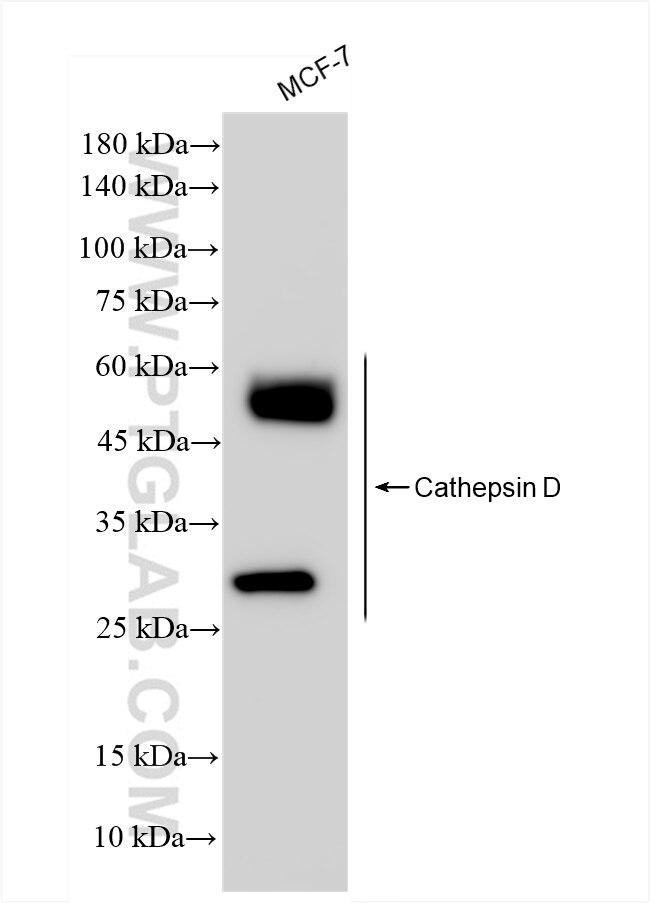
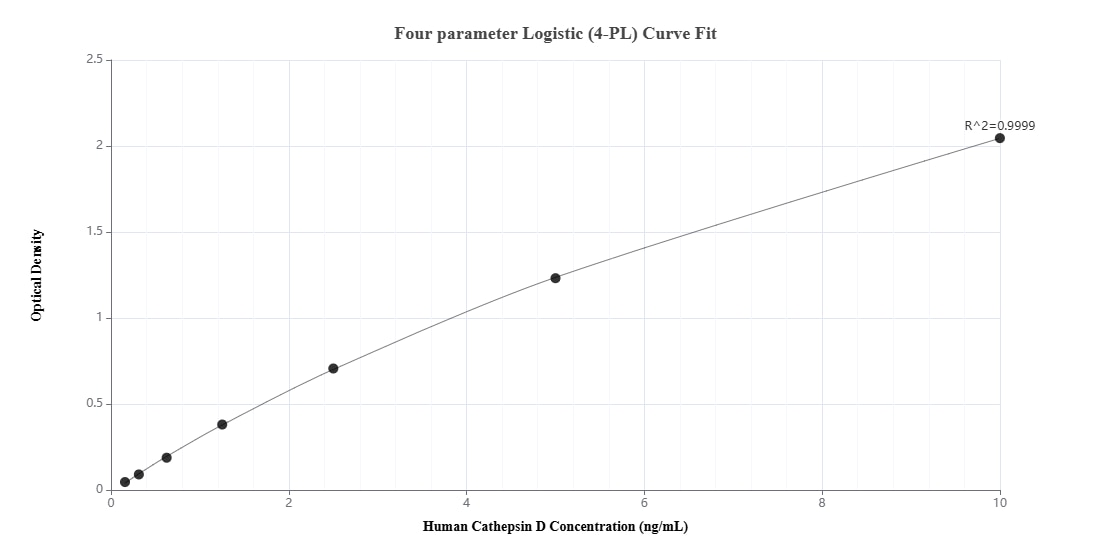
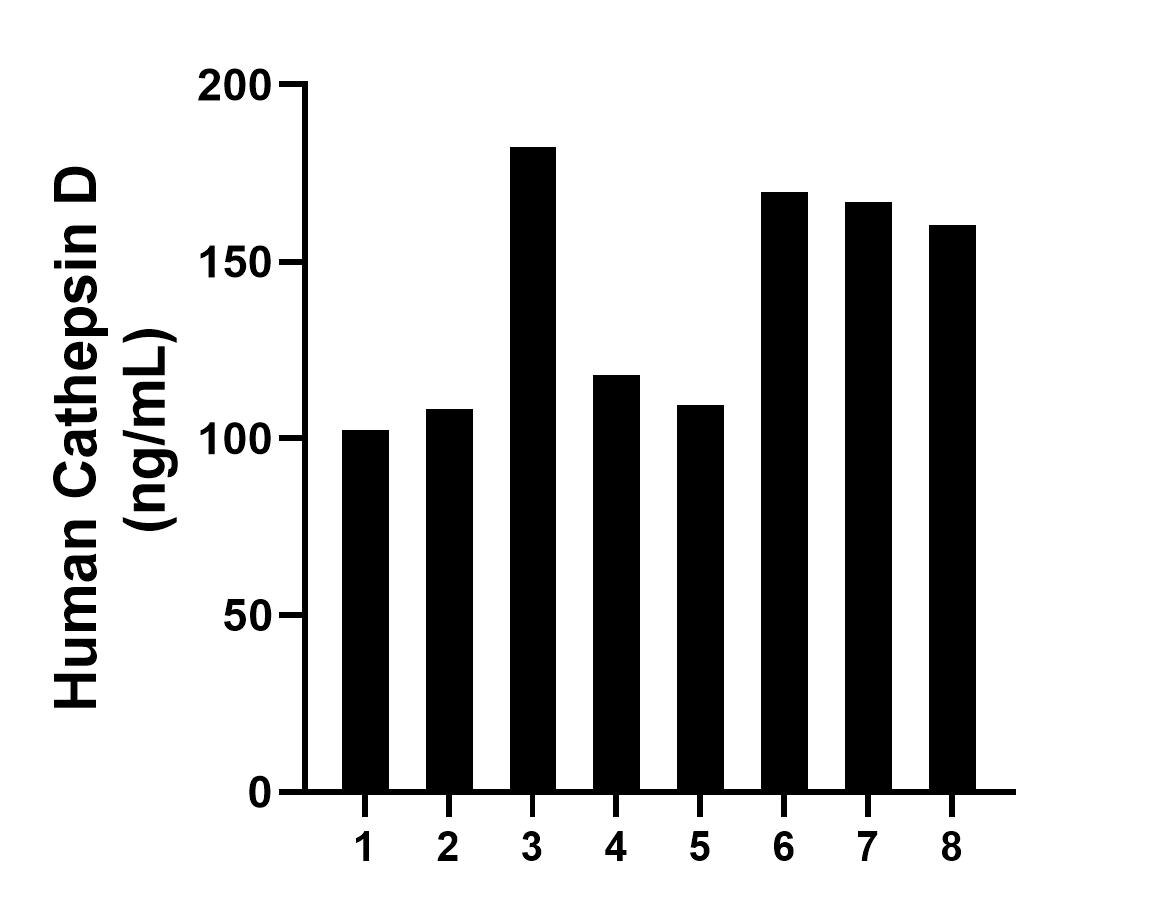
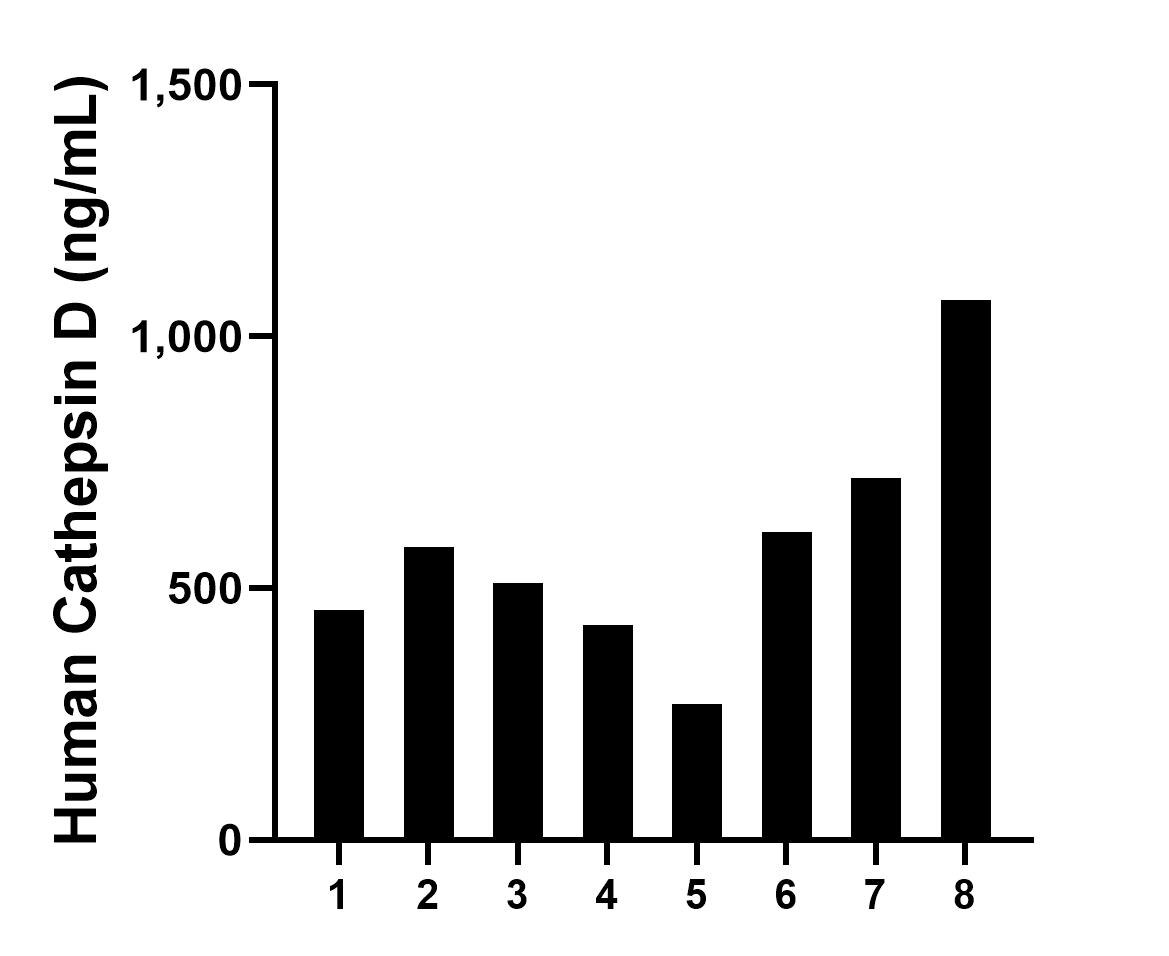
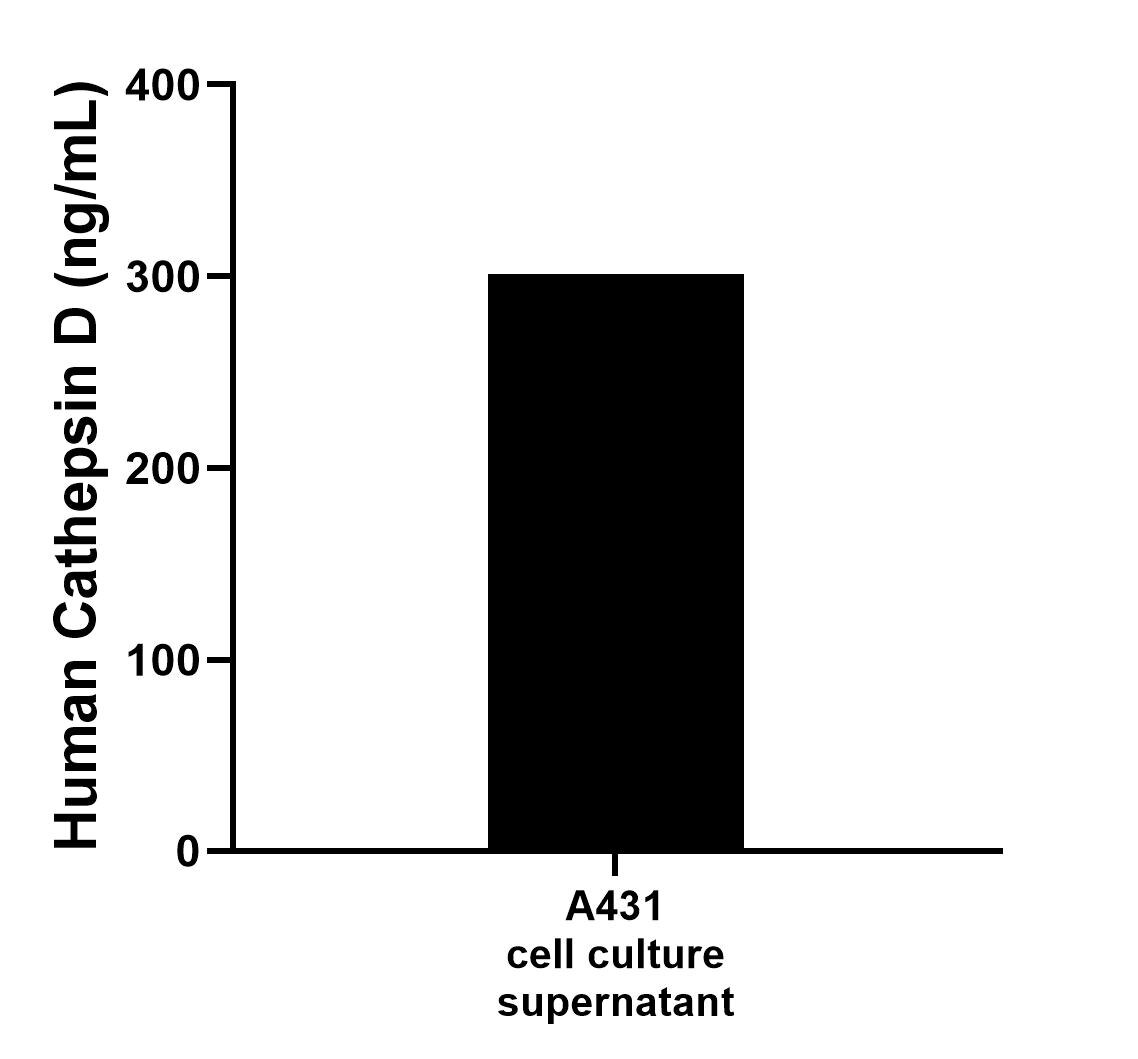
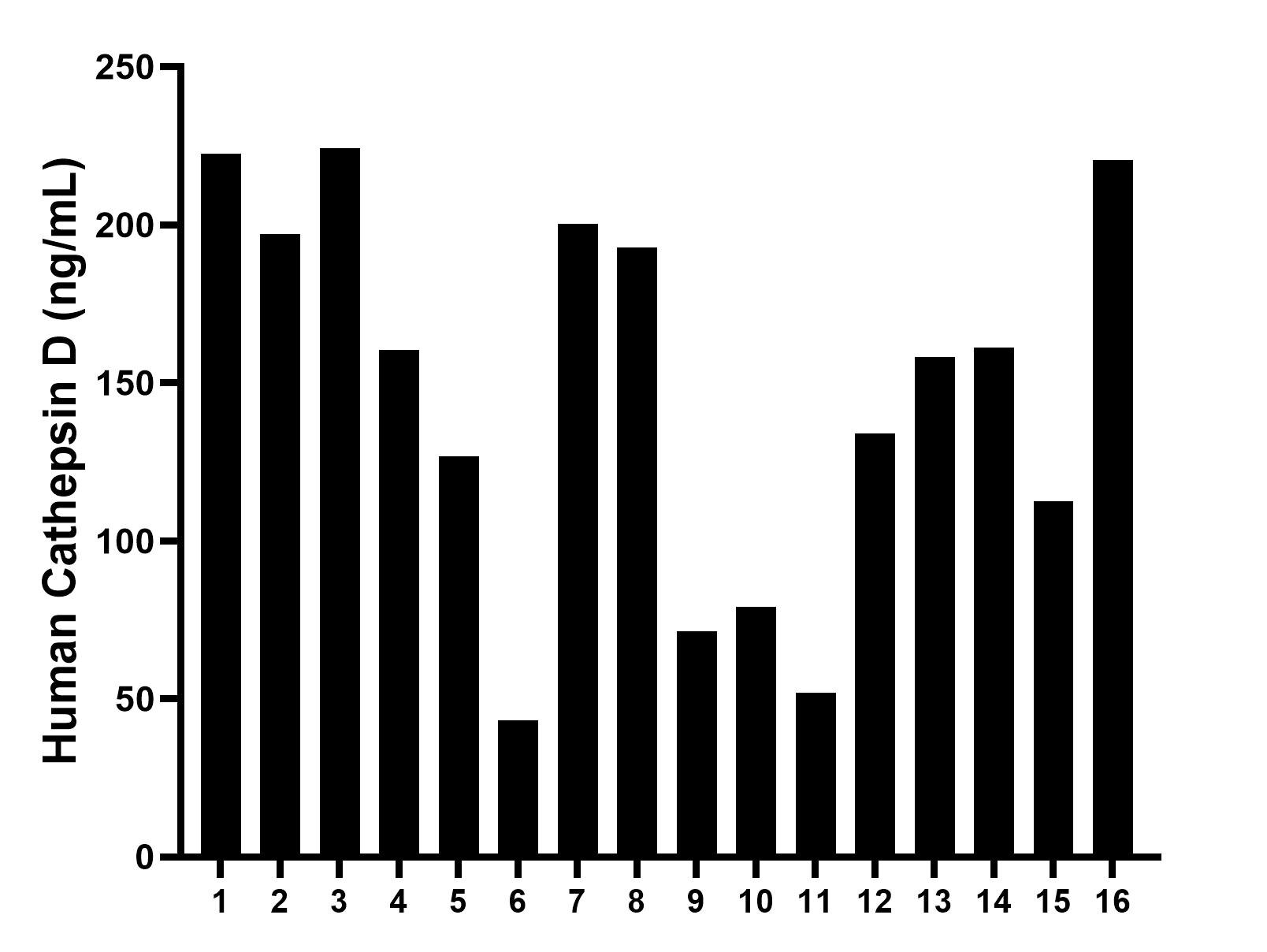
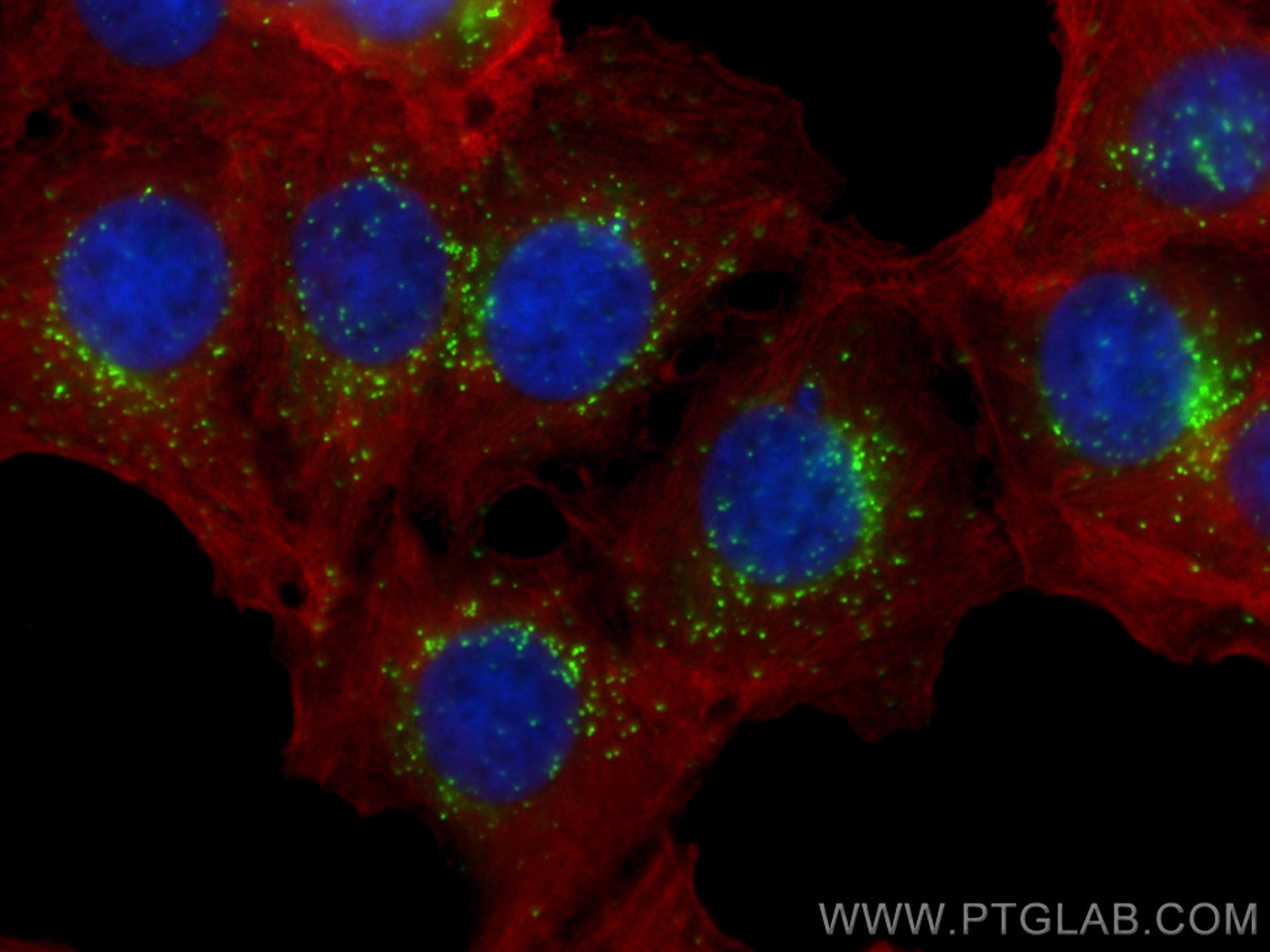
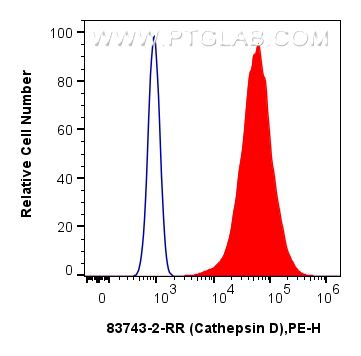
Geprüfte Anwendungen
Produktinformation
83743-2-PBS bindet in WB, IF/ICC, FC (Intra), Cytometric bead array, Sandwich ELISA, Indirect ELISA, Sample test Cathepsin D und zeigt Reaktivität mit human
| Getestete Reaktivität | human |
| Wirt / Isotyp | Kaninchen / IgG |
| Klonalität | Rekombinant |
| Typ | Antikörper |
| Immunogen | Cathepsin D fusion protein Eg1053 |
| Vollständiger Name | cathepsin D |
| Berechnetes Molekulargewicht | 45kDa |
| Beobachtetes Molekulargewicht | 32 kDa, 48 kDa, 52 kDa |
| GenBank-Zugangsnummer | NM_001909.5 |
| Gene symbol | Cathepsin D |
| Gene ID (NCBI) | 1509 |
| Konjugation | Unkonjugiert |
| Form | Liquid |
| Reinigungsmethode | Protein-A-Reinigung |
| Lagerungspuffer | PBS only |
| Lagerungsbedingungen | Store at -80°C. 20ul Größen enthalten 0,1% BSA. |
Hintergrundinformationen
CTSD (Cathepsin D) also named CPSD, belongs to the peptidase A1 family. It is ubiquitously expressed and is involved in proteolytic degradation, cell invasion, and apoptosis. Human CTSD is synthesized as a 52-kDa precursor that is converted into an active 48-kDa single-chain intermediate in the endosomes, and then into a fully active mature form, composed of a 34-kDa heavy chain and a 14-kDa light chain, in the lysosomes. It is a lysosomal acid protease found in neutrophils and monocytes and involved in the pathogenesis of several diseases such as breast cancer and possibly Alzheimer disease (PMID: 27114232, PMID: 30717773, PMID: 30051532).


