MCP-1/CCL2 Rekombinanter Antikörper
MCP-1/CCL2 Rekombinant Antikörper für WB, ELISA
Wirt / Isotyp
Kaninchen / IgG
Getestete Reaktivität
Ratte
Anwendung
WB, ELISA
Konjugation
Unkonjugiert
CloneNo.
240341G3
Kat-Nr. : 83370-2-RR
Synonyme
Filter:
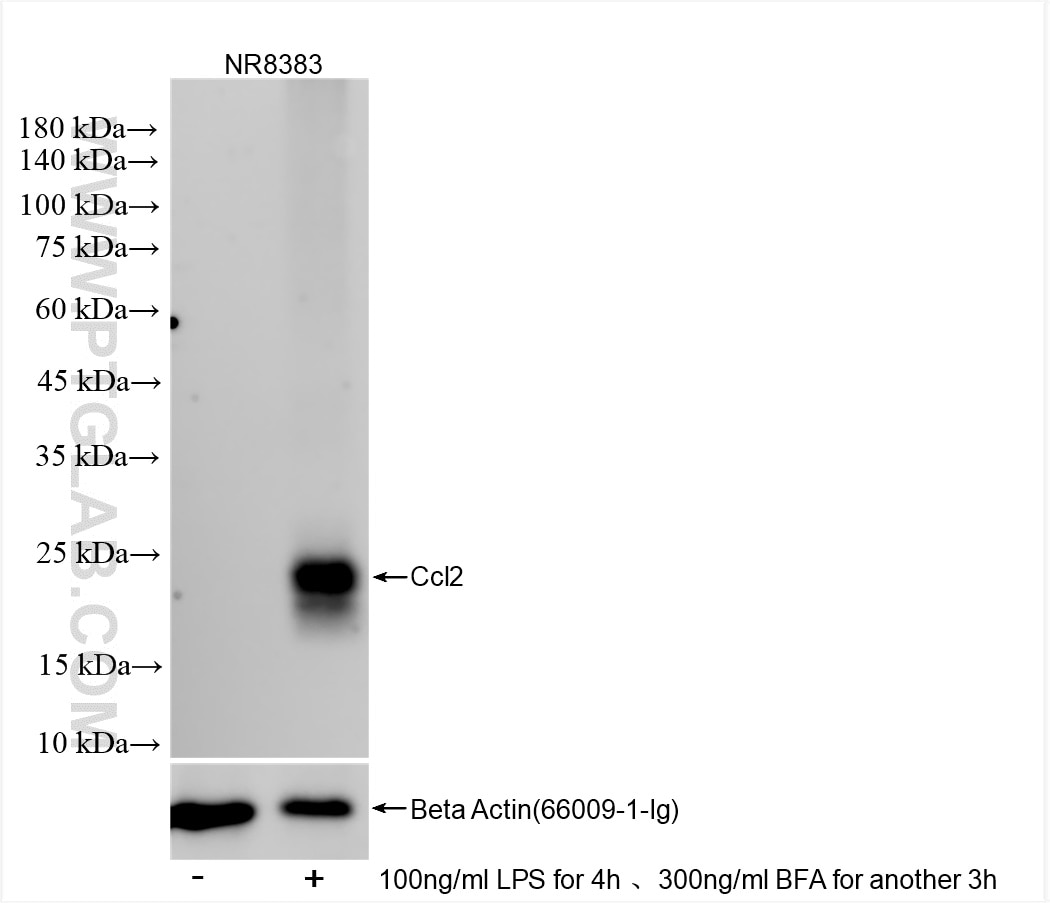
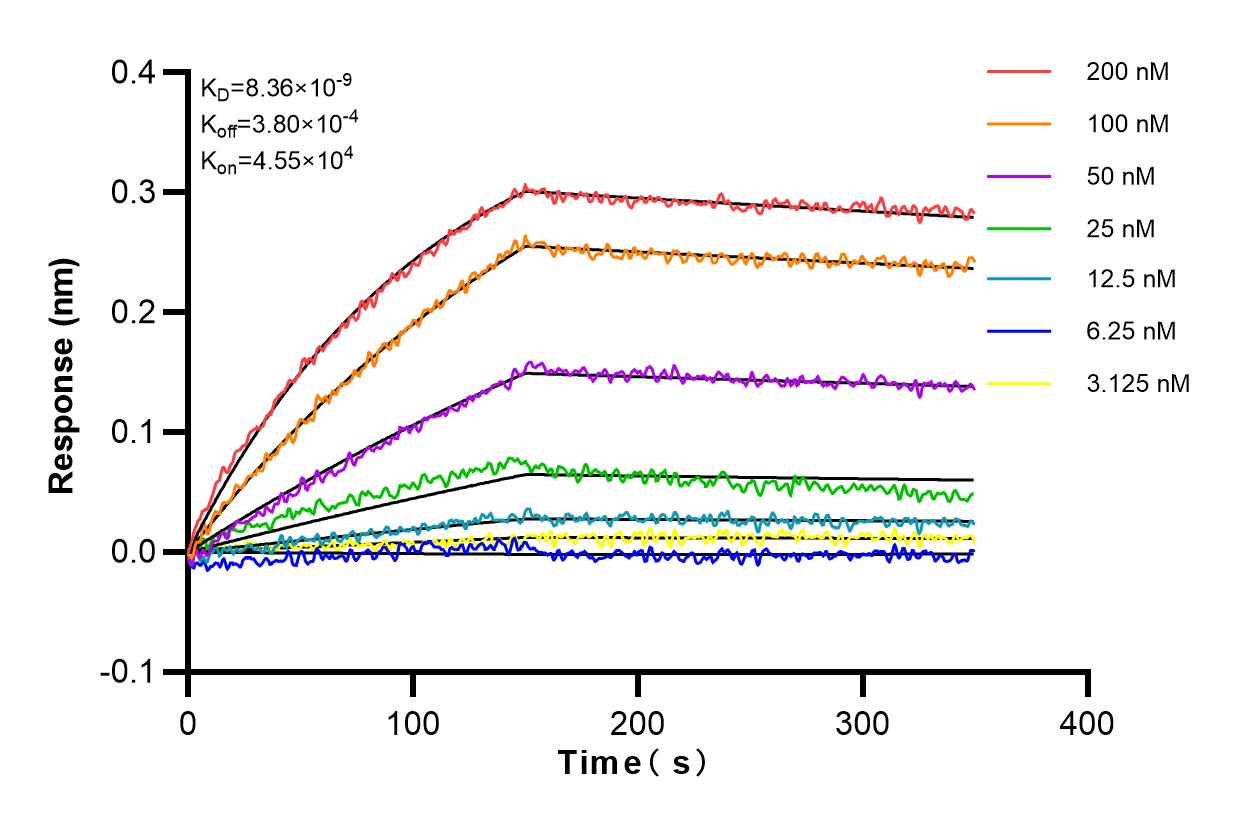
Geprüfte Anwendungen
| Erfolgreiche Detektion in WB | LPS and Brefeldin A treated NR8383 cells |
Empfohlene Verdünnung
| Anwendung | Verdünnung |
|---|---|
| Western Blot (WB) | WB : 1:5000-1:50000 |
| It is recommended that this reagent should be titrated in each testing system to obtain optimal results. | |
| Sample-dependent, check data in validation data gallery | |
Produktinformation
83370-2-RR bindet in WB, ELISA MCP-1/CCL2 und zeigt Reaktivität mit Ratten
| Getestete Reaktivität | Ratte |
| Wirt / Isotyp | Kaninchen / IgG |
| Klonalität | Rekombinant |
| Typ | Antikörper |
| Immunogen | Fusionsprotein |
| Vollständiger Name | chemokine (C-C motif) ligand 2 |
| Berechnetes Molekulargewicht | 16 kDa |
| Beobachtetes Molekulargewicht | 20 kDa |
| GenBank-Zugangsnummer | NM_031530 |
| Gene symbol | MCP-1/CCL2 |
| Gene ID (NCBI) | 24770 |
| Konjugation | Unkonjugiert |
| Form | Liquid |
| Reinigungsmethode | Protein-A-Reinigung |
| Lagerungspuffer | PBS with 0.02% sodium azide and 50% glycerol |
| Lagerungsbedingungen | Bei -20°C lagern. Nach dem Versand ein Jahr lang stabil Aliquotieren ist bei -20oC Lagerung nicht notwendig. 20ul Größen enthalten 0,1% BSA. |
Hintergrundinformationen
Monocyte chemoattractant protein-1 (MCP-1/CCL2) is one of the key chemokines that regulate migration and infiltration of monocytes/macrophages. Both CCL2 and its receptor CCR2 have been demonstrated to be induced and involved in various diseases. Migration of monocytes from the blood stream across the vascular endothelium is required for routine immunological surveillance of tissues, as well as in response to inflammation.
Protokolle
| PRODUKTSPEZIFISCHE PROTOKOLLE | |
|---|---|
| WB protocol for MCP-1/CCL2 antibody 83370-2-RR | Protokoll herunterladen |
| STANDARD-PROTOKOLLE | |
|---|---|
| Klicken Sie hier, um unsere Standardprotokolle anzuzeigen |


