Cystatin S Polyklonaler Antikörper
Cystatin S Polyklonal Antikörper für WB, IHC, Indirect ELISA
Wirt / Isotyp
Kaninchen / IgG
Getestete Reaktivität
human
Anwendung
WB, IHC, Indirect ELISA
Konjugation
Unkonjugiert
Kat-Nr. : 26979-1-PBS
Synonyme
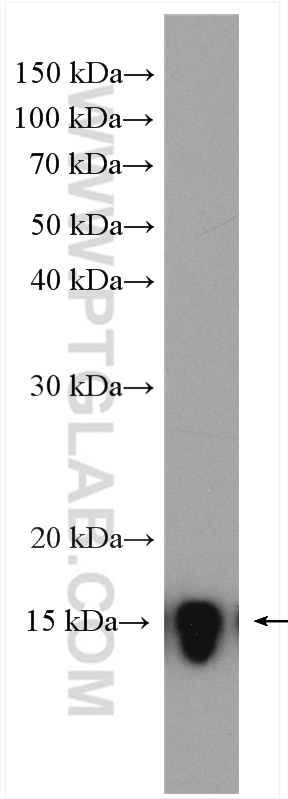
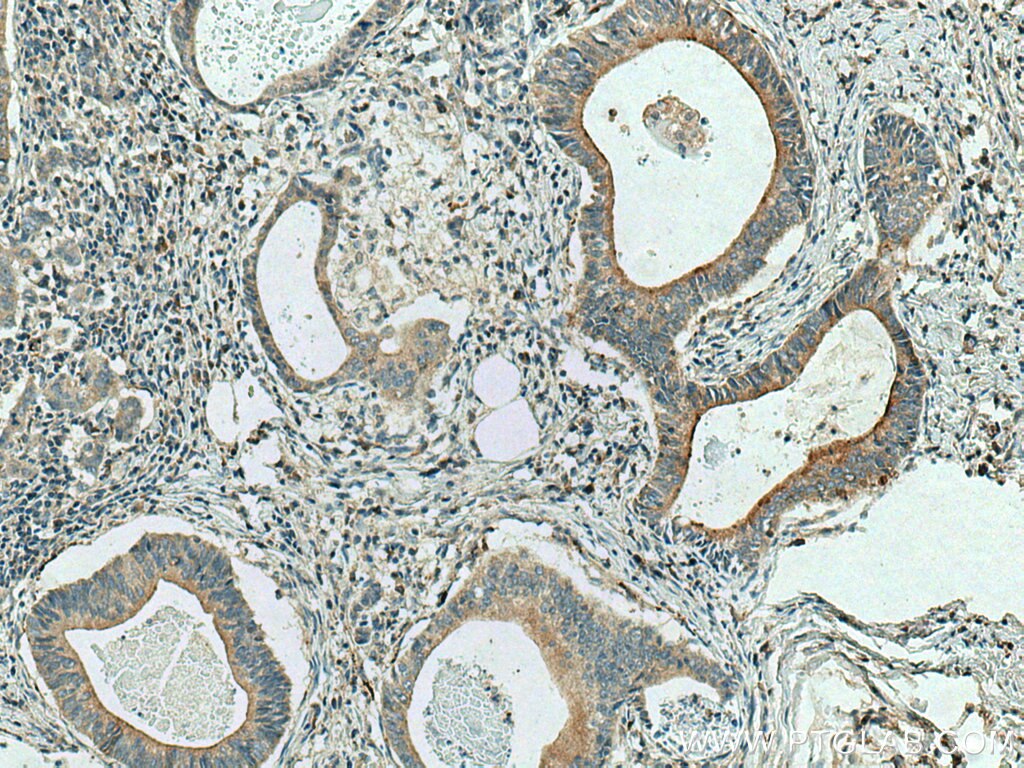
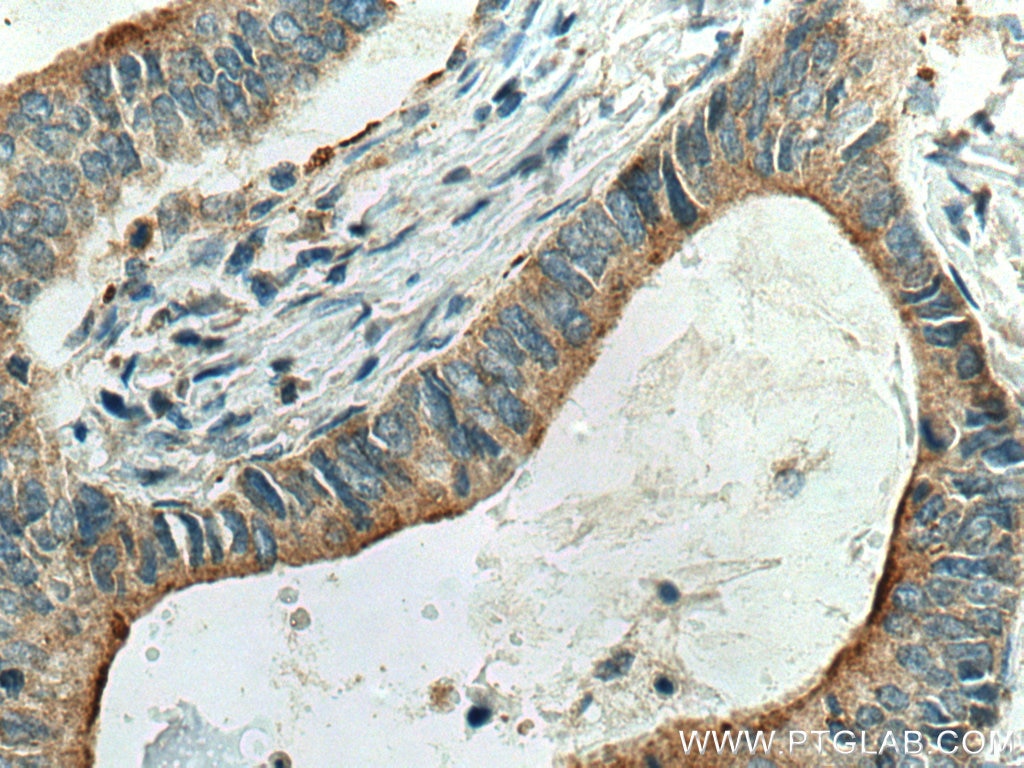
Geprüfte Anwendungen
Produktinformation
26979-1-PBS bindet in WB, IHC, Indirect ELISA Cystatin S und zeigt Reaktivität mit human
| Getestete Reaktivität | human |
| Wirt / Isotyp | Kaninchen / IgG |
| Klonalität | Polyklonal |
| Typ | Antikörper |
| Immunogen | Cystatin S fusion protein Ag25619 |
| Vollständiger Name | cystatin S |
| Beobachtetes Molekulargewicht | 16 kDa |
| GenBank-Zugangsnummer | BC065714 |
| Gene symbol | Cystatin S |
| Gene ID (NCBI) | 1472 |
| Konjugation | Unkonjugiert |
| Form | Liquid |
| Reinigungsmethode | Antigen-Affinitätsreinigung |
| Lagerungspuffer | PBS only |
| Lagerungsbedingungen | Store at -80°C. 20ul Größen enthalten 0,1% BSA. |
Hintergrundinformationen
Cystatins are a family of inhibitors of cysteine peptidases that comprises the salivary cystatins D and S-type (including CST5 and CST4,1,2) and cystatin C-type (CST3) (PMID: 25329717). The D and S-type cystatin have also been detected in seminal plasma, tears, and tracheobronchial fluid but not in other fluids and secretions where cystatin C is found. And the CST4 was expressed in the serous acinar and demilune cells of the human submandibular gland and at lower levels in the serous acini of the parotid gland (PMID:11879580). CST4 specifically combines with cysteine protease to regulate its activity, thus preventing hydrolysis of the extracellular matrix. And some studies propose that CST4 might be a biomarker for gastrointestinal cancer (PMID:29218251; PMID:29636621).


