Cytokeratin 7 Rekombinanter Antikörper
Cytokeratin 7 Rekombinant Antikörper für WB, IHC, IF/ICC, IF-P, ELISA
Wirt / Isotyp
Kaninchen / IgG
Getestete Reaktivität
human
Anwendung
WB, IHC, IF/ICC, IF-P, ELISA
Konjugation
Unkonjugiert
CloneNo.
242229F1
Kat-Nr. : 86153-7-RR
Synonyme
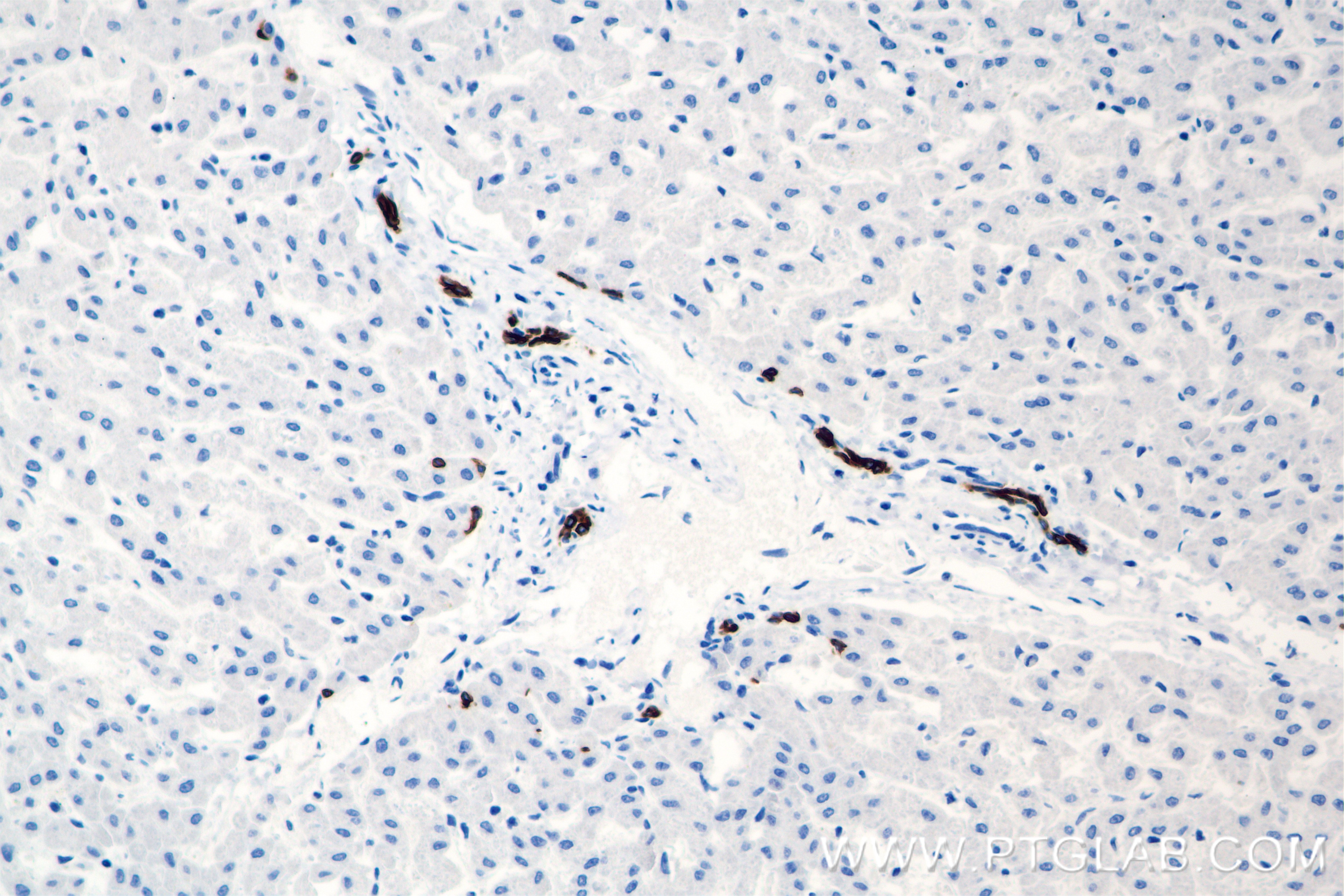
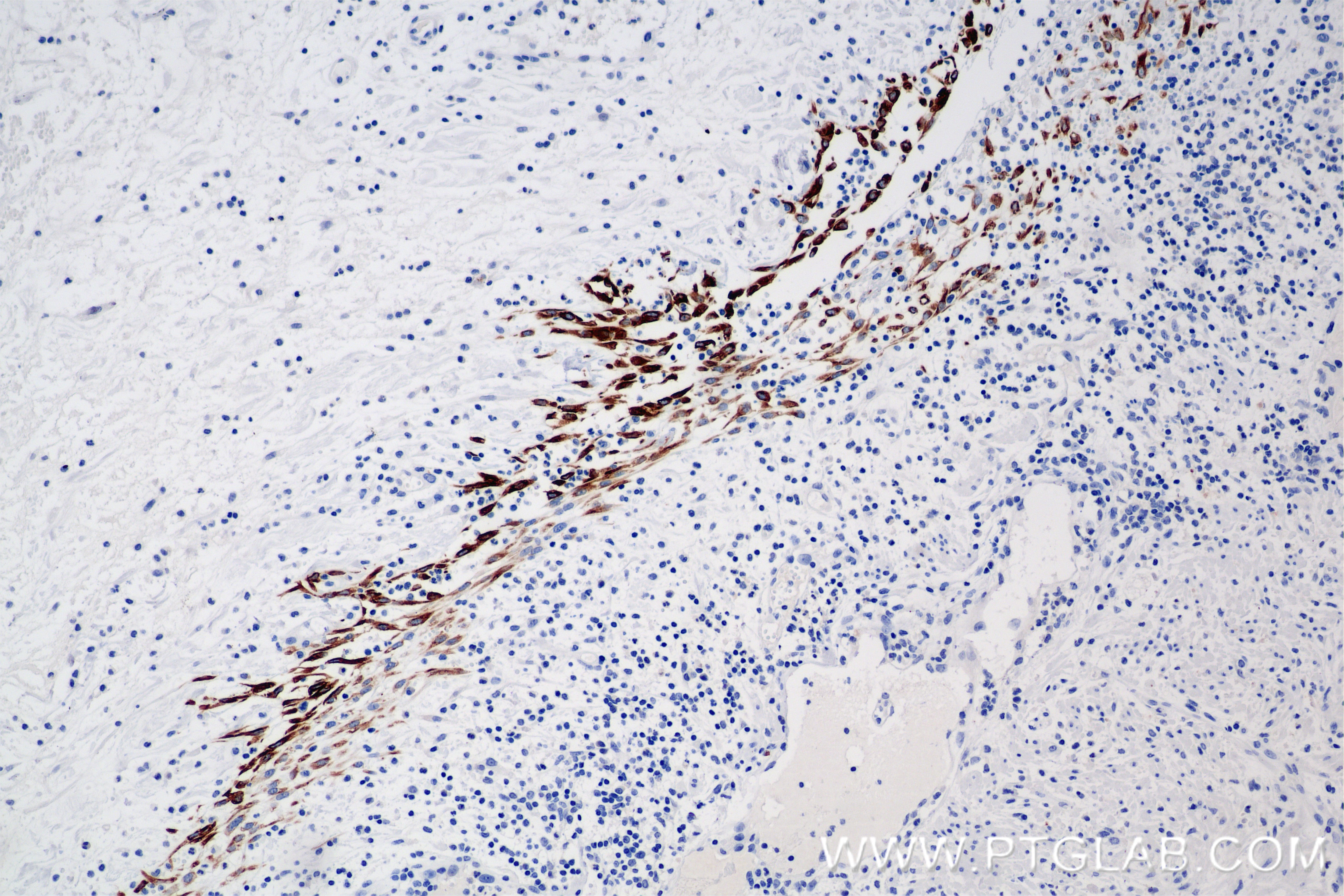
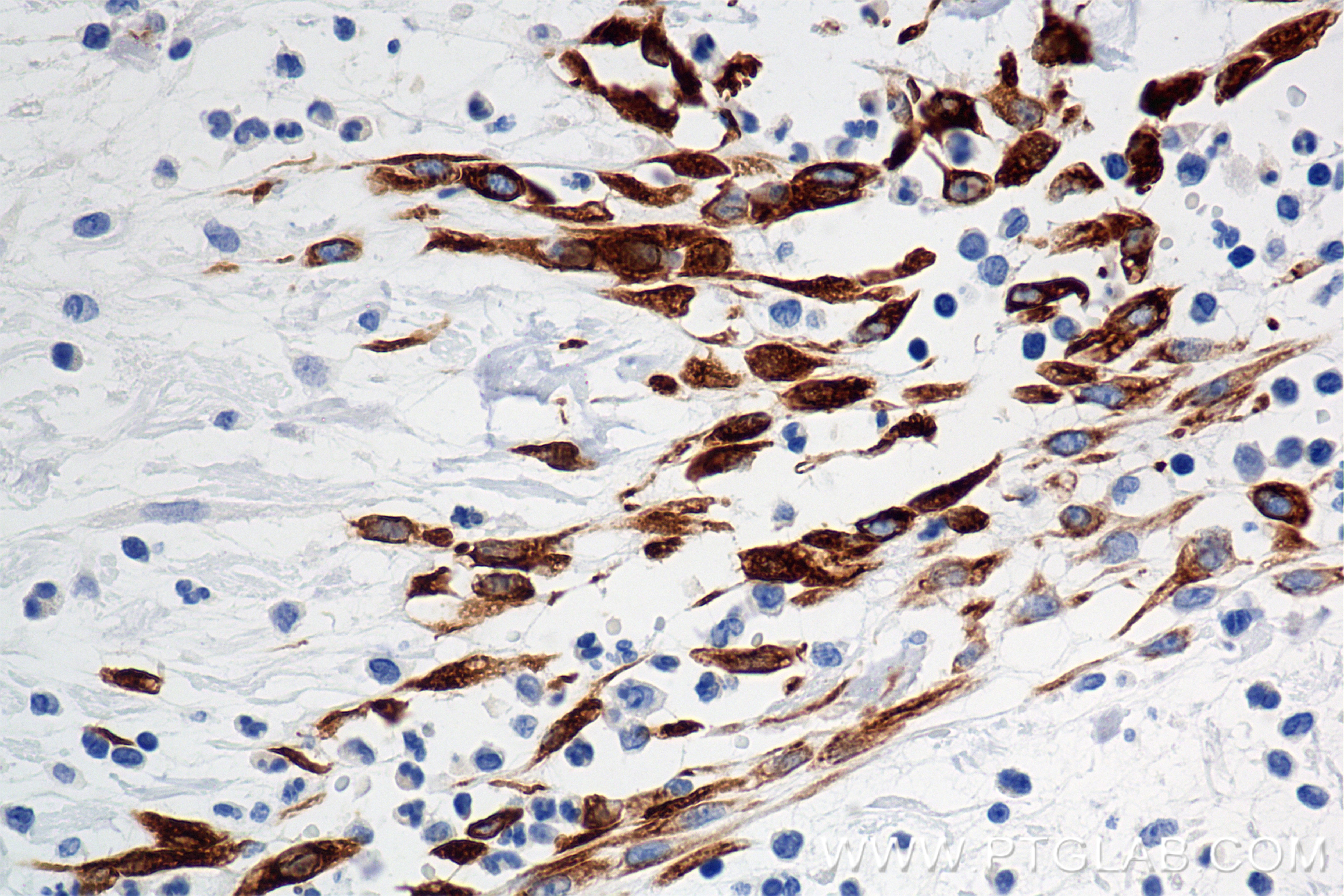
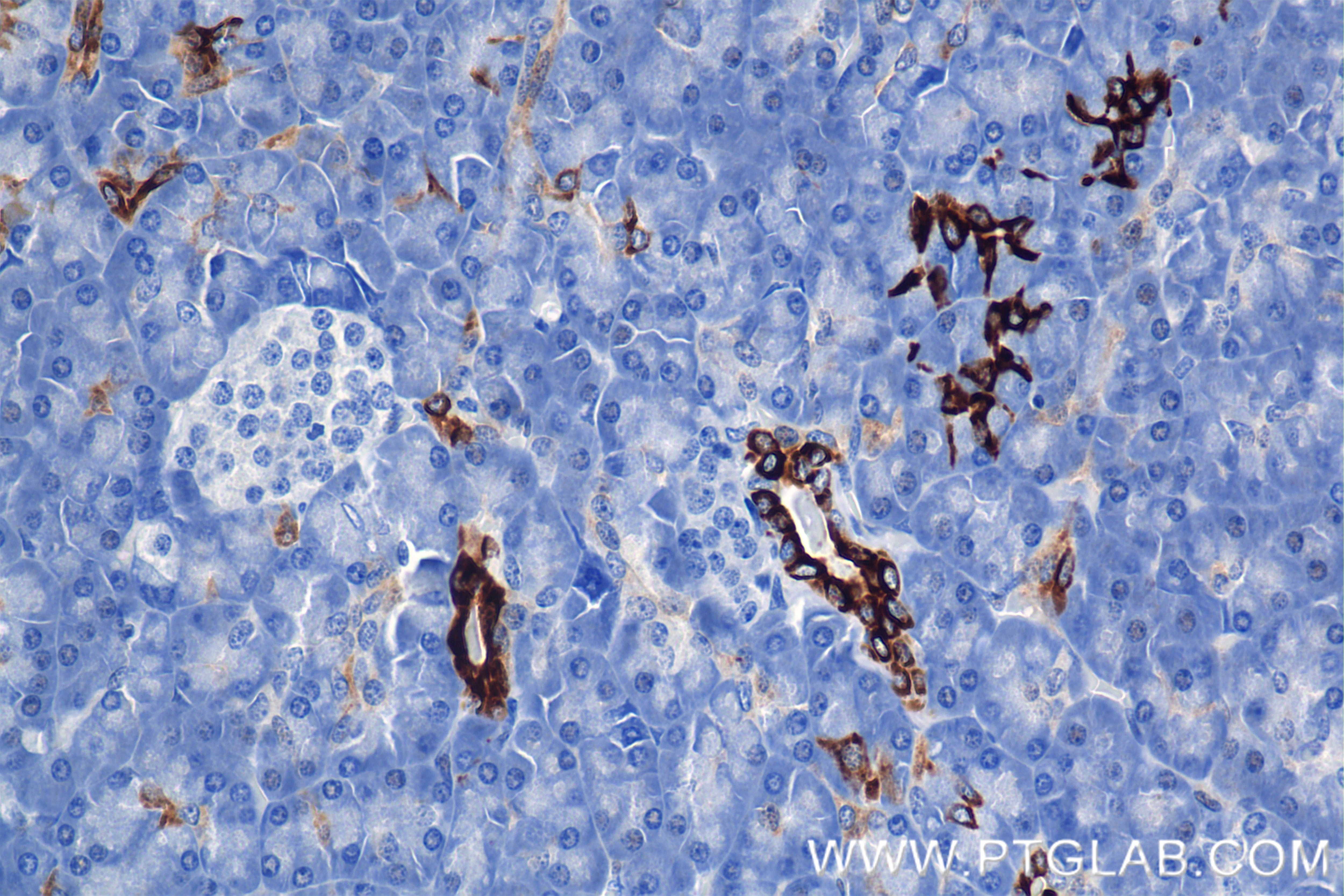
Geprüfte Anwendungen
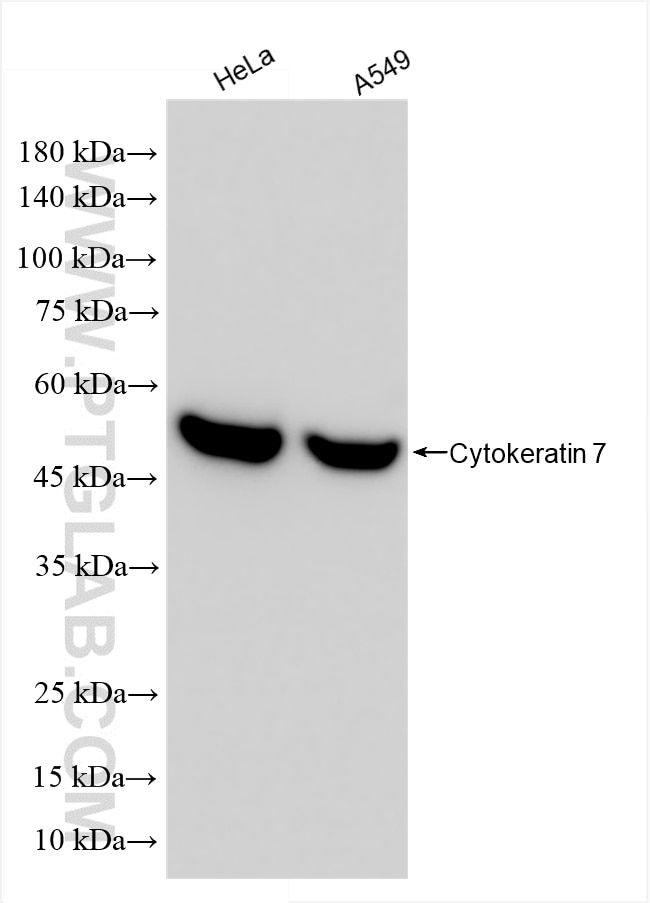
| Erfolgreiche Detektion in WB | HeLa-Zellen, A549-Zellen |
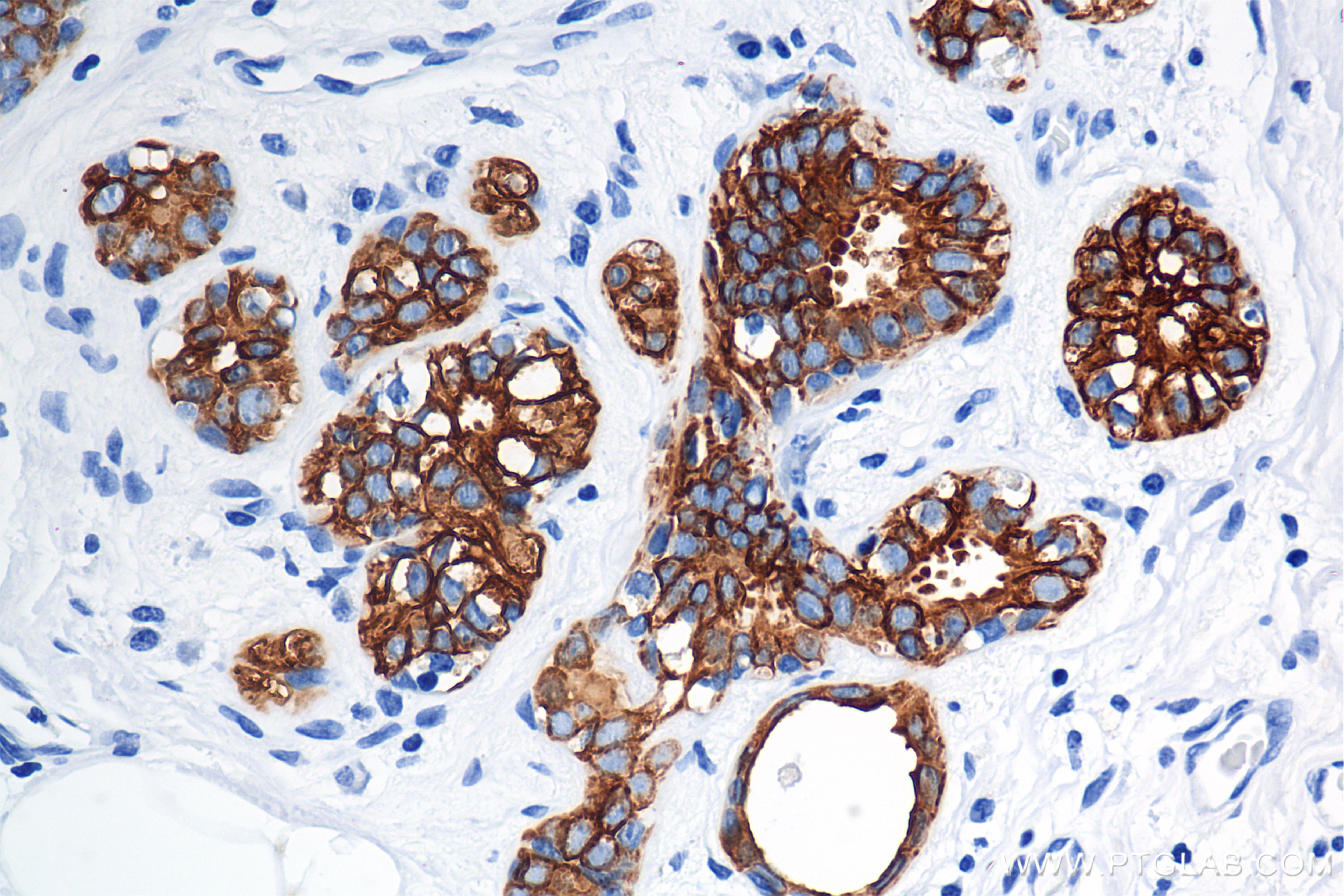
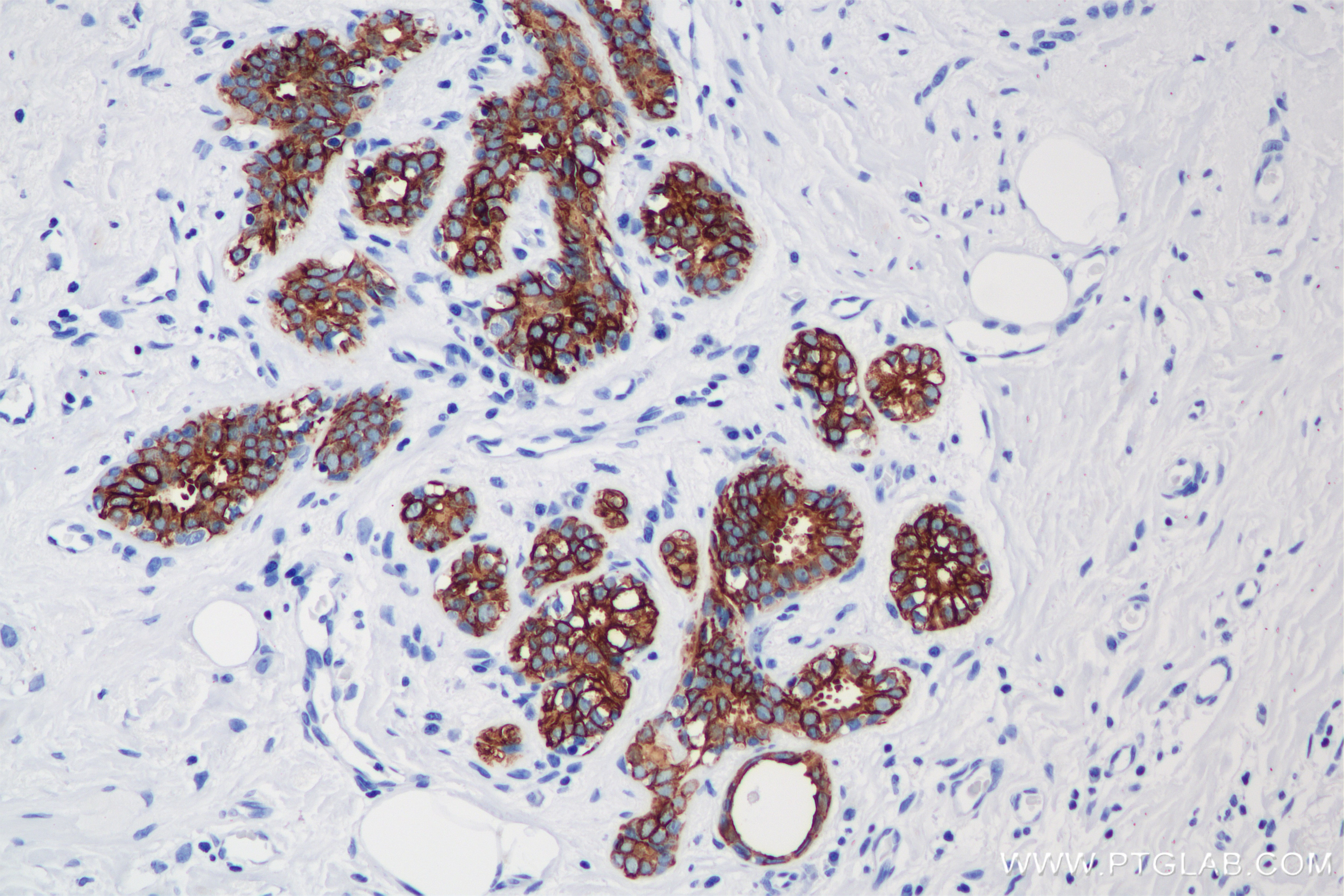
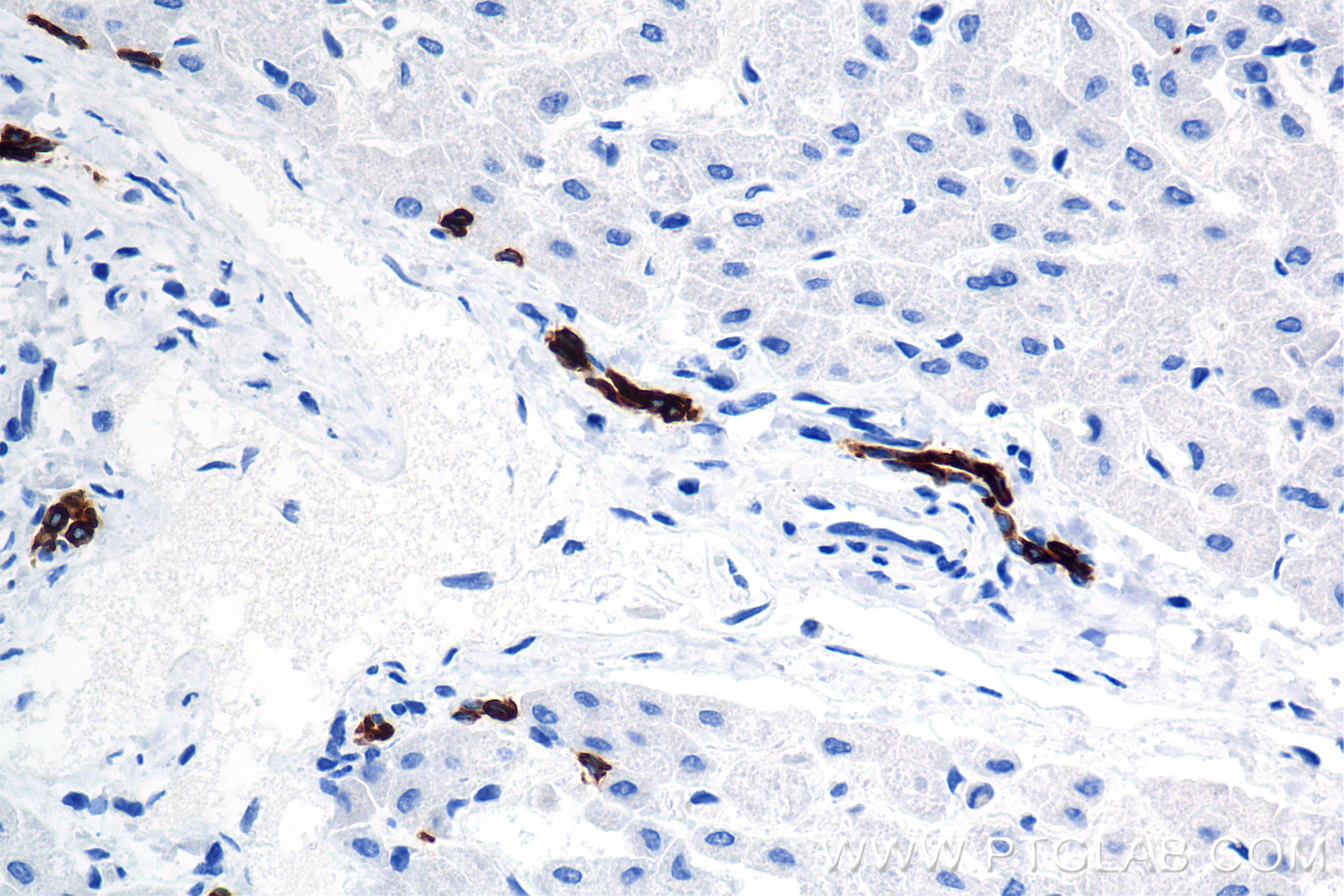
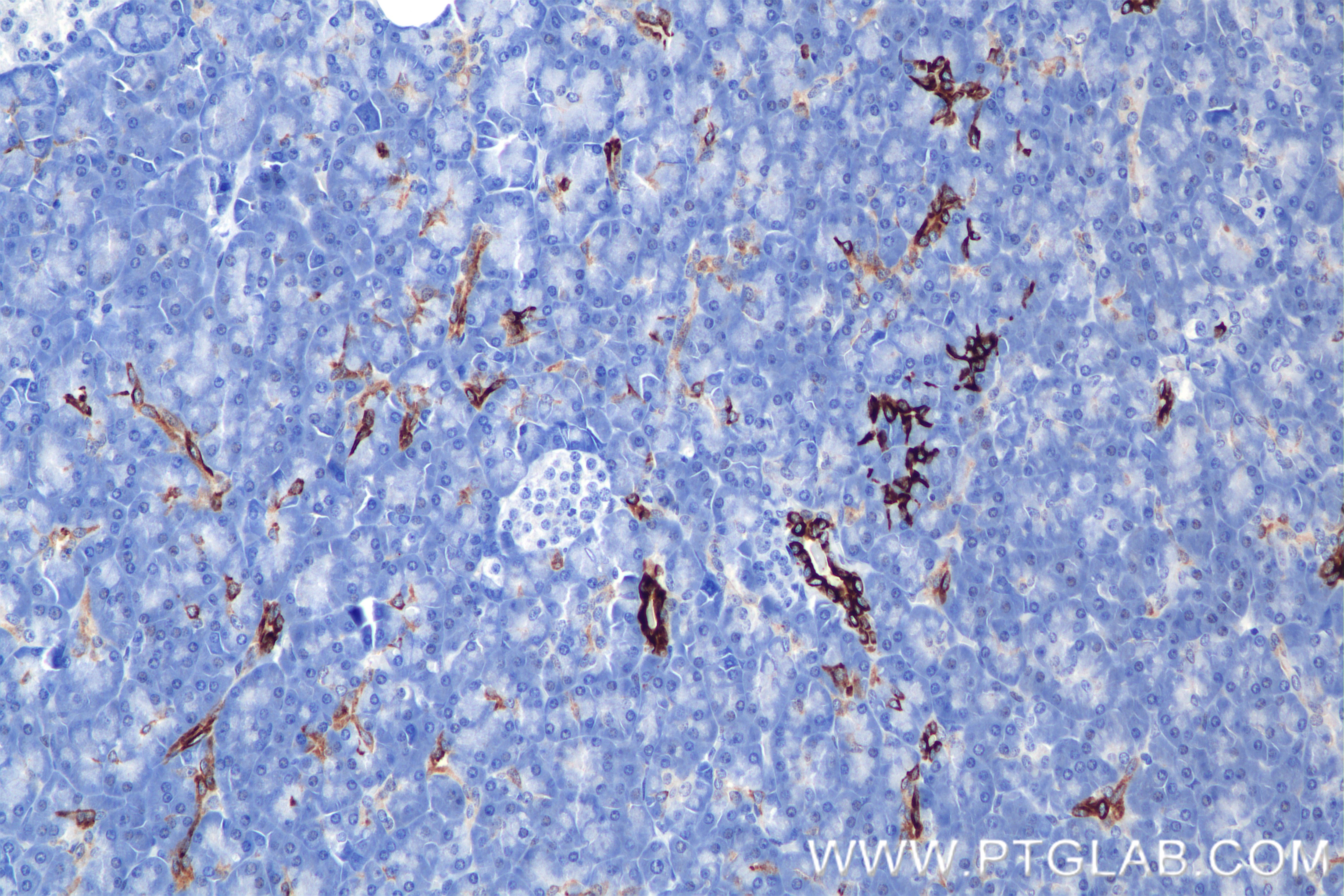
| Erfolgreiche Detektion in IHC | humanes Mammakarzinomgewebe, humanes Appendizitis-Gewebe, humanes Lebergewebe, humanes Pankreasgewebe Hinweis: Antigendemaskierung mit TE-Puffer pH 9,0 empfohlen. (*) Wahlweise kann die Antigendemaskierung auch mit Citratpuffer pH 6,0 erfolgen. |
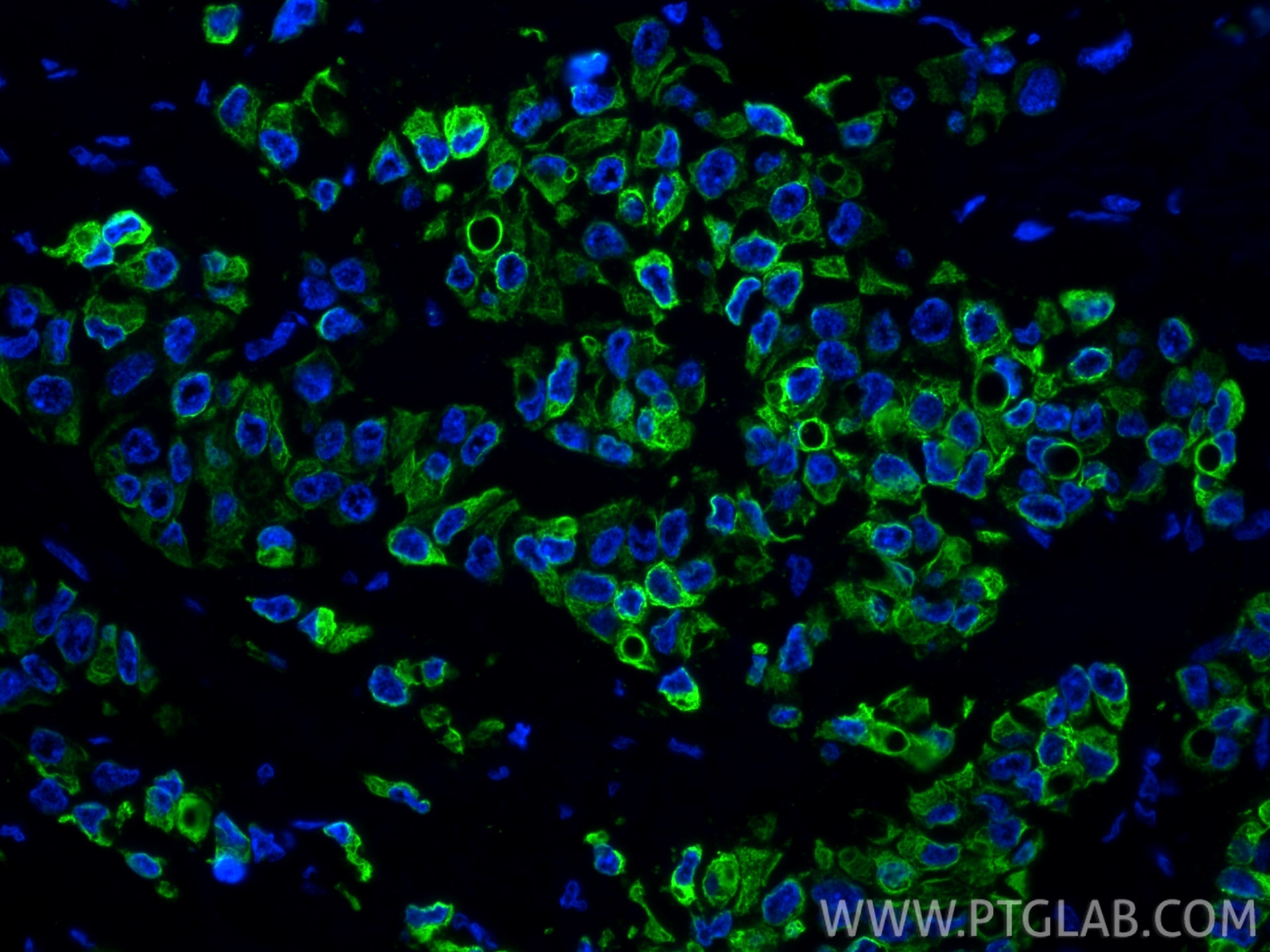
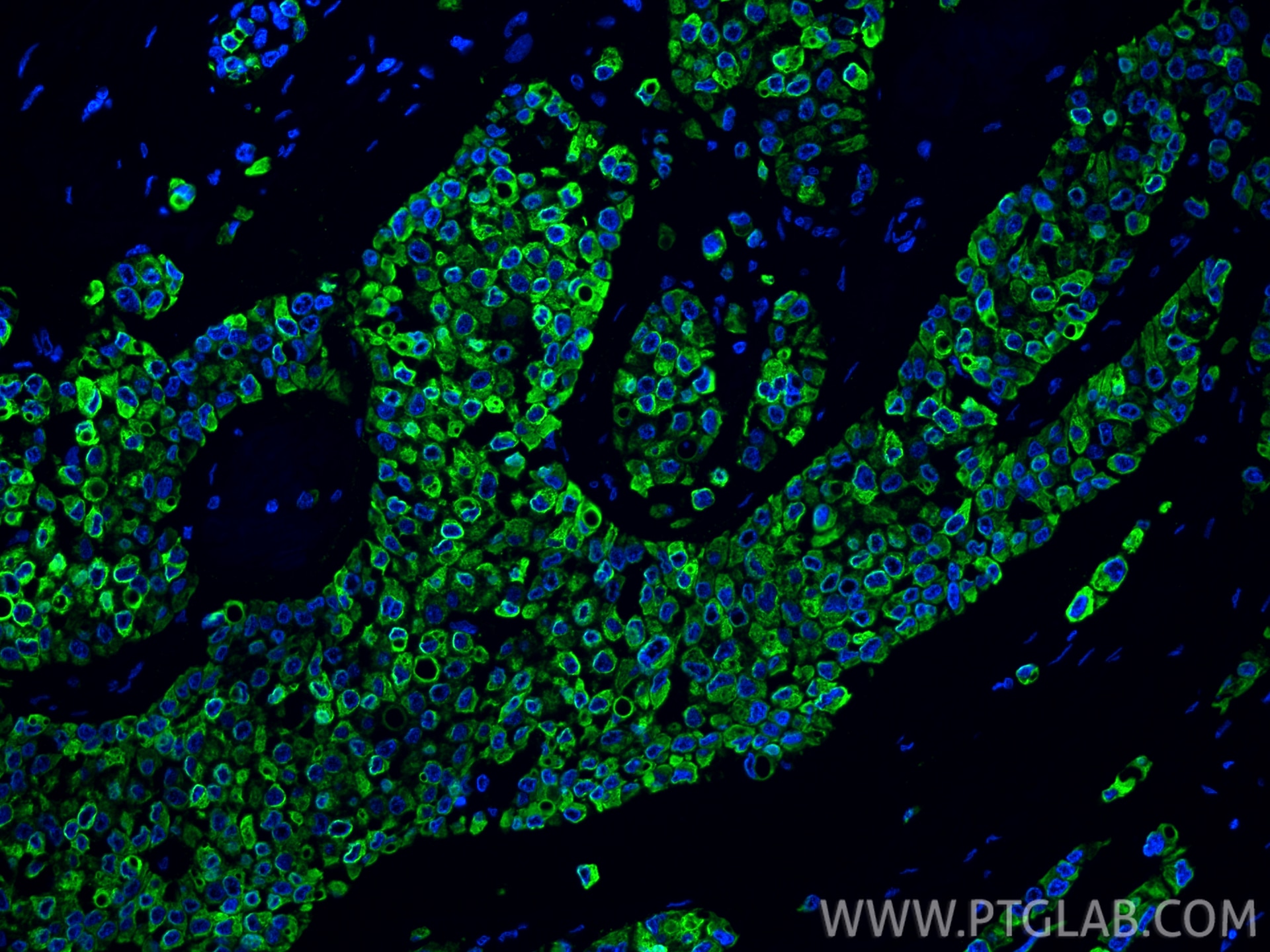
| Erfolgreiche Detektion in IF-P | humanes Mammakarzinomgewebe |
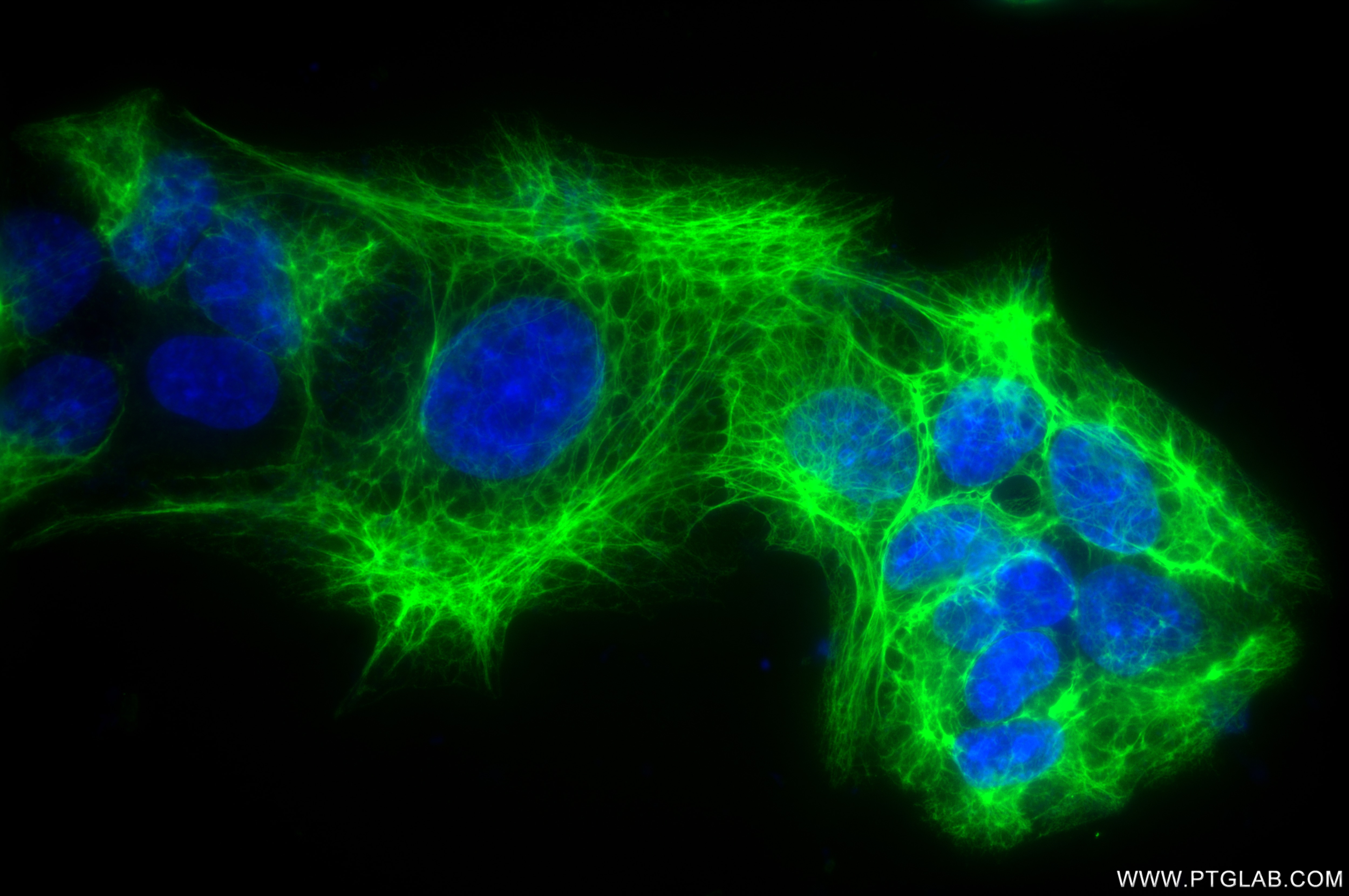
| Erfolgreiche Detektion in IF/ICC | HepG2-Zellen |
Empfohlene Verdünnung
| Anwendung | Verdünnung |
|---|---|
| Western Blot (WB) | WB : 1:5000-1:50000 |
| Immunhistochemie (IHC) | IHC : 1:1000-1:4000 |
| Immunfluoreszenz (IF)-P | IF-P : 1:50-1:500 |
| Immunfluoreszenz (IF)/ICC | IF/ICC : 1:1000-1:4000 |
| It is recommended that this reagent should be titrated in each testing system to obtain optimal results. | |
| Sample-dependent, check data in validation data gallery | |
Produktinformation
86153-7-RR bindet in WB, IHC, IF/ICC, IF-P, ELISA Cytokeratin 7 und zeigt Reaktivität mit human
| Getestete Reaktivität | human |
| Wirt / Isotyp | Kaninchen / IgG |
| Klonalität | Rekombinant |
| Typ | Antikörper |
| Immunogen | Peptid |
| Vollständiger Name | keratin 7 |
| Berechnetes Molekulargewicht | 51 kDa |
| Beobachtetes Molekulargewicht | 51 kDa |
| GenBank-Zugangsnummer | NM_005556 |
| Gene symbol | Cytokeratin 7 |
| Gene ID (NCBI) | 3855 |
| Konjugation | Unkonjugiert |
| Form | Liquid |
| Reinigungsmethode | Protein-A-Reinigung |
| Lagerungspuffer | PBS with 0.02% sodium azide and 50% glycerol |
| Lagerungsbedingungen | Bei -20°C lagern. Nach dem Versand ein Jahr lang stabil Aliquotieren ist bei -20oC Lagerung nicht notwendig. 20ul Größen enthalten 0,1% BSA. |
Hintergrundinformationen
Cytokeratin 7 (CK7) is a type II keratin protein that is a principal constituent of the intermediate filament cytoskeleton. It is primarily expressed in simple epithelia lining the cavities of internal organs, glandular ducts, and blood vessels. Abnormal expression of CK7 has been linked to various pathological conditions, including cancer. Overexpression of CK7 promotes tumor progression and metastasis in different human cancers, and its suppression leads to rapid tumor regression, highlighting its potential as a therapeutic target CK7 is also involved in inhibiting interferon-dependent interphase, promoting DNA synthesis, initiating translation possibly through interaction with p150 (the largest subunit of eukaryotic translation initiation factor 3), and interacting with G protein-coupled estrogen receptor 1 (GPER1), which activates several signaling pathways. In the context of cancer diagnosis, CK7 is used as a marker to distinguish between different types of carcinomas. It is expressed in most adenocarcinomas, particularly those of the lung and colorectal origin, and is useful in differentiating primary ovarian carcinoma from metastatic colorectal carcinoma. CK7 expression has also been studied as a predictor of an unfavorable prognosis in colorectal carcinoma.
Protokolle
| PRODUKTSPEZIFISCHE PROTOKOLLE | |
|---|---|
| WB protocol for Cytokeratin 7 antibody 86153-7-RR | Protokoll herunterladen |
| IHC protocol for Cytokeratin 7 antibody 86153-7-RR | Protokoll herunterladenl |
| IF protocol for Cytokeratin 7 antibody 86153-7-RR | Protokoll herunterladen |
| STANDARD-PROTOKOLLE | |
|---|---|
| Klicken Sie hier, um unsere Standardprotokolle anzuzeigen |

