DTYMK Rekombinanter Antikörper
DTYMK Rekombinant Antikörper für WB, ELISA
Wirt / Isotyp
Kaninchen / IgG
Getestete Reaktivität
human, Ratte
Anwendung
WB, ELISA
Konjugation
Unkonjugiert
CloneNo.
251441C1
Kat-Nr. : 86543-3-RR
Synonyme
Filter:
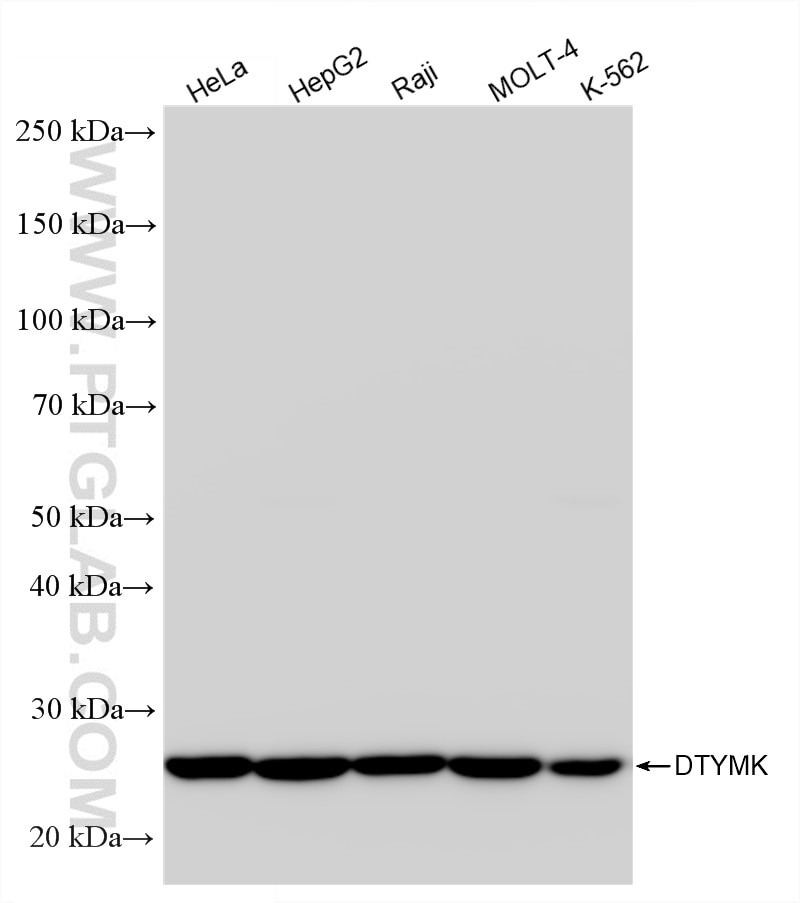
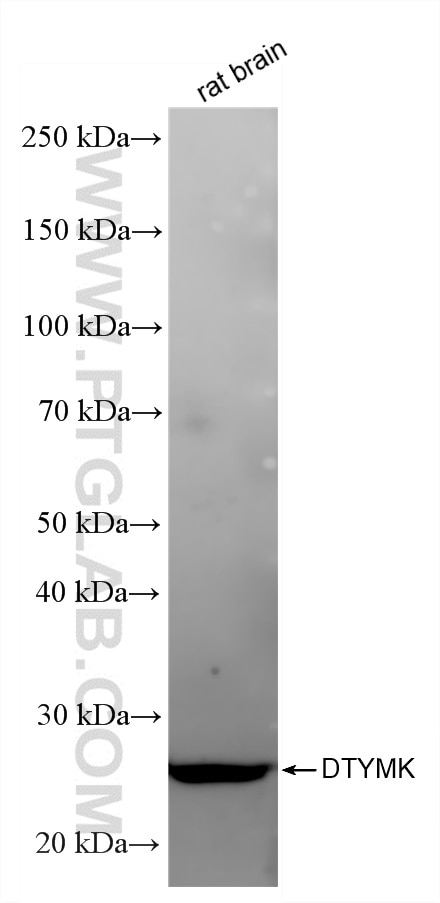
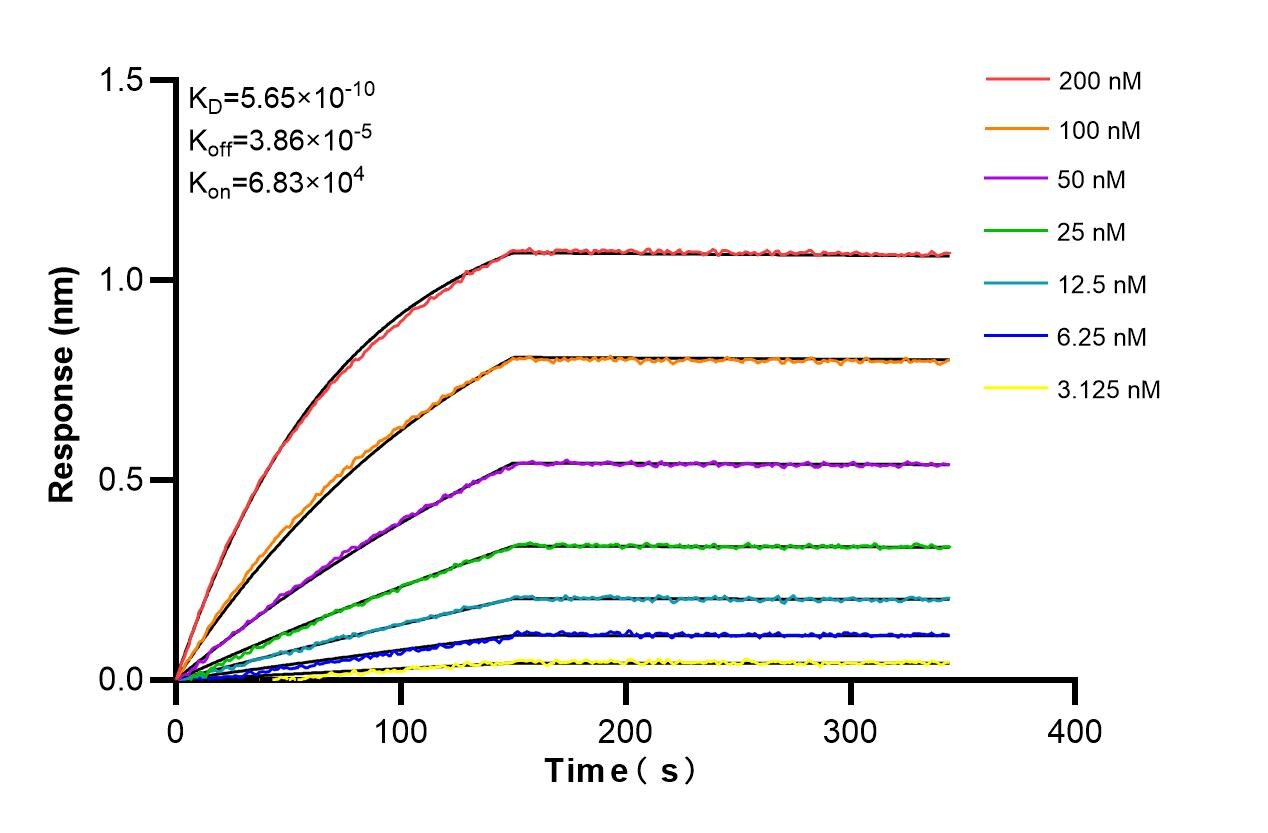
Geprüfte Anwendungen
| Erfolgreiche Detektion in WB | HeLa-Zellen, HepG2-Zellen, K-562-Zellen, MOLT-4-Zellen, Raji-Zellen, Rattenhirngewebe |
Empfohlene Verdünnung
| Anwendung | Verdünnung |
|---|---|
| Western Blot (WB) | WB : 1:5000-1:50000 |
| It is recommended that this reagent should be titrated in each testing system to obtain optimal results. | |
| Sample-dependent, check data in validation data gallery | |
Produktinformation
86543-3-RR bindet in WB, ELISA DTYMK und zeigt Reaktivität mit human, Ratten
| Getestete Reaktivität | human, Ratte |
| Wirt / Isotyp | Kaninchen / IgG |
| Klonalität | Rekombinant |
| Typ | Antikörper |
| Immunogen | DTYMK fusion protein Ag7606 |
| Vollständiger Name | deoxythymidylate kinase (thymidylate kinase) |
| Berechnetes Molekulargewicht | 24 kDa |
| Beobachtetes Molekulargewicht | 24 kDa |
| GenBank-Zugangsnummer | BC001827 |
| Gene symbol | DTYMK |
| Gene ID (NCBI) | 1841 |
| Konjugation | Unkonjugiert |
| Form | Liquid |
| Reinigungsmethode | Protein-A-Reinigung |
| Lagerungspuffer | PBS with 0.02% sodium azide and 50% glycerol |
| Lagerungsbedingungen | Bei -20°C lagern. Nach dem Versand ein Jahr lang stabil Aliquotieren ist bei -20oC Lagerung nicht notwendig. 20ul Größen enthalten 0,1% BSA. |
Hintergrundinformationen
DTYMK(Thymidylate kinase) is also named as CDC8,TMPK and TYMK.It catalyzes the phosphorylation of dTMP to form dTDP in the dTTP synthesis pathway for DNA synthesis.This enzyme is important in cellular DNA synthesis because the synthesis of dTTP either via the de novo pathway or through the exogenous supply of thymidine requires the activity of this enzyme(PMID:18469).
Protokolle
| PRODUKTSPEZIFISCHE PROTOKOLLE | |
|---|---|
| WB protocol for DTYMK antibody 86543-3-RR | Protokoll herunterladen |
| STANDARD-PROTOKOLLE | |
|---|---|
| Klicken Sie hier, um unsere Standardprotokolle anzuzeigen |


