EGFR Monoklonaler Antikörper
EGFR Monoklonal Antikörper für WB, IF/ICC, FC, ELISA, Blocking
Wirt / Isotyp
Maus / IgG1
Getestete Reaktivität
human
Anwendung
WB, IF/ICC, FC, ELISA, Blocking
Konjugation
Unkonjugiert
CloneNo.
2C8C12
Kat-Nr. : 68643-1-Ig
Synonyme
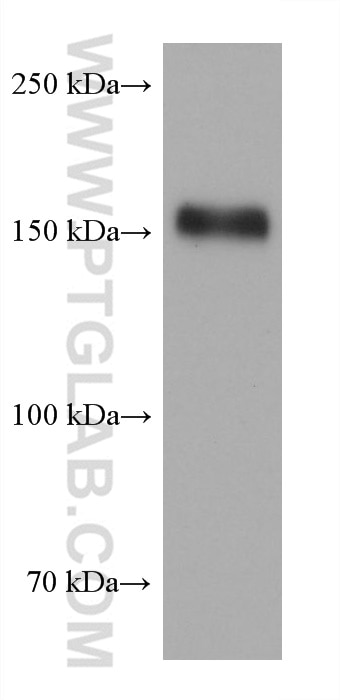
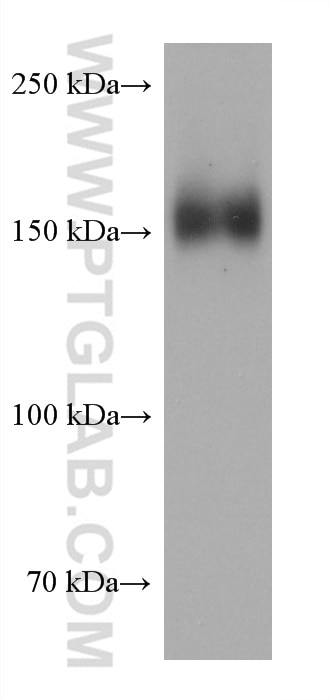
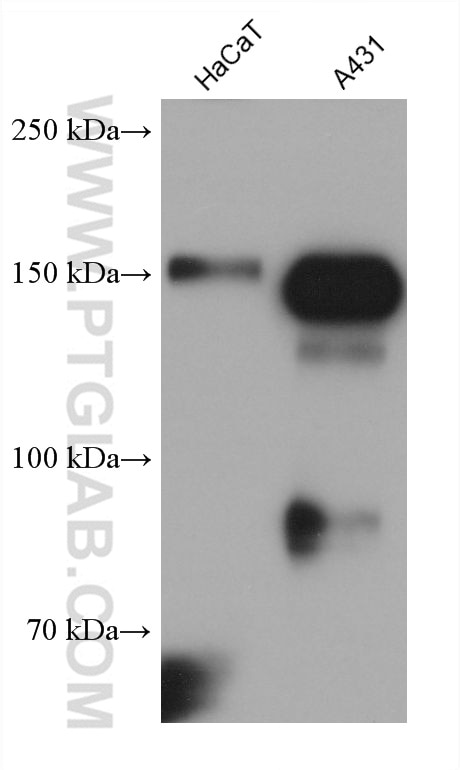
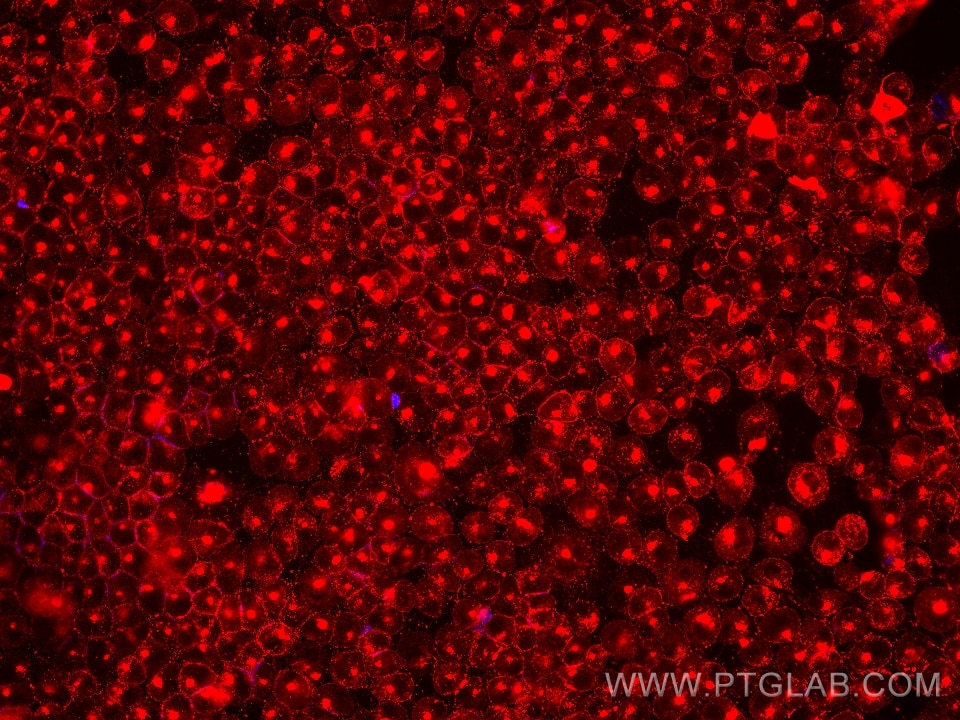
Geprüfte Anwendungen
| Erfolgreiche Detektion in WB | SCaBER cells, A431-Zellen, HaCaT-Zellen, MDA-MB-468-Zellen |
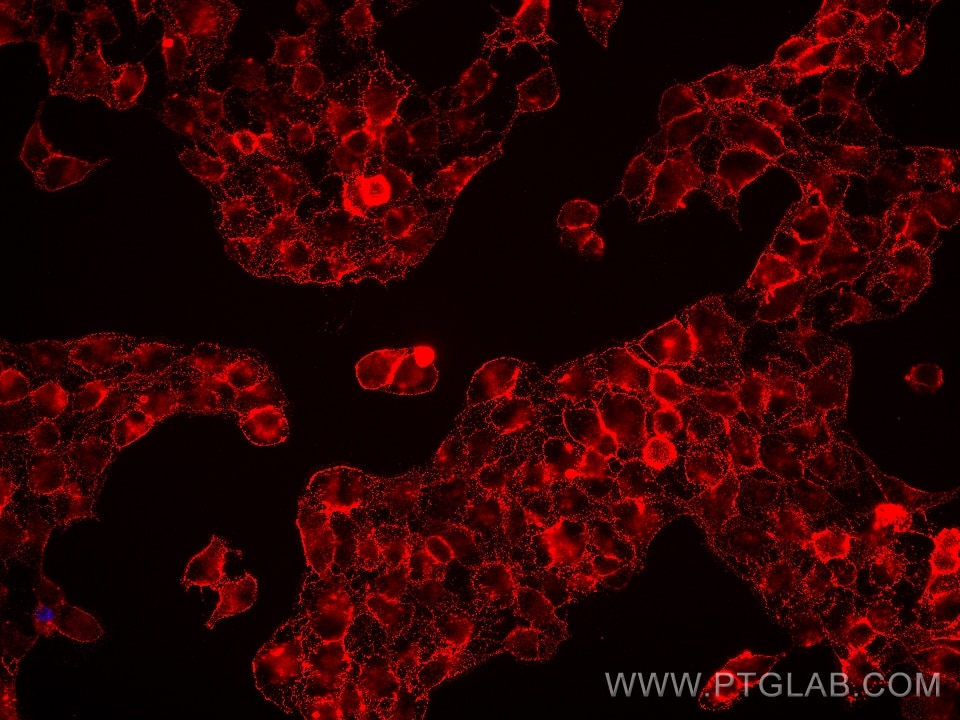
| Erfolgreiche Detektion in IF/ICC | HaCaT-Zellen, A431-Zellen |
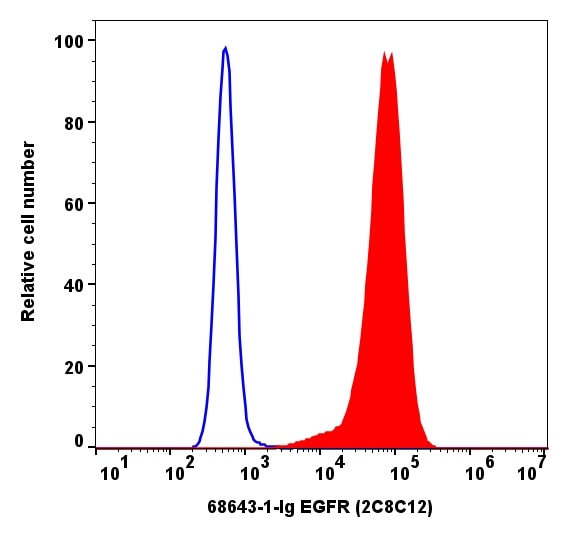
| Erfolgreiche Detektion in FC | A431-Zellen |
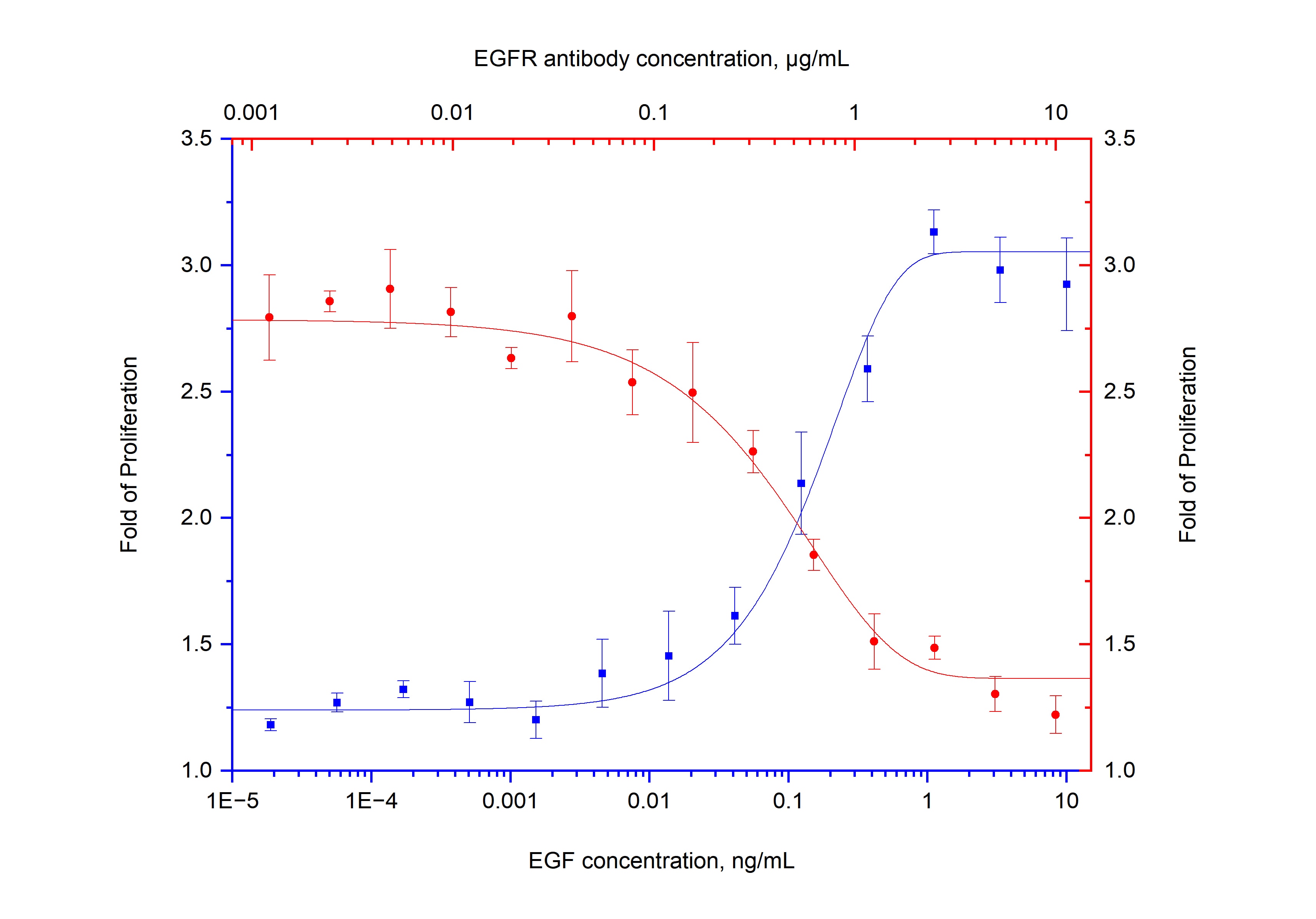
| Erfolgreiche Detektion in Blocking | HeLa-Zellen |
Empfohlene Verdünnung
| Anwendung | Verdünnung |
|---|---|
| Western Blot (WB) | WB : 1:5000-1:50000 |
| Immunfluoreszenz (IF)/ICC | IF/ICC : 1:500-1:2000 |
| Durchflusszytometrie (FC) | FC : 0.20 ug per 10^6 cells in a 100 µl suspension |
| BLOCKING | BLOCKING : 1:10-1:100 |
| It is recommended that this reagent should be titrated in each testing system to obtain optimal results. | |
| Sample-dependent, check data in validation data gallery | |
Produktinformation
68643-1-Ig bindet in WB, IF/ICC, FC, ELISA, Blocking EGFR und zeigt Reaktivität mit human
| Getestete Reaktivität | human |
| Wirt / Isotyp | Maus / IgG1 |
| Klonalität | Monoklonal |
| Typ | Antikörper |
| Immunogen | EGFR fusion protein Ag24947 |
| Vollständiger Name | epidermal growth factor receptor (erythroblastic leukemia viral (v-erb-b) oncogene homolog, avian) |
| Berechnetes Molekulargewicht | 134kd |
| Beobachtetes Molekulargewicht | 160 kDa |
| GenBank-Zugangsnummer | NM_005228.5 |
| Gene symbol | EGFR |
| Gene ID (NCBI) | 1956 |
| Konjugation | Unkonjugiert |
| Form | Liquid |
| Reinigungsmethode | Protein-G-Reinigung |
| Lagerungspuffer | PBS with 0.02% sodium azide and 50% glycerol |
| Lagerungsbedingungen | Bei -20°C lagern. Nach dem Versand ein Jahr lang stabil Aliquotieren ist bei -20oC Lagerung nicht notwendig. 20ul Größen enthalten 0,1% BSA. |
Hintergrundinformationen
EGFR, also named ERBB1, is a cell-surface receptor for members of the epidermal growth factor family (EGF-family) of extracellular protein ligands. Binding of the protein to a ligand induces receptor dimerization and tyrosine autophosphorylation and leads to cell proliferation. The gene resides on chromosome 7p12, encoding a 170 kDa membrane-associated glycoprotein. Recent studies have shown EGFR plays a critical role in cancer development and progression, including cell proliferation, apoptosis, angiogenesis, and metastatic spread. Mutations in this gene are associated with lung cancer. When stained with live cells, EGFR can be transported into the cell interior, which is consistent with the literature report (PMID: 18084617).
Protokolle
| PRODUKTSPEZIFISCHE PROTOKOLLE | |
|---|---|
| WB protocol for EGFR antibody 68643-1-Ig | Protokoll herunterladen |
| IF protocol for EGFR antibody 68643-1-Ig | Protokoll herunterladen |
| FC protocol for EGFR antibody 68643-1-Ig | Download protocol |
| STANDARD-PROTOKOLLE | |
|---|---|
| Klicken Sie hier, um unsere Standardprotokolle anzuzeigen |

