EPCAM/CD326 Rekombinanter Antikörper
EPCAM/CD326 Rekombinant Antikörper für FC
Wirt / Isotyp
Kaninchen / IgG
Getestete Reaktivität
human
Anwendung
FC
Konjugation
Unkonjugiert
CloneNo.
250626C6
Kat-Nr. : 98303-5-RR
Synonyme
Geprüfte Anwendungen
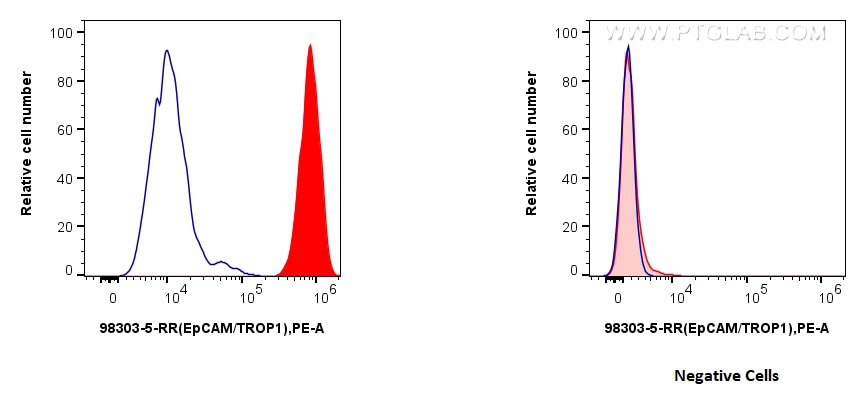
| Erfolgreiche Detektion in FC | HT-29-Zellen |
Empfohlene Verdünnung
| Anwendung | Verdünnung |
|---|---|
| This reagent has been tested for flow cytometric analysis. It is recommended that this reagent should be titrated in each testing system to obtain optimal results. | |
| Sample-dependent, check data in validation data gallery | |
Produktinformation
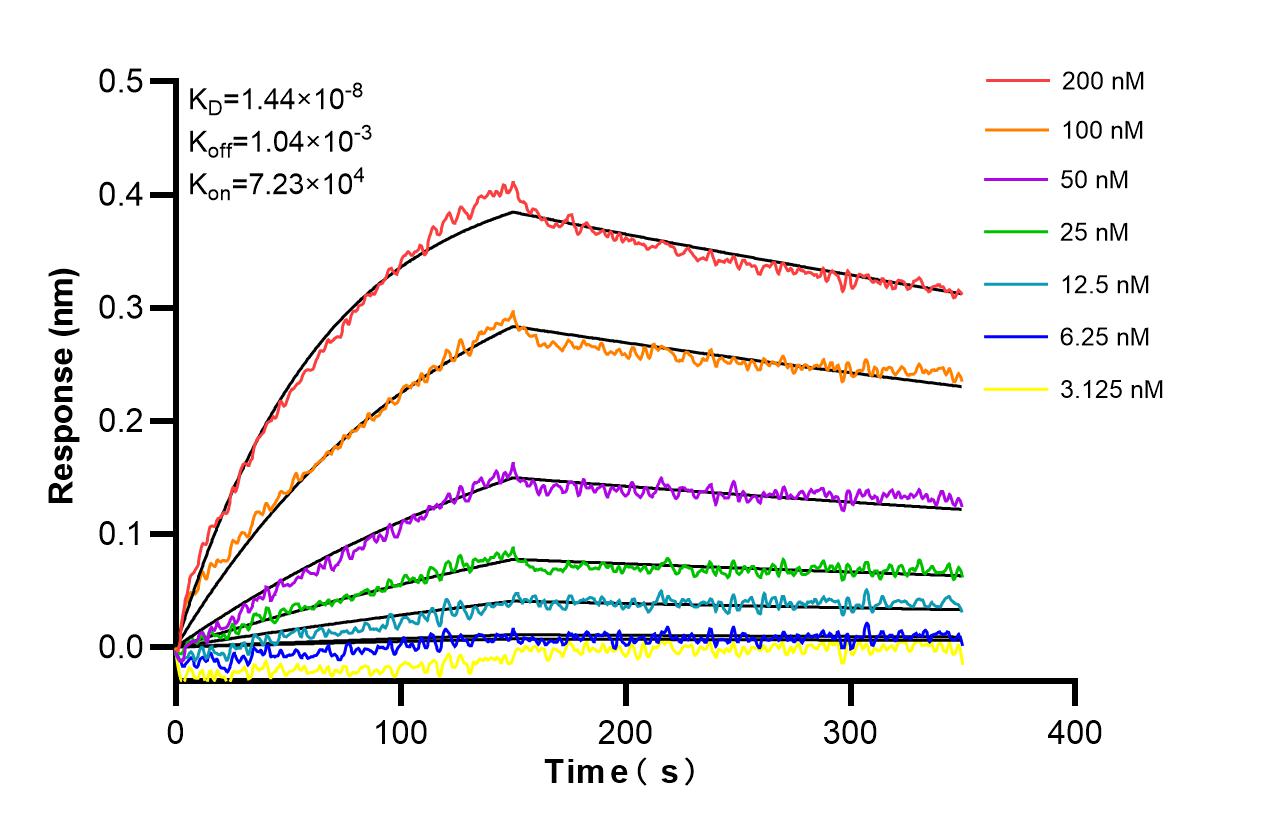
98303-5-RR bindet in FC EPCAM/CD326 und zeigt Reaktivität mit human
| Getestete Reaktivität | human |
| Wirt / Isotyp | Kaninchen / IgG |
| Klonalität | Rekombinant |
| Typ | Antikörper |
| Immunogen | EPCAM/CD326 fusion protein Eg1370 |
| Vollständiger Name | epithelial cell adhesion molecule |
| Berechnetes Molekulargewicht | 35 kDa |
| GenBank-Zugangsnummer | NM_002354.3 |
| Gene symbol | EPCAM |
| Gene ID (NCBI) | 4072 |
| Konjugation | Unkonjugiert |
| Form | Liquid |
| Reinigungsmethode | Protein-A-Reinigung |
| Lagerungspuffer | PBS with 0.09% sodium azide |
| Lagerungsbedingungen | Store at 2 - 8°C. Stable for one year after shipment. |
Hintergrundinformationen
Epithelial cell adhesion molecule (EpCAM, CD326) is a type I transmembrane glycoprotein that functions as a homophilic, epithelial-specific intercellular cell-adhesion molecule. In addition to cell adhesion, EpCAM is also involved in cellular signaling, cell migration, proliferation, and differentiation. EpCAM is highly expressed on most carcinomas and therefore of potential use as a diagnostic and prognostic marker for a variety of carcinomas, and has become a therapeutic target. EpCAM may occur in distinct forms due to glycosylation. (PMID: 20837599; 19249674; 21576002; 22647938; 12691820)
Protokolle
| PRODUKTSPEZIFISCHE PROTOKOLLE | |
|---|---|
| FC protocol for EPCAM/CD326 antibody 98303-5-RR | Download protocol |
| STANDARD-PROTOKOLLE | |
|---|---|
| Klicken Sie hier, um unsere Standardprotokolle anzuzeigen |


