FADS2 Monoklonaler Antikörper
FADS2 Monoklonal Antikörper für WB, IHC, IF/ICC, ELISA
Wirt / Isotyp
Maus / IgG2b
Getestete Reaktivität
human, Maus, Ratte
Anwendung
WB, IHC, IF/ICC, ELISA
Konjugation
Unkonjugiert
CloneNo.
1G4B10
Kat-Nr. : 68026-1-Ig
Synonyme
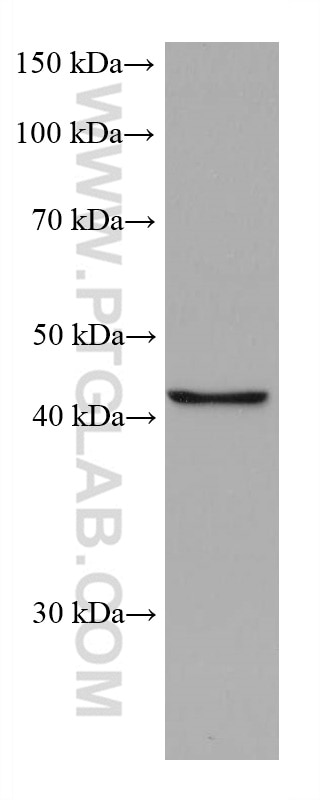
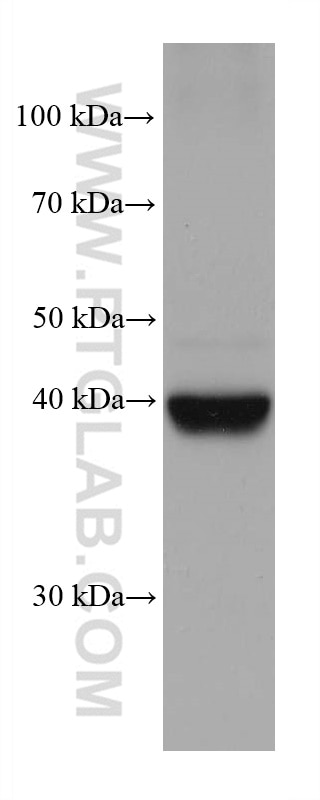
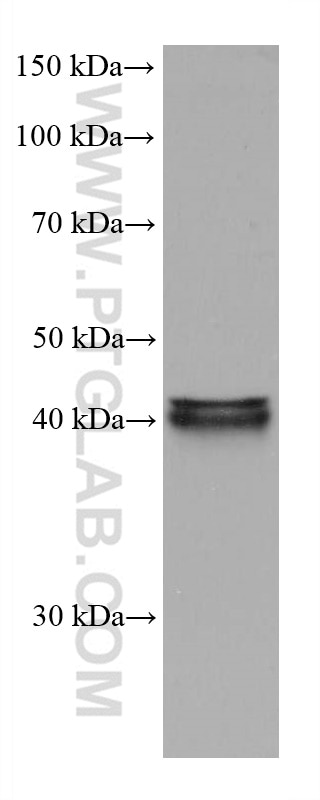
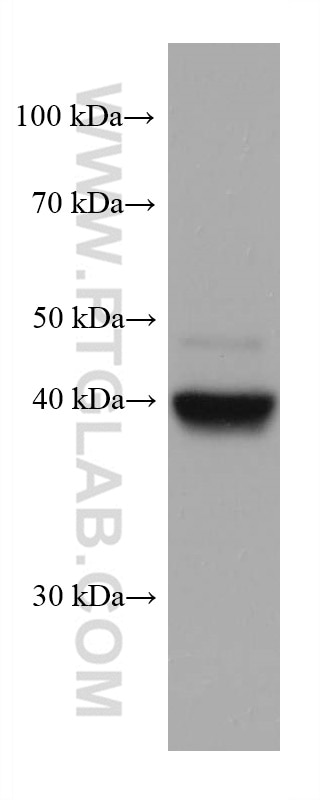
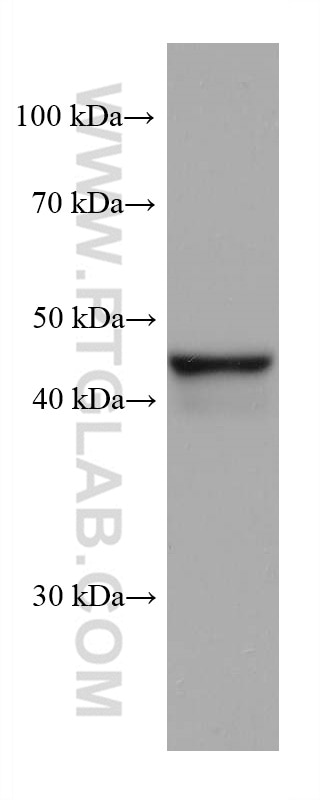
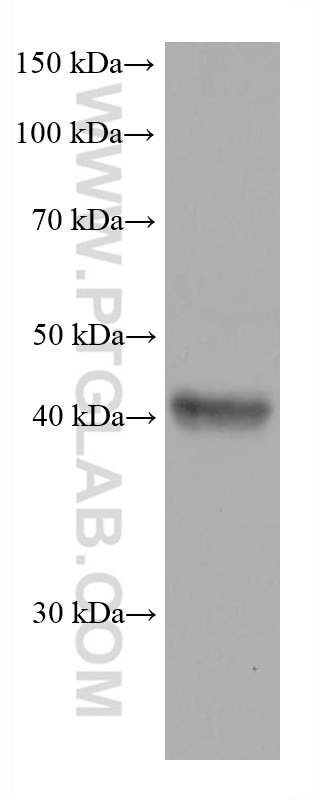
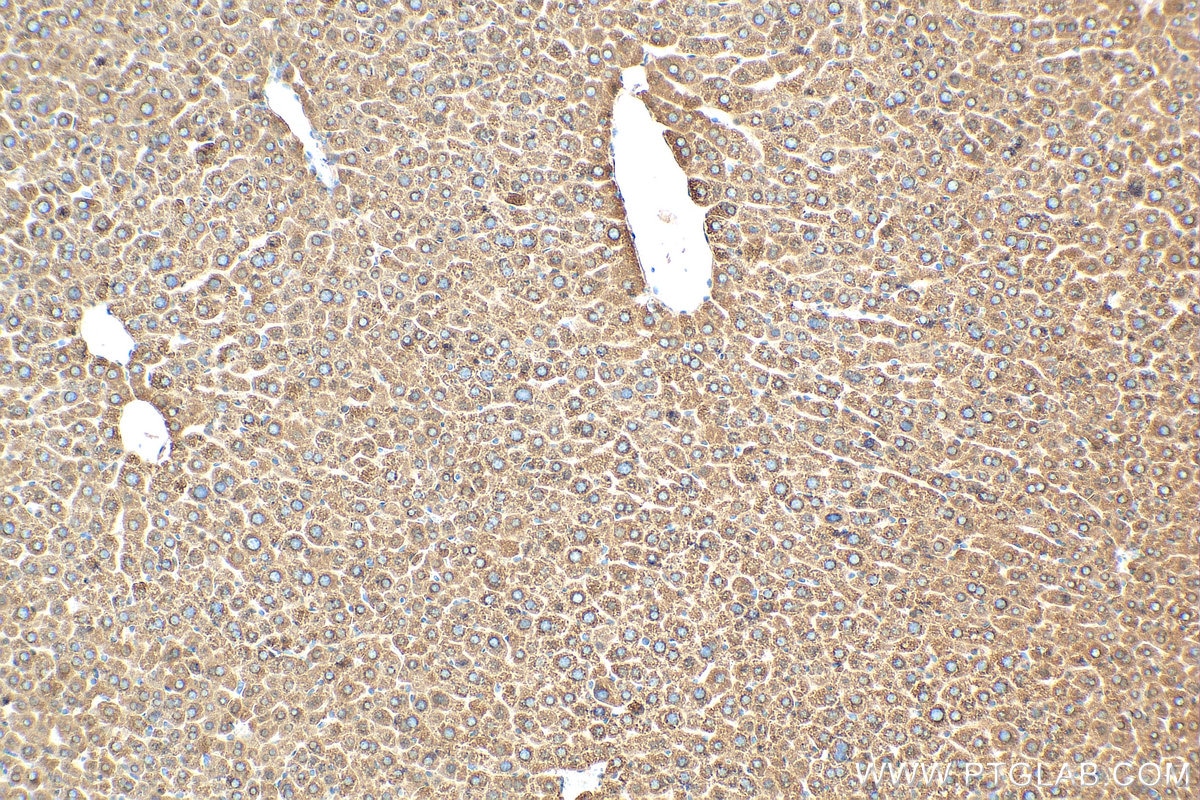
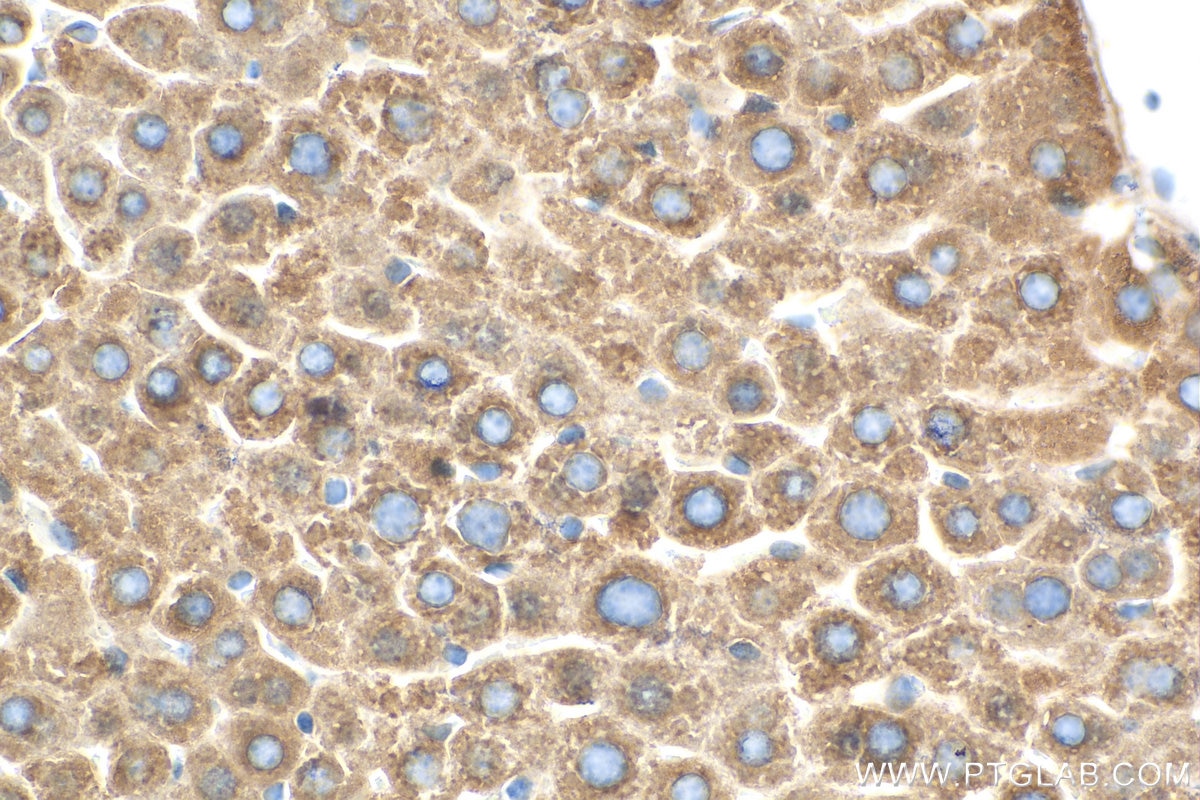
Geprüfte Anwendungen
| Erfolgreiche Detektion in WB | PC-3-Zellen, A549-Zellen, Jurkat-Zellen, LNCaP-Zellen, Rattenlebergewebe, U2OS-Zellen |
| Erfolgreiche Detektion in IHC | Mauslebergewebe Hinweis: Antigendemaskierung mit TE-Puffer pH 9,0 empfohlen. (*) Wahlweise kann die Antigendemaskierung auch mit Citratpuffer pH 6,0 erfolgen. |
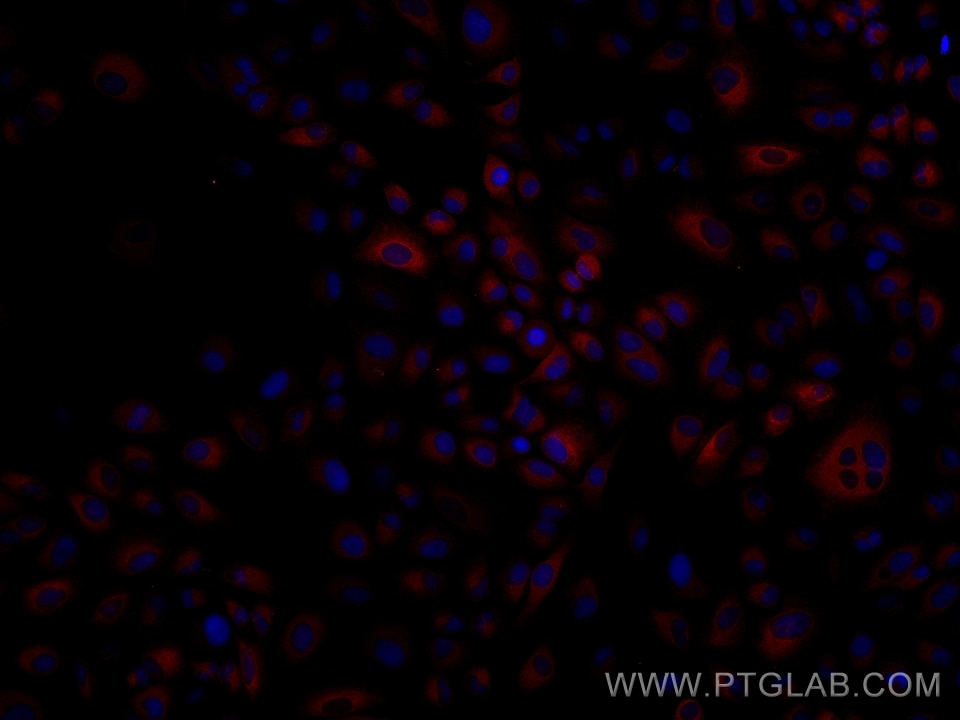
| Erfolgreiche Detektion in IF/ICC | A549-Zellen |
Empfohlene Verdünnung
| Anwendung | Verdünnung |
|---|---|
| Western Blot (WB) | WB : 1:5000-1:50000 |
| Immunhistochemie (IHC) | IHC : 1:1000-1:4000 |
| Immunfluoreszenz (IF)/ICC | IF/ICC : 1:500-1:2000 |
| It is recommended that this reagent should be titrated in each testing system to obtain optimal results. | |
| Sample-dependent, check data in validation data gallery | |
Veröffentlichte Anwendungen
| KD/KO | See 1 publications below |
| WB | See 6 publications below |
| IHC | See 1 publications below |
Produktinformation
68026-1-Ig bindet in WB, IHC, IF/ICC, ELISA FADS2 und zeigt Reaktivität mit human, Maus, Ratten
| Getestete Reaktivität | human, Maus, Ratte |
| In Publikationen genannte Reaktivität | human, Maus, Ratte |
| Wirt / Isotyp | Maus / IgG2b |
| Klonalität | Monoklonal |
| Typ | Antikörper |
| Immunogen | FADS2 fusion protein Ag27715 |
| Vollständiger Name | fatty acid desaturase 2 |
| Berechnetes Molekulargewicht | 445 aa, 49 kDa |
| Beobachtetes Molekulargewicht | 42-45 kDa |
| GenBank-Zugangsnummer | BC009011 |
| Gene symbol | FADS2 |
| Gene ID (NCBI) | 9415 |
| Konjugation | Unkonjugiert |
| Form | Liquid |
| Reinigungsmethode | Protein-A-Reinigung |
| Lagerungspuffer | PBS with 0.02% sodium azide and 50% glycerol |
| Lagerungsbedingungen | Bei -20°C lagern. Nach dem Versand ein Jahr lang stabil Aliquotieren ist bei -20oC Lagerung nicht notwendig. 20ul Größen enthalten 0,1% BSA. |
Hintergrundinformationen
Fatty acid desaturase 2 (FADS2) is responsible for the first desaturation reaction in the synthesis of highly unsaturated fatty acids (HUFAs), such as arachidonic acid (20:4n-6) and eicosapentaenoic acid (20:5n-3), and is involved in Mead acid (20:3n-9) production during essential fatty acid deficiency (EFAD) (PMID: 29353041). This is important when temperatures changes and the membrane is under distress. It has 4 isoforms produced by alternative splicing.
Protokolle
| PRODUKTSPEZIFISCHE PROTOKOLLE | |
|---|---|
| WB protocol for FADS2 antibody 68026-1-Ig | Protokoll herunterladen |
| IHC protocol for FADS2 antibody 68026-1-Ig | Protokoll herunterladenl |
| IF protocol for FADS2 antibody 68026-1-Ig | Protokoll herunterladen |
| STANDARD-PROTOKOLLE | |
|---|---|
| Klicken Sie hier, um unsere Standardprotokolle anzuzeigen |
Publikationen
| Species | Application | Title |
|---|---|---|
Proteomics Proteomics coupled transcriptomics reveals lipopolysaccharide inhibiting peroxisome proliferator-activated receptors signalling pathway to reduce lipid droplets accumulation in mouse liver | ||
Sci Rep FADS2 confers SCD1 inhibition resistance to cancer cells by modulating the ER stress response
| ||
FASEB J Lysosomal membrane protein TMEM106B modulates hematopoietic stem and progenitor cell proliferation and differentiation by regulating LAMP2A stability | ||
Prostaglandins Leukot Essent Fatty Acids Fatty acid synthase global inducible knockout does not alter brain fatty acid concentrations but attenuates cholesterol synthesis in the adult mouse | ||
Lipids Exogenous oxidized phytosterol may modulate linoleic acid metabolism through upregulation of fatty acid desaturase in rats | ||
Mol Biol Rep FADS2 inhibits colorectal cancer cell proliferation by regulating ferroptosis through SLC7A11/GPX4 |

