- Featured Product
- KD/KO Validated
FAT10 Polyklonaler Antikörper
FAT10 Polyklonal Antikörper für WB, IHC, Indirect ELISA
Wirt / Isotyp
Kaninchen / IgG
Getestete Reaktivität
human
Anwendung
WB, IHC, Indirect ELISA
Konjugation
Unkonjugiert
Kat-Nr. : 13003-2-PBS
Synonyme
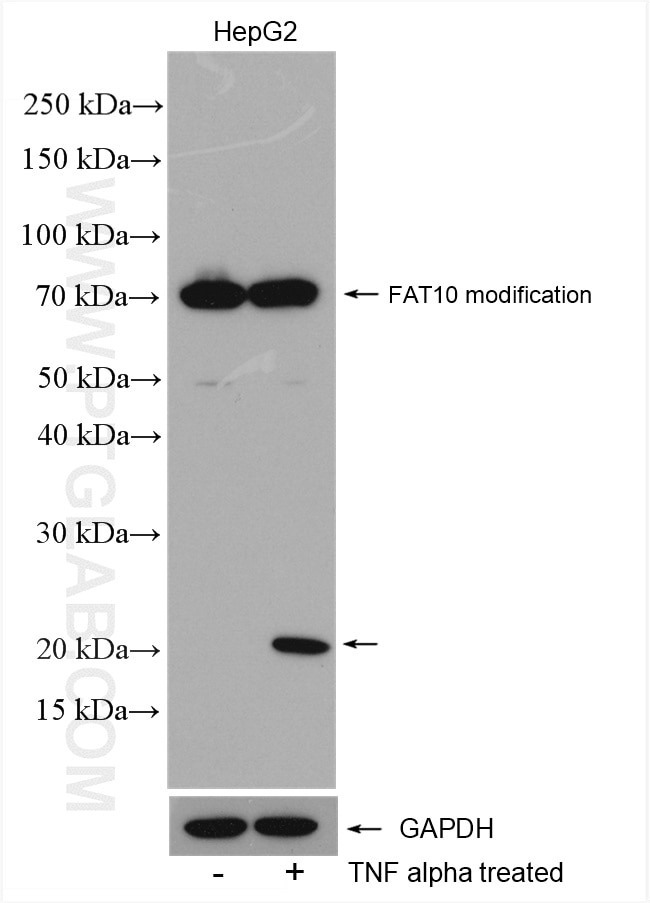
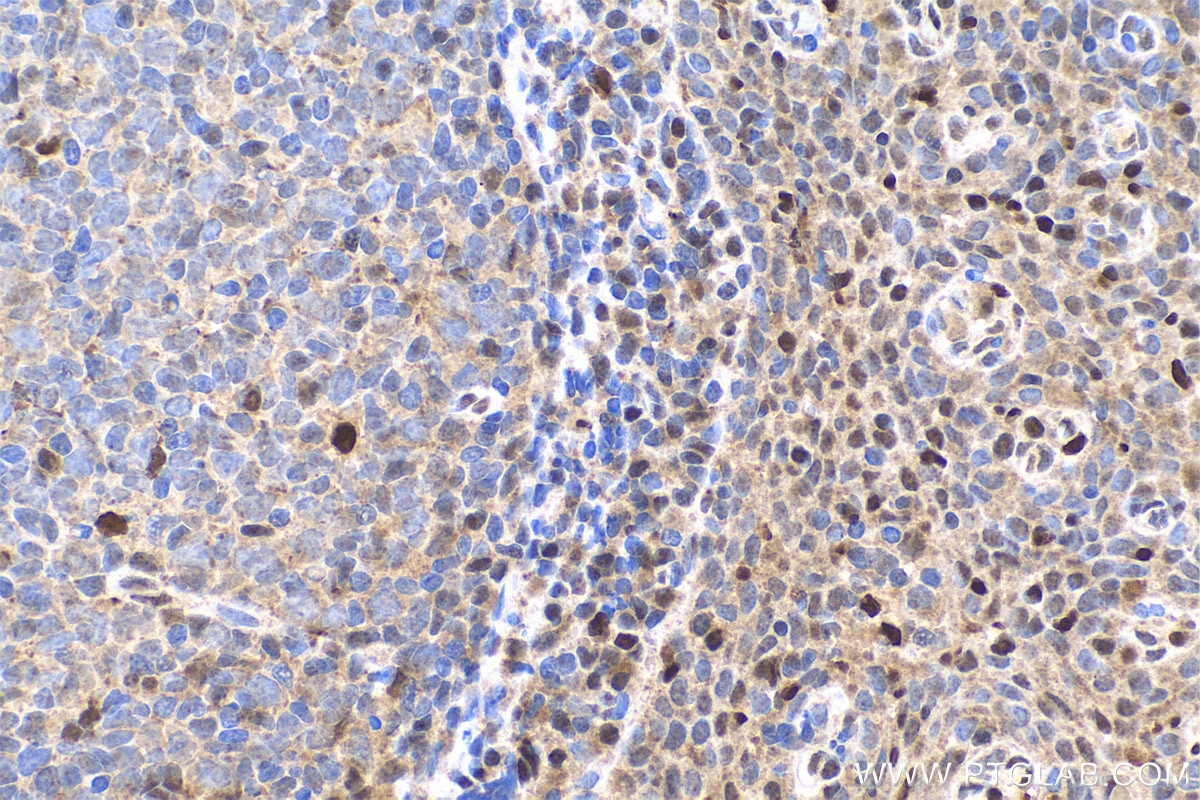
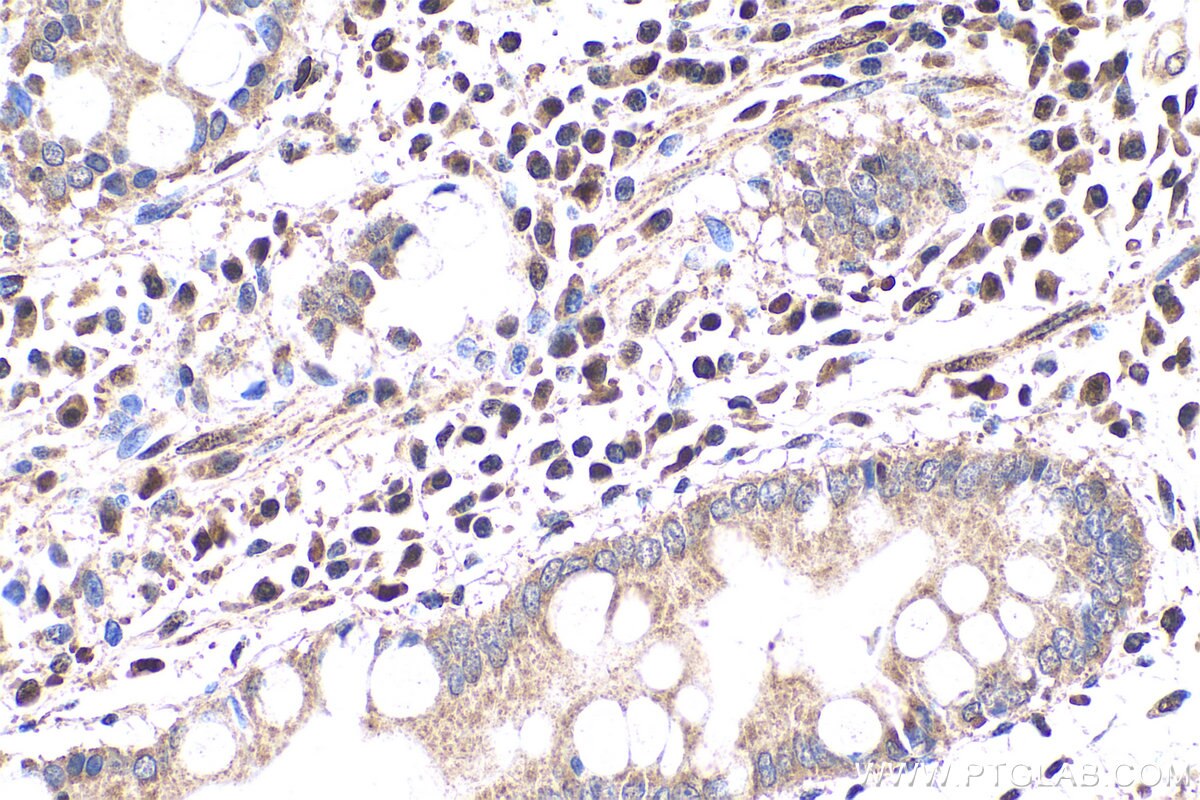
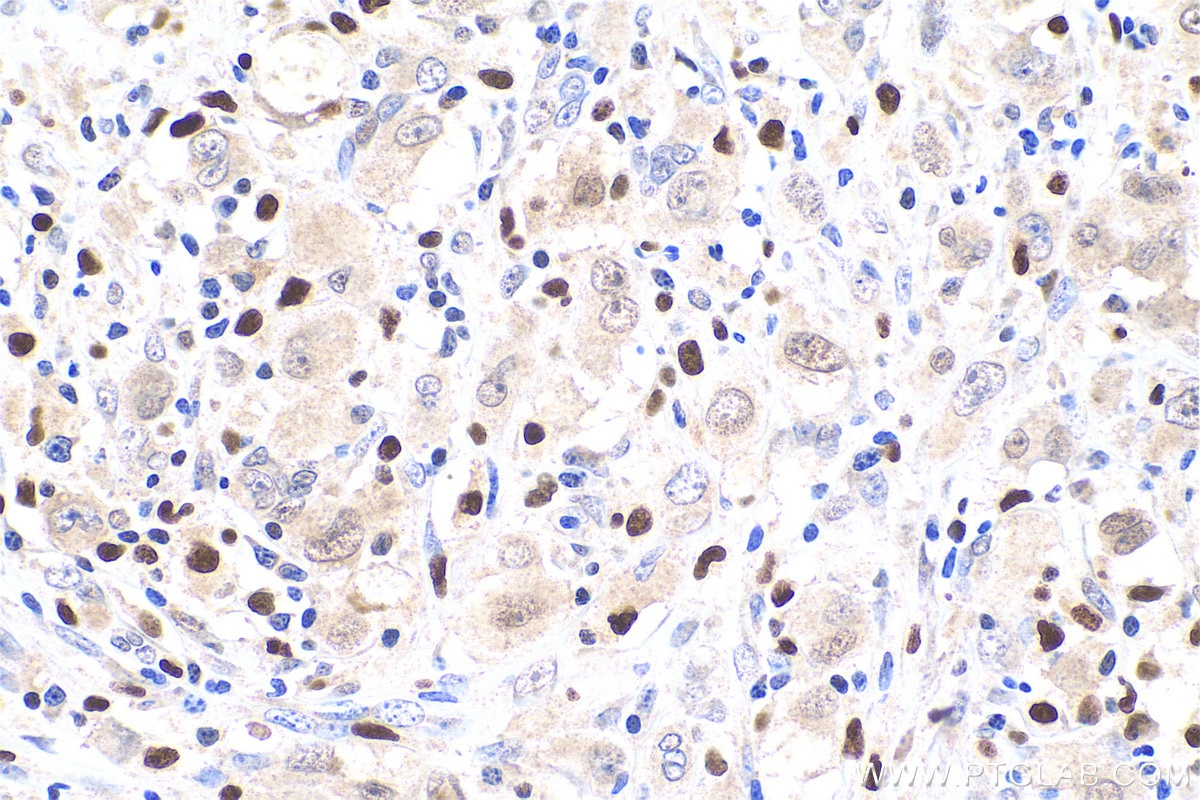
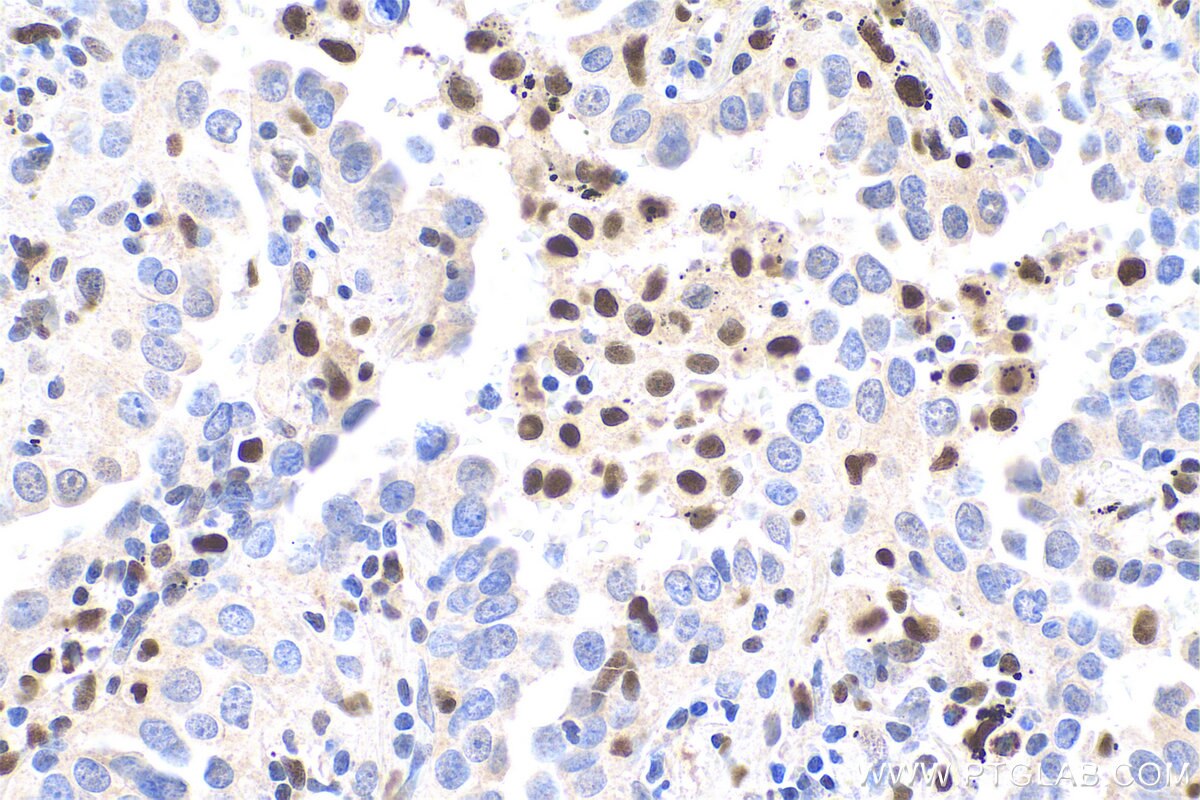
Geprüfte Anwendungen
Produktinformation
13003-2-PBS bindet in WB, IHC, Indirect ELISA FAT10 und zeigt Reaktivität mit human
| Getestete Reaktivität | human |
| Wirt / Isotyp | Kaninchen / IgG |
| Klonalität | Polyklonal |
| Typ | Antikörper |
| Immunogen | FAT10 fusion protein Ag3680 |
| Vollständiger Name | ubiquitin D |
| Berechnetes Molekulargewicht | 165 aa, 18 kDa |
| Beobachtetes Molekulargewicht | 20 kDa, 70kDa |
| GenBank-Zugangsnummer | BC012472 |
| Gene symbol | FAT10 |
| Gene ID (NCBI) | 10537 |
| Konjugation | Unkonjugiert |
| Form | Liquid |
| Reinigungsmethode | Antigen-Affinitätsreinigung |
| Lagerungspuffer | PBS only |
| Lagerungsbedingungen | Store at -80°C. 20ul Größen enthalten 0,1% BSA. |
Hintergrundinformationen
FAT10, also named UBD, contains two ubiquitin-like domains. It is a ubiquitin-like protein modifier that can be covalently attached to the target protein and subsequently leads to their degradation by the 26S proteasome, in a NUB1L-dependent manner. FAT10 also has important roles in cell mitosis, chromosome instability, apoptosis, and immune response. FAT10 mediates apoptosis in a caspase-dependent manner, especially in the renal epithelium and tubular cells during renal diseases such as polycystic kidney disease and Human immunodeficiency virus (HIV)-associated nephropathy (HIVAN). It promotes the expression of the proteasome subunit beta type-9 (PSMB9/LMP2). FAT10 regulates TNF-alpha-induced and LPS-mediated activation of the central mediator of innate immunity NF-kappa-B by promoting TNF-alpha-mediated proteasomal degradation of ubiquitinated-I-kappa-B-alpha. It may be involved in dendritic cell (DC) maturation, the process by which immature dendritic cells differentiate into fully competent antigen-presenting cells that initiate T-cell responses. FAT10 may be a marker for precancerous lesions and may promote cancer progression. This antibody is a rabbit polyclonal antibody raised against full-length FAT10 of human origin.


