FBXO21 Polyklonaler Antikörper
FBXO21 Polyklonal Antikörper für IF/ICC, IP, Indirect ELISA
Wirt / Isotyp
Kaninchen / IgG
Getestete Reaktivität
human, Ratte
Anwendung
IF/ICC, IP, Indirect ELISA
Konjugation
Unkonjugiert
Kat-Nr. : 17648-1-PBS
Synonyme
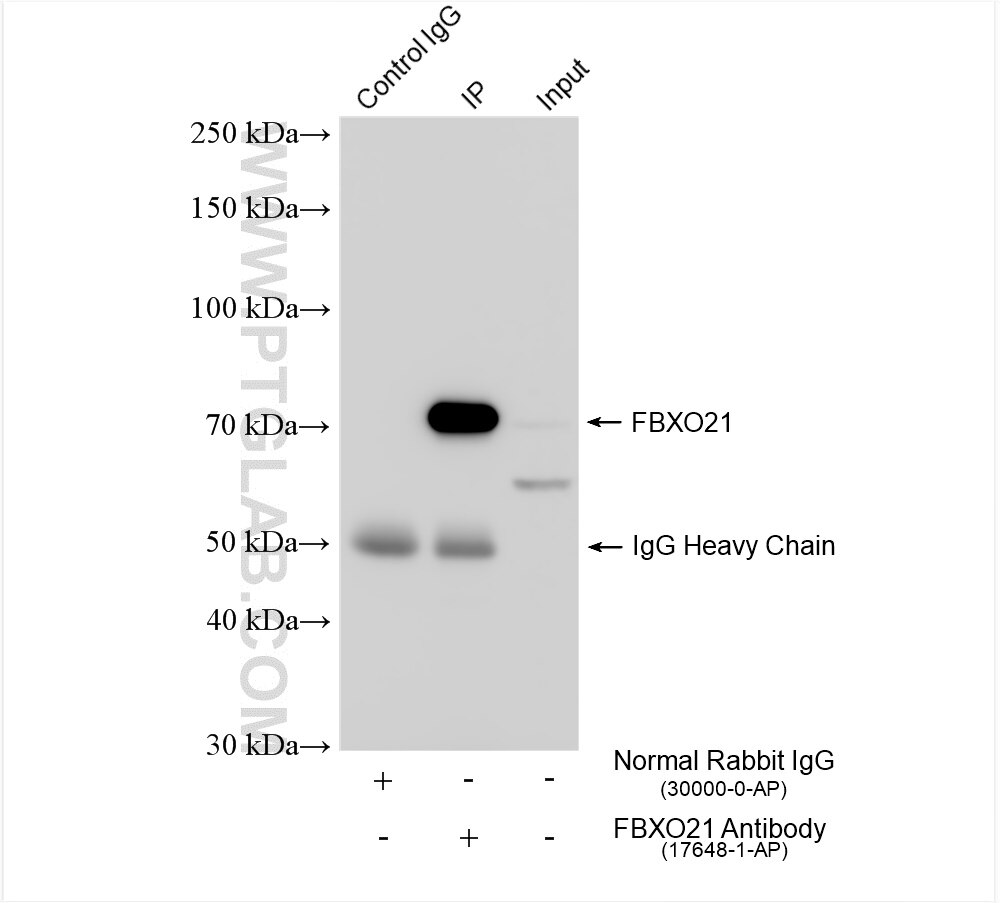
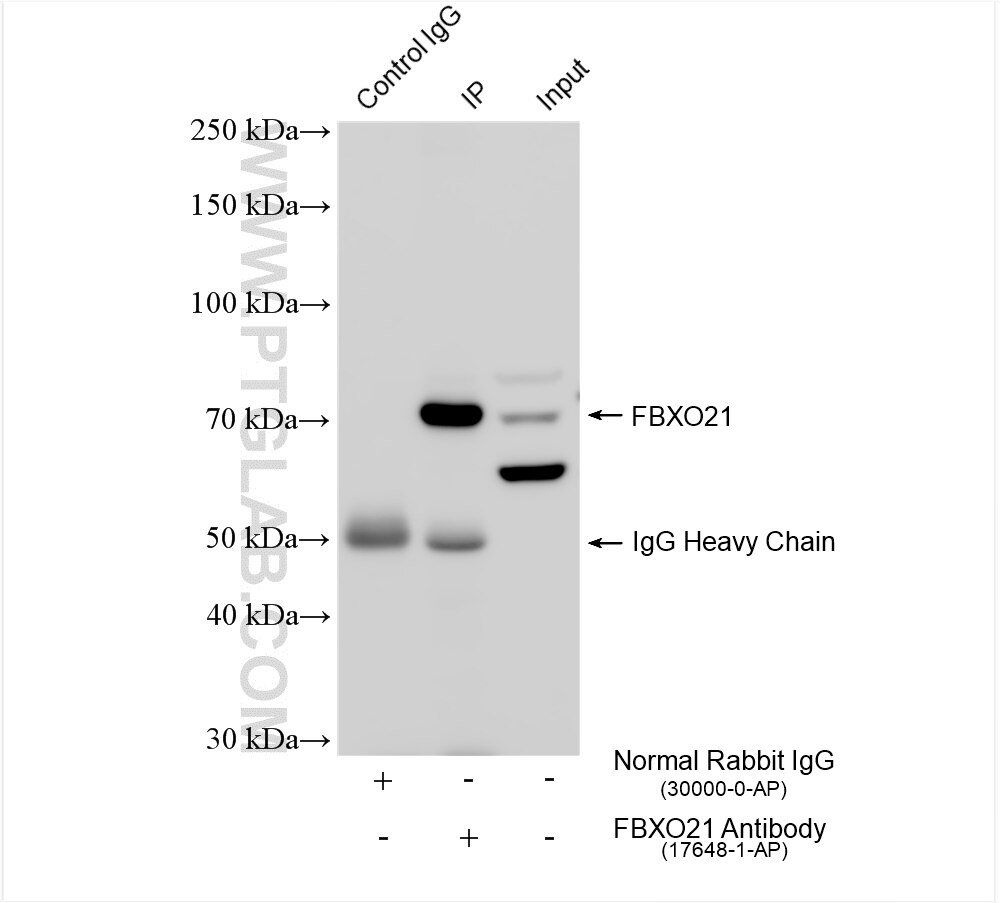
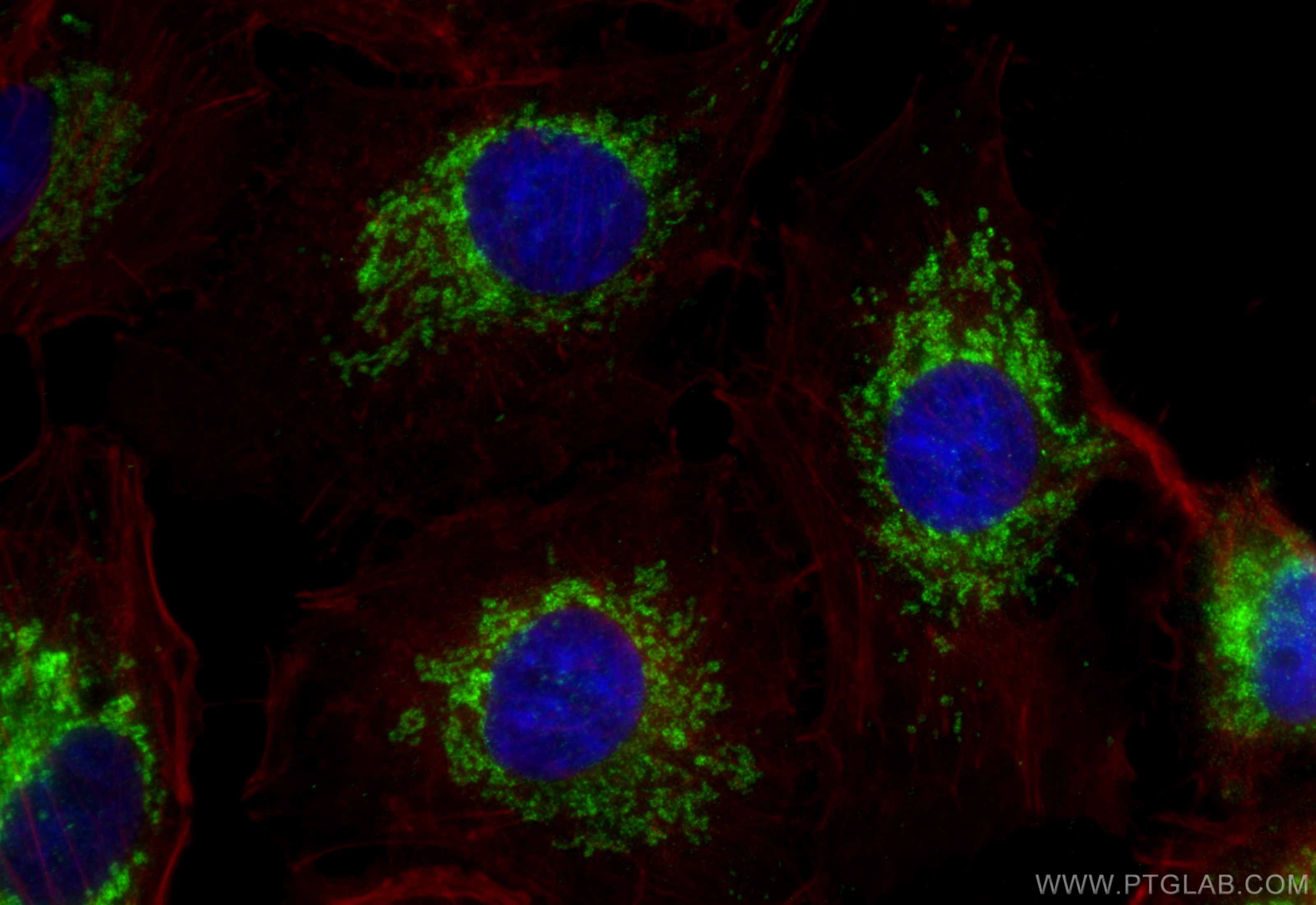
Geprüfte Anwendungen
Produktinformation
17648-1-PBS bindet in IF/ICC, IP, Indirect ELISA FBXO21 und zeigt Reaktivität mit human, Ratten
| Getestete Reaktivität | human, Ratte |
| Wirt / Isotyp | Kaninchen / IgG |
| Klonalität | Polyklonal |
| Typ | Antikörper |
| Immunogen | FBXO21 fusion protein Ag11882 |
| Vollständiger Name | F-box protein 21 |
| Berechnetes Molekulargewicht | 537 aa, 63 kDa |
| Beobachtetes Molekulargewicht | 75 kDa |
| GenBank-Zugangsnummer | BC034045 |
| Gene symbol | FBXO21 |
| Gene ID (NCBI) | 23014 |
| Konjugation | Unkonjugiert |
| Form | Liquid |
| Reinigungsmethode | Antigen-Affinitätsreinigung |
| Lagerungspuffer | PBS only |
| Lagerungsbedingungen | Store at -80°C. 20ul Größen enthalten 0,1% BSA. |
Hintergrundinformationen
FBXO21 (F-box protein 21) is a member of the F-box protein family and serves as the substrate recognition component of the SCF (Skp1-Cullin-F-box) E3 ubiquitin ligase complex. In AML cells, FBXO21 can ubiquitinate p85α, a regulatory subunit of the PI3K pathway, leading to its degradation. This reduces PI3K signaling, promotes p85α dimerization, and activates ERK, thereby influencing cell proliferation and survival. Silencing FBXO21 in AML cells induces differentiation, inhibits tumor progression, and increases sensitivity to chemotherapeutic agents. FBXO21 can regulate immune responses by ubiquitinating and degrading proteins like ASK1 through pro-inflammatory cytokine pathways. It can also ubiquitinate p85α, affecting CXCL10 expression and modulating immune cell infiltration and anti-tumor activity. In renal cell carcinoma, overexpression of FBXO21 significantly suppresses ccRCC cell proliferation and metastasis both in vitro and in vivo. It may be related to the stromal score and the infiltration levels of immune cells associated with prognosis. Additionally, FBXO21 overexpression increases the expression of key molecules in the CREB pathway.


