- Featured Product
- KD/KO Validated
FGFR4 Polyklonaler Antikörper
FGFR4 Polyklonal Antikörper für WB, IHC, IF/ICC, Indirect ELISA
Wirt / Isotyp
Kaninchen / IgG
Getestete Reaktivität
human
Anwendung
WB, IHC, IF/ICC, Indirect ELISA
Konjugation
Unkonjugiert
Kat-Nr. : 11098-1-PBS
Synonyme
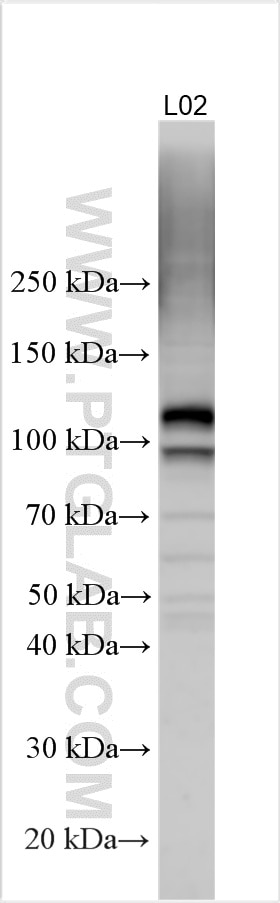
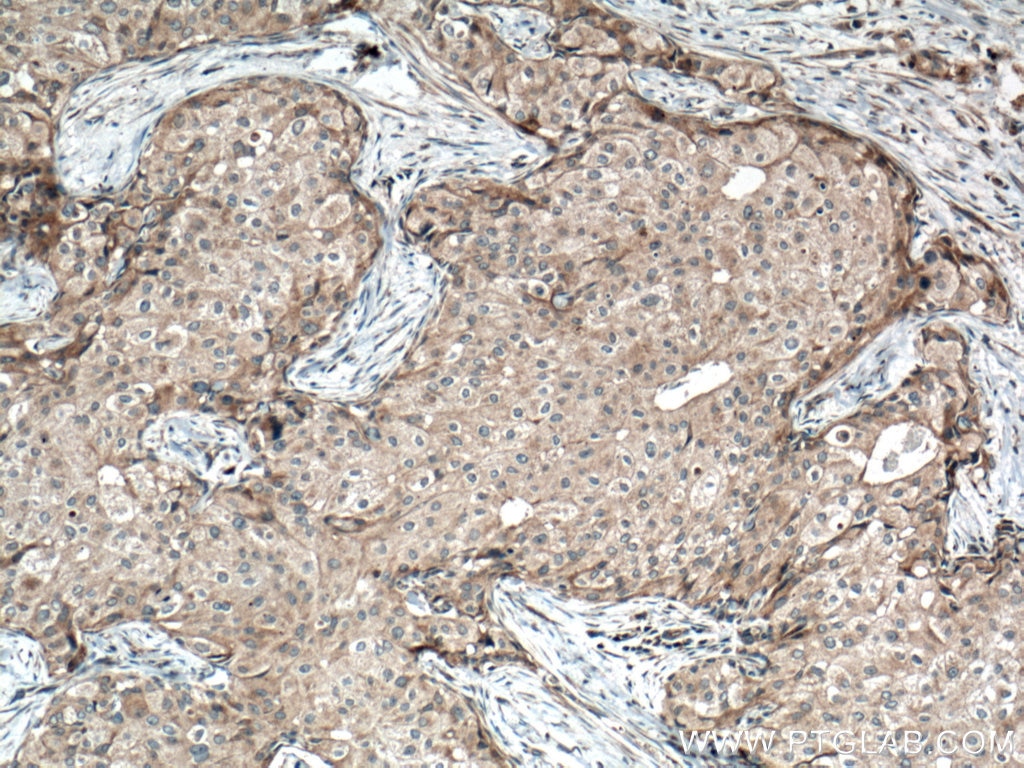
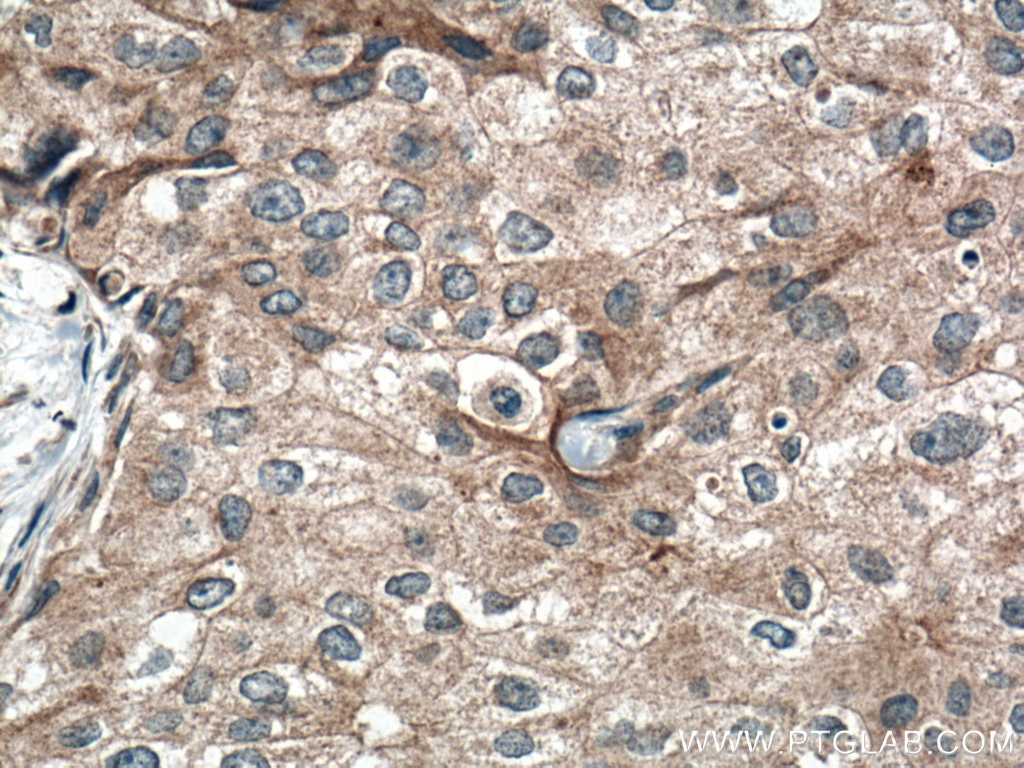
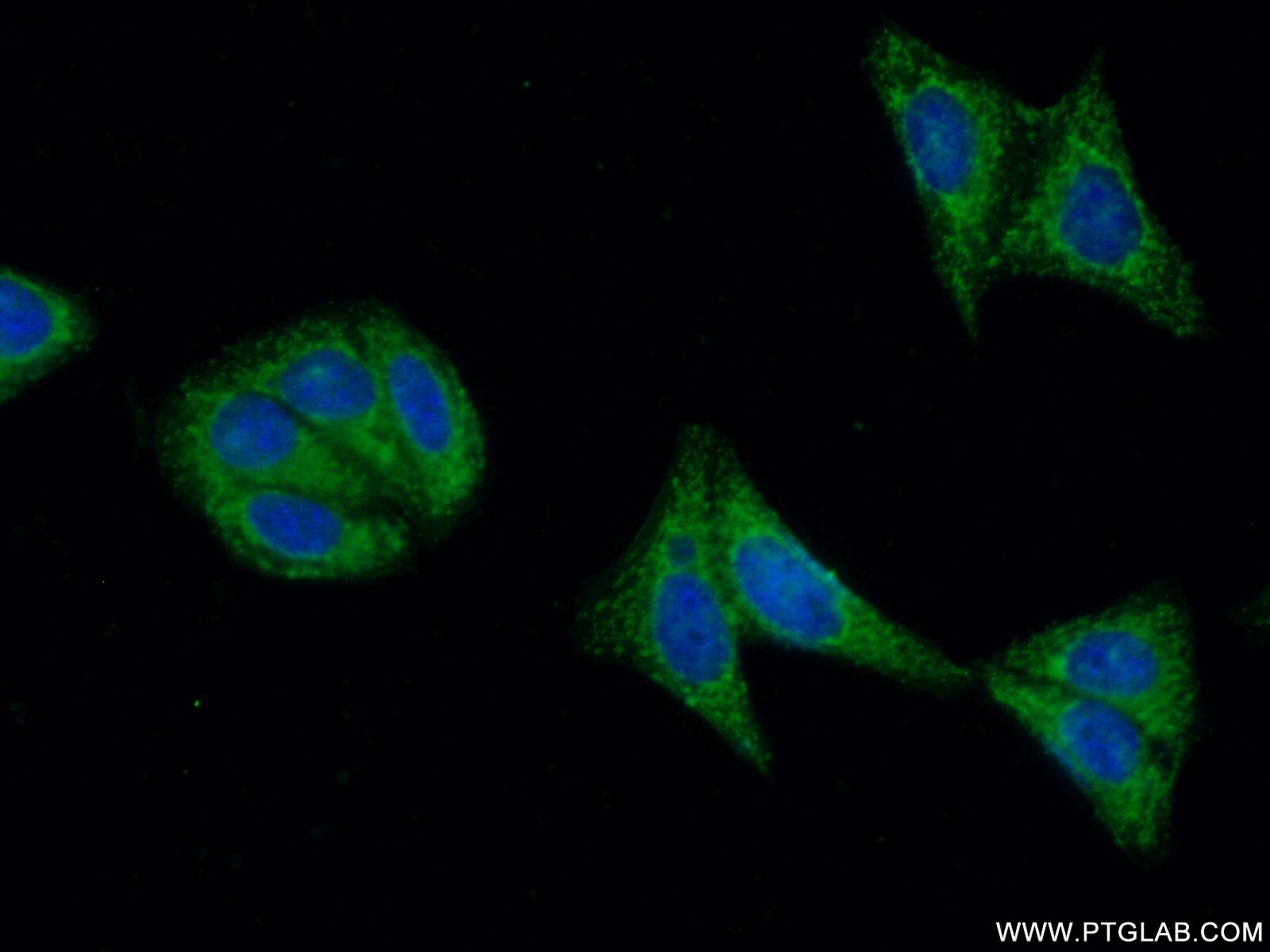
Geprüfte Anwendungen
Produktinformation
11098-1-PBS bindet in WB, IHC, IF/ICC, Indirect ELISA FGFR4 und zeigt Reaktivität mit human
| Getestete Reaktivität | human |
| Wirt / Isotyp | Kaninchen / IgG |
| Klonalität | Polyklonal |
| Typ | Antikörper |
| Immunogen | FGFR4 fusion protein Ag1573 |
| Vollständiger Name | fibroblast growth factor receptor 4 |
| Berechnetes Molekulargewicht | 88 kDa |
| Beobachtetes Molekulargewicht | 95, 100-110 kDa |
| GenBank-Zugangsnummer | BC011847 |
| Gene symbol | FGFR4 |
| Gene ID (NCBI) | 2264 |
| Konjugation | Unkonjugiert |
| Form | Liquid |
| Reinigungsmethode | Antigen-Affinitätsreinigung |
| Lagerungspuffer | PBS only |
| Lagerungsbedingungen | Store at -80°C. 20ul Größen enthalten 0,1% BSA. |
Hintergrundinformationen
Fibroblast growth factor receptor 4 (FGFR4) is a member of a highly conserved tyrosine kinase family, along with FGFR1-3. This family consists of an intracellular tyrosine kinase domain, a single transmembrane domain, and extracellular ligand-binding domains (PMID: 32492514). FGFR4 is the predominant FGFR isoform present in human hepatocytes. FGFR4 has been proposed to play a role in the observed induction of hepatocyte proliferation and carcinogenesis by FGF19; however, contradicting evidence proposing a protective role for FGFR4 in suppressing hepatoma progression has also been proposed(PMID: 20018895). While the role of FGFR4 in cancer remains to be fully elucidated, several findings suggest that this receptor may be an important player in Hepatocellular carcinoma (HCC) development and/or progression(PMID: 10336501).


