FSTL1 Rekombinanter Antikörper
FSTL1 Rekombinant Antikörper für WB, Cytometric bead array, Sandwich ELISA, Indirect ELISA
Wirt / Isotyp
Kaninchen / IgG
Getestete Reaktivität
human, Maus, Ratte
Anwendung
WB, Cytometric bead array, Sandwich ELISA, Indirect ELISA
Konjugation
Unkonjugiert
CloneNo.
251240E12
Kat-Nr. : 86444-1-PBS
Synonyme
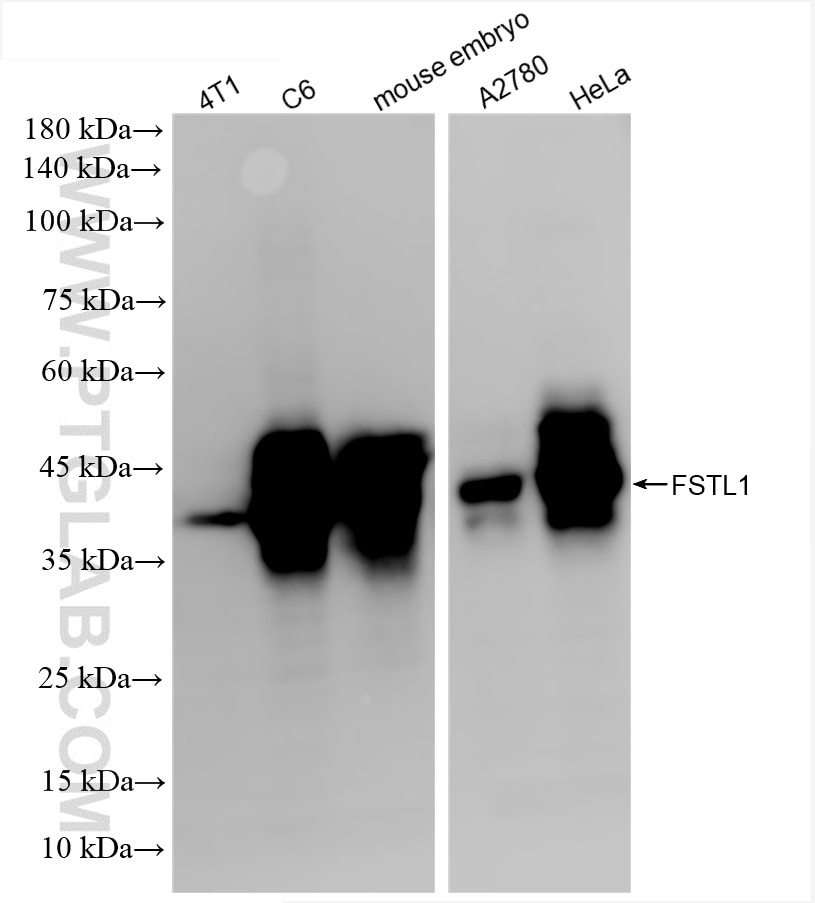
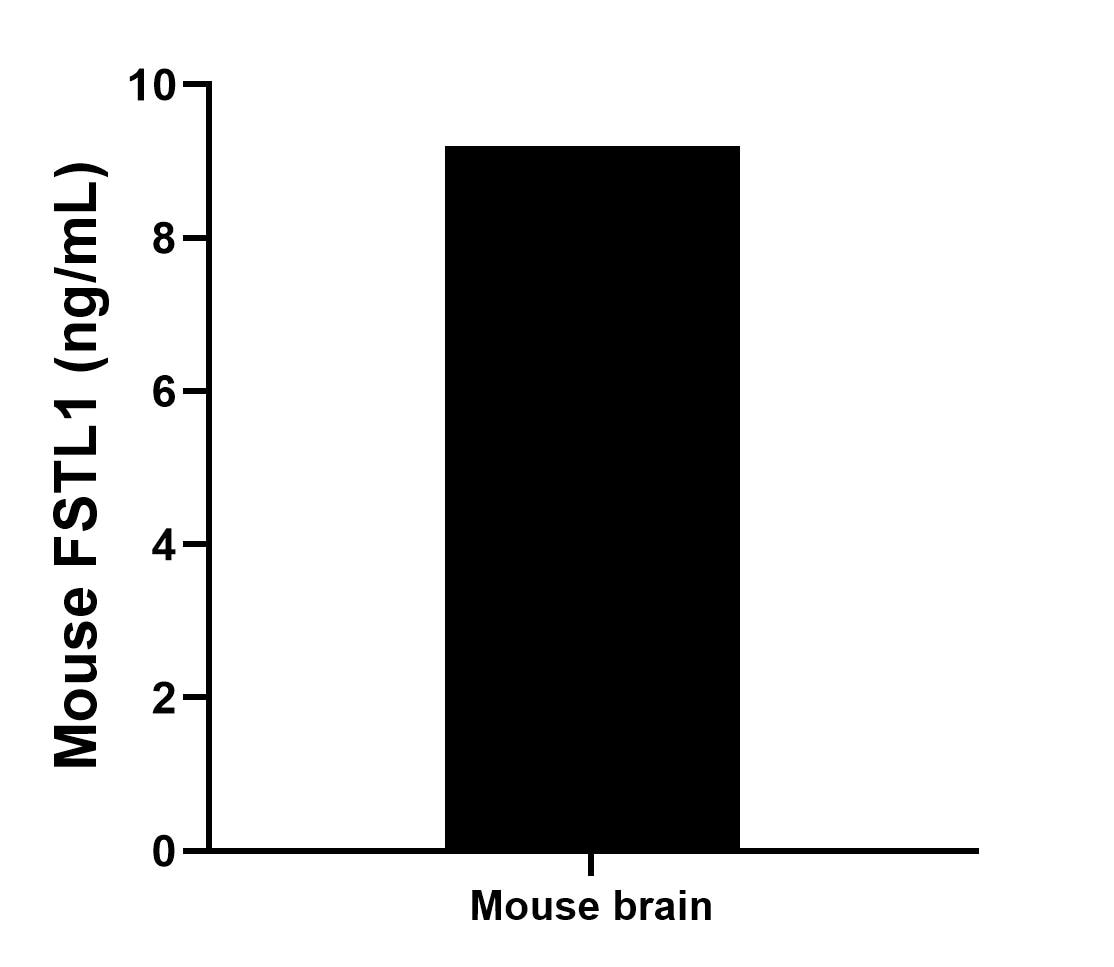
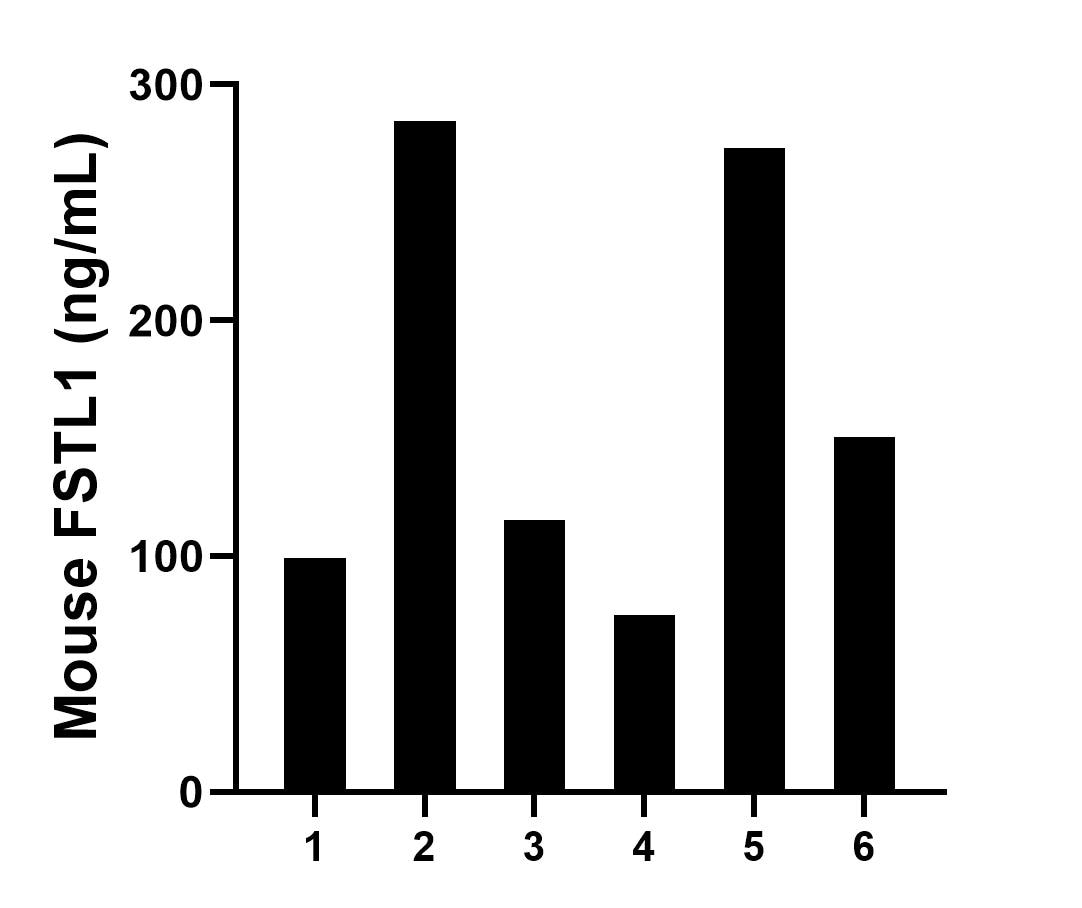
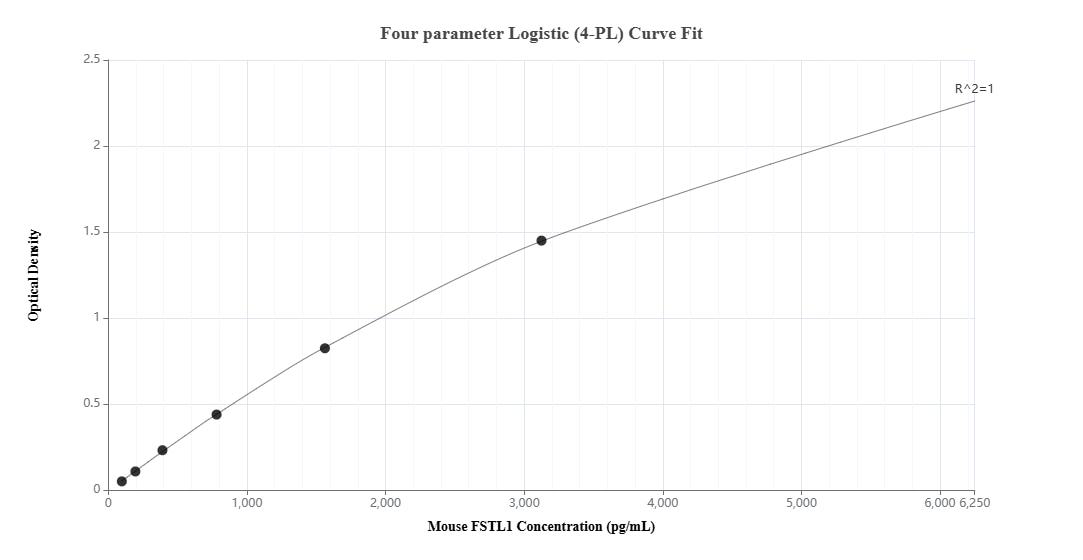

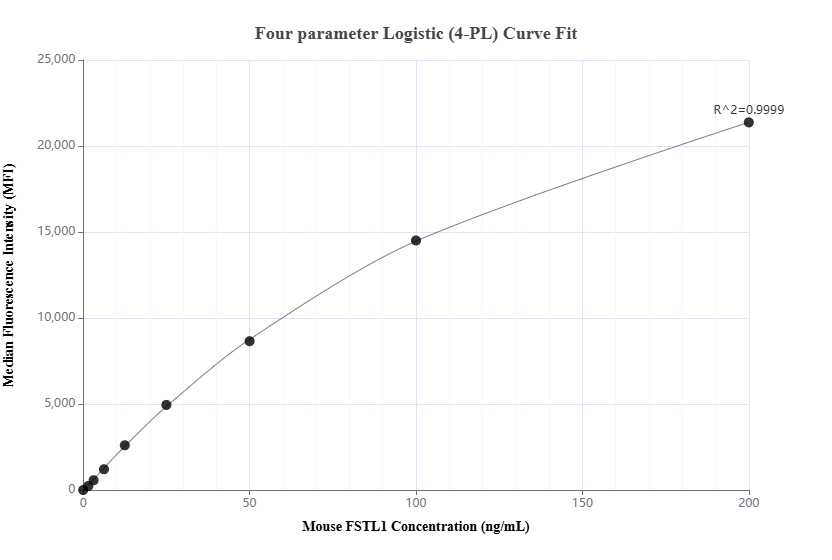
Geprüfte Anwendungen
Produktinformation
86444-1-PBS bindet in WB, Cytometric bead array, Sandwich ELISA, Indirect ELISA FSTL1 und zeigt Reaktivität mit human, Maus, Ratten
| Getestete Reaktivität | human, Maus, Ratte |
| Wirt / Isotyp | Kaninchen / IgG |
| Klonalität | Rekombinant |
| Typ | Antikörper |
| Immunogen | FSTL1 fusion protein Eg2859 |
| Vollständiger Name | follistatin-like 1 |
| Berechnetes Molekulargewicht | 35 kDa |
| Beobachtetes Molekulargewicht | 35-45 kDa |
| GenBank-Zugangsnummer | NM_008047.5 |
| Gene symbol | Fstl1 |
| Gene ID (NCBI) | 14314 |
| Konjugation | Unkonjugiert |
| Form | Liquid |
| Reinigungsmethode | Protein-A-Reinigung |
| Lagerungspuffer | PBS only |
| Lagerungsbedingungen | Store at -80°C. 20ul Größen enthalten 0,1% BSA. |
Hintergrundinformationen
Follistatin-like 1 (FSTL1), initially discovered as a TGF-β1-induced gene, encodes a 308 amino acid secreted 45-55 kDa glycoprotein with a follistatin domain and two non-functional calcium-binding motifs. FSTL1 has been reported to be involved in the fate determination and maturation of epithelial cells. Ablation of the FSTL1 gene in the mouse results in several structural developmental defects and neonatal lethality due to respiratory failure, demonstrating its functional importance. FSTL1 has been reported to exhibit both pro- and anti-inflammatory actions, with a specific anti-apoptotic and protective effect in cardiac or renal cell injury. Zwijsen et al. (1994) detected several isoforms of FSTL1 with molecular masses of 40 to 48 kD, which differ from the 50- to 55-kD products detected by Tanaka et al. (1998) (OMIM). (PMID: 26386648; PMID: 23723173; PMID: 20176958).


