GDF9 Polyklonaler Antikörper
GDF9 Polyklonal Antikörper für WB, IHC, IF/ICC, Indirect ELISA
Wirt / Isotyp
Kaninchen / IgG
Getestete Reaktivität
human, Maus, Ratte
Anwendung
WB, IHC, IF/ICC, Indirect ELISA
Konjugation
Unkonjugiert
Kat-Nr. : 29309-1-PBS
Synonyme
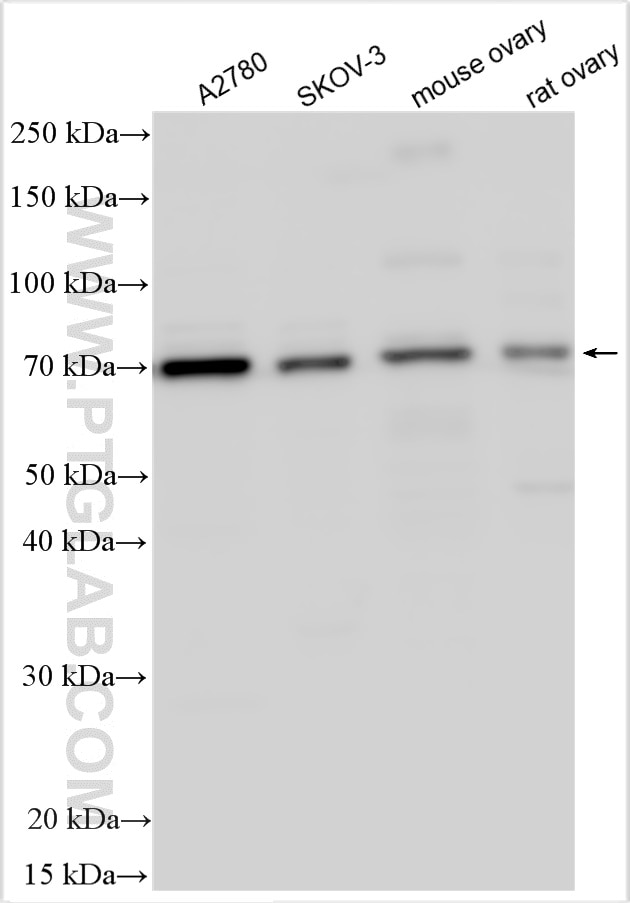
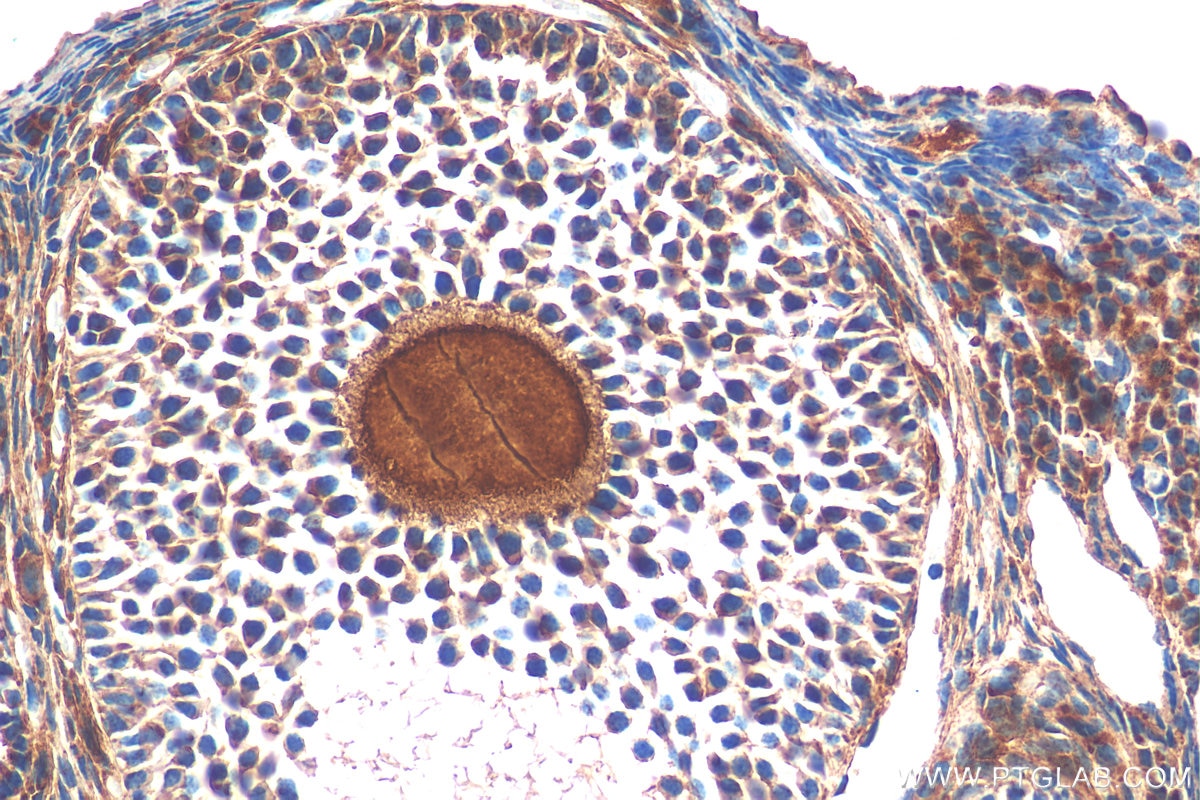
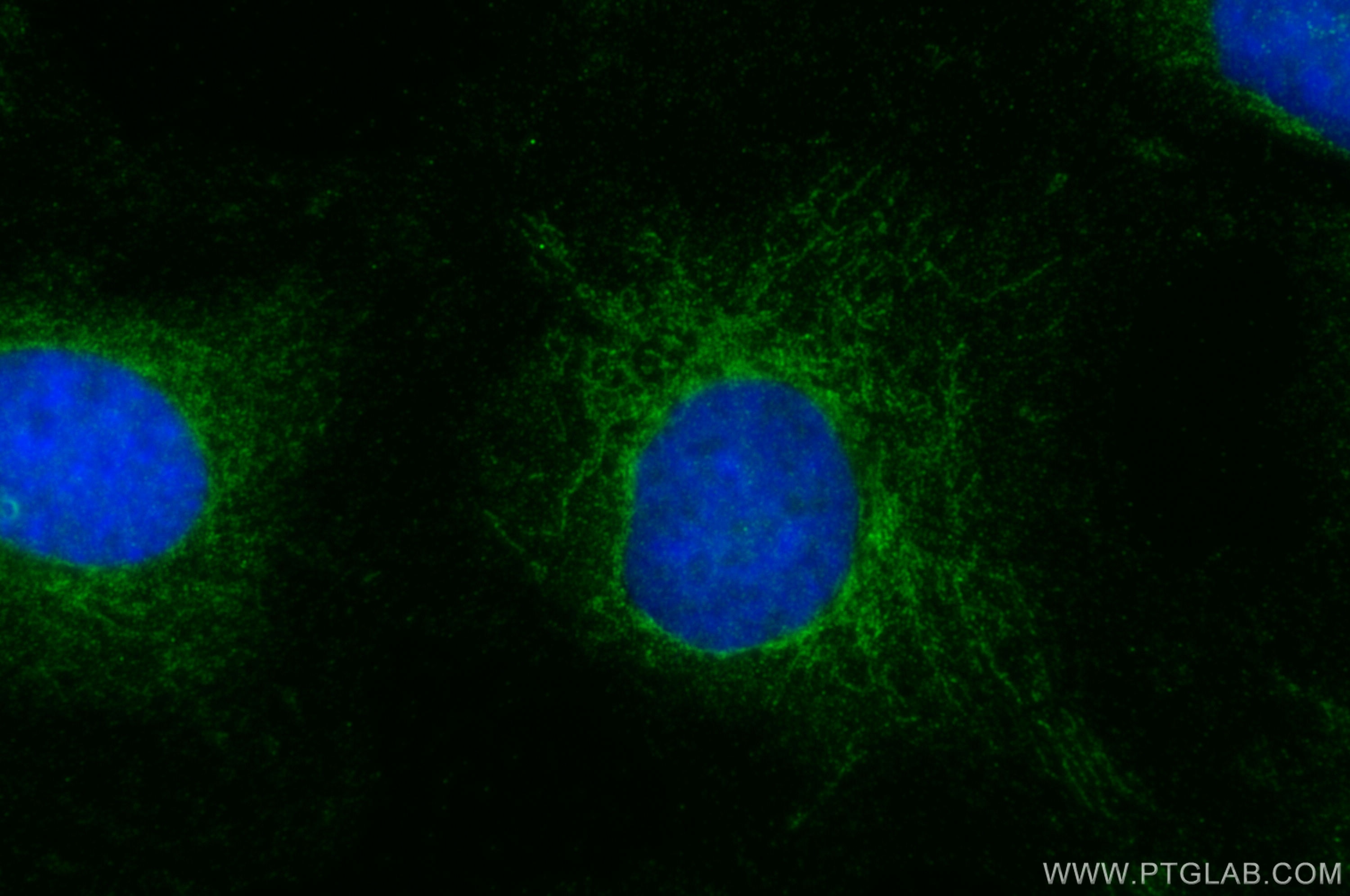
Geprüfte Anwendungen
Produktinformation
29309-1-PBS bindet in WB, IHC, IF/ICC, Indirect ELISA GDF9 und zeigt Reaktivität mit human, Maus, Ratten
| Getestete Reaktivität | human, Maus, Ratte |
| Wirt / Isotyp | Kaninchen / IgG |
| Klonalität | Polyklonal |
| Typ | Antikörper |
| Immunogen | GDF9 fusion protein Ag29603 |
| Vollständiger Name | growth differentiation factor 9 |
| Berechnetes Molekulargewicht | 454 aa, 51 kDa |
| Beobachtetes Molekulargewicht | 70 kDa |
| GenBank-Zugangsnummer | BC096228 |
| Gene symbol | GDF9 |
| Gene ID (NCBI) | 2661 |
| Konjugation | Unkonjugiert |
| Form | Liquid |
| Reinigungsmethode | Antigen-Affinitätsreinigung |
| Lagerungspuffer | PBS only |
| Lagerungsbedingungen | Store at -80°C. 20ul Größen enthalten 0,1% BSA. |
Hintergrundinformationen
GDF9 (Growth/differentiation factor 9) belongs to the TGF-beta family. GDF9 is required for ovarian folliculogenesis. GDF9 and BMP15 are oocyte-secreted factors with a leading role in the control of ovarian function in female reproduction, modulating both the cell fate of the somatic granulosa cells and the quality and developmental competence of the egg (PMID: 29544636). GDF9 promotes cell transition from G0/G1 to S and G2/M phases, through an increase of CCND1 and CCNE1 expression, and RB1 phosphorylation (PMID: 19366876). It regulates STAR expression and cAMP-dependent progesterone release in granulosa and thecal cells. GDF9 attenuates the suppressive effects of activin A on STAR expression and progesterone production by increasing the expression of inhibin B (PMID: 21829661). It suppresses FST and FSTL3 production in granulosa-lutein cells (PMID: 21632818, PMID: 21829661).


